Lead nurturing is the process of moving a lead from first contact to a better sales or purchase decision through useful follow-up. It can include email, CRM tasks, retargeting, sales calls, SMS where appropriate, webinars, comparison content and lifecycle messages. The goal is not to send more messages. The goal is to help the right lead take the right next step at the right time.
Lead nurturing matters because most leads are not ready to buy immediately. Some need internal approval, some need education, some need proof, and some are simply not a fit. A good nurturing system separates those groups, keeps sales focused on active opportunities and turns existing demand into more pipeline before the business raises ad spend.
TL;DR
- Lead nurturing converts demand that already exists. It improves the value of leads already generated by paid media, SEO, referrals or events.
- Nurturing is not only email. It combines CRM stages, sales tasks, retargeting, content, phone follow-up and lifecycle automation.
- Segmentation is the core. A demo request, webinar attendee, abandoned quote, pricing-page visitor and newsletter subscriber should not receive the same sequence.
- Sales and marketing need one lead status model. Without shared stages, nurturing becomes random follow-up.
- Deliverability affects revenue. Authentication, list hygiene and consent matter because a perfect sequence is useless if it lands in spam.
- B2B, SaaS, services and e-commerce need different triggers. The same principle applies, but timing, message and proof vary by buying process.
- Measurement should go beyond opens and clicks. Pipeline, qualified meetings, sales acceptance, repeat purchase and reactivation matter more.
What lead nurturing really means
Lead nurturing is often reduced to an email sequence. That is too narrow. Email is one delivery channel. The strategic job is to move a known person, account or customer toward a higher-value action.
Examples of lead nurturing:
- a B2B lead receives a diagnostic email, a case study and then a sales task is created;
- a SaaS trial user receives onboarding based on the feature they used first;
- a service-business quote request receives a call reminder and proof page;
- an e-commerce buyer receives post-purchase education and a replenishment reminder;
- a webinar attendee receives the recording, comparison guide and a retargeting sequence;
- an old opportunity receives a reactivation campaign when a problem becomes timely again.
Lead nurturing works best when it is based on behavior and fit. It should not treat every contact as if they are on the same timeline.
Lead nurturing vs lead generation
| Area | Lead generation | Lead nurturing |
|---|---|---|
| Main job | Create or capture a new contact | Move an existing contact toward value |
| Primary channels | Paid search, paid social, SEO, forms, events | Email, CRM, retargeting, sales tasks, content |
| Main risk | Low-quality lead volume | Over-messaging or wrong timing |
| Success metric | Qualified leads and opportunities created | Lead-to-opportunity, meeting rate, purchase rate, reactivation |
| Time horizon | Immediate to short term | Short, medium and long term |
This is why B2B lead generation and lead nurturing should be planned together. Lead generation without nurturing leaves demand unused. Nurturing without qualified acquisition becomes a database exercise.
The lead nurturing foundation: stages and intent
Before writing emails, the business needs a lead-status model. A simple version can work:
| Stage | Meaning | Nurture goal |
|---|---|---|
| New lead | Contact just entered the system | Confirm request and route correctly |
| Marketing qualified | Fits audience or showed meaningful intent | Educate and prompt sales-ready action |
| Sales accepted | Sales agrees the lead is worth follow-up | Support the conversation and reduce objections |
| Opportunity | Active commercial discussion | Provide proof, comparison and decision material |
| Closed lost | Not won, but may return later | Reactivate when timing or problem changes |
| Customer | Already bought or signed | Onboard, retain, expand or generate referrals |
Stages should be simple enough that sales actually uses them. If a CRM has too many unclear statuses, nurturing logic breaks. If it has too few, every lead receives generic follow-up.
Segmentation: the part most sequences miss
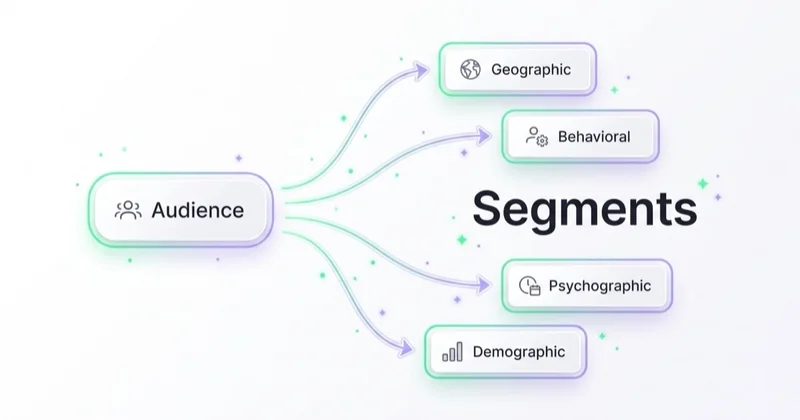
Good lead nurturing starts with segmentation. At minimum, segment by fit and intent.
Fit signals:
- company size;
- industry or business model;
- location where service delivery matters;
- role or seniority;
- product category;
- budget range;
- current tool stack;
- customer vs prospect.
Intent signals:
- demo request;
- quote request;
- pricing-page visit;
- comparison-page visit;
- webinar attendance;
- form submission type;
- abandoned checkout or abandoned quote;
- repeat visits to service pages;
- email engagement;
- CRM stage change.
The same message should not go to a high-intent pricing-page lead and a low-intent newsletter signup. One may need sales follow-up. The other may need education and category framing.
Email nurturing: useful, not noisy
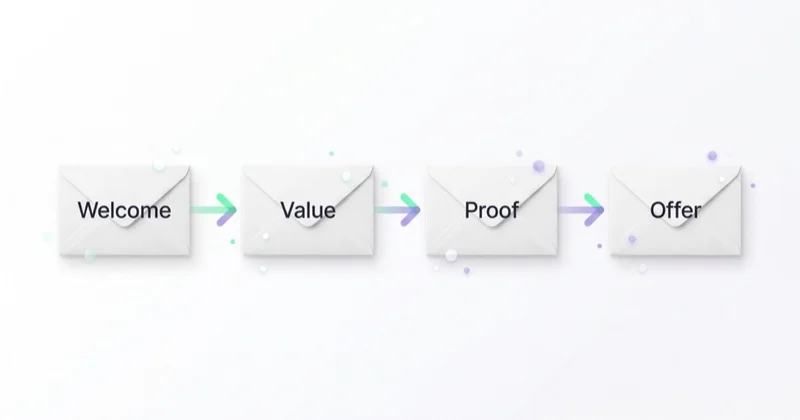
Email is still a practical lead nurturing channel because it is direct, measurable and works across B2B, SaaS, services and e-commerce. The problem is that many sequences are written around the sender's agenda rather than the buyer's question.
A useful email sequence should include:
- a clear reason for the message;
- one primary idea per email;
- a useful asset, answer or next step;
- a relevant CTA;
- plain subject lines;
- easy unsubscribe;
- no misleading urgency;
- consistent sender identity.
Example B2B sequence:
| Timing | Message | Goal |
|---|---|---|
| Immediately | Confirmation and next step | Set expectation |
| Day 1 | Problem diagnosis | Show understanding |
| Day 3 | Case study or proof | Reduce perceived risk |
| Day 6 | Comparison or checklist | Help internal evaluation |
| Day 10 | Direct sales-ready CTA | Invite a qualified conversation |
| Day 21 | Reactivation or alternative resource | Keep useful contact without pressure |
Deliverability matters. Gmail and Yahoo sender guidance both emphasize authentication, low spam complaints and clear unsubscribe paths. A sophisticated nurture map will underperform if the sender reputation is weak or consent is unclear.
CRM triggers and sales follow-up
Lead nurturing should create sales actions when intent is high. The CRM is the place where this becomes operational.
Examples:
- create a task when a target-account lead visits a pricing or audit page;
- notify sales when a qualified lead clicks a comparison guide;
- pause generic nurture after a meeting is booked;
- move a lead to a reactivation path after a closed-lost reason is logged;
- send different follow-up after "no budget" vs "timing" vs "not a fit";
- trigger a customer onboarding sequence after purchase or signed contract.
The sales handoff should be explicit. If marketing keeps emailing a lead that is in active sales conversation, the experience can feel disconnected. If sales does not know what the lead has read, the conversation starts colder than it needs to.
Lead scoring without false precision
Lead scoring can help prioritize follow-up, but it often becomes too complex too early. A practical score should combine two dimensions: fit and intent.
| Signal type | Examples | How to use it |
|---|---|---|
| Fit | company size, role, industry, geography, use case, budget range | Decide whether sales should spend time |
| Intent | pricing visit, demo request, repeat visit, comparison content, email reply | Decide how quickly sales should act |
| Negative fit | student email, unsupported country, wrong company size, competitor | Suppress or route away from sales |
| Negative intent | unsubscribed, repeated no-show, closed-lost reason | Reduce pressure and move to long-term nurture |
The mistake is pretending that a score of 78 is meaningfully different from a score of 72. For most teams, three buckets are enough: high priority, nurture and disqualified. High priority leads get sales attention fast. Nurture leads receive helpful content and retargeting. Disqualified leads are removed from sales workflows or routed to a lower-cost path.
Scoring should be reviewed with sales. If a "high priority" lead regularly gets rejected, the score is wrong. If a "nurture" lead later becomes a strong opportunity, the model may be missing an intent signal. Lead scoring is not a one-time setup; it is a feedback loop between marketing, sales and CRM data.
When not to automate the follow-up
Not every lead should enter a fully automated path. High-value enquiries, sensitive complaints, complex enterprise deals and urgent service requests often need a human response first. Automation should support the process, not hide behind it.
A practical rule is simple: automate reminders, education and routing; keep judgement with people when the lead has high value, high urgency or unclear context. This protects the buyer experience and prevents the CRM from sending generic messages while a real commercial conversation is already happening.
Retargeting as a nurturing layer
Paid retargeting can reinforce lead nurturing when used carefully. It should not chase every visitor with the same ad. It should support the stage.
| Audience | Better retargeting message |
|---|---|
| Read a problem guide | Educational proof or diagnostic checklist |
| Visited service page | Methodology, case study or audit CTA |
| Submitted lead form | Trust, process and next-step reassurance |
| Webinar attendee | Related guide or consultation offer |
| Closed-lost opportunity | New insight, benchmark or reactivation offer |
| Existing customer | Onboarding, cross-sell or retention content |
For Meta-specific lead capture, Facebook Lead Ads can be useful, but the follow-up path decides whether the forms become business value. For higher-intent search demand, Google Ads and offline conversion feedback usually matter more.
Lead nurturing by business model
B2B services
B2B services need nurturing that supports trust and timing. The strongest assets are usually audit explanations, process pages, case studies, comparison articles and objection-handling FAQ. A lead that is not ready this week may become ready when budget, internal pressure or vendor dissatisfaction changes.
SaaS
SaaS nurturing should connect marketing behavior with product behavior. A user who signs up but does not activate needs onboarding. A user who activates one feature may need use-case education. A high-fit account that reaches a usage threshold may need sales assist.
E-commerce
E-commerce nurturing often means lifecycle marketing: abandoned cart, browse abandonment, post-purchase education, replenishment, product recommendations and win-back campaigns. The key is to use purchase behavior and margin, not only generic email frequency.
Local and high-ticket services
Service businesses need speed and reassurance. Missed calls, slow quotes and unclear next steps can waste lead spend. Nurture should include appointment reminders, proof, financing or process information, and sales tasks for high-intent enquiries.
How Space Ads approaches this
At Space Ads, we look at lead nurturing as part of the acquisition system, not as a separate newsletter project. The first step is mapping where leads enter: Google Ads, Meta Ads, organic search, referrals, direct traffic, events or existing CRM lists. Then we define what each lead type means commercially and which action should happen next.
When no verified CRM feedback exists, we do not pretend the automation knows lead quality. We start with a simple model: source, offer, stage, fit and last meaningful action. From there, we connect the nurture path to reporting. A good dashboard should show not only how many leads arrived, but whether they were contacted, accepted, moved to opportunity, purchased, returned or went inactive. That is the difference between sending messages and operating a revenue follow-up system.
Measurement: what to track
Email metrics are useful diagnostics, but they are not the final result.
| Metric | What it helps diagnose |
|---|---|
| Delivery rate | Whether the message reaches inboxes |
| Open rate | Sender and subject-line signal, with privacy caveats |
| Click rate | Topic and CTA relevance |
| Reply rate | Sales-readiness for direct outreach |
| Meeting rate | Commercial usefulness of the sequence |
| Opportunity rate | Whether nurtured leads become pipeline |
| Purchase or repeat purchase | Whether nurture creates revenue |
| Unsubscribe and spam complaints | Whether frequency or relevance is wrong |
GA4 events, CRM stages and ad-platform conversion imports should be aligned where possible. For example, a lead that becomes a qualified opportunity can inform reporting and, in some cases, bidding. This is especially important when paid campaigns otherwise see only the initial form fill.
Common mistakes
| Mistake | Why it hurts | Better approach |
|---|---|---|
| Sending the same sequence to every lead | Ignores fit and intent | Segment by source, stage and behavior |
| Optimizing only opens and clicks | Measures attention, not pipeline | Track meetings, opportunities and revenue |
| Starting with automation tools | Tools do not fix unclear stages | Define lifecycle and handoff first |
| Overusing discounts | Trains buyers to wait | Use proof, education and relevant offers |
| No sales handoff rules | Marketing and sales send conflicting messages | Pause or change nurture during active sales |
| Weak deliverability | Good content does not reach inboxes | Maintain authentication, consent and list hygiene |
| No closed-lost path | Future demand is forgotten | Build reactivation by reason and timing |
30-day lead nurturing plan
Week 1: clean the lifecycle
Define lead sources, statuses, disqualifiers, sales-owner rules and the minimum data needed in the CRM. Remove statuses nobody uses.
Week 2: map the first three paths
Create separate paths for high-intent leads, early-stage content leads and existing customers or closed-lost opportunities. Keep the first version simple.
Week 3: build useful messages
Write emails, retargeting messages and sales prompts around buyer questions. Add proof, objections, examples and next steps. Avoid filling the sequence with generic check-ins.
Week 4: connect measurement
Track delivery, clicks, replies, meetings, opportunities and sales outcomes. Review with sales. Remove messages that create attention without progressing the buyer.
FAQ
What is lead nurturing?
Lead nurturing is the process of using relevant follow-up to move a lead toward a better sales or purchase decision. It can include email, CRM tasks, retargeting, content, SMS where appropriate and sales follow-up.
Is lead nurturing the same as email marketing?
No. Email marketing is one channel. Lead nurturing is the wider process of deciding what should happen after a lead enters the system. It may use email, CRM automation, sales tasks, retargeting and lifecycle content.
How long should a lead nurturing sequence be?
The right length depends on the buying cycle. A high-intent service enquiry may need a short sequence over days. B2B, SaaS or enterprise deals may need weeks or months of useful follow-up, especially when timing is the main blocker.
What should be included in a B2B lead nurturing sequence?
A B2B lead nurturing sequence should include confirmation, problem education, proof, comparison material, objection handling and a clear sales-ready CTA. It should also create sales tasks when a lead shows high intent.
How does lead nurturing improve paid media performance?
Lead nurturing improves paid media performance by increasing the value of leads already generated. It can raise meeting rates, opportunity rates, repeat purchase or reactivation, which means the same acquisition spend produces more business value.
What is the biggest lead nurturing mistake?
The biggest mistake is treating every lead the same. A buyer who requested a quote, a webinar attendee and an existing customer need different follow-up. Segmentation is more important than the number of messages.
Key takeaways
Lead nurturing is how a business gets more value from the demand it already paid to create. It connects acquisition, CRM, sales, email, retargeting and content into a follow-up system that respects buyer timing.
The best nurturing programs are not the loudest. They are clear, segmented, useful and measurable. They help sales prioritize active opportunities and help buyers move forward when they are ready.
Sources and further reading
- Gmail Help - Email sender guidelines
- Yahoo Sender Hub - Sender best practices
- Google Analytics Help - About events
- Google Ads Help - About offline conversion imports
Continue learning
- B2B Lead Generation: How to Build a Predictable Pipeline From Paid Media and SEO
- Customer Acquisition Strategy: How to Scale Growth Without Wasting Ad Spend
- How to Tag Transactional Emails with UTM Parameters
- Facebook Lead Ads: What They Are and How to Launch Instant Forms
- Marketing audit · Meta Ads · Google Ads
Continue reading
CRM Marketing Automation: How to Connect Ads, Leads and Sales Follow-Up
CRM marketing automation connects ad campaigns, lead capture, sales stages and follow-up so teams can improve lead quality, response speed, nurture and offline conversion feedback.
B2B Lead Generation: How to Build a Predictable Pipeline From Paid Media and SEO
A predictable B2B pipeline is built from agreed stage definitions, cohort conversion rates and closed-loop feedback—not form volume. Learn how paid media, SEO, landing pages, CRM data and sales follow-up work as one measurable system.
Speed to Lead: Why Response Time Decides Who Wins the Deal
Learn how to measure and improve lead response time without sacrificing quality: define the right timestamps, set channel-specific targets, fix routing and coverage, and validate the impact on sales outcomes.