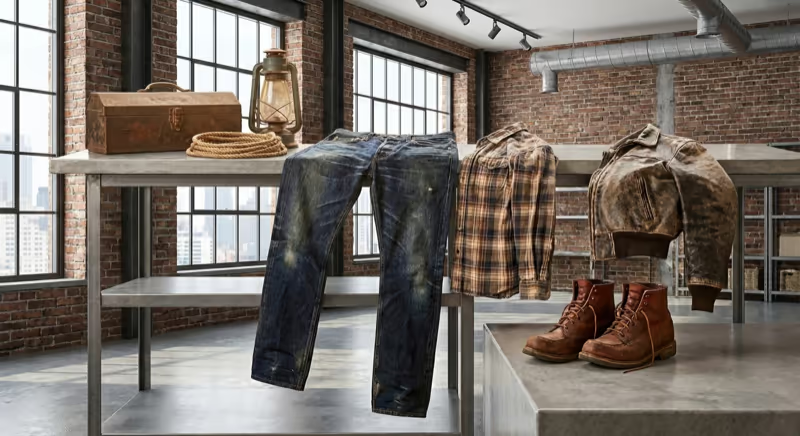
TikTok Shop is an ecommerce solution integrated inside TikTok. It lets sellers, brands and creators sell products through shoppable videos, LIVE shopping and store pages, so product discovery and purchase happen inside the same platform. It is powerful for social commerce, but it is available only in supported markets and it requires more than uploading products: content, creators, fulfilment, returns, pricing, compliance and profit measurement all matter.

TL;DR
- TikTok Shop turns content into commerce. TikTok describes it as an ecommerce solution integrated within TikTok that enables sellers, brands and creators to sell directly on the platform.
- The main shopping surfaces are shoppable video, LIVE Shopping and store pages. Users can discover products inside content and buy through TikTok Shop.
- Availability is market-specific. TikTok Help Center lists TikTok Shop availability in selected countries, including the United Kingdom, the United States, France, Italy, Spain and others.
- Seller Center is the operating hub. It supports shop setup, operations, customer service, seller growth, performance analysis and policy updates.
- Creators are part of the model. Sellers can use affiliate and target collaboration workflows so creators promote specific products for commission or flat-fee structures.
- TikTok Shop Ads changed. TikTok documentation says GMV Max became the default and only supported campaign type for TikTok Shop Ads beginning July 2025.
- It is not only an ad channel. TikTok Shop is a commerce system, so product quality, inventory, logistics, creator operations and margin control are as important as media buying.
What TikTok Shop is
TikTok Shop is the commerce layer inside TikTok. Instead of sending users from a TikTok video to an external website, a seller can make products available directly inside TikTok through shoppable videos, LIVE streams and a shop or store page.
TikTok describes TikTok Shop as an ecommerce solution integrated within TikTok, powered by its discovery engine, enabling sellers, brands and creators to sell products directly on the platform.
In practice, TikTok Shop connects four things:
- content that creates demand;
- product listings that explain what is being sold;
- checkout and order flow inside TikTok Shop;
- creator and paid media systems that expand reach.
That is why TikTok Shop is different from adding a TikTok Pixel to an online store. Pixel measures traffic on an external site. TikTok Shop moves the transaction into the TikTok commerce environment.
How TikTok Shop works
TikTok Shop usually works through several surfaces.
| Surface | What it does |
|---|---|
| Shoppable Video | A video includes tagged products that users can browse and buy |
| LIVE Shopping | Products are promoted and sold during a live stream |
| Store Page | Products are displayed in an in-app shop experience |
| Showcase | Products can be shown from a seller, creator or marketing account profile |
| Affiliate collaborations | Creators promote products and earn commission or agreed compensation |
| TikTok Shop Ads | Paid distribution for shop products and shopping content |
TikTok Shop compresses the path from discovery to purchase. A user can see a product in a video, tap a product anchor, view details and buy without leaving TikTok. For categories where demonstration, trust and impulse matter, that shorter path can be valuable.
TikTok Shop availability by market
Availability changes over time, so the safest answer is: always check TikTok Seller Center and official TikTok Shop documentation for the target country.
TikTok Help Center documentation for TikTok Shop and Showcase lists TikTok Shop as currently available in Brazil, France, Indonesia, Ireland, Italy, Japan, Malaysia, Mexico, the Philippines, Singapore, Spain, Thailand, the United Kingdom, the United States and Vietnam.
That means TikTok Shop is not universally available. A brand in a country that is not supported cannot assume it can open a local shop immediately. For example, if a market is not listed in Seller Center, the brand may need to keep using TikTok Ads, Spark Ads, organic content and external ecommerce tracking until local shop access becomes available or a compliant cross-border route exists.
This is especially important for international teams. A UK or US setup may not translate directly to Australia, Poland or another unsupported market. Legal entity, seller eligibility, banking, returns, tax and fulfilment requirements must be checked locally.
Seller Center: the operational hub
TikTok Seller Center is where a seller manages the commerce side. TikTok documentation says Seller Center allows businesses to run ecommerce directly on TikTok with solutions for store operations management, customer service and engagement, seller growth and education, performance analysis and policy updates.
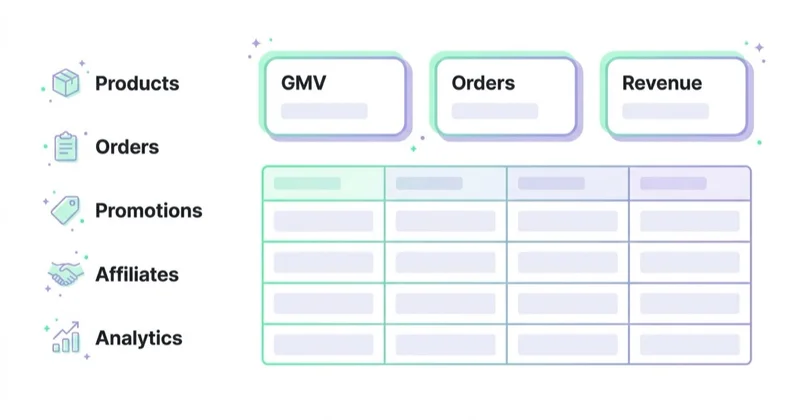
Before setting up a shop, official guidance says sellers need items such as:
- business verification documents;
- banking information;
- a valid phone number and email address;
- warehouse or pickup address;
- return address;
- identity or eligibility documentation;
- shop information and product listings.
This is not the same as creating a social media profile. TikTok Shop is a sales channel with operational obligations. If returns, stock, customer service or product compliance are weak, content performance will not solve the business problem.
TikTok Shop vs Showcase
TikTok Shop and Showcase are related but not identical.
TikTok documentation says Showcase lets customers shop from a seller or creator account by displaying a shopping bag icon on the profile page. It also explains that an account can be an official TikTok account, marketing TikTok account or affiliate TikTok account.
A simplified distinction:
| Area | TikTok Shop | Showcase |
|---|---|---|
| Product ownership | Products belong to the TikTok Shop | Products can be displayed from one or more shops |
| Account role | Seller owns and manages inventory | Marketing or affiliate account can display products |
| Advertising source | Products from the selected shop | Products currently displayed in the Showcase |
| Best use | Seller operations and product catalogue | Creator, partner or marketing profile commerce |
For brands, this matters because creators and partner accounts may sell through Showcase or affiliate workflows without owning the shop itself.
How creators and affiliates fit in
TikTok Shop is not only a brand storefront. It is built around creator-led commerce.
TikTok target collaboration documentation says a seller can invite specific creators to promote specific products for an affiliate commission. It also describes flat-fee and commission-only structures. In a flat-fee collaboration, creators submit videos in an agreed timeframe for review. In commission-only collaboration, creators earn when a sale is made.
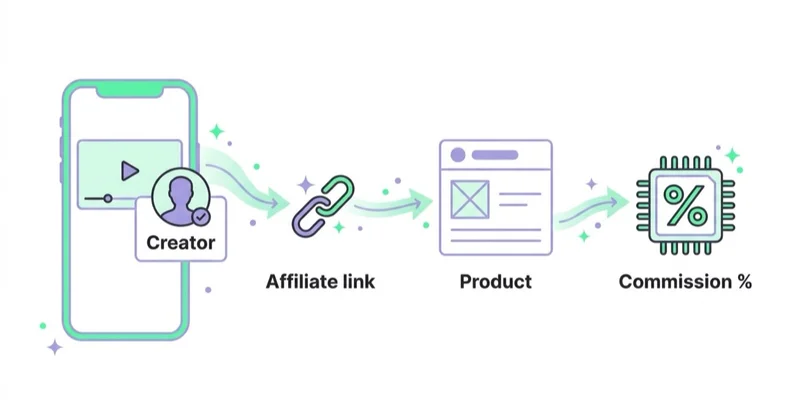
This creates several strategic choices:
- use creators for scale and authenticity;
- set commissions by margin and product priority;
- invite specific creators for target collaborations;
- use shoppable videos or LIVE formats;
- repurpose creator assets where authorization allows it;
- measure creator quality by sales, returns, comments and content fit.
Creator operations can become the main growth engine, but also the main coordination challenge. Product seeding, communication, approval, content quality, claims, rights and payment terms need structure.
TikTok Shop Ads and GMV Max
TikTok Shop can be supported by paid ads, but the ad system has changed.
TikTok documentation says that beginning July 2025, GMV Max became the default and only supported campaign type for TikTok Shop Ads. It also says TikTok Shop Ads are available when using the Sales objective with TikTok Shop as the product source.
Older documentation and campaign language may refer to Video Shopping Ads, LIVE Shopping Ads and Product Shopping Ads. TikTok describes those as ways to unlock different moments of discovery, consideration and transaction, but the newer guidance frames GMV Max as the campaign type for shop ads.
For marketers, this means:
- shop ads should be planned around commerce outcomes, not only clicks;
- product data and creative availability matter;
- shoppable videos and LIVE content should be ready before scaling;
- attribution should be compared with real sales and settlement data;
- budget decisions should include margin, commission and fulfilment cost.
TikTok Shop vs regular TikTok Ads
| Area | TikTok Shop | Regular TikTok Ads to a website |
|---|---|---|
| Checkout | Inside TikTok Shop | External website or landing page |
| Product data | Managed in TikTok Shop and Seller Center | Managed on ecommerce site or product feed |
| Creator affiliate | Built into TikTok Shop workflows | Usually managed separately |
| Measurement | TikTok Shop sales and shop reporting | Pixel, Events API, GA4, ecommerce backend |
| Control | More platform-native, less site control | More website control, more checkout friction |
| Best fit | Social commerce and product discovery | Broader ecommerce, lead gen, B2B, complex journeys |
The two models can coexist. A brand can run TikTok Shop in markets where it is available and still send users to its own ecommerce site in other countries or for products that need a more controlled buying experience.
Which products fit TikTok Shop best
TikTok Shop tends to fit products that can be shown clearly in video and explained quickly.
Strong candidates often include:
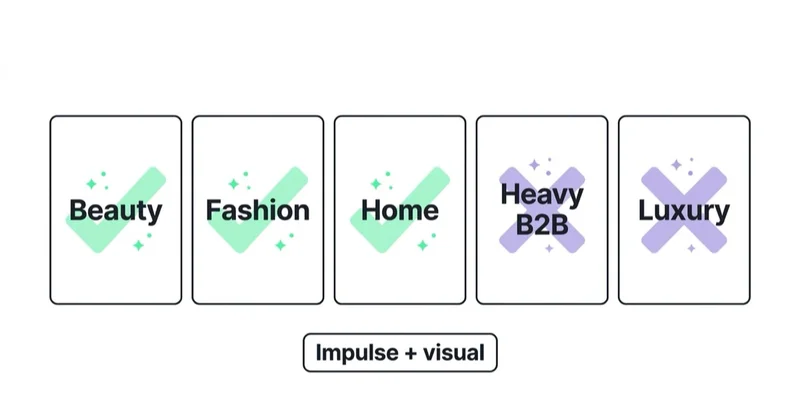
- beauty and skincare;
- fashion and accessories;
- home products;
- gadgets;
- small appliances;
- food and drink where allowed;
- fitness and wellness products where compliant;
- creator-friendly bundles;
- products with clear before-after or demonstration value.
More difficult candidates include:
- highly regulated products;
- products with complex compliance claims;
- very high-ticket items with long consideration cycles;
- products that need deep customization;
- B2B services;
- products with fragile margins after commissions, returns and fulfilment costs.
This does not mean premium or technical products cannot work. It means the content and trust-building burden is higher.
How to prepare for TikTok Shop
1. Check eligibility and market access
Before building a launch plan, confirm:
- whether TikTok Shop is available in the target country;
- whether the business can register locally;
- what documents are required;
- whether the product category is allowed;
- what banking and tax requirements apply;
- whether cross-border selling is allowed and compliant.
Do this before creator outreach or content production. Access assumptions can waste weeks.
2. Prepare product data
Product data should be clean before upload:
- clear product titles;
- accurate descriptions;
- product category;
- variants;
- images and video assets;
- price;
- stock;
- shipping details;
- return rules;
- compliance information;
- product claims and disclaimers where needed.
Bad product data can harm discoverability, trust, ad approval and conversion rate.
3. Build a content engine
TikTok Shop is not a static catalogue. It needs a content pipeline.
Useful formats:
- shoppable demos;
- creator reviews;
- LIVE selling segments;
- product comparisons;
- problem-solution videos;
- FAQs and objection handling;
- unboxing;
- before-after demonstrations;
- comment reply videos;
- bundle or offer explainers.
The product page and video should tell the same story. If the video creates desire but the listing lacks details, conversion suffers.
4. Plan creator and affiliate operations
Decide:
- which products creators should promote;
- commission levels;
- flat-fee options;
- content review rules;
- usage rights;
- product seeding process;
- creator communication rhythm;
- performance thresholds;
- how to handle out-of-stock or discontinued products.
Creator programs often fail because the brand treats them as one-off outreach instead of an operating system.
5. Model the unit economics
TikTok Shop performance should be judged after costs, not only gross sales.
Include:
- product cost;
- shipping;
- returns;
- discounts;
- affiliate commission;
- creator flat fees;
- ad spend;
- platform and payment fees where applicable;
- customer service cost;
- refund and cancellation rates;
- repeat purchase potential.
A high GMV number can still hide weak profit if returns, commissions or shipping costs are too high.
TikTok Shop metrics to track
| Metric | Why it matters |
|---|---|
| GMV | Gross sales volume generated through the shop |
| Net revenue | Sales after cancellations, refunds and discounts |
| Contribution margin | Profit after product, fulfilment, fees, ads and creator costs |
| Conversion rate | How effectively views or visits become purchases |
| Product click-through | Whether shoppable content creates product interest |
| LIVE watch time | Whether live content holds attention |
| Creator sales | Which creators generate useful revenue |
| Return rate | Whether sales quality is healthy |
| Stock-out rate | Whether demand is wasted by inventory issues |
| Repeat purchase | Whether TikTok Shop buyers become valuable customers |
For paid campaigns, also track how TikTok Shop sales affect the wider ecommerce system. Some customers may first discover the product on TikTok Shop and later buy elsewhere, or the opposite.
How we approach this at Space Ads
TikTok Shop glues content to checkout — and that's its whole strength. The shorter the path from "I'm watching" to "I bought", the less time the impulse has to cool, so we set everything up to shorten that distance: shoppable video you can buy from straight away, creator content as the shop window, and where it's available, GMV Max so the system optimises sales across the whole shop. But this only works when the back end is ready: logistics, reviews and the offer itself. At this speed a bad experience scales just as fast as a good one — a wave of returns or weak ratings is enough to turn the channel against the brand. So before we ramp sales, we check whether the shop can even carry the pace TikTok is capable of generating.
Common mistakes
| Mistake | Why it hurts | Better approach |
|---|---|---|
| Treating TikTok Shop like a normal product feed | Social commerce needs content | Build a shoppable video and LIVE plan |
| Launching without creator operations | TikTok Shop often needs creator scale | Plan affiliates, commissions and usage rights |
| Ignoring market availability | Seller access differs by country | Check Seller Center before planning launch |
| Optimising only for GMV | Revenue may not equal profit | Track margin, returns and fees |
| Weak product listings | Video demand does not convert | Improve titles, descriptions, images and trust signals |
| Poor inventory control | Viral demand can create stock problems | Sync stock and plan fulfilment before scale |
| No returns plan | Social commerce can drive impulse purchases | Build clear returns and customer-service workflows |
| Separating TikTok Shop from paid media | Organic, creator and ads affect each other | Connect content, Spark Ads, GMV Max and reporting |
FAQ
What is TikTok Shop?
TikTok Shop is an ecommerce solution integrated within TikTok. It lets sellers, brands and creators sell products directly through TikTok surfaces such as shoppable videos, LIVE shopping and store pages.
How does TikTok Shop work?
A seller adds products through TikTok Shop and Seller Center. Products can appear in videos, live streams, store pages or Showcase. Users can discover and buy products inside TikTok instead of going to an external website.
Is TikTok Shop available everywhere?
No. TikTok Shop is available only in selected markets. Official TikTok documentation lists supported countries and should be checked before planning a launch.
Is TikTok Shop available in the UK and US?
Yes. Official TikTok documentation lists the United Kingdom and the United States among supported TikTok Shop markets.
Is TikTok Shop available in Australia?
The official TikTok Shop and Showcase help page checked for this article does not list Australia among currently available TikTok Shop markets. Australian brands should check Seller Center for the current status and may need to use TikTok Ads to an external site until local shop access is available.
Is TikTok Shop the same as TikTok Ads?
No. TikTok Shop is the ecommerce system. TikTok Ads is the paid media system. They can work together when shop products are promoted through TikTok Shop Ads or GMV Max.
What is GMV Max?
GMV Max is the campaign type TikTok documentation names as the default and only supported campaign type for TikTok Shop Ads beginning July 2025.
Which brands should use TikTok Shop?
Brands with visual products, strong video potential, reliable fulfilment, healthy margins and a plan for creators are usually better candidates than brands with complex, regulated or long-consideration products.
Key takeaways
TikTok Shop is not just a new checkout surface. It is a social commerce operating model where content, creators, products, fulfilment and ads work together. It can shorten the path from discovery to purchase, but only if the brand has the operational foundation to support that demand.
Before launching, confirm market eligibility, prepare product data, build a content engine, plan creator collaboration, set up measurement and model profit after all costs. TikTok Shop can be powerful, but it should be managed as a commerce channel, not only a TikTok feature.
Sources and further reading
- TikTok for Business - Learn how to sell products on TikTok Shop
- TikTok for Business Help Center - About TikTok Shop and Showcase
- TikTok for Business Help Center - How to set up a TikTok Shop in Seller Center
- TikTok for Business Help Center - About TikTok Shop Ads in TikTok Ads Manager
- TikTok for Business Help Center - How to create Video Shopping Ads for TikTok Shop
- TikTok for Business Help Center - How to set up a target collaboration in Seller Center
- Space Ads - TikTok Ads service
Continue learning
Continue reading
TikTok Smart+: When to Hand Over the Campaign
TikTok Smart+ now supports full, partial and manual control across key campaign modules. Learn when automation has enough measurement, budget and creative signal to help—and how to test it without confusing attribution with business value.
How Much Does TikTok Advertising Cost? Budgets, Minimums and CPM in 2026
TikTok advertising has no fixed price, and its technical minimums do not define a useful test. Learn how to budget for media, creative and measurement, calculate qualified CPA and read Spark Ads or GMV Max without confusing attributed GMV with incremental profit.
TikTok GMV Max: What It Is, When to Use It and How to Measure It
TikTok GMV Max is an automated campaign type for TikTok Shop that optimizes toward gross merchandise value and target ROI. This guide explains Product and LIVE GMV Max, readiness requirements, creative inputs, automation risks, measurement and when manual control still matters.