Keyword n-gram analysis breaks search terms into recurring word patterns so Google Ads data becomes easier to interpret. Instead of reviewing thousands of full queries one by one, the analyst can see which single words, two-word phrases or three-word phrases repeatedly generate cost, conversions, revenue or poor intent.
This is especially useful in Search campaigns that use broad match, Smart Bidding, large keyword sets or long-tail queries. The search terms report shows what people searched. N-gram analysis shows which fragments of those searches repeatedly matter.
TL;DR
- An n-gram is a sequence of words: unigram means one word, bigram means two words, trigram means three words.
- In Google Ads, n-gram analysis is usually applied to search terms reports.
- The method helps find negative keyword candidates, profitable query patterns, new ad groups, landing page gaps and content opportunities.
- It is most useful when individual search terms are too fragmented to judge one by one.
- Broad match and Smart Bidding make n-gram review more important because matching is more intent-led and less literal than old exact keyword management.
- N-grams should be interpreted with cost, clicks, conversions, conversion value, margin and intent, not only with frequency.
- A bad n-gram is a hypothesis, not an automatic negative keyword.
- Ecommerce accounts can use n-grams to identify product attributes, model names, sizes, materials, use cases and wasteful modifiers.
What is an n-gram?
An n-gram is a sequence of n consecutive words or tokens.
For the search term:
waterproof hiking boots for women
the n-grams are:
| Type | Examples |
|---|---|
| Unigram | waterproof, hiking, boots, women |
| Bigram | waterproof hiking, hiking boots, boots women |
| Trigram | waterproof hiking boots, hiking boots women |
In PPC work, n-grams are usually extracted from search terms, then grouped and measured. If hundreds of different queries include the same phrase, that phrase can reveal a useful pattern.
Why n-gram analysis matters in Google Ads
Google Ads search term data can be messy. One account may contain thousands of queries, many of them with only a few impressions or clicks. Looking at each full query separately can hide patterns.
N-gram analysis helps answer:
- Which words regularly spend money without converting?
- Which phrases signal strong purchase intent?
- Which product attributes appear in profitable queries?
- Which informational modifiers pull traffic away from the campaign goal?
- Which terms deserve new ad groups or landing pages?
- Which broad match queries are drifting away from the offer?
- Which user language should influence ad copy or SEO content?
The value is pattern detection. A single search term may not have enough data. A repeated fragment across many search terms often does.
Search term vs keyword vs n-gram
| Concept | Meaning |
|---|---|
| Keyword | The keyword or targeting input in the Google Ads account |
| Search term | The actual query typed by the user that triggered the ad |
| N-gram | A word sequence extracted from one or many search terms |
Example:
| Account keyword | Search term | N-grams worth reviewing |
|---|---|---|
| broad match: running shoes | best waterproof running shoes for trails | waterproof, running shoes, trail, waterproof running |
| phrase match: analytics agency | ga4 setup agency for ecommerce | ga4 setup, setup agency, ecommerce |
| broad match: crm software | free crm template spreadsheet | free, template, spreadsheet |
N-gram analysis does not replace search term review. It makes search term review scalable.
When to use keyword n-gram analysis
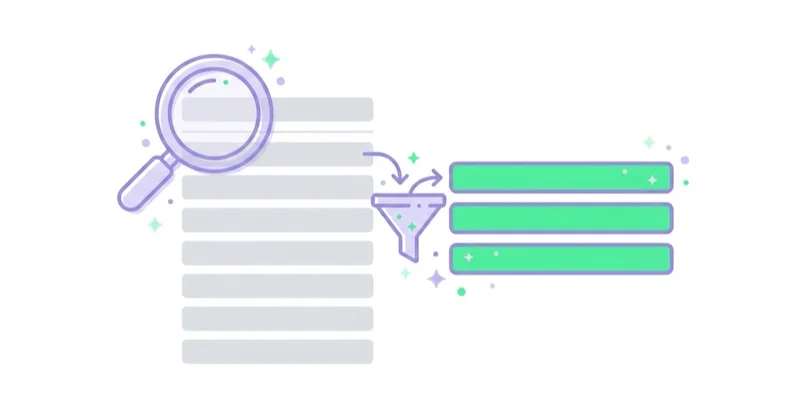
Use it when:
- the account has many long-tail search terms;
- broad match has been added;
- Smart Bidding is expanding into new intent areas;
- search term review takes too long manually;
- spend is spread across many low-volume queries;
- negative keyword management is reactive;
- product attributes are hard to map;
- campaign structure may be too broad;
- landing pages do not match recurring query patterns;
- SEO and PPC teams need shared insight into user language.
It is less useful when the account has very little data, highly controlled exact match only, or a short sales cycle with a small set of known terms.
How to run n-gram analysis step by step
1. Export search term data
Start with the Google Ads search terms report. The export should include at least:
- search term;
- campaign;
- ad group;
- keyword;
- match type;
- cost;
- impressions;
- clicks;
- conversions;
- conversion value;
- date range;
- device where useful;
- final URL or landing page where available.
Use a date range that gives enough volume. For a large account, two to four weeks may be enough. For a smaller account, use a longer period.
2. Clean the text
Before splitting terms, normalize the search text:
- lowercase everything;
- trim extra spaces;
- remove punctuation that does not change meaning;
- decide whether numbers matter;
- keep product model numbers when they matter;
- keep terms like "without", "near me", "for kids", "for business" because they change intent;
- optionally remove stop words only when they do not change meaning.
Do not over-clean. In PPC, small words can be commercially important. "free", "near", "without", "for", "cheap", "used" and "template" can completely change intent.
3. Generate unigrams, bigrams and trigrams
Start with:
- unigrams for broad waste patterns;
- bigrams for clearer intent;
- trigrams for specific long-tail patterns.
Longer n-grams can be useful in very large accounts, but they quickly become too specific.
4. Aggregate performance metrics
For every n-gram, aggregate:
| Metric | Why it matters |
|---|---|
| Cost | Shows financial exposure |
| Impressions | Shows scale |
| Clicks | Shows traffic volume |
| Conversions | Shows observed outcome |
| Conversion value | Shows revenue or modeled value |
| CPA | Useful for lead generation |
| ROAS | Useful for ecommerce |
| Query count | Shows how often the pattern appears |
| Campaign/ad group spread | Shows whether the issue is local or account-wide |
Do not judge by cost alone. A high-cost n-gram may be profitable. A low-cost n-gram can still be dangerous if it appears early in a new broad match test and clearly has the wrong intent.
5. Interpret intent
The key question is: does this n-gram match the campaign's intended audience and business goal?
Examples:
| N-gram pattern | Possible interpretation |
|---|---|
| free template | likely poor for paid software lead campaigns |
| near me | useful for local services, irrelevant for national SaaS |
| wholesale | strong for B2B, poor for DTC retail |
| repair | good for service campaigns, weak for product sales |
| reviews | mid-funnel research, may need different landing page |
| price | commercial investigation, often worth testing |
| for kids | important product attribute if category supports it |
N-gram output needs human judgement. A spreadsheet can surface the pattern; it cannot decide business fit alone.
How n-grams help with negative keywords
Negative keywords are the most obvious use case, but they require care.
Before adding a negative keyword, check:
- Does the n-gram always signal irrelevant intent?
- Does it appear in converting queries?
- Should it be excluded at account, campaign or ad group level?
- Should the negative be broad, phrase or exact?
- Could it block profitable long-tail queries?
- Does the campaign need a different landing page instead?
- Is the issue actually a weak ad message or poor audience fit?
Example:
If "free" appears across many costly non-converting B2B SaaS queries, it may be a negative candidate. But if the business offers a free trial and "free trial" converts well, excluding "free" broadly could damage performance.
How n-grams help find growth opportunities
N-gram analysis is not only for cutting waste.
High-performing n-grams can suggest:
- new exact or phrase keywords;
- new ad groups;
- better responsive search ad assets;
- landing page sections;
- FAQ content;
- product category copy;
- SEO article ideas;
- feed title improvements;
- demand generation angles;
- audience segmentation.
Example:
If the phrase "for small business" appears in profitable queries, that may justify ad copy, landing page copy and SEO content built around small-business use cases.
N-grams and broad match
Broad match has become more intent-led and works closely with Smart Bidding. It can consider signals beyond the literal keyword, including landing page relevance and expected performance. That makes monitoring search terms and patterns important.
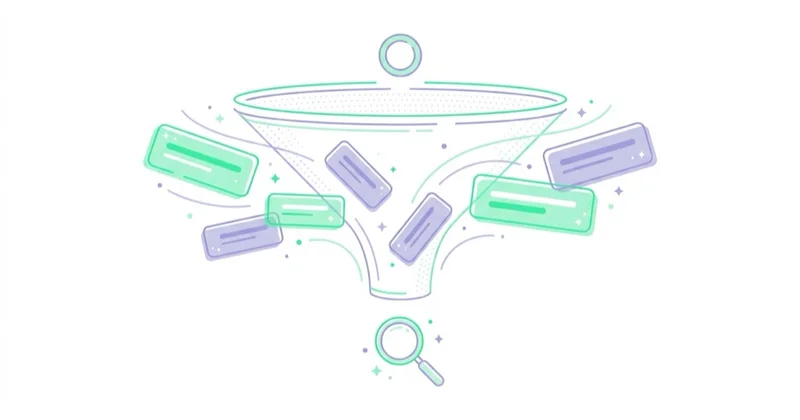
N-gram analysis helps identify whether broad match is:
- finding valuable adjacent demand;
- drifting into weak informational queries;
- mixing B2B and B2C intent;
- overreaching into competitor or job-seeker searches;
- discovering product attributes worth expanding;
- spending on terms that need negative keywords.
Broad match should not be managed with fear, but it should not be left unreviewed.
N-grams and Smart Bidding
Smart Bidding can optimize toward conversion goals, but it can only learn from the signals and conversions available. If conversion tracking is weak or all leads are treated equally, the system may optimize toward volume rather than quality.
Use n-gram analysis to check whether converted search patterns reflect real business value.
For lead generation, compare n-grams against:
- qualified leads;
- sales accepted leads;
- booked calls;
- opportunities;
- closed deals;
- spam or low-quality forms.
For ecommerce, compare against:
- revenue;
- margin;
- return rate;
- product category;
- new customer rate;
- repeat purchase potential.
This is where n-grams become more strategic than a negative keyword list.
Ecommerce use cases
Ecommerce accounts can use n-grams to reveal product demand patterns.
Common useful n-grams:
- brand names;
- model numbers;
- sizes;
- colours;
- materials;
- use cases;
- compatibility terms;
- gender or age segments;
- price modifiers;
- "near me" or local availability;
- delivery terms;
- condition terms such as used, refurbished or outlet.
Examples:
| Pattern | Possible action |
|---|---|
| "waterproof" performs well | Add product attributes to feed titles and page copy |
| "cheap" spends with low margin | Review bids, negatives or offer positioning |
| model numbers convert | Build more granular ad groups or Shopping segmentation |
| "for kids" appears often | Add category filters and copy |
| "used" is irrelevant | Consider negative keywords if only new products are sold |
For product-led campaigns, connect n-grams with feed quality and Shopping structure. See Google Shopping campaigns.
Service and B2B use cases
For services and B2B, n-grams often reveal decision-stage and qualification issues.

Useful patterns:
- "agency" vs "software";
- "consultant" vs "course";
- "jobs" or "salary";
- "free";
- "template";
- "near me";
- industry names;
- company size;
- location;
- compliance terms;
- integration names;
- urgent phrases such as "same day" or "emergency".
These patterns can determine whether the campaign needs negatives, better ad copy, clearer landing pages or separate campaigns by intent.
Tools for n-gram analysis
The simplest setup is a spreadsheet:
- Export search terms.
- Split query strings into words.
- Generate n-grams.
- Aggregate metrics with pivot tables.
- Review patterns manually.
For larger accounts, use:
- Google Ads Scripts;
- Google Ads API;
- BigQuery;
- Python;
- Looker Studio;
- internal PPC tooling;
- spreadsheet automation.
For bulk workflows and account management, Google Ads Editor and Google Ads API can support larger optimization processes.
Review workflow
Use a simple decision framework:
| Finding | Action |
|---|---|
| High cost, no value, wrong intent | Negative keyword candidate |
| High cost, no value, right intent | Landing page, offer or bid review |
| High value, repeated pattern | New keyword, ad group or landing page |
| Mixed performance | Segment by campaign, device or audience |
| Informational pattern | SEO/content opportunity or separate funnel campaign |
| Competitor pattern | Strategic decision, not automatic exclusion |
Document the decision. Future reviewers should know why a negative was added or why a profitable n-gram became a new campaign theme.
How we approach this at Space Ads
On a large account the search-terms report is too long to read line by line — individual queries appear once and lead nowhere. So we break it into n-grams: single words and pairs, then total cost and conversions around each fragment. Only then do the patterns the raw list hides surface — one word can quietly burn budget across hundreds of queries while looking harmless in every single one. Anything that costs steadily and doesn't sell goes on the negative list; the fragments that do convert earn their own tighter ad groups. We rerun it on a cycle, because customers' wording shifts faster than most accounts react.
Common mistakes
| Mistake | Impact | Better approach |
|---|---|---|
| Acting on tiny samples | Random results drive decisions | Use thresholds and review confidence |
| Excluding single words too broadly | Valuable queries get blocked | Check context and match type |
| Looking only at unigrams | Intent remains vague | Review bigrams and trigrams too |
| Ignoring conversion value | Cheap leads or sales look better than they are | Use value, margin or qualified lead data |
| Treating n-grams as automatic actions | Bad negatives and over-optimization | Treat them as hypotheses |
| Mixing brand and generic data | Patterns become misleading | Segment before interpreting |
| Ignoring landing pages | Search terms get blamed for page mismatch | Review post-click experience |
FAQ
What is keyword n-gram analysis?
Keyword n-gram analysis breaks search terms into recurring word sequences and aggregates performance metrics for those sequences. It helps identify useful and wasteful query patterns.
What is a unigram, bigram and trigram?
A unigram is one word, a bigram is two consecutive words and a trigram is three consecutive words from a search term or text string.
Is n-gram analysis only for Google Ads?
No. It can be used in SEO, content analysis, site search, product search and customer feedback. In PPC, it is most often used with Google Ads search terms.
How often should n-gram analysis be done?
For small accounts, monthly review may be enough. For larger accounts, broad match tests or high-spend campaigns, weekly or biweekly review can be useful.
Can n-grams be used in Performance Max?
Performance Max provides less raw query detail than standard Search campaigns. N-grams are most useful in Search, but lessons from Search terms can still inform PMax search themes, feed strategy, asset groups and landing pages.
Should every bad n-gram become a negative keyword?
No. First check context, sample size, conversion quality and match type. Some n-grams are better handled with landing page changes, ad copy, campaign segmentation or bid strategy review.
What data is needed for n-gram analysis?
At minimum, use search term, cost, clicks and conversions. For better decisions, include conversion value, campaign, ad group, keyword, match type, device and downstream lead or revenue quality.
Conclusion
Keyword n-gram analysis turns messy search term data into patterns that can be acted on. It helps reduce wasted spend, find profitable intent, improve landing pages and share PPC insight with SEO and content teams.
The best use of n-grams is disciplined. They should guide questions, not replace judgement. A strong process combines search term data, business context, conversion quality, landing page review and careful negative keyword decisions.
We apply n-gram analysis and trim unprofitable queries in the ongoing optimisation of Google Ads campaigns.
Sources and further reading
- Google Ads Help: About the search terms report
- Google Ads Help: About search terms insights
- Google Ads Help: About keyword matching options
- Google Ads Help: About negative keywords
- Google Ads Help: Using scripts to make automated changes
- Google Ads API: keyword_view
Continue learning
Continue reading

Negative Keywords in Google Ads: Cut Wasted Spend
Negative keywords in Google Ads prevent ads from entering auctions for irrelevant, low-intent or unprofitable searches. This guide explains negative match types, search terms analysis, account-level lists, Performance Max limits, over-blocking risk and a practical review workflow.
Google Ads Editor: What It Is and How to Use It
Google Ads Editor is a free desktop app for offline editing, bulk changes and campaign builds. Learn when to use it, how the workflow works and how to post changes safely.
What Are Sponsored Links and How to Use Them?
Sponsored links are paid search ads shown near organic results, but their performance depends on intent, query quality, ad relevance, landing pages and measurement. This guide explains how sponsored links differ from SEO, when to use them, how to launch them in Google Ads and how to judge results by leads, sales, value and margin rather than clicks.