Gemini Ad Formats: When the Ad Is Generated, Not Written
Google is testing and announcing Gemini-powered ad experiences across AI Mode and Search. Learn what each format does, what remains uncertain and how to prepare data, content and measurement.
Guides from real Google Ads account work: campaign structure, Search, Shopping, Performance Max, Demand Gen, Smart Bidding, Merchant Center and AI automation. We show how to scale sales without burning margin and how to understand the changes Google keeps shipping.

Google is testing and announcing Gemini-powered ad experiences across AI Mode and Search. Learn what each format does, what remains uncertain and how to prepare data, content and measurement.

A useful Google Ads experiment starts with a decision, an effect worth detecting and enough statistical power. Learn how to choose the test, split, metric and interpretation.

A Google Ads suspension requires evidence, not panic. Learn how suspension differs from a hold or pause, what the strike system covers and how to diagnose and appeal safely.

Choose a Google Ads agency by verifying diagnosis, measurement, account access, commercial understanding and operating discipline—not by comparing badges, promises or dashboards.

Google Ads management connects measurement, campaigns, creative, product data and budget to a commercial goal. Learn what belongs in scope, how fees work and how to compare proposals.

Google Keyword Planner estimates demand and advertising costs for Search campaigns. Learn the current workflows, exact meaning of each metric and a practical validation process.

A current guide to Google Local Services Ads and pay-per-lead Performance Max: eligibility, Google Verified, screening, billing, ranking, lead credits, migration and measurement beyond raw leads.

Google Ads benchmarks can provide context, but only when the campaign type, market, conversion action, attribution and time period match. Learn how to make a valid comparison and turn it into a useful decision.

Google Ads Change history shows many account edits, their timing and the user or tool responsible. Learn what the log can verify, what it cannot, and how to review agency decisions without rewarding busywork.

A practical 90-day Google Ads launch plan: define the economics, validate measurement, launch the right campaign mix, and scale only after the data is mature enough to support the decision.

Lowering CPC in Google Ads should not mean buying cheaper, weaker traffic. This guide explains how to reduce cost per useful click through relevance, search term control, Quality Score diagnostics, long-tail intent, landing pages and bidding strategy without hurting conversions.

If Google Ads are getting clicks but not conversions, do not start by changing bids. Diagnose the issue in order: tracking, conversion value, search intent, landing page, offer, Smart Bidding signals, campaign settings and lead or ecommerce quality.

Google Ads has no fixed price. You set the budget, while the auction determines actual CPC, CPM or CPV based on competition, bid, ad quality, context and campaign type. This guide explains pricing, budgets, CPA math and the full cost of running Google Ads.

If Google Ads receives gross revenue as conversion value, value-based bidding optimises toward gross revenue. For ecommerce stores with different product margins, a value closer to gross margin or contribution margin can give Shopping and Performance Max a better signal.

Returns, cancellations and partial refunds change the real value of ecommerce orders after the purchase. If Google Ads only sees gross revenue from the conversion day, campaigns can optimise toward products that look efficient before returns but weak after them.

Performance Max and Standard Shopping can both advertise Merchant Center products, but they give very different levels of automation, control and reporting. This guide explains when to use PMax, when to use Standard Shopping and when both can work together.

Google Ad Grants gives eligible nonprofits up to $10,000 per month in Search ad credit, but performance depends on eligibility, website quality, account compliance, conversion tracking and mission-focused keywords.

Negative keywords in Google Ads prevent ads from entering auctions for irrelevant, low-intent or unprofitable searches. This guide explains negative match types, search terms analysis, account-level lists, Performance Max limits, over-blocking risk and a practical review workflow.

Custom labels let ecommerce teams segment Merchant Center products by margin, season, stock, bestseller status, lifecycle and return risk. Used well, custom_label_0-4 make Shopping, Performance Max and Demand Gen easier to report, filter and optimise by business priority.

Google Ads Smart Bidding uses auction-time AI to optimize for conversions or conversion value. This guide explains Maximize Conversions, Target CPA, Maximize Conversion Value, Target ROAS, 2026 naming changes, data thresholds and common bidding failures.

GTIN, brand, MPN and identifier_exists help Google understand the exact product in Merchant Center. This guide explains when to send a GTIN, when to use brand and MPN, when identifier_exists should be set to no and why a store SKU is not a GTIN.

Merchant Center disapprovals usually come from a mismatch between the feed, product page, price, availability, identifiers, images, shipping or Google policy requirements. This guide shows how to diagnose the issue, prioritise fixes by business impact and restore Shopping or Performance Max eligibility.

Paid user acquisition for mobile games and apps is built around events, creative testing, privacy-era attribution and payback. Here is how to structure Google App campaigns, Meta app promotion and the measurement layer behind them.

For a Shopify store, Google Shopping performance is decided before the campaign launches: Merchant Center setup, product feed quality, margin-aware conversion values and the right split between Standard Shopping and Performance Max.

Local Services Ads are Google's pay-per-lead format for eligible local service businesses. The current trust badge is Google Verified, and performance depends on screening, profile quality, responsiveness and booked-job economics.

A raw model is useful for reasoning, not for unrestricted account changes. The article lays out the control layer a team needs around AI work: data access, proposed edits, approval rules, budget limits and logs.

Google's AI and third-party AI tools solve different problems. This guide draws the line between platform automation that already controls bidding and creative assembly, and external control layers that audit, explain, propose changes and help teams govern execution.

For a small paid-search shop, quality drops when review rhythm, naming, ownership and client updates live in someone's head. This guide turns multi-client work into a repeatable weekly system before headcount becomes the only scaling lever.

Use this to evaluate PPC software after the old bid-management era. It explains why agencies now need cross-account standards, anomaly detection, reporting, workflow and AI-assisted change review more than another interface for manual bid tweaks.

Google Merchant Center MCP usually means Google's official MAPI Docs MCP: a documentation assistant for Merchant API developers, not a tool for editing product feeds. This guide explains where official support stops, when custom integration is needed and how to use AI around catalogue data, diagnostics and controlled writes without putting feed quality at risk.

Google Ads MCP is Google's official open-source server for reading Google Ads data through the API and GAQL. This guide explains how to use it for audits, ad-hoc reports and campaign diagnostics, and where MCP stops before specialist review, API automation, Editor work or a controlled change process begins.

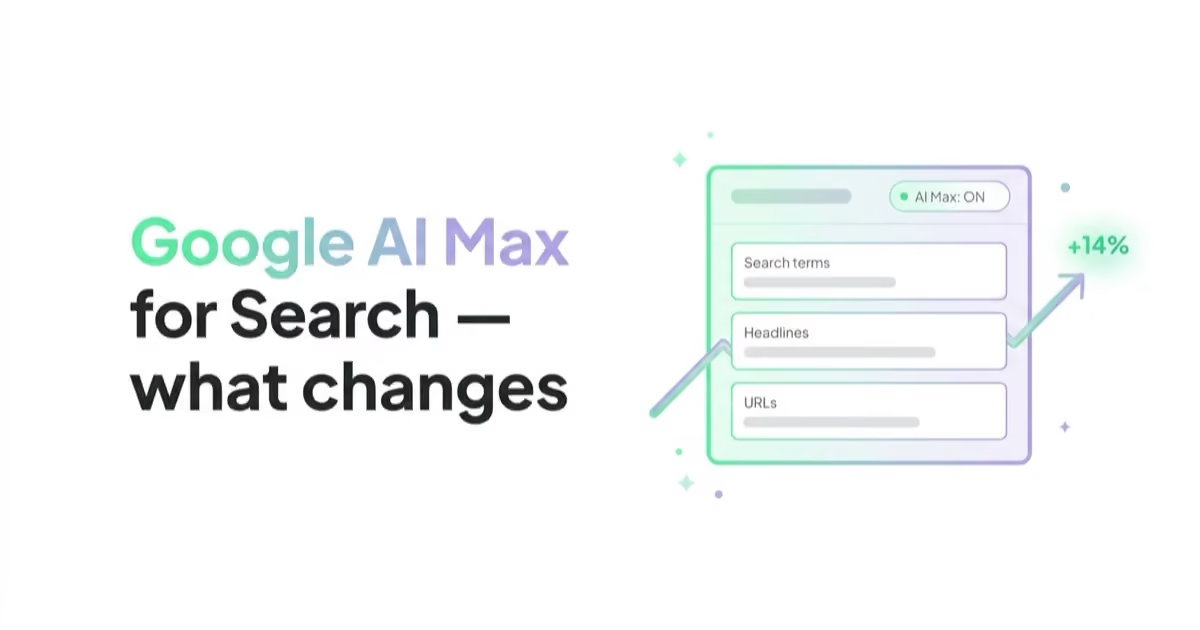
A practical guide to Google AI Max for Search campaigns: what it changes, how keywordless matching, URL expansion and text customisation work, and how to test it without losing control.

A Google Ads audit should show whether spend, conversion data, account structure, search demand, Merchant Center quality and landing pages support the actual business goal. This guide explains how to turn tracking gaps, wasted queries and Performance Max risks into a prioritised roadmap, not a list of generic settings.

Google Merchant Center is the product data hub behind Shopping ads, Performance Max, free listings and product-rich Google experiences.

Dynamic Search Ads use website content to match searches, generate headlines and choose landing pages. In 2026, DSA strategy should focus on AI Max migration and URL control.

Google Ads keyword match types control how search queries match keywords. Learn broad, phrase, exact, negatives, Smart Bidding, campaign structure and search term workflows.

A keyword matrix turns keyword research into an execution map for SEO, PPC, content and AI search: intent, clusters, target URLs, business value, status and ownership. This guide explains how to use it to prevent cannibalization, plan pages, align paid search with organic demand and prioritise work by revenue or lead impact.

Keyword n-gram analysis breaks Google Ads search terms into recurring word patterns to find wasted spend, profitable intent, negatives and landing page ideas.

Programmatic campaigns automate digital media buying across display, video, CTV, audio and more. Learn when they make sense, how buying models work and what risks to control.

RTB is automated auction-based buying of individual ad impressions. Performance depends on inventory quality, supply paths, privacy signals, creative, frequency and measurement.

Performance Max is a goal-based Google Ads campaign type powered by Google AI, but its results depend on inputs: conversion quality, values, assets, feeds, landing pages and business rules. This guide explains when to use PMax, how to structure ecommerce and lead generation campaigns, and how to measure performance beyond one blended ROAS number.

Google remarketing re-engages people who already interacted with a website, app, YouTube channel, product or customer list, but warm-audience ROAS can be misleading. This guide explains how your data segments, GA4 audiences, Customer Match, exclusions, consent and incrementality checks should work together.

Google PLA, now usually called Shopping ads, use Merchant Center product data to show product images, titles, prices and store details. Learn how feed quality, PMax, Standard Shopping and profitability measurement work.

Dynamic remarketing personalizes ads using previous behavior and a feed or catalog. Learn how product IDs, events, Google Ads, Meta catalog ads, exclusions and measurement work together.

Demand Gen campaigns create demand across Google visual surfaces such as YouTube, Discover, Gmail, GDN and other eligible placements. Learn how Demand Gen differs from Search, PMax and Display, and how to launch it.

Google Ads Editor is a free desktop app for offline editing, bulk changes and campaign builds. Learn when to use it, how the workflow works and how to post changes safely.

Quality Score is a 1-10 keyword-level diagnostic for Search campaigns. Use it to find relevance, CTR and landing page issues, not as a standalone KPI.

Enhanced Conversions improve Google Ads measurement with hashed first-party data. Setup needs clean data, consent alignment, correct conversion hierarchy and diagnostics.

Customer Match lets Google Ads use first-party customer lists for remarketing, exclusions and supported audience workflows. Learn how matching, consent, match rate and segmentation work.

Google Ads API lets teams manage Google Ads through code: automate reporting, connect business data, upload conversions, audit accounts and manage many accounts at scale.