Brand awareness is the extent to which the right audience recognizes, remembers and associates a brand with a specific category, problem or buying situation. A strong brand awareness campaign does not only generate reach. It builds mental availability: the brand is easier to recall when a person starts comparing options, searching for a solution, asking peers, reading reviews or responding to ads.
Brand awareness matters because performance marketing works better when people already know the brand, trust the category promise and understand why the offer is relevant. It is not a replacement for sales campaigns, SEO, conversion rate optimization or product quality. It is the layer that makes those activities easier to believe, easier to click and easier to remember.
TL;DR
- Brand awareness is not the same as impressions. Reach creates the opportunity to be remembered; consistent messaging creates memory.
- Recognition and recall are different. Recognition means the audience has seen the brand before; recall means the brand comes to mind in a relevant buying situation.
- Awareness supports performance. It can improve branded search demand, click-through confidence, remarketing quality, direct traffic and sales conversations.
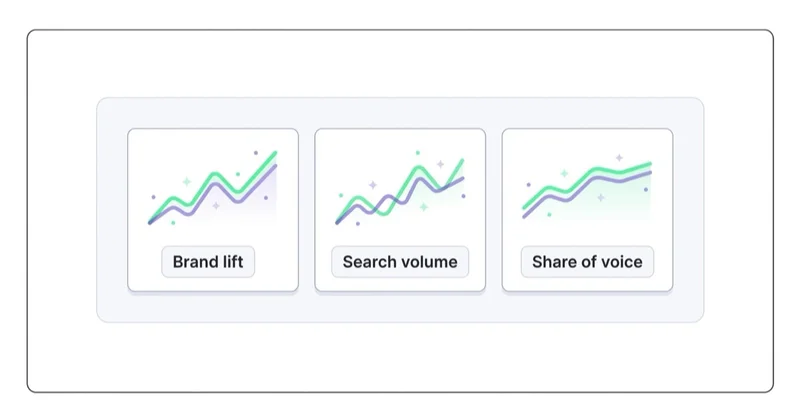
- Brand campaigns need different KPIs. Short-term ROAS is usually too narrow for awareness. Better signals include brand lift, ad recall, reach, frequency, share of search, branded search volume, direct traffic and assisted demand.
- Creative consistency matters. The same positioning, visual codes, proof points and category message should repeat across channels.
- Meta, YouTube, Demand Gen, PR, SEO, creators and events can all build awareness. The right mix depends on audience attention, budget, market maturity and sales cycle.
- E-commerce and B2B need different playbooks. A store may focus on trust, repeat exposure and branded product searches; B2B may need authority, founder visibility, category education and sales enablement.
- AI search raises the bar for brand authority. Helpful, sourced, experience-led content and third-party mentions make a brand easier to understand across both search engines and answer engines.
What brand awareness means
Brand awareness describes how familiar a target audience is with a brand and what they associate with it. The strongest awareness is not just name recognition. It is a clear connection between the brand and a category need.
A person may know a logo but still not know when to use the product. That is weak awareness. A stronger version looks like this:
- the person recognizes the brand name or visual identity;
- the person understands the category or problem the brand solves;
- the person remembers a distinctive feature, promise or proof point;
- the person trusts the brand more than an unknown alternative;
- the person searches for the brand, visits directly or returns after earlier exposure;
- the person includes the brand in a shortlist before speaking to sales or comparing prices.
This is why brand awareness should be tied to category entry points: moments when a buyer begins to feel a need. For a coffee brand, that may be morning routine, office supplies or gifts. For a SaaS product, it may be a workflow problem, audit, budget cycle or competitor comparison. For an agency, it may be a moment when paid media results plateau and the team needs external expertise.
Brand recognition vs brand recall
Brand awareness has two useful layers.
| Layer | Meaning | Example | Why it matters |
|---|---|---|---|
| Brand recognition | The audience recognizes the brand when they see it | A person sees the logo and remembers seeing it before | Helps ads, listings, emails and social posts feel familiar |
| Brand recall | The audience can name the brand without seeing it first | A person thinks of the brand when searching for a solution | Helps branded search, direct visits, referrals and shortlist inclusion |
Recognition is easier to build because it can come from repeated exposure. Recall is harder because the brand has to occupy a useful place in memory. Strong campaigns usually need both: distinctive assets for recognition and clear positioning for recall.
Why brand awareness matters
It makes performance marketing less fragile
A campaign that reaches people who already know the brand has an easier job than a campaign that must explain everything from zero. Familiarity can support click confidence, product page trust, form completion and sales conversations.
That does not mean brand awareness automatically reduces CAC or increases ROAS. The impact depends on the offer, category, creative quality, landing page, pricing, competitive set and measurement window. The safer claim is that awareness creates a better environment for performance channels to work.
It creates demand before people search
Search captures demand that already exists. Brand building helps create or shape that demand before the search happens. This is especially important in categories where buyers do not know the correct terms yet or where competitors bid on the same high-intent keywords.
A brand that has educated the market earlier may be searched by name later. This is why branded search volume, branded Search Console queries and direct traffic are useful signals for awareness, even though they are not perfect proof of incrementality.
It reduces trust friction
Unknown brands need more proof. Known brands can often earn attention faster because the audience has already seen reviews, founder content, case studies, creators, ads, PR or educational material.
Trust is especially important in expensive, risky or complex categories: B2B software, finance, health, legal services, enterprise agencies, high-AOV e-commerce and products with long consideration cycles.
It supports SEO and answer-engine visibility
Modern organic visibility is not only about publishing more pages. Google recommends people-first content, clear sourcing, evidence of expertise and trust signals. That overlaps with good brand building: useful content, visible authorship, real examples, proof, reviews, case studies and consistent topical authority.
For AI search and answer engines, the same logic applies. A brand is easier to understand when its expertise appears consistently across its own site and trusted third-party sources. An llms.txt file can make important pages easier to discover by some crawlers, but it is not a guarantee of AI citations. The stronger play is to publish clear, sourced, original and repeatedly referenced content.
When a brand awareness campaign is worth running
A brand awareness campaign makes sense when at least one of these situations is true:
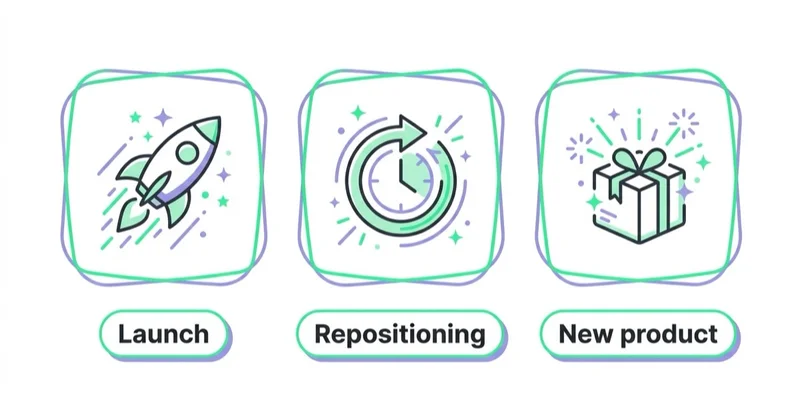
- the category is competitive and performance channels are becoming more expensive;
- the business needs more branded search demand;
- the product is new and people do not understand the category yet;
- buyers research for weeks or months before converting;
- the brand has strong customer proof but weak visibility;
- the company is entering a new market;
- the offer is premium and needs trust before price comparison;
- sales teams hear that prospects do not know the brand;
- paid media is over-dependent on retargeting and existing demand;
- competitors are more memorable even when the product is not stronger.
Awareness is less urgent when the business has no clear positioning, no proof, no conversion tracking, weak product-market fit or a landing page that cannot explain the offer. In that case, better messaging and conversion foundations should come first.
How to build a brand awareness campaign
1. Define the memory the campaign should create
The campaign should not start with a channel. It should start with the association the brand wants to own.
Useful prompts:
- What buying situation should trigger memory of the brand?
- What problem should the audience associate with the brand?
- What phrase, visual cue, category or proof point should repeat?
- What should the audience believe after seeing the campaign several times?
- What should be remembered even if the person does not click?
A campaign that tries to say everything usually builds nothing durable. One clear association repeated across formats is stronger than ten unrelated messages.
2. Choose the audience and category entry points
Brand awareness is broad, but it should not be random. The campaign should define who needs to remember the brand and in which context.
For e-commerce, category entry points may include:
- seasonal buying moments;
- gift occasions;
- product replacement cycles;
- lifestyle goals;
- product problems;
- comparison moments;
- first purchase vs repeat purchase.
For B2B, they may include:
- budget planning;
- platform migration;
- team growth;
- audit findings;
- poor results from the current vendor;
- new regulation;
- board pressure;
- a competitor change.
The campaign message should connect the brand to those moments, not only describe product features.
3. Build distinctive creative assets
Distinctive assets make a brand easier to recognize. They can include:
- logo and name usage;
- colors;
- typography;
- sound or sonic branding;
- founder or expert presence;
- recurring visual style;
- product demonstration format;
- slogan or repeated phrase;
- packaging;
- characters, rituals or repeated scenes.
The goal is not to make every ad identical. The goal is to make every ad recognizably from the same brand while allowing the message and format to adapt to the channel.
4. Match channels to attention
Different channels build awareness in different ways.
| Channel | Best role | What to watch |
|---|---|---|
| YouTube and video ads | Reach, storytelling, product explanation, brand lift testing | Creative quality, audience fit, frequency, completion, lift metrics |
| Meta Ads | Repeated exposure on Facebook, Instagram and Messenger; broad reach; creator-style content | Fatigue, frequency, creative distinctiveness, audience quality |
| TikTok and short-form video | Discovery, product demonstration, creator-native formats | Hook quality, native feel, comment sentiment, creative refresh |
| Demand Gen | Visual demand creation across Google surfaces | Asset quality, audience signals, assisted demand, branded search movement |
| SEO and content | Category education and long-term authority | Helpful content, search intent, E-E-A-T, internal links, content refreshes |
| PR and earned media | Third-party credibility and wider category association | Relevance of outlets, message consistency, referral quality, branded search lift |
| Creators and influencers | Trust transfer and authentic product context | Audience fit, usage rights, disclosure, creative control, repeated partnerships |
| Podcasts, webinars and events | Deep attention, B2B trust and expert positioning | Lead quality, audience overlap, sales feedback, content reuse |
| Display and programmatic | Reinforcement, reach and reminder layers | Viewability, placements, frequency, brand safety, creative simplicity |
The strongest plan usually combines channels with different roles. For example, content can educate, video can create memory, Meta can repeat the message, PR can validate it, and Search can capture the later demand.
5. Set a realistic measurement window
Brand campaigns should not be judged after a few days of ROAS data. Many people who become aware of a brand do not immediately click, search or buy. A campaign needs enough time and repeated exposure for memory to form.
For most practical campaigns, use a minimum measurement window of several weeks. For larger brand programs, track movement over quarters. Short-term signals can still be useful, but they should be interpreted as leading indicators rather than final proof.
Brand awareness measurement
Good measurement combines platform data, search data, site data, surveys and business feedback.
| Metric | What it shows | Limitation |
|---|---|---|
| Reach | How many unique people saw the campaign | Reach alone does not prove memory |
| Frequency | How often people saw the ad | Too much frequency can create fatigue |
| Video completion or view rate | Whether people stayed with the creative | Views do not guarantee brand recall |
| Brand Lift | Survey-based lift in ad recall, awareness, consideration or association | Not available for every account or budget |
| Branded search volume | Whether more people search for the brand | Can be affected by PR, seasonality and other channels |
| Share of search | Brand search demand compared with category competitors | Requires careful keyword selection |
| Direct traffic | More people arriving without a tagged referral | Can be distorted by tracking and privacy limits |
| Returning users or customers | Repeat interest and loyalty | Needs clean analytics and CRM data |
| Social mentions and sentiment | Whether the brand is discussed and how | Volume can be noisy or low quality |
| Sales feedback | Whether prospects recognize the brand | Qualitative and sometimes inconsistent |
Google's Brand Lift is one example of direct awareness measurement. It can measure outcomes such as ad recall, brand association, brand awareness and consideration for eligible video and Demand Gen campaigns. Google also notes that Brand Lift is not available for every Google Ads account and may require a Google account representative.
Google's media effectiveness guidance also warns against measuring awareness only with short-term actions such as site visits, search queries or sales. Awareness is about creating memory of the brand in relation to a category, so measurement should match that objective.
Brand awareness on Meta Ads
Meta Ads can support awareness because Facebook and Instagram create repeated visual contact. The awareness objective is designed for goals such as increasing brand awareness, reaching as many people as possible in an audience, changing perception or sharing videos with people likely to watch.
A practical Meta awareness setup usually needs:
- one clear audience or broad market definition;
- a small set of distinctive creative concepts;
- frequency monitoring;
- simple message repetition;
- consistent brand assets;
- landing pages or profiles that continue the same promise;
- a measurement plan beyond clicks.
For e-commerce, Meta awareness can support product discovery, seasonal launches, category education and trust-building before retargeting. For B2B, Meta can work when the creative is specific enough to qualify the right audience, but LinkedIn, podcasts, newsletters or search content may carry more authority depending on the market.
Brand awareness with YouTube, CTV and video
Video is useful because it can show product use, customer context, founder credibility and emotional cues faster than text or static display. YouTube, connected TV and video campaigns can be particularly relevant when the audience needs to understand what the brand does before they search.
Google's Reach Planner can help plan reach and frequency across YouTube, Google video partners and TV scenarios in supported markets. It provides forecasts, not guaranteed results, so it should guide planning rather than replace campaign measurement.
Good brand video usually follows a simple rule: make the brand visible early, connect it to one category need, then repeat a memorable proof point. If the brand only appears at the end, many viewers may remember the story but not the advertiser.
Brand awareness through content and SEO
Content builds awareness when it helps the audience solve recurring problems and repeatedly connects those problems with the brand's expertise.
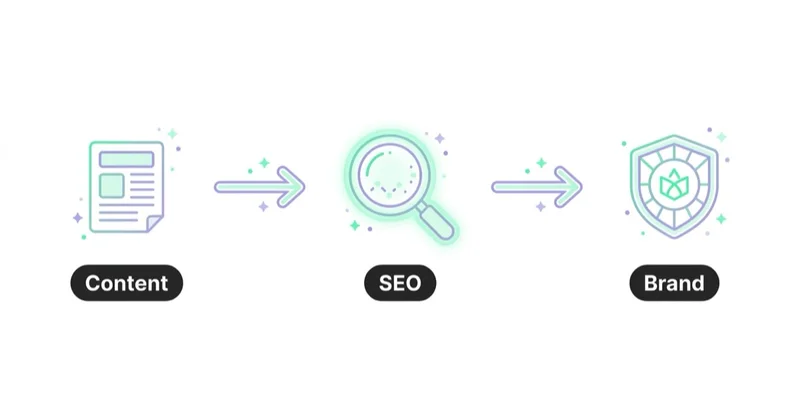
Useful formats include:
- definitive guides;
- comparison pages;
- research summaries;
- glossary pages;
- case studies;
- founder or expert POV articles;
- industry playbooks;
- templates and checklists;
- problem-led landing pages;
- video explainers reused as articles and social clips.
This is where SEO, LLM SEO and AEO overlap. A strong page should answer the question clearly, show evidence, use structured headings, include sources, link to related resources and reflect real experience. It should not exist only to rank for a keyword.
For answer engines, concise definitions, comparison tables, FAQs and source-backed claims make content easier to extract and summarize. For users, the same structure makes the page faster to scan and more useful.
Brand awareness in e-commerce
In e-commerce, awareness often affects the moment of comparison. When two stores sell similar products at similar prices, the known and trusted brand has an advantage.
Important awareness levers for online stores:
- recognizable product photography and packaging;
- reviews and user-generated content;
- creator demonstrations;
- repeated Meta, TikTok and YouTube exposure;
- category SEO and gift guides;
- clear delivery, returns and guarantee messaging;
- email and SMS retention;
- loyalty programs;
- branded search protection;
- consistent product feed titles and brand naming.
Measurement should connect media signals with commercial signals: branded search, direct revenue, new customer share, repeat purchase rate, email list growth, MER, contribution margin and customer lifetime value. ROAS from one campaign is too narrow to explain whether the brand is becoming easier to choose.
Brand awareness in B2B and services
B2B awareness is often slower and more valuable than consumer awareness because buying cycles are longer and more people influence the decision. A prospect may see content for months before a form is submitted.
Strong B2B awareness usually comes from:
- expert content;
- webinars;
- podcasts;
- LinkedIn thought leadership;
- case studies;
- reports;
- conference visibility;
- newsletter sponsorships;
- founder-led commentary;
- search visibility for problem and comparison queries;
- sales enablement materials that repeat the same positioning.
The goal is to be remembered before the RFP, audit, vendor review or budget conversation begins. Measurement should include branded search, direct demo requests, assisted pipeline, sales-call recognition, content engagement from target accounts and CRM source quality.
How we approach this at Space Ads
Awareness, for us, is a multiplier on results with concrete, measurable mechanics. The better known a brand is, the more people search it by name, the higher the CTR across every ad, and the more easily warm traffic closes, so the same budget simply buys more. We build it deliberately — consistent creative, broad reach — and measure it concretely, by branded-search volume and direct traffic rather than a vague "awareness survey". As recognition rises, paid efficiency follows. A brand that only harvests existing demand and never builds it watches costs climb in silence, because the in-market pool runs dry and you're bidding for an ever-smaller group at an ever-higher price. Awareness and performance aren't separate worlds; one gets cheaper as the other grows.
Common mistakes
| Mistake | Why it hurts | Better approach |
|---|---|---|
| Measuring brand only by ROAS | Awareness often creates delayed or indirect effects | Use lift, reach, frequency, branded search and assisted demand |
| Changing the message too often | Memory does not have time to form | Repeat one clear association across channels |
| Treating reach as success | People can be reached and still remember nothing | Measure recall, brand search and engagement quality |
| Hiding the brand until the end | The viewer may remember the story but not the advertiser | Show brand assets early and naturally |
| Copying performance creative | Direct-response ads often lack distinctiveness | Build assets for memory, not only clicks |
| Running channels in isolation | The audience receives fragmented messages | Use one positioning system across paid, organic and sales |
| Ignoring proof | Awareness without trust is weak | Use reviews, case studies, expert evidence and real examples |
| Over-indexing on e-commerce logic | B2B, local and services need different buying-context cues | Match the campaign to sales cycle and decision process |
FAQ
What is brand awareness in simple terms?
Brand awareness means the right audience knows the brand, recognizes it and can connect it with a relevant category, problem or buying situation.
Is brand awareness the same as reach?
No. Reach is the number of people exposed to a campaign. Awareness is what remains in memory after exposure. Reach is a media input; awareness is a market outcome.
How long does brand awareness take to build?
There is no universal timeline. Directional signals may appear within weeks, but stronger market-level movement usually needs consistent messaging over months. The timing depends on budget, category, creative quality, media mix and existing brand strength.
How is brand awareness measured?
Useful measurements include brand lift surveys, ad recall, reach, frequency, branded search volume, share of search, direct traffic, social mentions, returning customers, assisted conversions and sales feedback.
Does brand awareness help SEO?
It can support SEO indirectly when more people search for the brand, engage with content, mention it, link to it or trust it. SEO still requires helpful content, technical quality, relevance and authority.
Does brand awareness help paid ads?
Often, yes, but not automatically. Familiar brands can be easier to click and trust, but campaign performance still depends on targeting, offer, creative, landing page, measurement and competition.
Should small businesses invest in brand awareness?
Yes, but proportionally. Small businesses can build awareness through focused content, reviews, local visibility, founder-led expertise, social proof, partnerships and consistent creative rather than expensive mass-media campaigns.
What is the best channel for brand awareness?
There is no single best channel. YouTube and CTV can create reach and memory, Meta and TikTok can repeat visual exposure, SEO can build category authority, PR can add credibility, and creators can transfer trust. The best channel is the one where the target audience pays attention.
Is brand awareness important for e-commerce?
Yes. It can support product discovery, trust, branded search, repeat purchases and higher confidence at checkout. It is especially important when products are similar, switching costs are low or the store is not yet widely known.
Is brand awareness important for B2B?
Yes. Many B2B buyers research before speaking to sales. A brand that is already known, trusted and associated with a specific problem is more likely to make the shortlist.
Key takeaways
Brand awareness is not a vanity layer. It is the work of making a brand easier to recognize, remember and trust in the moments that matter. It should be planned with the same discipline as performance marketing, but judged with metrics that match the job.
A strong campaign starts with one clear association, repeats it through distinctive creative assets, chooses channels based on attention and measures both memory and business movement. The best results usually come when brand and performance are connected: brand creates demand, performance captures it, content explains it, and measurement keeps the whole system honest.
Sources and further reading
- Google Ads Help - About Brand Lift
- Think with Google - Media Effectiveness Guide
- Google Ads Help - About TV in Reach Planner
- Google Search Central - Creating helpful, reliable, people-first content
- Meta for Business - Awareness ad objective
Continue learning
Continue reading
Meta Advantage+ vs Manual Campaigns: When to Trust the Automation
Meta Advantage+ can automate audience expansion, placements and budget allocation, while manual settings preserve selected controls. This guide explains what each label actually means and how to test the right configuration for a business goal.
What Is a Brand Awareness Campaign and How to Plan It?
A brand awareness campaign builds recognition, trust and demand. Learn how to plan positioning, creative, frequency, channels and measurement.
What Is Brand Marketing and How to Use It?
Brand marketing builds recognition, trust, memory and preference so a company is easier to choose when buyers enter the market.