A brand awareness campaign is a planned set of advertising and communication activities designed to increase recognition, trust and associations with a brand. It does not always aim to generate an immediate purchase after the first click. Its job is to prepare the market, build memory and make later sales, lead generation, recruitment or product launches easier.
Brand campaigns are often misunderstood because they are judged like direct response campaigns. That creates bad decisions. A brand campaign can support sales, but it should not be measured only by last-click ROAS. It should be measured by reach quality, frequency, recall, branded demand, consideration, audience growth and downstream impact on the funnel.
In 2026, brand campaigns also matter because search and AI answer environments reward brands that are known, trusted, cited and searched for by name. Performance campaigns can capture demand. Brand campaigns help create it.
TL;DR
- A brand awareness campaign builds memory, trust and category associations.
- It should have a business goal, not only a "visibility" goal.
- The main metrics are reach, frequency, ad recall, brand lift, branded search demand, direct traffic, engaged audiences and downstream conversion impact.
- ROAS alone is a poor way to judge top-of-funnel activity.
- A good campaign needs clear positioning, one main message, repeatable creative codes and enough frequency.
- Brand and performance should work together: brand creates demand, performance captures and converts it.
- Ecommerce brand campaigns support launches, premium positioning, branded demand and cheaper remarketing, but do not replace sales campaigns.
- The output should be a plan: audience, message, creative, channels, frequency, measurement and next funnel step.
What is a brand awareness campaign?
A brand awareness campaign is a campaign designed to make a target audience know, remember and associate a brand with a relevant need or category.
It can support:
- a new brand launch;
- a new product launch;
- market entry;
- repositioning;
- category education;
- trust building;
- employer branding;
- premium positioning;
- event promotion;
- future sales demand;
- recruitment;
- investor or partner visibility.
The key difference from a sales campaign is timing. A sales campaign asks for action now. A brand campaign increases the chance that the brand will be considered later.
For a broader framework, see brand marketing.
Brand campaign vs performance campaign
| Area | Brand campaign | Performance campaign |
|---|---|---|
| Main role | Create memory and demand | Capture and convert demand |
| Typical funnel stage | Top and middle | Middle and bottom |
| Main metrics | reach, recall, awareness, consideration | CPA, ROAS, leads, purchases |
| Time horizon | medium to long term | short to medium term |
| Creative style | distinctive, memorable, repeated | offer-led, intent-led, conversion-led |
| Risk | hard to measure with last click | can overfocus on existing demand |
Both are needed in mature growth systems. Performance without brand can become expensive because the business keeps competing only for people already in-market. Brand without performance can create attention that is never converted.
When does a brand awareness campaign make sense?
Consider a brand campaign when:
- the brand is new or unknown;
- competitors have stronger recognition;
- the category needs education;
- the product has a long decision cycle;
- trust is a key buying factor;
- the business is entering a new market;
- a new collection or product line is launching;
- direct response campaigns are becoming more expensive;
- branded search volume is weak;
- remarketing audiences are too small;
- sales teams hear "we have never heard of you";
- the brand needs repositioning.
Brand campaigns should still have a commercial reason. "More awareness" is not enough. The better goal is "build awareness among a specific audience before a launch", "increase consideration in a high-value category" or "grow branded demand before peak season".
Core elements of a strong brand campaign
1. Positioning
Define what the brand should be remembered for.
Questions:
- What category should the brand be associated with?
- What problem does the brand solve?
- What is the audience supposed to remember?
- What makes the brand credible?
- What is the emotional or rational territory?
- Which associations should be avoided?
A campaign without positioning often becomes a set of nice visuals that nobody remembers.
2. One main message
Brand campaigns need repetition. Too many messages weaken memory.
The message should be:
- simple;
- ownable;
- connected to the category;
- repeated across channels;
- understandable without deep product knowledge;
- supported by creative assets.
If the campaign needs five explanations before it makes sense, it is probably too complicated.
3. Distinctive brand assets
A brand campaign should build recognisable assets.
These can include:
- logo use;
- colour system;
- type style;
- character or spokesperson;
- product shape;
- sonic cue;
- tagline;
- recurring visual frame;
- repeated offer language;
- category phrase.
Distinctiveness helps users recognise the brand later even when they do not click immediately.
4. Audience definition
The audience should not be "everyone".
Define:
- current buyers;
- potential buyers;
- category users;
- category non-users;
- decision makers;
- influencers;
- geographic markets;
- job roles;
- interests or behaviours;
- lookalike or first-party audience logic;
- exclusion groups.
Brand campaigns need enough scale, but not meaningless reach.
5. Frequency planning
One impression rarely builds memory.
Frequency depends on category, creative strength, channel, budget and campaign duration. The audit question is not whether the campaign reached many people once. It is whether the right people saw a consistent message enough times to remember it.
Too little frequency creates no memory. Too much frequency with weak creative creates fatigue.
Channels for brand awareness campaigns
Brand campaigns can use many channels:
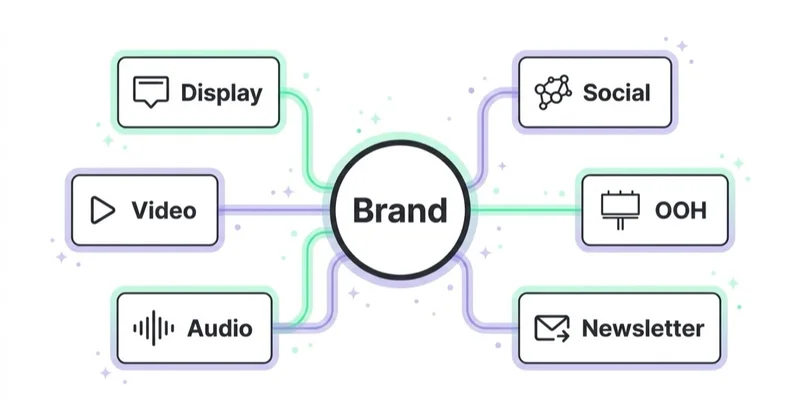
- Meta Ads;
- YouTube;
- TikTok;
- Demand Gen;
- Display and programmatic;
- podcasts;
- influencer campaigns;
- PR;
- content partnerships;
- outdoor;
- connected TV;
- events;
- organic social;
- SEO content;
- email to existing audiences.
The channel choice should follow the audience and message. A B2B category education campaign may use LinkedIn, YouTube, webinars and search-led content. A fashion launch may use Meta, TikTok, creators, email and product-led landing pages.
Brand campaigns in Meta Ads
Meta Ads can work well for brand campaigns when the goal is:
- broad reach;
- visual storytelling;
- video distribution;
- creator-style creative testing;
- engaged audience building;
- remarketing pool growth;
- Instagram and Facebook coverage;
- frequency control by campaign design.
Useful campaign logic:
- test several creative territories;
- keep the message consistent;
- build engagement and video audiences;
- exclude existing customers where relevant;
- retarget engaged users with consideration or sales messages;
- monitor frequency and creative fatigue.
For account quality and creative analysis, see Facebook Ads audit.
Brand campaigns in Google and YouTube
YouTube is often a strong brand channel because it combines reach, video and measurement options.
Google Brand Lift can measure campaign impact on goals such as ad recall, brand awareness, consideration and other brand metrics. It uses survey-based exposed and control groups where eligible.
Other Google-related signals include:
- branded search volume;
- Google Trends;
- Search Console branded impressions;
- direct traffic;
- YouTube engagement;
- Demand Gen performance;
- video completion;
- assisted conversions;
- remarketing audience growth.
For discovery-style Google advertising, see Demand Gen campaigns.
Creative principles for brand campaigns
Brand creative should be designed for memory.
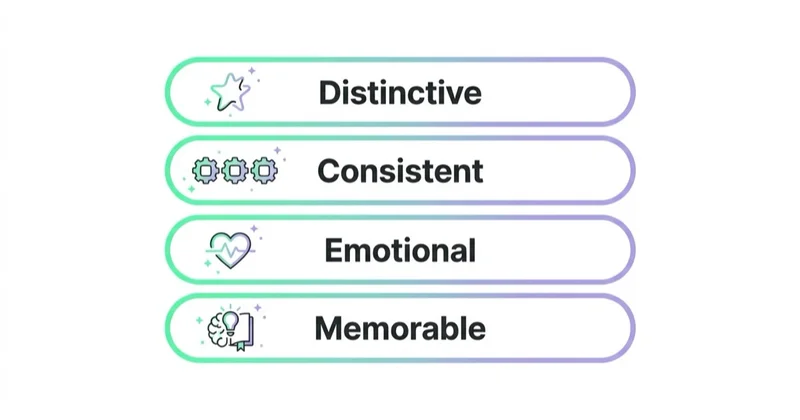
Good brand creative usually has:
- early brand presence;
- one main idea;
- distinctive visual or sound cue;
- clear category connection;
- emotional or practical relevance;
- native channel format;
- short versions for social;
- longer versions where attention allows;
- repeated assets across formats;
- a simple landing page or next step.
Common mistake: hiding the brand until the final frame. That can work in some storytelling formats, but in many paid social and skippable video contexts the brand needs to appear earlier.
Product video can also support brand memory when it clearly connects the product with the brand. See product videos.
Measuring a brand awareness campaign
Brand campaigns should use a measurement stack, not one metric.
Platform metrics
- reach;
- frequency;
- impressions;
- video views;
- completed views;
- engaged users;
- CPM;
- cost per reached user;
- ad recall estimate where available.
Brand response metrics
- brand lift;
- ad recall;
- awareness;
- consideration;
- favourability;
- purchase intent;
- survey responses;
- search lift where available.
Demand signals
- branded search volume;
- Google Trends;
- Search Console branded queries;
- direct traffic;
- homepage traffic;
- branded paid search impressions;
- social profile searches;
- email signups;
- remarketing audience growth.
Downstream metrics
- lower CPA in remarketing;
- higher branded conversion rate;
- improved assisted conversions;
- more qualified leads;
- higher new customer share;
- better sales team recognition;
- improved organic click-through for brand queries.
No single metric proves everything. The goal is to triangulate.
Why ROAS alone is misleading
ROAS is useful for sales campaigns, but it is often misleading for brand campaigns.
Problems with using only ROAS:
- brand exposure may influence later searches;
- users may convert through organic or direct channels;
- top-of-funnel users may not be ready to buy;
- platforms may undercount or overcount assisted impact;
- short attribution windows miss long consideration cycles;
- premium trust effects are not visible immediately.
Brand campaigns should still be accountable. They just need the right accountability model.
Brand campaigns and AI search visibility
AI-powered search and answer systems increase the importance of brand clarity.
A brand that is searched for, mentioned, cited and associated with a category has more surface area across search and answer environments. A brand campaign can support this indirectly by increasing:
- branded searches;
- direct visits;
- mentions;
- reviews;
- content engagement;
- social discussion;
- creator coverage;
- category association.
This does not mean a brand campaign guarantees visibility in AI answers. It means brand demand and authority are part of the wider discoverability system.
Ecommerce use cases
In ecommerce, a brand campaign can support:
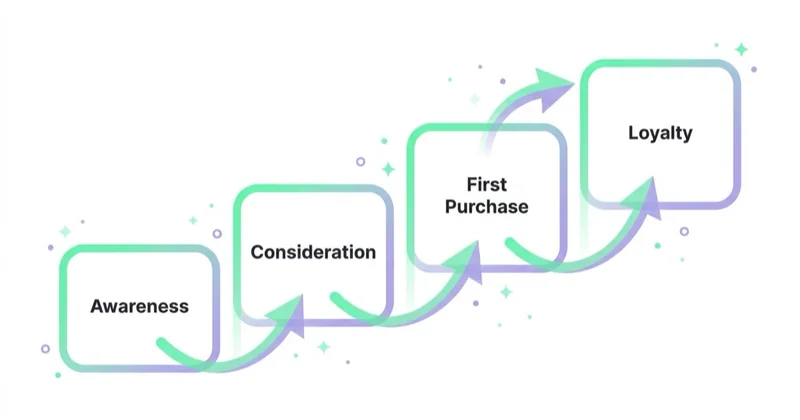
- a new store launch;
- seasonal collection launch;
- premium positioning;
- category education;
- new market entry;
- pre-season demand building;
- trust before high-intent campaigns;
- creator-led product discovery;
- remarketing pool growth;
- branded search growth.
It should not replace Shopping, Performance Max, product SEO, email and remarketing. It should create attention that those channels can later capture.
For sales-side planning, see how to increase online sales.
B2B and service use cases
For B2B and services, brand campaigns can be useful when:
- the sales cycle is long;
- trust matters before contact;
- category education is needed;
- the company enters a new region;
- decision makers are hard to capture with direct search alone;
- recruitment visibility matters;
- events or webinars need audience building;
- the sales team needs stronger recognition.
Measurement may rely more on branded search, direct traffic, content engagement, event registrations, demo quality and sales feedback than immediate purchase data.
30-day campaign planning process
Days 1-5: Strategy
Define audience, category, positioning, key message, business reason and measurement model.
Days 6-10: Creative platform
Create the main idea, visual system, messaging hierarchy and channel-specific formats.
Days 11-15: Media plan
Select channels, targeting, budget split, frequency logic, flight dates and exclusions.
Days 16-20: Tracking and landing experience
Set UTMs, landing pages, video audiences, survey options, branded search baseline and dashboards.
Days 21-30: Launch and learn
Launch, check delivery, watch frequency, review early creative signals and prepare the next funnel step.
How we approach this at Space Ads
A brand campaign earns its place with us only when it can be held accountable; left unmeasured, it slides into spending with no feedback. We don't judge it on last-click cost, because by that yardstick every top-of-funnel effort looks weak and gets switched off. We watch reach and frequency instead, going wide without wearing the same people out, and we read the effect lower down: is branded search rising, are direct visits growing, are the sales campaigns closing more easily? Weeks of awareness work with nothing moving further down the funnel tells us the message is off, not that "brand can't be measured". Awareness is an investment with an expected return, and we hold it to that.
Common mistakes
| Mistake | Impact | Better approach |
|---|---|---|
| Measuring only ROAS | Good brand activity may be killed early | Use brand and demand metrics |
| Too many messages | Low recall | Choose one main association |
| No frequency planning | Reach without memory | Plan repeated exposure |
| Weak branding | People remember the ad, not the brand | Use distinctive assets |
| Channel mismatch | Creative feels unnatural | Design for the channel |
| No next step | Attention is wasted | Connect to content, remarketing or sales |
| Too small budget | No meaningful reach | Match goal to budget reality |
| No baseline | Impact cannot be read | Record branded demand before launch |
FAQ
What is a brand awareness campaign?
A brand awareness campaign is a planned campaign designed to increase recognition, recall, trust and associations with a brand among a defined audience.
Does a brand campaign generate sales?
It can influence sales, but often indirectly. It builds demand, trust and memory that later support search, remarketing, direct visits, leads and purchases.
How should a brand awareness campaign be measured?
Use reach, frequency, video engagement, brand lift, branded search, direct traffic, engaged audiences, assisted conversions and downstream sales indicators.
Is ROAS a good metric for brand campaigns?
ROAS can be a supporting metric, but it should not be the main metric for top-of-funnel brand activity. It misses delayed and assisted effects.
Which channels are best for brand awareness?
The best channel depends on audience and message. Common options include Meta Ads, YouTube, TikTok, Demand Gen, programmatic, PR, creators, podcasts, SEO content and events.
Can small businesses run brand campaigns?
Yes, but the scale and measurement should match the budget. A small business may run a focused local, niche or creator-led brand campaign rather than a broad national campaign.
How long should a brand campaign run?
It should run long enough to reach the right audience with repeated exposure. Short bursts can work for launches, but brand memory usually benefits from consistent repetition.
Conclusion
A brand awareness campaign should make the right audience remember the brand for the right reason. It needs positioning, one main message, distinctive assets, enough frequency, channel-specific creative and a measurement model that goes beyond last-click ROAS.
The best brand campaigns do not sit apart from performance. They create demand that search, remarketing, sales campaigns, SEO, email and direct channels can later capture. That is why brand work should be planned as part of the growth system, not as a decorative media spend.
We plan and run brand-awareness campaigns within Facebook and Instagram ads.
Sources and further reading
- Google Ads Help: About Brand Lift
- Google Ads Help: Set up Brand Lift
- Nielsen: Brand Lift solutions
- Nielsen: Viewability and brand lift
- Search Engine Land: Share of Search
Continue learning
Continue reading
What Is Brand Marketing and How to Use It?
Brand marketing builds recognition, trust, memory and preference so a company is easier to choose when buyers enter the market.
Why Brand Awareness Matters and How to Build a Successful Campaign
Brand awareness is not only reach. Learn how to build recognition and recall, choose channels, measure brand lift and branded demand, and connect awareness with performance marketing.
Why Your Meta Ads Stopped Working (and How to Diagnose It)
When Meta performance changes, diagnose the affected layer before editing campaigns. This guide covers delivery status, billing, event quality, funnel metrics, activity history, creative, offer, website and controlled recovery.