Brand marketing builds the meaning, memory, trust and preference that make a company easier to choose when a buyer enters the market. It is not limited to logos, colours or slogans. Strong brand marketing shapes what people associate with the company, when they remember it and why they believe it is a safer or better choice than alternatives.
Brand marketing does not replace performance marketing. It improves the conditions in which performance marketing operates. A familiar, trusted and distinctive brand often needs less explanation, faces less skepticism and can convert demand more efficiently over time.
TL;DR
- Brand marketing builds recognition, trust, associations, preference and future demand.
- It is different from performance marketing, but the two should work together.
- Brand activity usually has a longer measurement horizon than direct-response campaigns.
- The often-cited 60/40 brand-to-activation idea from Binet and Field is a useful starting point, not a universal budget rule.
- The main brand assets are positioning, distinctiveness, promise, proof, consistency, distribution and customer experience.
- Brand marketing can support SEO, AI Search visibility, paid media efficiency, direct traffic, referrals and sales trust.
- Ecommerce brands need brand trust because unknown stores face more risk during checkout.
- B2B brands need brand trust because buying committees reduce risk by choosing companies that feel credible and familiar.
What is brand marketing?
Brand marketing is the long-term work of making a company meaningful, recognizable and preferred in a category.
It answers questions such as:
- What should the brand be known for?
- Who should remember it?
- Which buying situations should trigger it?
- What promise does it make?
- What proof supports that promise?
- What makes it distinctive?
- How should it sound, look and behave?
- How does the customer experience reinforce the brand?
The goal is to increase the probability that the brand comes to mind and feels credible when someone needs the product, service or solution.
A practical brand marketing question is: when the buyer finally needs a solution, what should make this brand easier to remember and safer to choose?
Brand marketing vs performance marketing
| Area | Brand marketing | Performance marketing |
|---|---|---|
| Main goal | Build memory, trust and preference | Generate immediate actions |
| Time horizon | Medium to long term | Short to medium term |
| Typical metrics | awareness, branded search, direct traffic, share of search, brand lift, NPS | CPA, ROAS, leads, purchases, conversion rate |
| Creative style | distinctive, emotional, memorable, broad | specific, offer-led, intent-led, measurable |
| Audience | Often broader category buyers | Often in-market or high-intent users |
| Risk | Harder attribution | Over-optimization for short-term demand |
The tension is not "brand or performance". The real question is how to balance future demand creation with current demand capture.
Brand building and sales activation
Les Binet and Peter Field's work for the IPA is often summarized through the "long and short" distinction:
- long-term brand building creates mental availability and future demand;
- short-term sales activation converts people who are closer to buying.
The 60/40 split between brand building and activation is often cited as a rough benchmark for many categories. It should not be copied mechanically. The right balance depends on category, budget, brand maturity, purchase cycle, margins, competition and current demand.
For example:
- a new brand may need more brand-building investment;
- a direct-response ecommerce brand may initially need more activation;
- a mature brand with high awareness may shift differently by market;
- B2B with a long sales cycle may need sustained trust-building;
- seasonal businesses may vary by calendar.
The principle matters more than the exact ratio: short-term conversion and long-term brand memory need different work.
The core elements of brand marketing
1. Positioning
Positioning defines where the brand sits in the customer's mind.
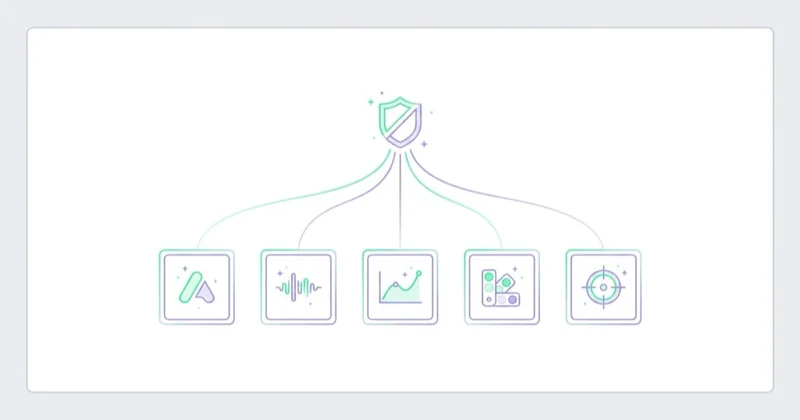
A useful positioning statement clarifies:
- audience;
- category;
- problem;
- main value;
- differentiation;
- proof;
- emotional or practical reason to choose.
Weak positioning is vague: "high quality service for everyone." Strong positioning is specific enough to guide creative, content, product and sales.
A simple positioning template:
For [audience] who need [problem solved], [brand] is the [category] that provides [main value], because [proof or differentiator].
Example:
| Weak | Stronger |
|---|---|
| We are a marketing agency for every business | For ecommerce and lead-generation brands that already spend on paid media, Space Ads is a performance marketing partner that connects Google, Meta, TikTok and analytics with business outcomes |
| We sell premium shoes | For hikers who need durable footwear for wet conditions, the brand offers reinforced waterproof boots tested for long routes |
The stronger version gives creative, SEO, sales and performance teams a clearer direction.
2. Distinctive brand assets
Distinctive assets make the brand easier to recognize.
Examples:
- name;
- logo;
- colours;
- typography;
- visual style;
- sound or sonic assets;
- character or spokesperson;
- tagline;
- packaging;
- repeated format;
- product design;
- content structure.
Distinctiveness is not decoration. It reduces the mental work required to identify the brand across ads, search results, social posts, emails and customer touchpoints.
Useful distinctive asset checklist:
- is the asset recognisable without the logo;
- can it be repeated across channels;
- is it legally usable and ownable;
- does it fit the category without becoming generic;
- can it work in small mobile placements;
- can it be used in video, static, email and landing pages;
- will the team keep using it long enough to build memory.
Changing assets too often usually slows brand building.
3. Brand promise
A brand promise states what customers can expect.
It should be:
- clear;
- relevant;
- differentiated;
- believable;
- deliverable;
- supported by experience.
Generic claims such as "best quality" or "customer-first" are weak unless backed by proof, process and consistent behavior.
4. Proof
Brand trust needs evidence.
Proof can include:
- case studies;
- testimonials;
- reviews;
- certifications;
- product demonstrations;
- expert profiles;
- client logos where allowed;
- transparent pricing or process;
- awards;
- data;
- before-and-after examples;
- public documentation;
- customer stories.
Proof is especially important in B2B, healthcare, finance, software, professional services and higher-value ecommerce.
5. Consistency
Brand memory needs repetition. Changing the message, tone, visual system and promise every campaign makes the brand harder to remember.
Consistency should not mean boring repetition. It means the audience can recognize the brand even when the campaign idea changes.
6. Distribution
A brand is not built only by creating a strategy deck. It needs reach and repeated exposure in places where the audience spends attention.
Possible channels:
- YouTube;
- podcasts;
- social media;
- organic search;
- thought leadership;
- PR;
- newsletters;
- events;
- creator partnerships;
- display and video campaigns;
- communities;
- customer education;
- out-of-home;
- sales conversations.
Channel choice should depend on category and buying behaviour, not trend pressure.
Small companies do not need every brand channel at once. A focused system can be enough: a clear website, consistent expert content, reviews, case studies, email, social proof and a few paid distribution tests. Consistency usually beats scattered presence.
Brand marketing in the AI Search era
AI-assisted discovery changes how people research brands. A buyer may see the brand in search results, ask an AI system for options, watch social proof, read reviews, compare competitors and only then visit the website.
Brand marketing now supports:
- branded search demand;
- entity recognition;
- mentions across credible sources;
- expert content;
- customer reviews;
- consistent positioning;
- helpful educational content;
- source-backed authority;
- community discussion;
- direct traffic and referral memory.
This is where brand, SEO and content strategy overlap. For practical content foundations, see inbound marketing and SEO audit guide.

Brand marketing for B2B
B2B brand marketing reduces perceived risk.
Buying committees often ask:
- Is this company credible?
- Has it solved this problem before?
- Will it still exist in three years?
- Can it support implementation?
- Is it safe to recommend internally?
- Does it understand our market?
- Will choosing it damage reputation if the project fails?
B2B brand assets include:
- case studies;
- founder or expert visibility;
- webinars;
- category thought leadership;
- analyst or partner recognition;
- product documentation;
- comparison content;
- customer proof;
- event presence;
- sales enablement content.
The goal is to make the brand easier to shortlist before the buyer is ready to speak to sales.
Brand marketing for ecommerce
In ecommerce, brand trust reduces purchase hesitation.
Customers ask:
- Is this store real?
- Will delivery happen on time?
- Can the product be returned?
- Are reviews believable?
- Does the product look like the photos?
- Is payment safe?
- Is the product worth the price?
Brand marketing appears in:
- product photography;
- packaging;
- reviews;
- return policy;
- email tone;
- customer service;
- product guides;
- social proof;
- creator content;
- post-purchase experience;
- loyalty programs;
- delivery communication.
For ecommerce, brand is not only the campaign. It is the entire buying experience.
Brand and performance should share strategy
Performance marketing often captures existing demand. Brand marketing helps create and increase future demand.
They should share:
- audience research;
- positioning;
- messaging hierarchy;
- creative assets;
- landing page strategy;
- measurement assumptions;
- offer clarity;
- customer insights;
- analytics and CRM feedback.
Paid campaigns can amplify brand assets. Brand campaigns can improve search demand, click-through rates, conversion confidence and remarketing quality.
For budget planning, see marketing budget planning.
How to measure brand marketing
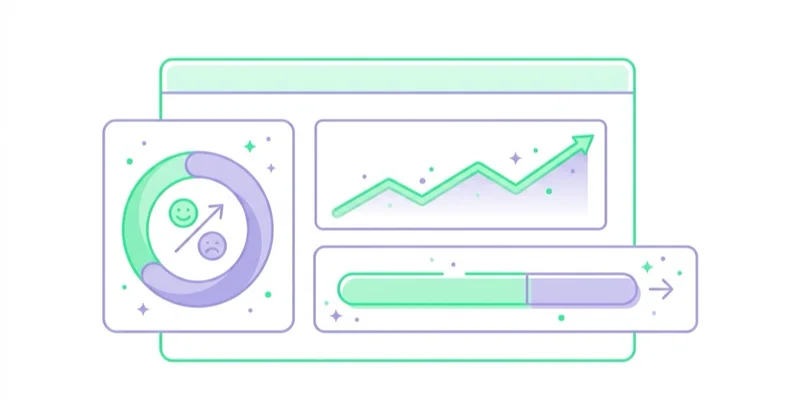
Brand measurement needs a longer horizon and multiple signals.
Useful metrics:
- branded search volume;
- direct traffic;
- share of search;
- brand lift;
- ad recall;
- awareness surveys;
- consideration surveys;
- preference surveys;
- NPS;
- social mentions;
- sentiment;
- referral traffic;
- repeat purchase rate;
- customer lifetime value;
- returning customer share;
- sales win rate;
- pipeline velocity;
- branded conversion rate;
- performance efficiency after brand exposure.
No single metric proves brand impact. The best approach is to track a group of leading and lagging indicators.
90-day brand marketing plan
Days 1-15: Diagnosis
Review customer interviews, sales objections, reviews, competitors, category language, brand assets, search demand, website clarity and campaign messages.
Days 16-30: Positioning
Define audience, category, promise, proof, differentiation and messaging hierarchy.
Days 31-45: Asset system
Create or refine visual, verbal and proof assets: case studies, brand story, product demonstrations, key claims, testimonials and reusable creative formats.
Days 46-70: Distribution
Choose channels based on audience behaviour. Test video, social, content, PR, newsletter, paid reach or creator partnerships depending on the category.
Days 71-90: Measurement and alignment
Track branded search, direct traffic, engagement, reach, assisted conversions, sales feedback and performance changes. Connect brand learning with paid search, social and sales teams.
How we approach this at Space Ads
Brand and performance aren't two budgets fighting over the same money. A brand is an asset that, over time, makes all of performance cheaper: a known brand earns higher CTR, cheaper clicks, more branded search, and closes warm traffic more easily. So we measure brand marketing by its effect on the average cost of winning a customer over months, not by a single "awareness" figure that looks nice and decides nothing. The classic mistake is raiding the brand budget to top up performance: it helps for a quarter, then quietly raises the cost of everything, because the pool of cold traffic only grows and gets dearer. The two are sides of one equation, each making the other cheaper, which is why we read them together rather than apart.
Common brand marketing mistakes
| Mistake | Impact | Better approach |
|---|---|---|
| Treating brand as logo only | Strategy stays shallow | Define positioning, promise and proof |
| Changing message every campaign | Memory does not build | Keep distinctive assets consistent |
| No proof | Claims feel generic | Add case studies, reviews and demonstrations |
| Measuring only short-term ROAS | Brand work gets undervalued | Use longer-horizon metrics |
| Separating brand from customer experience | Campaign promises are not delivered | Align product, service and support |
| Ignoring performance data | Brand becomes disconnected | Use search, CRM and conversion insights |
| Over-targeting only in-market buyers | Future demand is missed | Reach broader category buyers where sensible |
FAQ
What is brand marketing?
Brand marketing is the work of building recognition, meaning, trust and preference so a brand is easier to remember and choose in relevant buying situations.
Is brand marketing the same as branding?
No. Branding often refers to identity elements such as name, logo, design and tone. Brand marketing uses those assets to build market memory, trust and demand over time.
Is brand marketing measurable?
Yes, but not only through last-click ROAS. Measure branded search, direct traffic, awareness, consideration, brand lift, repeat purchase, NPS, share of search, pipeline quality and performance changes over time.
Does brand marketing work for small companies?
Yes. Small companies can build brand through specialization, consistency, expert content, customer proof, reviews, founder visibility and a reliable customer experience.
Does brand marketing replace performance marketing?
No. Brand marketing builds future demand and trust. Performance marketing captures demand and drives measurable actions. They work best when aligned.
What is the 60/40 rule in marketing?
The 60/40 idea is a rough guideline from Binet and Field's effectiveness work suggesting many brands benefit from balancing long-term brand building with short-term activation. It is not a universal rule for every company.
Why does brand matter in B2B?
B2B buyers reduce risk by choosing credible, familiar and trusted vendors. Brand helps a company enter the shortlist before a formal sales conversation begins.
Can brand marketing help paid ads?
Yes. Stronger brand recognition can improve trust, click confidence, landing-page conversion and remarketing quality. Paid ads still need good targeting, creative and measurement, but brand makes the audience less cold.
What should a small company do first?
Start with positioning, proof and consistency. Clarify who the brand is for, what promise it makes, what evidence supports it, and which few assets should be repeated across the website, ads, content and sales conversations.
Conclusion
Brand marketing builds the conditions that make future selling easier: memory, trust, preference and credibility. It is slower to measure than a conversion campaign, but it can make performance marketing, SEO, sales and retention work better.
The strongest strategies do not choose between brand and performance. They use brand to create demand and reduce risk, then use performance to capture intent and learn from the market.
Sources and further reading
- IPA: The Long and the Short of It
- Kantar: What role does brand play in the consumer decision journey?
- Kantar: What is brand equity?
- Google Search Central: Creating helpful, reliable, people-first content
- Google Ads Help: About video ad formats
Continue learning
Continue reading
What Is Performance Marketing? (And How It Differs From Growth and Brand)
Performance marketing connects media investment with measurable business outcomes and improves those outcomes through continuous testing. Learn how it works, which channels it covers, how to measure it beyond platform ROAS and how it complements growth and brand marketing.
What Is Storytelling in Marketing and How to Use It?
Storytelling in marketing uses narrative structure to explain a customer problem, transformation and result. Learn how to use it in ads, landing pages, ecommerce, B2B and case studies.

What Is the 7Ps Marketing Mix?
The 7Ps marketing mix expands the classic 4Ps with People, Process and Physical Evidence. Learn how to use it to audit offer, price, channels, trust and customer experience.