Content marketing is a long-term strategy of creating and distributing useful, relevant content that helps a clearly defined audience solve problems, make decisions and build trust with a brand. In 2026, strong content marketing is no longer just "writing blog posts for SEO". It combines audience research, topic clusters, expert insight, distribution, conversion paths, content refresh and readiness for AI-assisted search.

TL;DR
- Content marketing builds trust before the sales conversation. It helps people understand problems, compare options and reduce risk.
- SEO is only one part of the system. A strong program also includes distribution, newsletters, video, social, sales enablement, case studies and content updates.
- AI has raised the quality bar. Generic summaries are easy to produce, so original experience, specific examples and clear sourcing matter more.
- E-E-A-T is not a template. Experience, expertise, authoritativeness and trust have to be visible through useful detail, accurate claims, author context, sources and practical judgment.
- Content should be built in clusters. One isolated article rarely creates authority; connected guides, definitions, comparisons, FAQs and service pages work better.
- The best content has a job. Some pages create demand, some capture search intent, some support sales, some reduce objections and some help existing customers.
- E-commerce is only one use case. Content marketing also works for B2B, SaaS, professional services, local businesses and complex lead generation.
What content marketing means
The Content Marketing Institute defines content marketing as a strategic approach focused on creating and distributing valuable, relevant and consistent content to attract and retain a clearly defined audience and ultimately drive profitable customer action.
That definition is still useful because it separates content marketing from random publishing. Content marketing is not just posting because a calendar has empty slots. It is a business system that uses content to help an audience move from uncertainty to trust and from trust to action.
Good content marketing usually does at least one of these jobs:
- explains a problem better than the audience could explain it alone;
- helps compare possible solutions;
- teaches how to use a product, service, method or framework;
- reduces perceived risk before a purchase or enquiry;
- proves expertise through examples, data, process or lived experience;
- supports sales teams with useful assets;
- creates long-term organic visibility;
- earns mentions, links, newsletter subscribers or community trust.
Content can be a blog article, video, newsletter, podcast, webinar, case study, landing page, interactive tool, guide, checklist, comparison page, glossary entry, report or documentation page. The format matters less than the job it performs.
Content marketing vs SEO, copywriting and advertising
These terms overlap, but they are not the same.
| Discipline | Main job | Typical output |
|---|---|---|
| Content marketing | Build trust, demand and education over time | Articles, guides, videos, webinars, newsletters, case studies |
| SEO | Help content become discoverable in search and understandable to crawlers | Keyword strategy, technical improvements, internal links, schema, content structure |
| Copywriting | Persuade a reader to take a specific action | Ads, landing pages, product copy, email subject lines, CTAs |
| Paid advertising | Buy distribution and capture or create demand quickly | Google Ads, Meta Ads, TikTok Ads, sponsored posts, paid content amplification |
| Brand marketing | Build memory, preference and meaning around the company | Campaigns, narratives, distinctive assets, thought leadership |
Mature marketing teams do not choose only one. Paid ads can distribute content. Content can improve landing-page conversion. SEO can identify demand. Copywriting can turn that demand into action. Brand marketing can make every channel work harder.
Why content marketing matters more in 2026
The content environment has become more competitive, not easier.
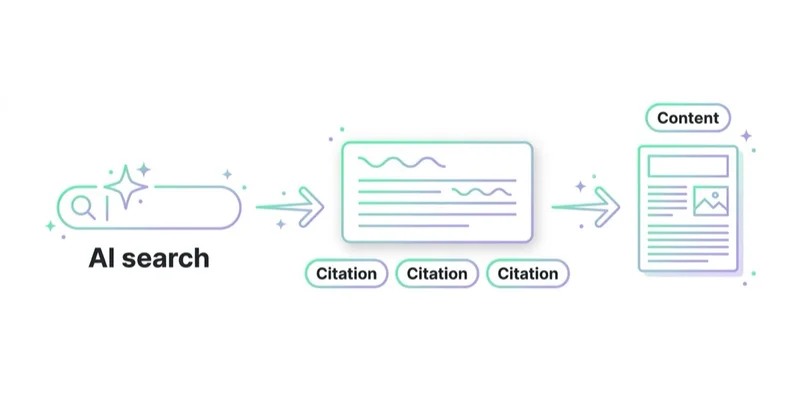
Generative AI made average content cheaper. It also made average content less differentiated. Search results, social feeds and AI answer systems are filled with summaries that sound correct but do not add much. In that environment, content that shows first-hand understanding, clear trade-offs and practical examples is more valuable.
Google's own guidance is consistent with this direction: content should be helpful, reliable and made primarily for people, not produced mainly to manipulate rankings. Google also says useful content is one of the most important influences on a site's presence in search results. That does not remove SEO work; it means SEO has to support genuinely useful content.
AI-assisted search adds another layer. Google AI Overviews, AI Mode, ChatGPT, Perplexity, Gemini and other answer engines often summarize topics before a user clicks. Content therefore has to be easy to parse, clearly structured and trustworthy enough to be cited or used as a source. Thin articles that only repeat definitions are less likely to stand out.
The core strategy: topics, not isolated posts
An effective content program starts with a topic map.
Instead of asking "What article should be published this week?", the better question is:
What does the market need to understand before it can choose this product, service or category confidently?
From there, content can be organized into clusters:
- Pillar guide: a broad, authoritative page for the main topic.
- Definition pages: short and clear answers to "what is..." queries.
- How-to guides: implementation steps and practical workflows.
- Comparison pages: options, trade-offs, alternatives and when to choose each.
- Problem pages: content for symptoms and pain points.
- Use-case pages: industry, audience or situation-specific content.
- Case studies: proof that the method works in real situations.
- FAQ and glossary content: answer blocks that support SEO, AEO and sales.
- Service or product pages: commercial pages connected to educational content.
The cluster should be internally linked. A reader who starts with a definition should be able to move to a practical guide, then to a comparison, then to a service page or case study. Search engines and LLMs also understand a site better when related pages reinforce each other.
Building a content marketing strategy step by step
1. Define the audience and decision stage
Content should match the stage of awareness.
| Stage | Reader question | Useful content |
|---|---|---|
| Problem unaware | "Why is performance getting worse?" | Trend explanations, diagnostics, educational content |
| Problem aware | "What is causing this?" | Problem guides, checklists, analytics explanations |
| Solution aware | "What are the options?" | Comparisons, frameworks, implementation guides |
| Provider aware | "Who can help?" | Case studies, service pages, process pages, proof |
| Customer | "How can this work better?" | Documentation, training, advanced guides, retention content |
This prevents one common mistake: writing every article as if the reader were ready to buy. Many readers first need language for the problem, a way to evaluate risk, or a reason to trust the category.
2. Choose topics from real demand
Good topic research combines several inputs:
- search queries from Google Search Console;
- keyword data from SEO tools;
- questions from sales calls;
- customer-support tickets;
- objections heard by sales teams;
- product reviews and competitor reviews;
- Reddit, forums, LinkedIn comments and community discussions;
- internal analytics and paid-search query reports;
- prompts people are likely to ask AI assistants.
The best topics often sit where search demand, business value and first-hand expertise overlap. High-volume topics with weak business fit create traffic that does not matter. Commercial topics without useful education can feel too sales-heavy. Expert topics with no audience language may never be found.
3. Decide the job of each page
Before writing, each page should have a primary job.
Examples:
- rank for a strategic search query;
- earn trust around a complex topic;
- support a paid campaign landing journey;
- answer objections before a consultation;
- help a sales team explain a process;
- create a source that AI answers can cite;
- attract links from industry publications;
- retain or educate existing customers.
This job shapes length, format, CTA, internal links and measurement. A glossary article should not behave like a sales page. A case study should not read like a generic how-to article.
4. Write for usefulness and retrieval
A strong article usually includes:
- a direct answer near the beginning;
- a short summary or TL;DR;
- definitions for important terms;
- logical H2 and H3 headings;
- examples and scenarios;
- comparison tables where decisions are involved;
- common mistakes;
- FAQ;
- internal links to related resources;
- external sources where factual claims need support;
- a clear next step.
For LLM SEO and answer engines, clarity matters. A paragraph that says exactly what something is, when to use it and what to avoid is more useful than a long introduction full of general statements.
5. Distribute, repurpose and update
Publishing is not the end of content marketing. Many good articles fail because there is no distribution plan.
Distribution options:
- internal links from relevant high-traffic pages;
- newsletter features;
- LinkedIn posts from company and experts;
- short video summaries;
- sales follow-up sequences;
- webinar topics;
- paid amplification for proven assets;
- community contributions where the content genuinely answers a question;
- partner or industry newsletter mentions.
Content also needs maintenance. Search intent, tools, platform rules, screenshots, competitor pages and AI search behavior change. Articles about advertising platforms, analytics, privacy, AI tools and legal topics should be reviewed more often than evergreen brand strategy pieces.
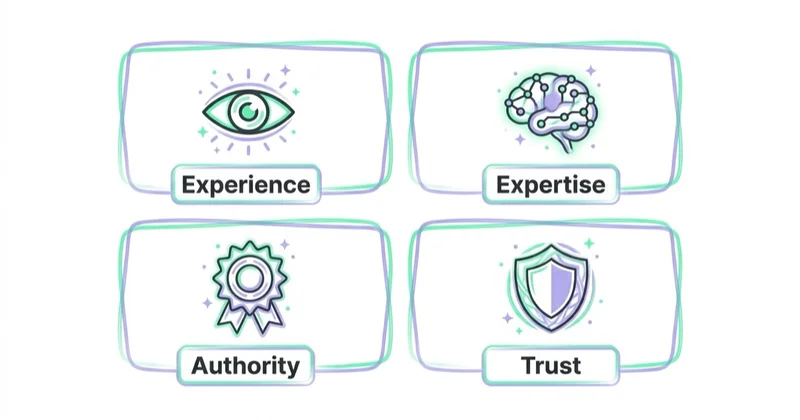
What good E-E-A-T looks like in content marketing
E-E-A-T is not a badge that can be added at the end of an article. It has to be demonstrated.
Practical signals include:
- named author or responsible expert when the site supports it;
- evidence of first-hand experience;
- examples from real workflows;
- source links for factual claims;
- clear dates for changing topics;
- limitations and exceptions;
- transparent distinction between facts and recommendations;
- internal consistency across related pages;
- no exaggerated promises.
For a performance marketing agency, E-E-A-T means content should sound like it was written or reviewed by people who actually work with campaigns, analytics, creative testing and business outcomes. Generic definitions are not enough.
Content marketing for SEO and AI search
Content that works for search in 2026 is usually structured for both humans and machines.
Important practices:
- use clear page titles and descriptions;
- answer the main query early;
- use descriptive headings;
- include related entities and synonyms naturally;
- link to supporting pages inside the site;
- keep claims accurate and sourced;
- make definitions extractable;
- use FAQ for natural questions;
- add comparison tables where they improve decision-making;
- avoid producing many near-duplicate articles.
For AI search, the goal is not only to rank as a blue link. The goal is to become a reliable source that can be summarized, cited or used to form an answer. That requires clarity, specificity and trust.
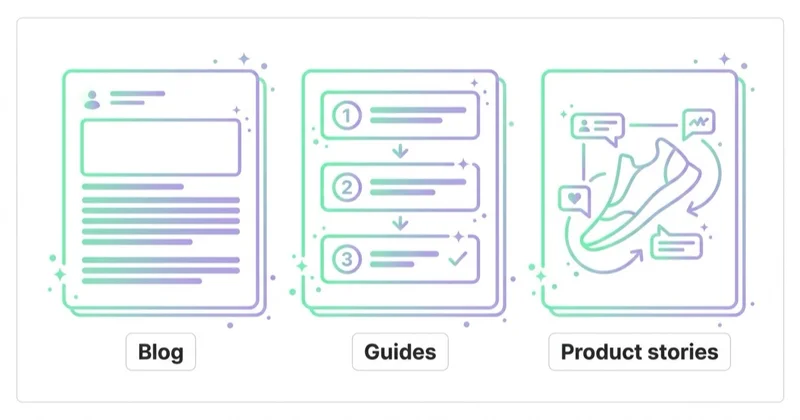
How content marketing works in e-commerce
E-commerce content should help people buy the right product, not only attract traffic.
Useful e-commerce content includes:
- category guides;
- product comparison pages;
- size, fit and material guides;
- gift guides;
- seasonal buying guides;
- use-case articles;
- product-care instructions;
- FAQ around shipping, returns and compatibility;
- review-led content;
- content that supports email, remarketing and paid social.
The best e-commerce content connects SEO with merchandising. For example, a footwear category guide should consider margin, stock, seasonality, return reasons, sizing questions and internal links to category pages. Traffic alone is not enough if it sends users to out-of-stock products or low-margin categories.
How content marketing works in B2B and services
B2B content usually supports a longer decision.
Strong B2B and service content should:
- explain the cost of inaction;
- help stakeholders align around the problem;
- compare approaches;
- show implementation risk;
- prove process and expertise;
- answer procurement and decision-maker objections;
- connect education with case studies and service pages.
For agencies, SaaS and professional services, content often acts as a silent sales conversation. A useful article can pre-educate a buyer, make a discovery call more specific and reduce the time needed to explain basic concepts.
Measuring content marketing
Content measurement should match the page's job.
Useful metrics include:
- organic impressions and clicks;
- ranking coverage for strategic topics;
- engaged sessions;
- scroll depth and time on page;
- newsletter signups;
- assisted conversions;
- consultation or demo requests;
- internal-link clicks to commercial pages;
- backlinks and referring domains;
- branded search growth;
- sales-team usage;
- lead quality and pipeline contribution;
- content refresh impact after updates.
No single metric is enough. A top-of-funnel guide may not convert directly but can still influence brand search, assisted conversions and sales conversations. A comparison page may have lower traffic but higher commercial value. Measurement should reflect the role of the content, not punish every page for failing to behave like a landing page.
How we approach this at Space Ads
We treat content as a compounding asset, not a string of one-off posts. A good article keeps working for months: it pulls traffic from search and from AI answers, and along the way it feeds paid campaigns — its readers are a ready, warm audience for remarketing, and the piece itself often becomes proof we use in ads. Topics, then, aren't chosen purely for traffic but for real customer questions and commercial intent; ten visits from someone ready to buy beat a thousand random ones. We don't read success off view counts, which is a vanity metric, but off whether content supports conversions and lowers acquisition cost once it feeds campaigns. We run this very blog on exactly that principle, so we know from experience how long it takes before content starts to pay.
Common mistakes
| Mistake | Why it weakens the program | Better approach |
|---|---|---|
| Publishing without a topic cluster | Articles stay isolated and do not build authority | Build connected clusters around strategic topics |
| Writing for keywords only | The page may rank poorly or fail to satisfy readers | Start from intent, then map keywords |
| Overusing AI without expert editing | Content becomes generic and untrustworthy | Use AI for support, then add expert review and original detail |
| No distribution | Good content receives little attention | Plan distribution before publishing |
| No refresh process | Older articles become inaccurate | Review high-value content cyclically |
| No internal links | Readers and crawlers cannot move through the cluster | Add contextual links and next-step sections |
| Measuring only pageviews | Traffic can be irrelevant | Measure business outcomes and assisted value |
| Treating every topic as e-commerce | General topics become artificially narrow | Explain broadly, then add e-commerce specifics when useful |
FAQ
What is content marketing in simple terms?
Content marketing is using useful content to attract, educate and retain a specific audience. The goal is not only traffic. The goal is to build enough trust and understanding that profitable customer action becomes more likely.
Is content marketing the same as SEO?
No. SEO helps content become discoverable and technically understandable. Content marketing decides what to say, why it matters, who it helps, how it builds trust and how it supports business goals.
Does content marketing still work with AI search?
Yes, but low-value content works less well. AI search increases the need for original experience, clear structure, accurate definitions, source links, comparisons and FAQ sections that can be understood without extra context.
Can AI tools be used to create content?
AI tools can support research, outlines, editing, repurposing and quality checks. They should not replace expert judgment, fact checking, original examples or responsibility for the final article.
How long does content marketing take to work?
Content marketing is usually a medium- to long-term channel. Some assets can support sales or paid campaigns immediately, but organic visibility, authority and demand creation usually compound over months and years.
How often should a company publish?
There is no universal frequency. A smaller team publishing one genuinely useful article per month can outperform a larger team publishing weak content weekly. Cadence should follow quality, distribution capacity and topic strategy.
What should be updated in old content?
Old content should be checked for outdated facts, missing sections, weak intros, poor internal links, thin FAQ, unsupported claims, changed platform names, stale screenshots, missing sources and mismatched search intent.
Key takeaways
Content marketing is strongest when it is treated as a business system, not a publishing habit. The best programs combine topic strategy, expert knowledge, clear structure, SEO, distribution, sales usefulness and regular updates. In 2026, the winning content is more specific, more trustworthy and more useful than generic AI-assisted summaries.
Sources and further reading
- Content Marketing Institute — What Is Content Marketing?
- Google Search Central — Creating helpful, reliable, people-first content
- Google Search Central — SEO Starter Guide
- Google Search Central — AI features and your website
Continue learning
Continue reading
What Is Inbound Marketing and How to Use It?
Inbound marketing attracts potential customers through useful content, SEO, education, trust, email, CRM and customer experience instead of only interruptive promotion.
Is Google Trends Worth Using and What Are the Alternatives?
Google Trends shows relative search interest, not exact search volume. Learn when to use it, how to interpret the 0-100 scale and which alternatives work better for volume, SEO and sales.
What is evergreen content and why do you need it on your blog?
Evergreen content stays useful long after publication because it answers recurring questions. This 2026 guide explains evergreen topics, SEO and AI search value, refresh workflows, e-commerce use cases and common mistakes.