Evergreen content is content that stays useful long after publication because it answers a recurring question, explains a stable concept or supports a decision people make repeatedly. It is not content that never changes. The best evergreen articles are reviewed, refreshed and improved over time so they remain accurate for readers, search engines and AI answer systems.
TL;DR
- Evergreen content answers durable intent. Definitions, how-to guides, comparisons, checklists, FAQs and buying guides are common formats.
- Evergreen does not mean "set and forget". Stable topics still need periodic updates, especially when tools, platforms, prices, screenshots or laws change.
- It works because value compounds. One strong page can earn internal links, backlinks, rankings, newsletter signups and assisted conversions over months or years.
- AI search raises the standard. Clear definitions, examples, tables, FAQ and sources make evergreen content easier to understand, summarize and cite.
- Not every topic should be evergreen. News, short-lived trends, product launches and annual predictions need a different format.
- E-commerce evergreen content should support buying decisions. Size guides, category guides, product comparisons and care instructions can help shoppers choose correctly.
- The best evergreen strategy combines creation and refresh. Updating old content is often faster than publishing a new article from zero.
What evergreen content is
Evergreen content is content built around a topic that remains relevant for a long time. The name comes from evergreen plants that stay green across seasons, but in content strategy it means something more practical: the page continues to help readers after the day it is published.
Examples include:
- "what is..." definitions;
- beginner guides;
- step-by-step tutorials;
- comparison pages;
- checklists;
- frameworks;
- glossaries;
- FAQ pages;
- buying guides;
- maintenance and care guides;
- case studies with transferable lessons;
- pillar pages for important topics.
The key is recurring intent. If people ask the same question every month or every year, the topic may be evergreen. If the page depends on today's announcement, this quarter's numbers or a temporary platform change, it is probably not evergreen unless it is reframed and updated regularly.
Evergreen content vs news content
Evergreen content and news content both matter, but they serve different roles.
| Area | Evergreen content | News / topical content |
|---|---|---|
| Main purpose | Build long-term value | Respond to a current event |
| Search demand | Usually stable or recurring | Often spiky and short-lived |
| Update model | Reviewed and improved cyclically | Often replaced by newer coverage |
| Best format | Guides, definitions, comparisons, FAQs | Announcements, commentary, trend reactions |
| Business role | Compounds visibility and trust | Shows freshness and market awareness |
| Risk | Can become outdated quietly | Loses relevance quickly |
The healthiest content programs usually use both. Evergreen content creates the knowledge base. News and commentary show that the brand understands what is happening now.
Why evergreen content matters for SEO and AI search
Evergreen content is valuable because it can accumulate signals over time.
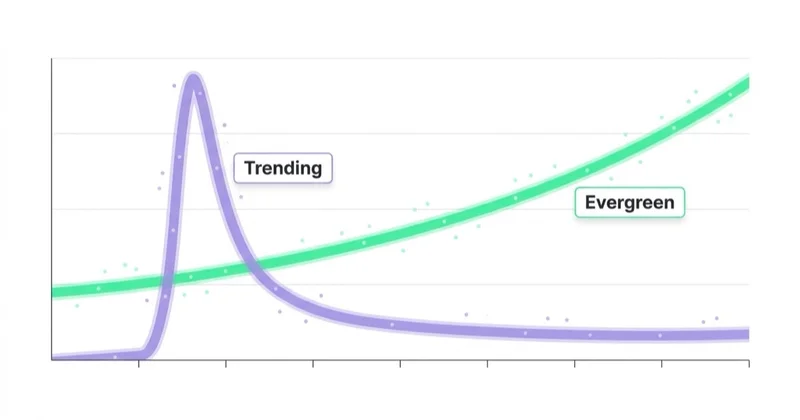
For SEO, a strong evergreen page can:
- rank for a main query and many long-tail variants;
- attract internal links from newer articles;
- earn external links because it becomes a reference;
- support commercial pages through contextual links;
- improve topical authority around a subject;
- reduce dependency on paid traffic for recurring questions.
For AI search and answer engines, evergreen content is useful because it often contains stable explanations. A clear definition, comparison table, checklist or FAQ answer can be understood without reading the entire site. That does not guarantee visibility in AI answers, but it makes the content easier to process and reuse accurately.
Google's guidance reinforces the same direction: helpful content should be created for people, provide substantial value, demonstrate experience where relevant and avoid being made only to manipulate rankings. Evergreen content works best when it follows that standard instead of becoming a thin "definition page" created only for a keyword.
What makes a topic evergreen
A good evergreen topic usually has at least four traits:
- Recurring demand: the audience asks about it repeatedly.
- Stable core answer: the main explanation does not change every week.
- Business relevance: the topic connects to a product, service, category or expertise area.
- Expandable depth: the page can include examples, steps, comparisons or related questions.
Examples of strong evergreen topics:
- "what is conversion rate optimization";
- "how to set up Google Analytics 4 events";
- "Facebook Pixel vs Conversions API";
- "how to choose running shoes";
- "email marketing automation examples";
- "brand awareness campaign checklist";
- "PPC vs SEO";
- "how to write a marketing plan".
Examples of weaker evergreen topics:
- "best ads from May 2026";
- "new Meta feature launched today";
- "Black Friday tips for 2025" if the page is never refreshed;
- "our thoughts on this week's algorithm rumor";
- "current TikTok Shop eligibility by country" if not maintained.
Seasonal content can be evergreen if the event repeats and the page is updated. A Black Friday planning guide, Christmas gift guide or Q4 media-budget checklist can work for years if the URL is year-free and the article is refreshed before each season.
How to create evergreen content
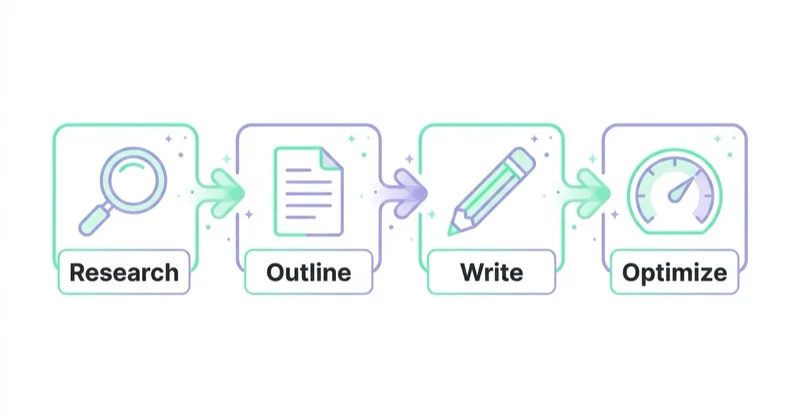
1. Start from search intent
The topic should begin with a real question, not only a keyword. Useful inputs include:
- Google Search Console queries;
- internal site search;
- customer-support questions;
- sales-call objections;
- paid-search terms;
- product reviews;
- community discussions;
- SEO tools;
- AI prompts people may use to research the topic.
The goal is to understand what the reader needs to do after reading. A definition, checklist, tutorial and comparison may all target the same broad subject but serve different jobs.
2. Choose the right format
The format should follow intent.
| Intent | Best evergreen format |
|---|---|
| "What is this?" | Definition + practical context |
| "How does it work?" | Explainer with process and examples |
| "How to do this?" | Step-by-step guide |
| "Which option is better?" | Comparison table and decision criteria |
| "What should be checked?" | Checklist |
| "Is this right for this situation?" | Use-case guide |
| "What mistakes should be avoided?" | Mistakes article or troubleshooting guide |
A mismatch between intent and format weakens the page. A reader searching for a checklist does not need a long history lesson before the checklist appears.
3. Build a complete structure
Most evergreen articles should include:
- direct opening answer;
- short TL;DR;
- definition or context;
- main explanation;
- practical steps;
- examples;
- comparison or checklist where useful;
- common mistakes;
- FAQ;
- key takeaways;
- sources;
- internal links to related pages.
The article should be complete enough to satisfy the reader without forcing another search. That does not mean it must be extremely long. It means the page should answer the intent with enough clarity and depth.
4. Add experience and specificity
Evergreen content often fails because it is too generic.
Specificity can come from:
- real workflow examples;
- before/after scenarios;
- implementation warnings;
- trade-offs;
- edge cases;
- industry-specific notes;
- screenshots or diagrams when useful;
- examples from campaigns, analytics audits, sales calls or product usage;
- links to related resources on the same site.
For Space Ads, this matters because many marketing topics are already covered thousands of times in English. A page needs operator-level judgment, not only a general definition.
5. Make the page easy to maintain
Evergreen articles should be written so updates are easy.
Good practices:
- avoid years in the slug unless the topic is explicitly annual;
- separate timeless principles from changing platform details;
- cite sources with dates when the date matters;
- add "last updated" through site metadata;
- use tables that can be refreshed quickly;
- keep tool lists and requirements in sections that are easy to audit;
- link to official sources for changing rules.
Evergreen content refresh process
Content refresh is often one of the highest-leverage SEO tasks because the URL already has history.
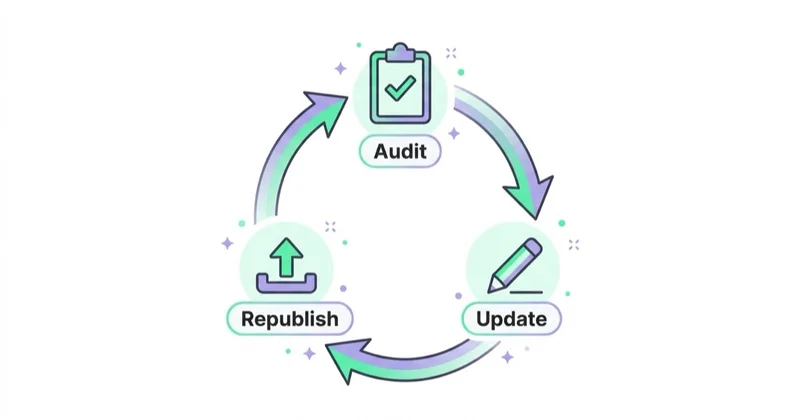
A practical refresh workflow:
- Find candidate pages. Look for articles with declining impressions, declining clicks, outdated claims, weak CTR or strong historical performance.
- Re-check intent. Search results may now reward a different format than when the article was published.
- Update facts. Remove outdated tools, screenshots, dates, pricing, platform names or legal claims.
- Improve the opening. Add a direct answer and a useful summary.
- Expand missing sections. Add examples, FAQ, comparison tables, practical steps and sources.
- Improve internal links. Connect the article to related guides, service pages and newer content.
- Update metadata. Refresh description, word count, reading time and modified date.
- Measure after publishing. Track impressions, clicks, rankings, engagement and assisted conversions.
The goal is not to pretend old content is new. The goal is to make the page genuinely better and more accurate.
How evergreen content works in e-commerce
In e-commerce, evergreen content should reduce purchase uncertainty.
Good examples:
- size guides;
- material guides;
- "how to choose" category guides;
- product comparison pages;
- care and maintenance instructions;
- gift guides with year-free URLs;
- FAQ for delivery, returns and compatibility;
- seasonal pages that are refreshed before demand peaks;
- category education that links naturally to products.
The best e-commerce evergreen content connects editorial value with merchandising. A guide to choosing hiking shoes should consider fit, terrain, season, return reasons, stock availability and links to the right categories. A skincare guide should consider skin type, ingredients, routine order and product compatibility.
Traffic alone is not enough. A page that ranks but sends users to low-margin, out-of-stock or poorly matched products may create operational problems instead of profit.
How evergreen content works in B2B and services
For B2B, SaaS and professional services, evergreen content supports a longer decision process.
Useful formats include:
- problem explainers;
- implementation guides;
- comparison pages;
- audit checklists;
- pricing logic explainers;
- risk and compliance guides;
- buyer education pages;
- case studies with transferable lessons.
This content often helps before a buyer fills out a form. It gives internal teams language for the problem, helps stakeholders compare options and makes sales conversations more specific.
How we approach this at Space Ads
Evergreen, for us, is content that keeps repaying its SEO and AI-visibility investment for years, unlike news that spikes for a week and dies. We prioritise it because the return compounds: a solid guide or how-to keeps pulling traffic and feeding remarketing long after publishing, with no extra budget. Better to build a handful of durable pieces that earn for years than ten that are dead in a month. The trap is easy to miss, though: evergreen doesn't mean written once and left forever. Content needs refreshing — numbers, examples, current realities — because even the best guide drifts down the rankings as competitors publish fresher takes. Durability is a product of upkeep, not of the topic.
Common mistakes
| Mistake | Why it hurts | Better approach |
|---|---|---|
| Adding a year to the URL | The page ages quickly and is harder to reuse | Keep the slug evergreen and update the content |
| Treating evergreen as permanent | Facts and examples become stale | Set a review cadence |
| Writing only a thin definition | The page adds little value | Add examples, use cases, FAQ and next steps |
| Publishing without internal links | The page becomes isolated | Connect it to topic clusters and commercial pages |
| Using unsupported claims | Trust drops and AI systems may misread the content | Cite official or reputable sources |
| Ignoring business relevance | Traffic may not help revenue | Prioritize topics linked to expertise and commercial value |
| Rewriting without checking intent | The new version may miss what searchers want | Review SERPs, queries and user questions before updating |
FAQ
What is evergreen content in simple terms?
Evergreen content is content that stays useful for a long time because it answers a recurring question or explains a stable topic. It can still need updates, but its core purpose does not expire quickly.
Is evergreen content always long?
No. Evergreen content should be as long as the intent requires. A glossary definition can be short, while a complete buying guide or implementation guide may need thousands of words.
How often should evergreen content be updated?
Stable topics may need a review once or twice a year. Topics involving tools, platforms, privacy, legal requirements, pricing or APIs should be checked more often.
Can seasonal content be evergreen?
Yes, if the event repeats and the page is refreshed. A year-free Black Friday guide can be evergreen if it is updated before each season and does not depend on an old date in the URL.
Does evergreen content work for AI search?
It can. Clear definitions, structured headings, FAQ, tables, examples and sources make a page easier for AI answer systems to understand. Visibility is never guaranteed, but strong evergreen content is a better source than thin or outdated content.
Should the publish date be changed after a refresh?
Usually the original publish date should stay intact, while the modified date should reflect a real update. Changing dates without meaningful content improvement can mislead readers.
What is the difference between evergreen and cornerstone content?
Evergreen describes long-term relevance. Cornerstone content describes the most important foundational pages in a site's topic strategy. Many cornerstone pages are evergreen, but not every evergreen article is a cornerstone page.
Key takeaways
Evergreen content is one of the most durable parts of a content strategy when it is built around recurring intent, clear structure, practical examples and regular updates. It should not be treated as static. The articles that keep performing are the ones that continue to become more useful over time.
Sources and further reading
- Google Search Central — Creating helpful, reliable, people-first content
- Google Search Central — SEO Starter Guide
- Google Search Central — AI features and your website
- Content Marketing Institute — What Is Content Marketing?
Continue learning
Continue reading

What Is Inbound Marketing and How to Use It?
Inbound marketing attracts potential customers through useful content, SEO, education, trust, email, CRM and customer experience instead of only interruptive promotion.

Content marketing, a way to build a professional image of the company
Content marketing is a long-term strategy for building trust, demand and search visibility through useful content. This 2026 guide explains strategy, topic clusters, E-E-A-T, AI search, distribution, measurement and practical use cases for e-commerce, B2B and services.

Is Google Trends Worth Using and What Are the Alternatives?
Google Trends shows relative search interest, not exact search volume. Learn when to use it, how to interpret the 0-100 scale and which alternatives work better for volume, SEO and sales.