









An affiliate programme that pays for demand it created, not demand you already had.

Most affiliate programmes look profitable because last-click reporting flatters them. We design and run partner programmes the other way round: commission set against margin, brand and coupon leakage closed, partner mix built by role, and the whole channel tested for incrementality the same way we test paid media.

Paid on incremental revenue, not on last click

(the question is never how many sales a partner was credited with — it is how many would not have happened without them)

Brand terms and coupon leakage closed first

(trademark bidding rules, attribution windows and checkout-adjacent clicks are the fastest margin recovery in most programmes)

Partner mix built for demand, not volume

(content, comparison, creator and loyalty partners each do a different job — and each needs a different commission)

  • Operating since 2018
  • Your programme, always
  • Short rolling notice

Let's talk about your goals

Tell us your current challenges — we'll reply within 24 hours.

Rafał Chojnacki
Rafał Chojnacki
CEO & Growth Strategist

30 minutes • no obligations

By submitting this form or contacting us by phone or email you accept the data processing described in our Privacy Policy. Controller: Space Ads Sp. z o.o. We process your data only to respond to your inquiry.

A channel where the risk is credit, not overspend

Commission is paid after a sale, so the classic failure mode is not wasted budget — it is paying for revenue that would have arrived anyway.

A performance channel with a fixed unit cost

Commission is paid after the sale, so the channel cannot overspend the way an auction can. The risk moves elsewhere: paying commission on demand you already owned.

It overlaps every other channel

Affiliate touchpoints sit next to paid search, email and organic. Without incrementality controls, the affiliate report and the paid media report will both claim the same revenue.

Partners are a portfolio, not a list

A comparison site, a niche newsletter, a cashback portal and a creator behave nothing alike. Treating them as one channel with one commission rate is what quietly kills programme margin.

Which is why the first question we ask about an existing programme is not how to grow it, but how much of it is already incremental — and the answer changes the commission model, not just the partner list.

What we manage in a partner programme

From commission design and partner recruitment to brand protection and incrementality testing — the parts that decide whether the channel adds profit.

Programme design and launch

Commission structure, cookie and attribution windows, partner tiers, terms and the technical setup — on a network or on your own platform, depending on where your buyers actually are.

Partner recruitment by role

We recruit against gaps, not against volume: content and review sites for consideration demand, comparison for high intent, creators for reach, loyalty for retention. Each with its own target and rate.

Brand protection and compliance

Trademark bidding rules, coupon-code policy, enforcement of disclosure requirements and monitoring of how partners describe your brand. Written into terms, then actually checked.

Incrementality testing

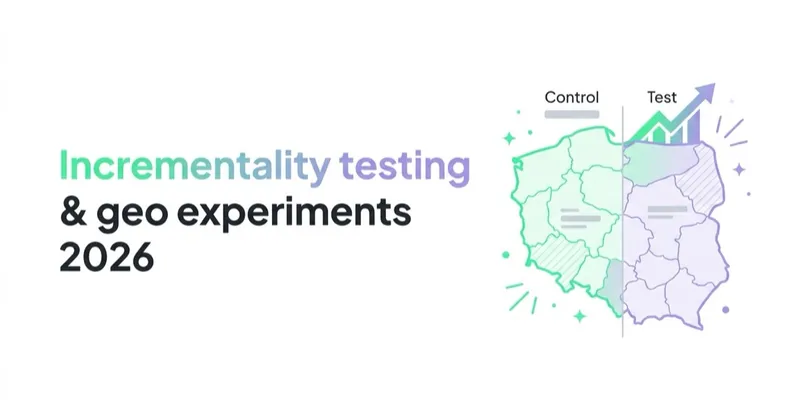
Holdout and geo tests to establish which partner types generate net-new demand. The same discipline we apply to paid media, described in our incrementality guide — applied to commissions.

Commission and margin management

Rates set per partner type and per product margin, with tiered and performance-based structures instead of one flat percentage that overpays the easiest sales.

Reporting next to your other channels

Affiliate revenue reported against total blended performance — not in a network dashboard that counts every assisted sale as its own win.

We audit the credit before we grow the programme

We start by auditing the credit, not the growth

The first deliverable is usually uncomfortable: how much commission is being paid on sales that were already coming. Fixing that funds everything else in the programme.

Commission follows margin, not revenue

A flat rate across the catalogue overpays low-margin products and underpays the ones worth pushing. We set rates against contribution, so partner incentives match your P&L.

Affiliate run by a performance team

Partner recruitment, commission, leakage and incrementality sit in one commercial model. The programme is judged with the same discipline as paid media, not by a network dashboard that rewards last click.

When a partner programme is worth managing properly

It pays off where order volume makes commission economics material and margin differs enough across products to matter.

It makes sense when

  • You sell online with enough order volume that commission economics are worth managing properly.
  • There is an existing programme on a network, and nobody can currently say which partners are incremental.
  • Margin varies across the catalogue, so one flat commission rate is leaving money on the table.
  • Affiliate revenue needs to sit in the same commercial picture as paid media, email and organic.
  • You want partner terms enforced — trademark bidding, coupon policy, disclosure — not just written once.

Not yet, when

  • There is no reliable order and revenue tracking yet, so commissions could not be verified or reconciled.
  • Order volume is still very low — at that stage paid media and retention usually return faster than partner recruitment.
  • You are looking for a partner list rather than ongoing management of rates, terms and incrementality.

Audit the credit, restructure, then scale

Recovered margin from the first phase usually funds the recruitment in the second.

Audit of credit and leakage

We map current partners by type, check where commission is paid on brand and coupon searches, review attribution windows and identify overlap with paid media. Output: what is incremental, what is not, and what it costs today.

Restructure and recruit

Commission model rebuilt against margin, terms tightened on trademark and coupon behaviour, then recruitment into the gaps — content, comparison and creator partners that reach demand before it becomes a brand search.

Test, scale, enforce

Holdout and geo tests confirm which partner types add net-new revenue. Budget and rates move toward those; monitoring keeps brand terms and disclosure rules enforced as the programme grows.

The programme and the partners stay yours

Our fee is for managing the channel, so removing non-incremental commission never works against us.

Your programme, your partners

The network account or platform stays yours, along with partner relationships, terms and historical data. Nothing is held hostage to the engagement.

Management fee, not a cut of commission

We charge for managing the programme. A percentage of commission would reward volume — including the non-incremental volume we are supposed to remove.

Reported in incremental terms

Reporting separates assisted revenue from incremental revenue, and shows the programme next to your other channels rather than in a network dashboard.

Different models, one operating standard

A cross-section of work across premium e-commerce, marketplaces, local lead generation and ticketed experiences. Each story shows how the right strategy, capabilities and operating cadence come together around the business model.

Top Clutch Digital Marketing Company Warsaw 2026
5.0 on Clutch

See what our clients say about us

Verified reviews on Clutch — the global B2B review platform. Our reviews come from real clients who delivered measurable results with us.

“With Space Ads' support our client saw great month-over-month results in online sales and traffic. The team was responsive, available and budget-aware. They also adapted strategies and tactics to deliver even better outcomes.”
Read all reviews

Selected portfolio

Brands that scaled their results with Space Ads.

Plein Sport
Embassy London
Iluzjonista Y
Sykomat
Glantier
Diuvie
All Right
Gentaur
Magnus
APLUG
Alexim.pl
COLORAT
FX-Music Group

Strategy and execution under one line of accountability

The way we work is consistent across every scope: the business objective comes first, each capability has a defined role, and decisions are made against real business numbers.

Direct strategist contact

You work with the person responsible for direction, priorities and delivery — not a layer of account managers.

Infrastructure on your side

Accounts, analytics, automations, creative and data stay yours from day one — no dependency on the agency.

A daily decision rhythm

We connect marketing and analytics data in one operational view, so evidence turns into priorities and action quickly.

No long lock-ins

A 14-day rolling notice, a clear billing model and a clean handover if you decide to stop.

2018
agency founded
180+
accounts since 2018
98%
client retention
5.0/5.0
Clutch rating

Affiliate programmes — questions worth asking

What does an affiliate marketing agency actually do?

It designs and runs a partner programme: commission structure, terms, tracking setup, partner recruitment, brand-protection rules and reporting. The management part matters more than the setup — rates, partner mix and attribution rules need continuous adjustment as the programme grows. Without that, a programme drifts toward whichever partners are best at claiming credit rather than creating demand.

What is the difference between affiliate marketing and influencer marketing?

Affiliate marketing pays a commission on a tracked outcome, usually a sale, and partners are often publishers, comparison sites, newsletters or loyalty platforms. Influencer marketing usually pays for content and reach, with the creator relationship as the asset. They increasingly overlap — many creators now work on commission — and both should be measured against incremental revenue. Our approach to creator programmes is on the influencer marketing page.

How do you know whether affiliate sales are incremental?

By testing rather than by reading attribution reports. Holdout and geo tests suppress a partner type in part of the market and compare total revenue against a control. Attribution shows which partner touched the path; only a test shows whether the outcome changed. Coupon, cashback and brand-bidding partners appear late in the journey, which is exactly where credit and causation diverge most.

Should the programme run on a network or on our own platform?

It depends on where the partners you need already are. Networks give reach, established partner supply and consumolidated tracking, at the cost of fees and less control over terms. A self-hosted platform gives lower variable cost and full control, but partner recruitment becomes your job. For most brands the answer is a network first, then selective direct relationships with the partners that prove incremental.

What commission rate should we pay?

There is no single correct rate, and a flat catalogue-wide percentage is usually the wrong answer. Rates should follow contribution margin and partner role: a content partner introducing new customers earns differently from a cashback portal appearing at checkout. Tiered and performance-based structures let the programme pay more for what it actually needs.

Do you take a percentage of the commission we pay out?

No. We charge a management fee. Taking a cut of commission would reward total programme volume, including the non-incremental volume our job is to remove — the incentive would point the wrong way.

An affiliate programme measured on incremental revenue.

Tell us whether a programme already exists, which network it runs on and what your margin looks like. We'll talk about where commission is currently going and what would change first.

Rafal Chojnacki

Rafal Chojnacki

CEO & Growth Strategist

Describe your programme and margin. We'll come back with a concrete next step.

No commitment
Accounts stay yours
Reply within 24h
Data controller: Space Ads. We use your details only to reply to and follow up on your inquiry. Your rights and full details: Privacy Policy.