LLM SEO is the practice of making a brand, website and content easier for large language models to understand, describe and cite. It applies to tools such as ChatGPT with search, Gemini, Perplexity, Copilot and other AI assistants that answer questions by combining model knowledge, retrieval systems and web sources.
LLM SEO is not a replacement for SEO. It depends on crawlable pages, clear content, trustworthy sources, consistent brand entities and useful answers. The difference is the surface: a model may mention a brand, summarize a page or cite a specific passage before the user ever clicks through to the website.
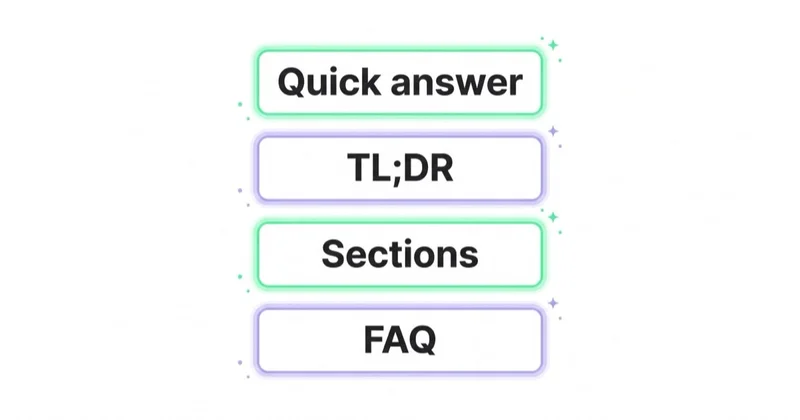
TL;DR
- LLM SEO focuses on model understanding and citation. The goal is to make AI tools more likely to describe the brand correctly and use its pages as useful sources.
- SEO is still the base layer. If pages are not crawlable, indexable or helpful, LLM visibility becomes much harder.
- Entities must be consistent. Brand name, services, experts, case studies, tools and categories should be described the same way across the site.
- Passages need to stand alone. A paragraph, table or FAQ answer should be understandable when quoted outside the full article.
- Crawler access should be intentional. Robots.txt, WAF and bot protection should reflect the brand's policy for search and AI tools.
- Measurement is prompt-based. There is no universal LLM rank, so brands need a repeatable set of prompts and answer-quality checks.
- Commercial pages still matter. LLM SEO should connect educational answers to service pages, case studies and conversion paths.
What is LLM SEO?
LLM SEO prepares public content and brand signals for language-model systems. A model may answer from training data, from a search index, from live retrieval, from a partner search provider or from a page fetched during the session. The exact architecture varies by tool, but the brand problem is similar: the model needs enough trustworthy context to explain the brand accurately.
LLM SEO asks:
- what does the model think the brand does;
- which sources does it use to support that answer;
- does it cite the brand's own pages, third-party sources or competitors;
- does it understand the right services and markets;
- does it connect the brand to the right category;
- does it confuse similar entities;
- does it recommend the brand for the right problems;
- does the answer include a path to a useful page.
That makes LLM SEO partly technical, partly editorial and partly brand governance.
LLM SEO vs AI SEO vs GEO
| Discipline | Main question | Example work |
|---|---|---|
| AI SEO | Is the site optimized for classic search and AI-assisted search? | technical SEO, snippets, helpful content, answer structure |
| LLM SEO | Can language models understand and cite the brand correctly? | entity consistency, source clarity, prompt monitoring |
| GEO | Can the brand appear in generative search results? | passage citability, sources, AI answer visibility |
| AEO | Can content answer questions directly? | definitions, FAQ, tables, short answer blocks |
For the broader umbrella, see AI SEO. For answer-engine structure, see AEO. For Google AI Overviews and generative search, see AI Overviews and GEO.
How LLMs may use web content
Different tools use different retrieval systems. Some answers come from model memory. Some use live search. Some show citations. Some fetch a page after the user asks a question. Some blend multiple sources into one answer.
The practical flow often looks like this:
- The user asks a question.
- The system interprets the intent and entities.
- The system searches or retrieves supporting sources.
- The model selects passages that answer parts of the question.
- The answer is synthesized.
- Some tools show citations, links or source panels.
This is why LLM SEO should not optimize only for one keyword. A prompt can be phrased many ways:
- "best agency for Google Ads audits";
- "who can help improve B2B lead quality";
- "how to measure paid media performance across Google and Meta";
- "what is LLM SEO";
- "Space Ads agency review";
- "paid media agency for luxury fashion".
The site needs to answer the category, problem, service and brand questions around those prompts.
Brand entities in LLM SEO
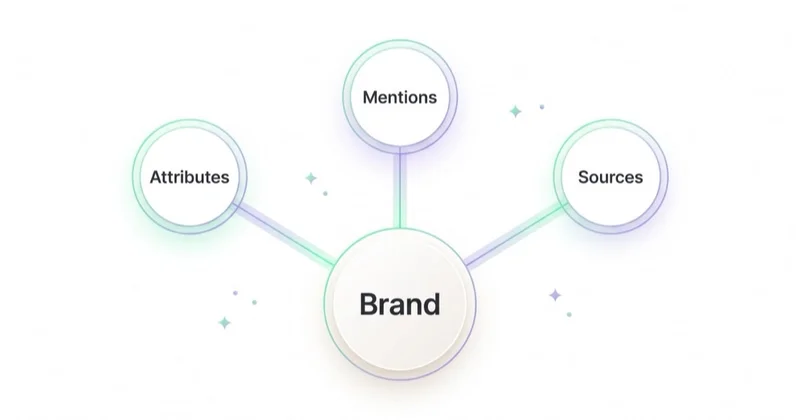
Models work better when public signals are consistent. A brand should not describe itself one way on the homepage, another way on service pages and a third way in case studies.
Important entities:
| Entity | What should be consistent |
|---|---|
| Brand | name, spelling, category, positioning |
| Services | names, scope, process, limitations |
| Experts | author names, roles, expertise areas |
| Case studies | brand, industry, problem, method, outcome context |
| Tools | dashboard, analytics, Space Ads OS, reporting workflow |
| Categories | Google Ads, Meta Ads, TikTok Ads, CRO, SEO, AI search |
| Markets | only where genuinely relevant |
| Contact paths | service pages, audit, consultation, booking |
For Space Ads, useful public entities include Google Ads, Meta Ads, TikTok Ads, marketing audit, Fractional CMO, luxury marketing agency, client dashboards, performance marketing, AEO, GEO and LLM SEO.
Passage-level citability
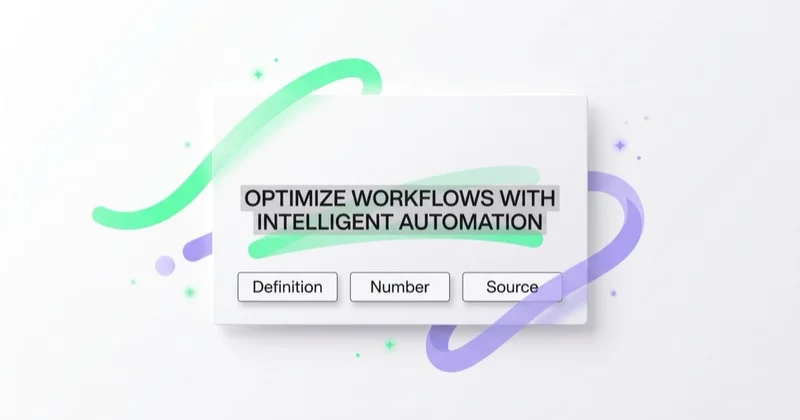
Passage-level citability means a specific section can be quoted as part of an AI answer. A good passage does not require the reader or model to inspect the entire page to understand it.
Good passages usually have:
- a clear answer in the first sentence;
- the full name of the concept;
- enough context to avoid ambiguity;
- limitations or caveats;
- a source when the claim is current or technical;
- specific entities;
- plain language;
- no inflated claim.
Weak passage:
AI is changing SEO, so brands should create high-quality content and focus on the future.
Stronger passage:
LLM SEO is the practice of making a brand easier for language models such as ChatGPT, Gemini and Perplexity to understand, describe and cite. It combines crawlable pages, consistent brand entities, answer-ready content, source links and prompt monitoring.
The stronger passage can be used on its own. It names the concept, scope, examples and practical components.
Content types that support LLM SEO
| Content type | Why it helps |
|---|---|
| Definitions | Helps models answer "what is" queries |
| Comparison pages | Helps vendor and method-selection prompts |
| Case studies | Provides proof and industry context |
| Methodology pages | Explains how the company works |
| FAQ | Creates extractable answers |
| Glossaries | Defines entities and concepts |
| Source-backed guides | Increases trust and citation usefulness |
| Service pages | Connects knowledge to commercial intent |
| About / team pages | Clarifies expertise and accountability |
For commercial visibility, a blog post should not stop at education. It should link to a relevant next step: marketing audit, Google Ads, Meta Ads, Fractional CMO or an appropriate success story.
Third-party corroboration
LLM SEO does not depend only on the brand's own website. Models may see or retrieve information from third-party sources: industry articles, podcasts, directories, review platforms, partner pages, marketplaces, social profiles, public talks, GitHub repositories, documentation and media mentions.
The important point is consistency. If third-party profiles describe the brand as a general creative agency, while the website describes it as a performance marketing agency, a model may blend those signals. If case studies, service pages and external profiles all reinforce the same category and expertise, the answer is more likely to be coherent.
Useful external signals include:
- accurate business profiles;
- consistent descriptions on partner pages;
- case-study references;
- expert interviews or webinars;
- public documentation or playbooks;
- credible reviews;
- social profiles that match the service focus;
- links from relevant industry sources.
This is not a reason to publish low-quality guest posts. Weak external pages can create noise. The best corroboration comes from sources that real buyers would also trust.
Commercial pages and LLM recommendations
When a user asks an LLM for a vendor, tool or agency recommendation, the model needs more than a definition. It needs evidence that a company actually does the work. That evidence usually lives on commercial pages and proof pages, not only blog posts.
A service page that supports LLM SEO should include:
- the service name and scope;
- who the service is for;
- the process;
- input data or access required;
- common problems the service solves;
- clear limitations;
- proof or case-study links;
- FAQ for decision questions;
- a logical next step.
This is why LLM SEO should link educational articles to service pages. The article answers the problem. The service page explains how the company solves it. The case study shows that the work exists outside theory.
Technical access for LLM SEO
LLM SEO is not only writing. Technical access matters.
Checklist:
- important pages are not accidentally blocked by
robots.txt; - relevant content is available as HTML text;
- canonical tags are correct;
- snippets are not restricted unnecessarily;
- sitemap includes important URLs;
- internal links connect the topic cluster;
- structured data matches visible content;
- WAF or bot protection does not block intended crawlers;
- page speed and reliability are acceptable;
- content is not hidden in images, canvas or inaccessible widgets.
OpenAI documents crawlers used for search and user-triggered browsing. Perplexity documents its own crawlers. Google documents controls such as robots meta tags and guidance for AI features in Search. A good policy does not blindly allow or block everything; it decides which bots support discovery and which forms of crawling the business does not want.
LLM SEO for different business models
| Business model | What models need to understand |
|---|---|
| B2B services | expertise, process, qualification, proof, industries |
| SaaS | use cases, integrations, alternatives, onboarding, security |
| E-commerce | categories, products, reviews, availability, policies |
| Local services | service area, proof, pricing signals, booking process |
| Premium brands | positioning, authenticity, exclusivity, distribution |
| Agencies | services, methodology, success stories, reporting approach |
This prevents the common long-tail mistake of writing every article as if it were e-commerce. A lead-generation service, SaaS product, high-ticket consultant and fashion store need different proof and conversion paths.
How Space Ads approaches this
At Space Ads, we start LLM SEO with a brand-answer audit. We test how AI tools describe the brand, which services they associate with it, what sources they use and where the answer is incomplete or wrong. Then we map the missing signals: service pages, author context, case studies, definitions, technical access, internal links and source-backed guides.
The work is not limited to blog posts. A strong answer usually needs a cluster: one page that explains the service, one article that explains the problem, one case study that shows experience, one FAQ section that answers objections and one reporting path that shows how the business measures the outcome. We do not promise that a model will cite a page on a specific prompt. We improve the quality and consistency of public signals so the brand is easier to understand and safer to cite.
Prompt monitoring
LLM SEO measurement should use a repeatable prompt set.
| Prompt type | Example |
|---|---|
| Brand | "What does Space Ads do?" |
| Category | "Which agency helps with Google Ads audits?" |
| Problem | "How can a B2B company improve lead quality from paid media?" |
| Comparison | "AEO vs GEO vs LLM SEO" |
| Commercial | "Paid media agency for luxury fashion brands" |
| Service | "How should a marketing dashboard connect ad platforms and sales?" |
| Objection | "When should a company not scale ad spend?" |
For each prompt, record:
- whether the brand appears;
- whether it is cited;
- which page is cited;
- how the brand is described;
- which competitors or publishers appear;
- whether the answer is accurate;
- what page or source could improve the answer.
Trends matter more than one screenshot. Answers can change by tool, time, context and phrasing.
Common mistakes
| Mistake | Why it hurts | Better approach |
|---|---|---|
| Writing only generic AI articles | No distinctive source value | Add methodology, examples and sources |
| Ignoring brand prompts | Models may describe the company incorrectly | Monitor how AI explains the brand |
| Blocking crawlers accidentally | Some tools may not access useful pages | Review robots and WAF policies intentionally |
| Treating LLM SEO as one post | Weak entity network | Build a cluster across service pages, blog and case studies |
| Using "agency" keywords everywhere | Blog becomes a service directory | Use problem-led and educational content |
| No source sections | Lower trust and lower citation usefulness | Link to official documentation |
| Measuring only traffic | Misses zero-click answers | Track prompts, citations and answer quality |
30-day LLM SEO plan
Week 1: audit brand answers
Test branded, category, service and problem prompts in multiple AI tools. Save the answers, sources and errors.
Week 2: map entities and sources
List brand entities, services, experts, case studies, tools and topic clusters. Identify inconsistent descriptions and missing public proof.
Week 3: improve pages and passages
Add direct definitions, FAQ, source sections, methodology explanations, internal links and clearer service-page language.
Week 4: monitor and iterate
Repeat the prompt set, compare answer quality and update pages where the model lacks a clear source or misstates the brand.
FAQ
What is LLM SEO?
LLM SEO is the practice of making a brand, website and content easier for language models to understand, describe and cite. It combines SEO, entity consistency, answer-ready content, technical access, sources and prompt monitoring.
How is LLM SEO different from AI SEO?
AI SEO is the broader umbrella for optimizing across search engines and AI-assisted search. LLM SEO focuses specifically on how language models such as ChatGPT, Gemini and Perplexity understand and cite a brand.
Can LLM SEO guarantee that ChatGPT cites a brand?
No. LLM tools choose sources dynamically and answers can change. LLM SEO improves the likelihood that a brand is understandable and citable, but it cannot guarantee a specific mention or citation.
What makes a page easier for LLMs to cite?
A page is easier to cite when it has clear definitions, self-contained paragraphs, tables, FAQ, source links, consistent entities, visible author or company context and accessible HTML content.
Is llms.txt required for LLM SEO?
llms.txt can help organize important URLs and context for some AI workflows, but it does not replace crawlable pages, internal links, sitemap coverage, source-backed content or strong SEO fundamentals.
How should LLM SEO be measured?
LLM SEO should be measured with a fixed prompt set, citation tracking, answer-quality reviews, AI referral traffic where available, Google Search Console data and conversion data from analytics or CRM.
Key takeaways
LLM SEO is about making a brand easier to understand and safer to cite. The work combines clear content, consistent entities, technical access, source-backed claims and monitoring of how models answer real buyer questions.
The strongest LLM SEO does not chase one model. It builds a public knowledge base that humans, search engines and language models can all use. That knowledge base should also make the next commercial step obvious when the answer creates qualified interest.
Sources and further reading
- OpenAI - Overview of OpenAI crawlers
- Perplexity - Perplexity Crawlers
- Google Search Central - AI features and your website
- Google Search Central - Robots meta tag, data-nosnippet and X-Robots-Tag
- Google Search Central - Creating helpful, reliable, people-first content
Continue learning
Continue reading
Generative Engine Optimization: How Brands Get Mentioned in AI Search Results
Generative Engine Optimization helps brands become useful, verifiable sources for AI-generated search experiences. Learn what GEO can influence, what it cannot guarantee and how to measure visibility without mistaking a single answer for a ranking.
AI SEO: How to Optimize for Search Engines, AI Overviews and LLMs
AI SEO applies proven SEO principles to Google AI Overviews, AI Mode and answer tools. Learn what improves visibility, what Google says to ignore, how crawler controls differ and how to measure results without inventing an ‘AI ranking’.

Google AI Mode: What It Is and What It Means for Your Brand's Visibility
Google AI Mode is Google's conversational and increasingly agentic Search experience. Learn how query fan-out, personalization, links, ads and new 2026 reporting affect brand visibility—and what Google actually recommends website owners do.