
Optometry marketing has to do more than fill the exam schedule. A practice may be a healthcare provider, a local service business and an optical retailer at the same time. A new patient can book an eye exam, buy frames, order lenses, return for contact lenses, schedule annual recall and bring family members later. That total patient value matters more than cost per click.
The challenge is that each revenue path has a different intent. Routine eye exams, medical eye care, designer frames, contact lenses, dry eye care, myopia management and specialty lenses should not be treated as one generic "eye doctor" campaign. They also carry healthcare privacy constraints, so measurement and remarketing need discipline.
The goal is a marketing system that fills appointments, increases optical capture, supports specialties, earns local trust and reports business value without sending protected health information to ad platforms.
TL;DR
- Optometry marketing is healthcare plus retail. Exam volume matters, but optical revenue, contact-lens retention and recall often decide profitability.
- Search intent should be split. Routine exams, medical eye care, eyewear, contacts and specialty services need different pages and conversion values.
- Google Business Profile is a conversion layer. Local searchers compare reviews, hours, photos, booking links, insurance notes and location before choosing a practice.
- Optical capture rate is a major lever. A practice can fill exams and still lose value if patients take prescriptions and buy eyewear elsewhere.
- Meta works best for retail and recall support. Frames, collections, seasonal reminders and brand familiarity are better fits than condition-based targeting.
- Healthcare measurement must be privacy-safe. Neutral events such as "appointment booked" or "exam attended" are safer than clinical details.
- Specialty services need their own funnels. Myopia management, dry eye, specialty contacts and medical eye care deserve separate messaging, pages and tracking.
Why optometry marketing is different
Optometry combines four businesses in one patient journey.
| Layer | What the patient wants | Marketing implication |
|---|---|---|
| Routine vision care | exam, convenience, accepted plans, booking | local Search, GBP, booking UX |
| Medical eye care | symptom or condition support, urgency, trust | separate service pages, careful language |
| Optical retail | frames, lenses, fit, style, warranty | Meta, Shopping/retail pages, in-office proof |
| Retention | recall, contacts, annual exams, family care | CRM, email/SMS, consented reminders |
Those layers should share a brand, but not a single measurement model. A routine exam may be valuable because it leads to optical sales. A medical visit may have a different payer and follow-up path. A contact-lens patient may have recurring reorder value. A premium frame buyer may have higher margin than a low-cost exam lead.
The practice also competes with online eyewear retailers. The exam can happen locally while the frame purchase happens somewhere else. Marketing has to support both appointment booking and in-office optical capture.
Search campaign structure
Google Search is usually the strongest channel for active local demand. The account should separate intent by service and value.
| Intent | Example queries | Landing page need |
|---|---|---|
| Routine eye exam | "eye exam near me," "optometrist [city]" | booking, hours, plans, reviews, location |
| Medical eye care | "dry eye doctor," "pink eye doctor," "eye infection clinic" | service explanation, urgency, provider proof |
| Eyewear | "glasses near me," "designer frames [city]" | brands, styling, insurance allowance, optical shop |
| Contact lenses | "contact lens exam," "contact lens fitting" | fitting process, brands, reorder path |
| Pediatric / family | "children's eye exam," "kids optometrist" | family trust, scheduling, school-season messaging |
| Specialty | "myopia management," "scleral lenses," "dry eye treatment" | specialty page, process, consultation |
| Brand | practice name, doctor name | local trust and navigation |
Search ads should lead to specific pages. A dry eye query should not land on a generic homepage. A designer frames query should not land only on an appointment page. A contact-lens query should explain exam, fitting, reorder and follow-up.
Negative keyword work is also important: jobs, school, salary, training, online-only glasses, free prescription tools, exercises, definitions and academic terms can dilute spend. Informational content can be useful for SEO, but paid Search should prioritize appointment and purchase intent.
Google Business Profile and local trust
Optometry is local and trust-sensitive. Patients often compare several practices before booking. Google Business Profile should confirm that the practice is real, accessible and relevant.
Important profile elements:
- accurate category, address, phone and hours;
- booking or appointment link;
- real photos of the office, optical area and exterior;
- services listed by routine, medical, pediatric, contact-lens and specialty care;
- information about accepted vision plans or insurance where appropriate;
- review responses that do not confirm patient status or discuss care;
- accessibility, parking and location details;
- current holiday and special hours.
Google's local ranking guidance emphasizes complete and accurate information, verification, current hours, reviews, photos and local ranking factors such as relevance, distance and prominence. In practice, a paid ad may create the first impression, but the Business Profile often decides whether the patient books.
Optical capture rate
Optical capture rate is the share of exam patients who buy eyewear or contact lenses from the practice. It is one of the most important business metrics in optometry because the exam alone may not represent the full value of acquisition.
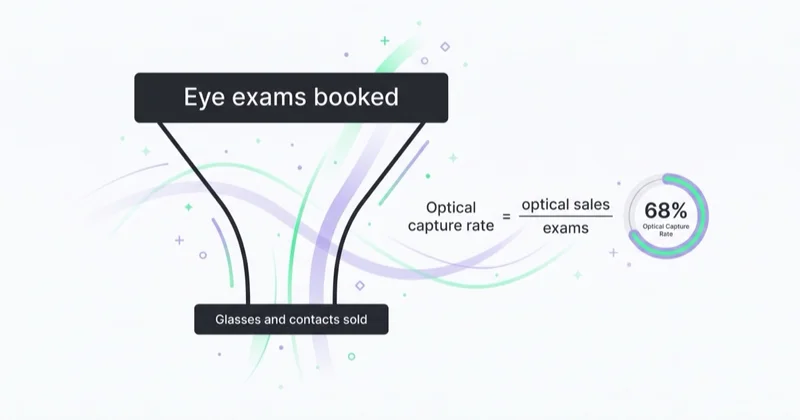
Marketing can improve optical capture by making the retail value visible before the appointment:
- frame brands and collections;
- styling help;
- lens options and coatings;
- warranty and adjustment support;
- same-day or faster fulfillment where available;
- insurance or vision-plan allowance guidance;
- second-pair offers where compliant;
- contact-lens fitting and reorder paths;
- in-office expertise compared with anonymous online checkout.
This should be reflected in reporting. A campaign that generates low-cost exams but weak optical sales may be less valuable than a campaign with fewer patients and stronger capture.
Routine, medical and specialty demand
Routine vision demand and medical eye care demand should not share one page.
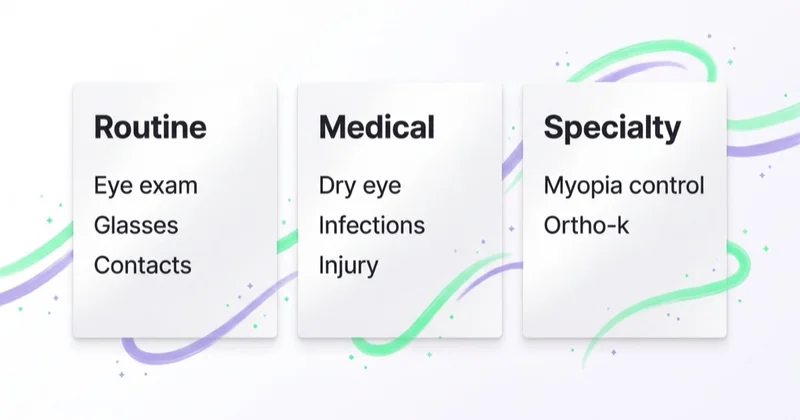
| Track | What to emphasize | Measurement |
|---|---|---|
| Routine / vision plan | convenience, booking, accepted plans, family scheduling | booked and attended exam, optical sale |
| Medical eye care | provider expertise, urgency, condition page, insurance path | appointment, attended visit, follow-up |
| Specialty services | consultation, process, equipment, outcomes without guarantees | qualified consultation, plan start |
| Optical retail | frames, lenses, style, warranty, local fitting | optical sale, margin, repeat purchase |
Specialties such as dry eye care, myopia management, scleral lenses and pediatric eye care can be valuable because they answer more specific needs. They also require careful messaging. The page should explain the service, evaluation process and next step without promising outcomes or implying that every visitor has a condition.
Google's healthcare policy expects healthcare ads and destinations to follow applicable laws and industry standards, with some healthcare content restricted by location and certification. That makes compliance review part of the operating process, especially for medical services, prescriptions, telehealth, pharmacy-related topics or condition-heavy language.
Meta and Instagram
Meta is usually better for the optical retail and retention side than for urgent medical demand.
Good roles for Meta:
- new frame collections and brands;
- seasonal eyewear campaigns;
- back-to-school family reminders;
- year-end vision benefit reminders;
- contact-lens reorder and recall messaging where consent allows;
- local brand familiarity;
- retargeting site visitors with general optical or appointment messages.
Riskier roles include health-condition targeting, copy that implies a person has a medical issue, or audiences built from sensitive clinical data. Safer copy focuses on the practice and service, not on diagnosing the viewer. For example, "Dry eye evaluation appointments available at [practice]" is safer than language that tells the viewer they have symptoms.
Meta's health and wellness standards include restrictions for certain health-related promotions and personal insecurity-based messaging. Platform policies and local healthcare advertising rules should be checked before campaigns launch.
Privacy-safe measurement
The measurement model should show business value without exposing protected health information.
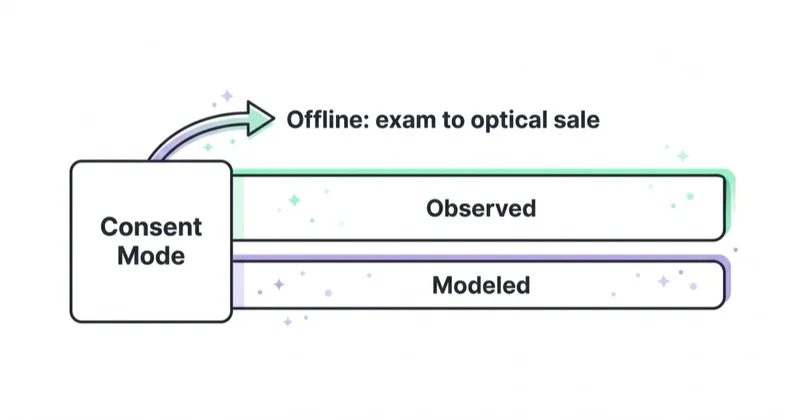
Useful neutral events:
| Event | What it means |
|---|---|
| call_started | ad-generated call |
| qualified_call | local, in-scope conversation |
| appointment_booked | appointment scheduled |
| exam_attended | appointment completed |
| optical_sale | eyewear or lens purchase |
| contact_lens_reorder | repeat retail purchase |
| recall_completed | returning patient appointment |
| specialty_consult_booked | consultation for a named service line, if safe and policy-reviewed |
For US practices, HIPAA requires careful handling of protected health information in marketing. HHS guidance explains that uses or disclosures of PHI for marketing generally require authorization unless an exception applies. In advertising operations, that means clinical details should stay in compliant systems, and ad platforms should receive only neutral conversion events or aggregated business values that do not reveal diagnosis, treatment, prescription or patient identity beyond permitted matching processes.
This article is not legal advice. Healthcare practices should review measurement, tags, consent, CRM uploads, call tracking and vendor relationships with qualified counsel or compliance staff.
Landing pages and CRO
An optometry landing page should reduce booking friction and answer patient questions.
Routine exam page:
- appointment button and phone number;
- office hours and location;
- accepted plans or "contact the office to verify coverage";
- provider and staff trust signals;
- what to expect at the exam;
- optical shop connection;
- reviews or testimonials handled appropriately.
Medical or specialty page:
- service explanation in plain language;
- when to seek urgent or emergency care, if relevant;
- evaluation process;
- provider expertise and equipment;
- insurance/payment notes;
- appointment path;
- disclaimers that outcomes vary where needed.
Optical retail page:
- frame brands and styles;
- lens options;
- fitting and adjustment support;
- warranty or service policies;
- contact-lens fitting and reorder options;
- photos of real frames and the optical area.
For AEO and LLM SEO, pages should answer specific questions clearly: what an eye exam includes, how contact-lens fitting works, whether a practice sees children, what dry eye evaluation involves, how vision plans and medical insurance differ, and how optical warranties work.
Retention and recall
Optometry is recurring. Annual exams, contact-lens reorders, family appointments, second pairs, sunglasses and specialty follow-ups all increase lifetime value.
Retention activities include:
- recall reminders;
- contact-lens reorder prompts;
- year-end benefit reminders;
- family scheduling reminders;
- second-pair or sunglasses campaigns;
- lapsed-patient reactivation;
- review requests after visits, handled without exposing care details.
Consent and data use matter. A reminder sent through the practice management system may be different from uploading a patient list into an ad platform. The privacy and platform policy review should happen before activation, not after performance issues appear.
How Space Ads approaches optometry marketing
At Space Ads, optometry work starts with the value model: exam volume, attended appointment rate, optical capture, contact-lens retention, specialty value and recall. Campaign structure comes after that business model is clear.
The operating model is:
- separate routine exams, medical eye care, optical retail, contact lenses and specialties;
- use Google Search for explicit local intent;
- keep Google Business Profile strong enough to convert comparison shoppers;
- use Meta for frames, seasonal reminders, brand familiarity and retargeting with safe messaging;
- track neutral stages such as booked appointment, attended exam, optical sale and recall;
- keep clinical data out of advertising platforms unless a compliant process has been reviewed.
That connects directly with Google Ads, Meta Ads, performance marketing, and local acquisition strategy covered in Google Ads for local businesses.
Practical setup order
- Map patient value: exam, optical sale, contacts, specialty service and recall.
- Audit privacy, tags, call tracking, CRM exports and consent flows.
- Improve Google Business Profile: categories, services, photos, hours, booking and reviews.
- Build Search campaigns for routine exams, eyewear, contacts, medical and specialty intent.
- Create separate landing pages for the major service lines.
- Use Meta for optical creative, seasonality and privacy-safe reminders.
- Import neutral offline stages such as attended exams and optical sales where compliant.
- Review performance by patient value and optical capture, not lead volume alone.
Common mistakes
| Mistake | Better approach |
|---|---|
| Measuring only exam bookings | measure attended exams, optical sales and recall |
| Blending routine and medical demand | separate campaigns, pages and values |
| Sending all traffic to the homepage | use service-specific pages |
| Ignoring optical capture | promote frames, lenses, styling and in-office value |
| Using sensitive health data in audiences | keep targeting and uploads privacy-safe |
| Writing ads that assign a condition to the viewer | describe services without implying a condition |
| Skipping year-end benefits messaging | plan compliant seasonal campaigns early |
FAQ
What is optometry marketing?
Optometry marketing is the system used to attract new patients, book eye exams, grow optical retail sales, support specialty services and bring patients back for recall. It usually combines Google Search, Google Business Profile, Meta, service pages, reviews, CRM reminders and privacy-safe measurement.
What is the most important metric for optometry marketing?
The best metric is patient value: attended exam, optical sale, contact-lens revenue, specialty value and recall. Cost per booked exam is useful, but it is incomplete if the campaign does not show whether the patient bought eyewear or returned.
What is optical capture rate?
Optical capture rate is the share of exam patients who buy eyewear or contacts from the practice. It matters because online eyewear can capture the retail sale after a local exam. Marketing should support the optical shop before and after the appointment.
Which channels work best for optometry practices?
Google Search is strong for active local intent such as eye exams, optometrist searches, contact-lens fitting and specialty services. Google Business Profile supports trust and local comparison. Meta is better for frame collections, seasonality, recall and brand familiarity than urgent medical intent.
How can optometry ads stay privacy-safe?
Use neutral conversion events, avoid clinical details in ad platforms, keep protected health information in compliant systems, review CRM uploads carefully and avoid copy that tells the viewer they have a medical condition. HIPAA, local privacy rules and platform policies should be reviewed before tracking goes live.
Should dry eye or myopia management have separate campaigns?
Yes, when those services are meaningful to the practice. They have different intent, value, page requirements and compliance considerations than routine eye exams. Dedicated pages and privacy-safe tracking produce cleaner data than burying them inside a generic exam campaign.
In Short
Optometry marketing works when appointment volume, optical capture, specialties and recall are measured as one business system. Google Search captures local intent, Google Business Profile converts on trust, Meta supports the retail and seasonal layer, and privacy-safe measurement shows which channels create real patient value.
The strongest starting point is not more ad spend. It is better segmentation and safer data: routine exams, medical eye care, eyewear, contacts, specialties, attended appointments, optical sales and recall.
Sources
- Google Ads Policies - Healthcare and medicines
- Google Ads Policies - Restricted targeting in personalized advertising
- Google Business Profile Help - Tips to improve your local ranking on Google
- Google Ads Help - About call reporting
- Google Ads Help - About offline conversion imports
- HHS - HIPAA marketing guidance
- Meta Transparency Center - Health and Wellness
Continue Learning
Continue reading
Wedding Venue Marketing: Tours, Dates and Signed Bookings
Wedding venue marketing should fill the calendar with qualified tours and signed bookings, not just raw inquiries. This guide covers Google Search, Google Business Profile, wedding marketplaces, Instagram, Pinterest, galleries, off-peak dates, CRM follow-up and measuring tour-to-booking value.
Physical Therapy Marketing: New Patients, Direct Access and Plan-of-Care Value
Physical therapy marketing should connect local demand with booked evaluations, attended visits and completed plans of care. This guide covers Google Search, Google Business Profile, direct access, insurance vs cash-pay positioning, Meta, referral marketing and privacy-safe measurement.
Auto Repair Shop Marketing: Google Ads, Local Trust and Booked Bays
Auto repair shop marketing works when local search intent, Google Business Profile, call tracking, service pages, reviews and repair-order value all point to the same outcome: booked bays and profitable repeat customers.


































