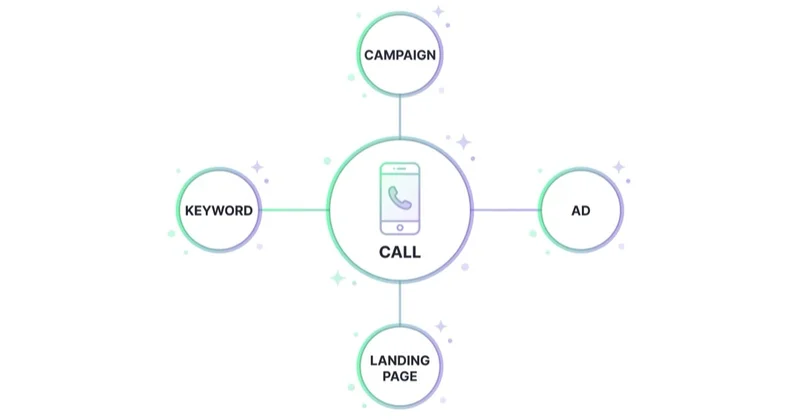
Call tracking for PPC is the process of connecting phone calls with the campaigns, ads, keywords, landing pages or channels that generated them. It matters because many lead-generation businesses do not convert mainly through checkout or form submission. They convert when a prospect calls, asks a question, books an appointment, requests a quote or becomes a qualified opportunity after a conversation.
Without call tracking, a Google Ads account can look less profitable than it really is. Campaigns that drive valuable phone calls may appear weak because the calls are invisible in reporting, while campaigns that produce easier-to-track form fills get more credit. The same problem affects automated bidding: Smart Bidding can optimize only toward the conversion signals that are defined, tracked and imported.
The goal is not to count every ring as success. The goal is to measure call quality, connect calls with the right source and feed the account signals that reflect real business value.
TL;DR
- Call tracking attributes phone calls to marketing activity. It shows which campaign, ad, keyword, landing page or channel generated the call.
- Google call reporting uses Google forwarding numbers. Google can measure calls from call assets, location assets and call ads, including duration, start time and whether the call connected.
- Website call tracking needs a separate setup. Google website call conversions or third-party dynamic number insertion can connect post-click website calls to the ad visit.
- Call quality is the real metric. A wrong number, support call or 12-second enquiry should not be treated like a booked appointment or sales-qualified lead.
- CRM imports improve bidding. Importing call outcomes lets Google Ads learn from calls that became customers, not only calls that happened.
- Call recording and AI qualification require extra care. Google's 2026 documentation describes AI-qualified call leads and call recording availability, mainly for the US and Canada, with sensitive-vertical rules.
- Privacy and consent are part of the implementation. The account should collect only the data needed, disclose tracking or recording where required and avoid sending sensitive call content into ad platforms.
- Call tracking is most valuable in phone-led categories. Home services, legal, medical, dental, mortgage, real estate, insurance, automotive and local B2B often need it before media performance can be judged correctly.
What is call tracking?
Call tracking is attribution and conversion measurement for phone calls. Instead of seeing only that the phone rang, the business can see which source created the call and whether the call was valuable.
In PPC, call tracking usually answers five questions:
- Which campaign generated the call?
- Which keyword, ad or asset was involved?
- Did the call connect?
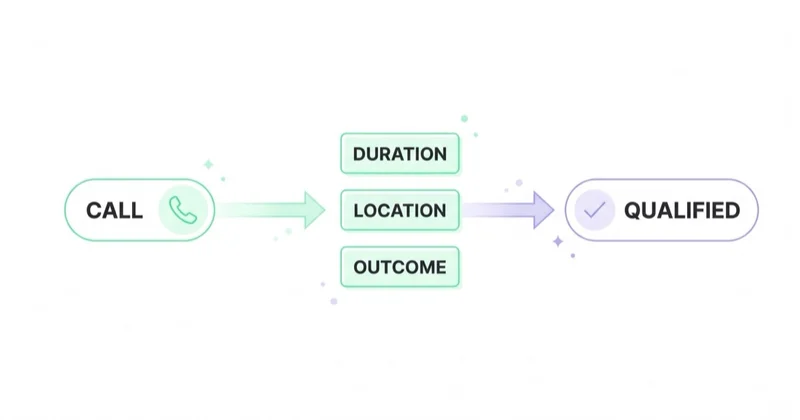
- Was the call long enough or qualified enough to count?
- Did the call become a booked job, appointment, sale, policy, patient or opportunity?
That fifth question is the difference between basic call counting and serious lead-generation measurement.
Why call tracking changes PPC decisions
Most lead-generation reports undercount phone value. A campaign can spend $2,000, generate 18 visible form leads and also drive 42 calls that nobody attributes. If only the forms are measured, the account manager may pause the campaign, lower its budget or move bidding away from the terms that produced the best conversations.
This is especially risky in expensive local and professional-service categories:
- plumbing, HVAC and emergency home services;
- roofing and other high-ticket contractor work;
- dental, chiropractic and other appointment-led clinics;
- mortgage, insurance and financial services;
- legal services and real estate;
- automotive repair, local B2B and franchise services.
Phone calls often carry higher intent than casual form fills. The prospect is ready to ask about availability, price, eligibility, service area or urgency. But the call also has to be answered, routed and qualified. A campaign with good call volume and bad intake can still underperform.
The main call tracking methods
There are three practical layers.
| Method | What it tracks | Best use | Main limitation |
|---|---|---|---|
| Google call reporting | Calls from call assets, location assets and call ads | Measuring direct ad calls inside Google Ads | Depends on Google forwarding numbers and availability |
| Google website call conversions | Calls to a number shown on the website after an ad click | Measuring post-click calls from Google Ads traffic | Needs tag setup and a supported forwarding-number flow |
| Third-party DNI | Website calls by source, channel, campaign or session | Multi-channel attribution and deeper call routing | Requires a number pool, script and vendor governance |
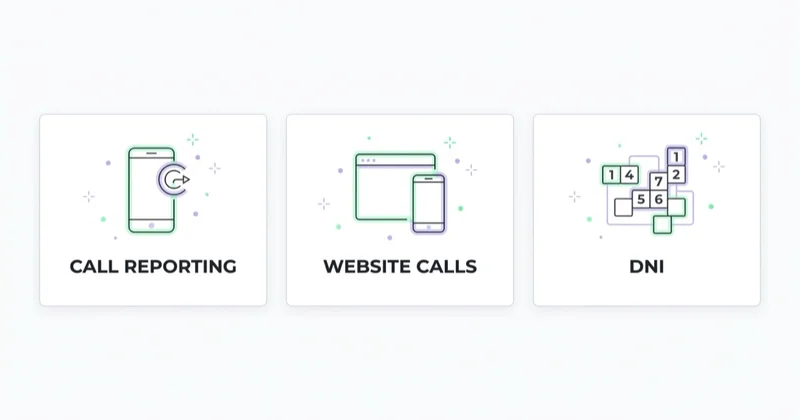
Many lead-generation accounts need more than one layer. Google call reporting can capture calls directly from ads. Website call conversions or dynamic number insertion can capture people who click first, browse the site and then call.
Google call reporting
Google call reporting uses Google forwarding numbers to measure calls from call assets, location assets and call ads. Google's documentation says call reporting can show details such as call duration, call start time, whether the call connected and, in eligible situations, caller information. Phone calls of a specified duration can be counted as conversions and used by automated bidding.
The important point is control. A minimum duration threshold should reflect the business. For some emergency services, a useful call may last 45 seconds. For a mortgage or legal consultation, a meaningful call may need several minutes. Duration is an imperfect proxy, but it is usually better than counting every call.
Useful call reporting checks:
- Are call assets active on the right campaigns?
- Is call reporting enabled at the account level?
- Are call conversions marked as primary or secondary intentionally?
- Is the minimum call duration realistic?
- Are calls segmented by brand and non-brand traffic?
- Are call ads used only where a phone-first path makes sense?
- Are calls being answered during the hours when ads run?
Call tracking does not fix missed calls. It exposes them.
Website call conversions and DNI
Not every caller taps the call asset. Many prospects click the ad, read the landing page, compare reviews and then call from the website. That path needs website call tracking.
Google website call conversions can dynamically replace a business number with a Google forwarding number for users who clicked an ad. The Google tag and event snippet need to be implemented correctly, and the account needs call reporting where Google forwarding numbers are used.
Third-party dynamic number insertion, usually called DNI, works more broadly:
- A call-tracking provider supplies a pool of phone numbers.
- A script on the website changes the displayed number based on visitor source or session.
- The tracking number forwards to the real business line.
- The provider stores source, landing page, call time, duration and outcome data.
- Qualified outcomes can be pushed to Google Ads, GA4, CRM or reporting tools.
DNI is often better when calls come from multiple channels: Google Ads, Microsoft Ads, Meta, organic search, referral partners, email, directories and offline campaigns. The trade-off is operational complexity. Number pools, consent notices, analytics integrations and CRM mapping need ownership.
Call quality: duration is only the first filter
The easiest implementation counts calls over a minimum duration. That can work as a starting point, but it is rarely the final model.
Better call-quality signals include:
- connected call;
- minimum duration;
- new caller vs returning caller;
- service area match;
- category or service requested;
- appointment booked;
- quote requested;
- job booked;
- policy sold;
- patient scheduled;
- sales-qualified lead;
- revenue or estimated value.
A 90-second call from outside the service area may be worthless. A 50-second emergency call that booked a technician may be valuable. This is why CRM or call-center disposition matters more than duration alone.
For definitions, connect this setup with micro and macro conversions. A call click can be a micro-conversion. A qualified call, booked appointment or signed job is closer to a macro-conversion.
Feeding calls into Smart Bidding
Call tracking becomes commercially useful when call outcomes feed the bidding system.
A practical maturity path looks like this:
| Stage | Signal sent to Google Ads | Risk | Better next step |
|---|---|---|---|
| Basic | every call click | inflated conversion volume | use connected calls or minimum duration |
| Better | calls over a threshold | still counts weak calls | add CRM or intake outcomes |
| Strong | qualified calls | better bidding signal | import booked or sold outcomes |
| Advanced | qualified calls with value | value-based optimization | use lead value, job value or pipeline value |
Google Ads supports phone call conversion tracking and importing phone call conversions tracked in another system, such as a CRM. Its documentation also notes that importing call conversions gives more control over which calls count, including calls that include sales and values.
For lead-generation businesses, the end state is usually not "maximize calls". It is "maximize qualified calls that turn into profitable customers". That may require offline conversion imports, enhanced conversions for leads, CRM hygiene and a clear naming convention for conversion actions.
Call tracking and GA4
GA4 can track click-to-call events on a website, but a click on a phone number is not the same as a completed call. On mobile, click-to-call tracking is useful as a behavioral signal. It cannot always confirm that a conversation happened, how long it lasted or whether it was valuable.
A robust setup usually separates:
- click on phone number;
- call from Google call asset or call ad;
- website call after paid click;
- third-party DNI call;
- qualified call outcome from CRM;
- booked appointment or closed sale.
GA4 is useful for journey analysis. Google Ads conversion actions are useful for bidding. CRM outcomes are useful for business truth. They should be connected, but not confused.
Privacy, consent and call recording
Call tracking touches personal data because calls can include names, phone numbers, addresses, medical issues, financial details, legal facts or other sensitive information. The safest implementation measures the event and outcome without sharing call contents or sensitive details with ad platforms.
Operational rules:
- disclose tracking and recording where required by law or platform policy;
- avoid recording sensitive calls unless the legal basis and internal process are clear;
- restrict who can access call recordings;
- define retention periods;
- send only necessary conversion data to ad platforms;
- avoid putting personal data in campaign names, call notes or URL parameters;
- review the setup separately for healthcare, finance, legal and other regulated categories.
Google's current documentation says call recording is used for playback and AI classification, that call recording and AI-qualified conversions are available only for calls involving phone numbers in the United States and Canada, and that sensitive industries such as certain healthcare or financial services have additional handling. It also says callers hear an automated message when the conversation will be recorded for quality purposes.
This should be treated as a measurement feature, not a reason to collect more data than needed.
Implementation checklist
- Map the phone paths. List calls from ads, website calls, mobile click-to-call, Google Business Profile, landing pages, Local Services Ads and third-party directories.
- Choose tracking layers. Use Google call reporting for ad calls, website call conversions for post-click Google Ads calls and DNI when multi-channel attribution is needed.
- Set conversion rules. Decide which calls are primary conversions, which are secondary diagnostics and what duration or qualification threshold applies.
- Connect CRM outcomes. Import booked, qualified, sold or value-based outcomes when volume and process allow it.
- Audit consent and notices. Review privacy policy, call recording messages, cookie consent and data-sharing settings.
- Align ad schedule with intake. Do not drive calls when nobody can answer unless the business has a reliable callback process.
- Report by value, not only volume. Segment calls by campaign, service, location, new caller, outcome and revenue quality.
How Space Ads audits call tracking
Across the 25+ accounts audited daily and roughly 14M monthly data points analyzed through Space Ads OS, missing call tracking is one of the fastest ways for a lead-generation account to misread performance.
The audit usually checks:
- whether call assets and call reporting are configured correctly;
- whether phone calls are primary, secondary or missing conversions;
- whether website numbers are tracked after paid clicks;
- whether mobile click-to-call is being mistaken for completed calls;
- whether call duration thresholds match real sales conversations;
- whether CRM or call-center outcomes are imported;
- whether ad schedules match call-answering capacity;
- whether privacy, recording and sensitive-vertical controls are documented.
When the account is already spending, a marketing audit can show whether budget is being moved away from call-driving campaigns because the reporting is incomplete. Ongoing execution sits under performance marketing, especially for phone-led local and professional-service accounts.
Common mistakes
| Mistake | Why it hurts | Better approach |
|---|---|---|
| Counting every call as a conversion | Wrong numbers and support calls inflate performance | Use duration, connection and CRM quality rules |
| Measuring only click-to-call | A click does not prove a conversation happened | Track completed calls where possible |
| Ignoring website calls | Post-click callers disappear from attribution | Use website call conversions or DNI |
| Running ads outside intake hours | Good calls become missed calls | Align schedule, routing and callback process |
| Importing no call outcomes | Smart Bidding optimizes toward weak proxies | Import qualified, booked or sold call stages |
| Recording calls without governance | Creates privacy and compliance risk | Define notice, access, retention and sensitive-data rules |
| Mixing brand and non-brand calls | Brand demand hides acquisition efficiency | Segment reporting by source and intent |
FAQ
What is call tracking in PPC?
Call tracking in PPC is the attribution of phone calls to paid campaigns, ads, keywords, landing pages or channels. It helps advertisers see which activity generates calls and whether those calls become valuable leads or customers.
How does Google call reporting work?
Google call reporting uses Google forwarding numbers for eligible call assets, location assets and call ads. When reporting is enabled, Google can show call details such as duration, start time and whether the call connected. Calls of a specified duration can be counted as conversions.
What is dynamic number insertion?
Dynamic number insertion is a website call-tracking method where a script changes the displayed phone number based on the visitor's source or session. The number forwards to the real business line, while the system records which campaign, channel or landing page generated the call.
Is call tracking the same as call recording?
No. Call tracking measures source and outcome. Call recording captures the conversation. Recording creates additional legal, privacy and operational requirements, especially in sensitive sectors such as healthcare, finance and legal services.
Should every call count as a Google Ads conversion?
Usually not. Better conversion definitions use a minimum duration, connection status or CRM outcome. For mature accounts, the best signal is often a qualified call, booked appointment, sold job or revenue value imported back into Google Ads.
Does call tracking help Smart Bidding?
Yes, if the conversion actions are configured correctly. Smart Bidding can optimize toward call conversions and imported call outcomes, but weak signals can train it in the wrong direction. Quality matters more than raw call count.
In short
Call tracking turns phone demand into measurable PPC data. The basic setup identifies where calls came from. The better setup separates qualified calls from noise. The strongest setup imports call outcomes and values so bidding follows real business quality. For phone-led lead generation, that difference can decide whether the account scales profitably or cuts the campaigns that were actually producing the best conversations.
Sources and further reading
- Google Ads Help - About call reporting
- Google Ads Help - About phone call conversion tracking
- Google Ads Help - Set up tracking calls to a phone number on a website
- Google Ads Help - Import phone call conversions
- Google Ads Help - Call recording settings and eligibility documentation
Continue learning
- Google Ads Smart Bidding: tCPA, tROAS and Maximize Conversions
- Google Ads for local businesses, home services and contractors
- Google Local Services Ads and Google Guaranteed: the guide
- Enhanced conversions: what they are and how to set them up
- What is a conversion? Micro-conversions and macro-conversions
Continue reading
How to Choose a Lead Generation Agency (Questions to Ask, Red Flags)
A practical framework for comparing lead generation agencies: scope, measurement, pricing, account ownership, security, contracts and the questions worth asking before you sign.
Cost Per Lead (CPL): Benchmarks, What's 'Good', and How to Set Your Target
CPL is easy to calculate and easy to misuse. Learn how to compare valid benchmarks, separate media CPL from fully loaded CPQL, and derive an affordable target from your own unit economics.
Speed to Lead: Why Response Time Decides Who Wins the Deal
Learn how to measure and improve lead response time without sacrificing quality: define the right timestamps, set channel-specific targets, fix routing and coverage, and validate the impact on sales outcomes.