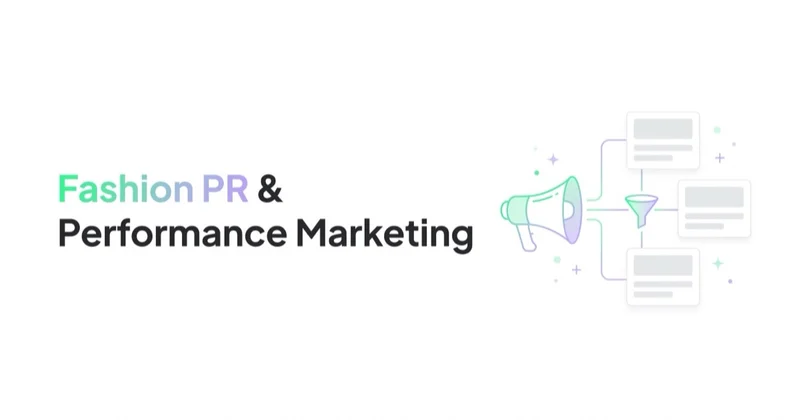
Fashion PR is the discipline of managing relationships, reputation and public understanding around a fashion brand. It can support desirability and cultural relevance through editorial coverage, press and stylist relationships, showrooms, events, runway moments, product seeding, talent dressing, digital PR and issues or crisis communication.
Unlike advertising, PR does not guarantee reach by buying an impression. It creates reasons for journalists, stylists, buyers, creators and communities to pay attention, but coverage remains subject to their judgment. Not every PR output is purely earned: a program can contain gifted product, paid creators, sponsored events, affiliate commerce and owned content. Those relationships should be labeled and measured according to what they actually are.
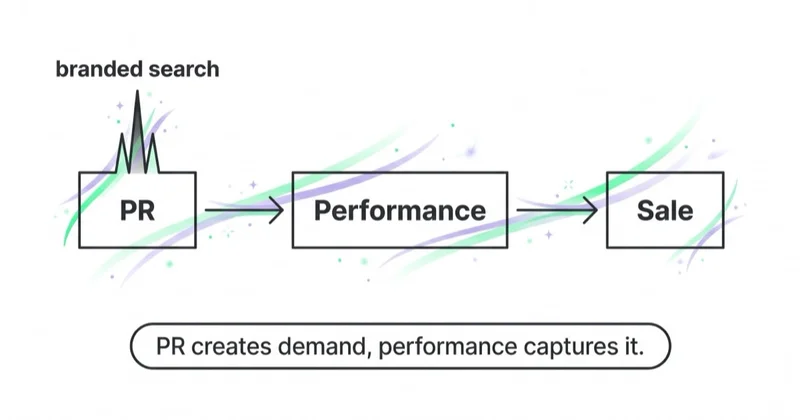
The commercial mistake is treating PR and performance marketing as unrelated systems. PR may influence awareness, understanding, reputation or demand; paid and owned channels can then help people find the relevant product or story. Coordinating the systems improves the customer path and measurement, but it does not make every later sale attributable to PR.
TL;DR
- Fashion PR manages reputation and relationships. Earned coverage is one output; events, seeding, creators, issues and stakeholder communication also belong in the system.
- PR is not the same as advertising. Advertising buys media delivery. Independent editorial attention is not guaranteed and should not be described as a paid endorsement.
- Fashion PR now overlaps with creators and SEO. Digital coverage, creator seeding, backlinks, search demand and social amplification are part of the same visibility layer.
- PR and performance need a shared readiness plan. Search paths, landing pages, stock, customer service and lawful audience capture should be ready before a known moment.
- Measurement should move from activity to impact. Define objectives and baselines, then separate outputs, audience response, outcomes and business impact. Media impressions and AVE are not proof of value.
- Disclosure and link quality matter. Gifting, paid partnerships and affiliate relationships require clear disclosure; digital PR should not become paid link manipulation.
- Luxury uses PR differently. Premium and luxury fashion need taste, scarcity, editorial authority and cultural fit more than raw reach.
What is fashion PR?
Fashion PR, or fashion public relations, manages communication between a fashion brand and the people who can affect or are affected by it. That includes customers, employees, media, creators, stylists, buyers, retail partners, investors, local communities and other stakeholders. Earned media is important, but reputation also depends on what the company does, how it responds and whether its claims match reality.
In practical terms, fashion PR tries to answer questions such as:
- Why should editors, stylists or creators care about this brand now?
- What story makes this collection relevant?
- Which people should be seen wearing the product?
- Which publications, communities or events can give the brand credible context?
- How should the brand respond if a product, campaign or founder decision creates criticism?
- What evidence supports the story, especially claims about craft, sourcing, performance or environmental impact?
- How can relevant attention support search, social, ecommerce and retail without overstating attribution?
Fashion PR is part of the broader fashion marketing system. Its objective might be awareness, accurate understanding, reputation, stakeholder confidence, launch consideration or response to an issue. Immediate conversion may be relevant for a product story, but it should not be forced onto every corporate, cultural or crisis communication program.
What fashion PR includes
| Area | What it does | Typical output |
|---|---|---|
| Media relations | Builds relationships with journalists, editors and publications | Features, interviews, product placements, reviews |
| Editorial strategy | Shapes the story behind the brand or collection | Angles, press releases, lookbooks, founder narratives |
| Events and launches | Creates moments worth covering | Shows, presentations, pop-ups, showroom appointments |
| Stylist and celebrity dressing | Places product on culturally relevant people | Red carpet, street style, editorial pulls |
| Gifting and seeding | Gets product into the hands of tastemakers and creators | Organic posts, mentions, try-ons, informal feedback |
| Digital PR | Earns online coverage and authority | Links, referral traffic, search visibility, brand mentions |
| Creator relationships | Connects PR with influencer and social visibility | Unpaid seeding, paid partnerships, amplification candidates |
| Crisis and reputation | Protects trust when something goes wrong | Holding statements, response plans, stakeholder updates |
Product seeding is an input, not guaranteed coverage. Sending an item without a posting commitment can result in no public output, and a resulting endorsement can still require disclosure because the product was free. If a post, mention or link is contractually required, classify the relationship as paid or sponsored rather than reporting it as purely earned.
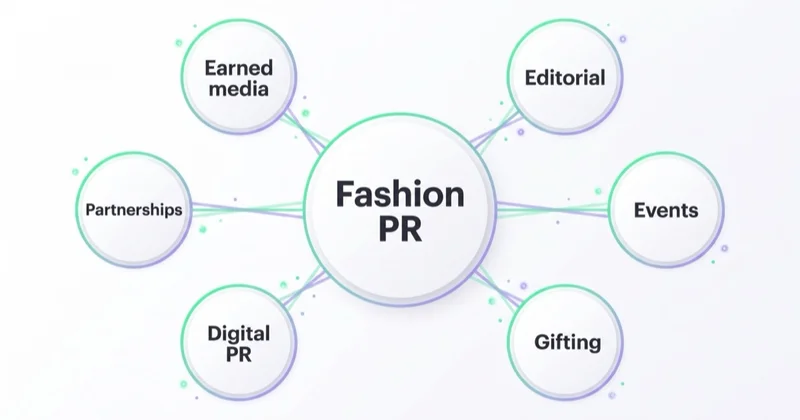
The mix depends on the communication objective, stakeholder and brand position. A young label may focus on founder expertise, customer community and relevant digital media. A premium brand may prioritize editorial context, stylists and carefully selected events. A luxury house may protect scarcity and cultural status rather than pursue mass traffic. None of these approaches removes the need for accurate claims and operational readiness.
Fashion PR vs fashion marketing vs advertising
Fashion PR is one part of fashion marketing. The distinction is useful because each discipline earns attention differently.
| Discipline | Main mechanism | Main job |
|---|---|---|
| Fashion PR | Earned attention and relationships | Credibility, reputation, cultural relevance |
| Fashion advertising | Paid media | Reach, traffic, demand capture and scale |
| Organic social | Owned and community content | Daily relevance, audience engagement, creative learning |
| Influencer marketing | Creator partnerships, paid or unpaid | Social proof, content, audience trust |
| Ecommerce marketing | Site, feed, merchandising, CRM | Conversion, retention and order quality |
The disciplines can share one narrative and calendar without losing their different rules. PR develops stakeholder-relevant stories and relationships. Social adapts owned communication. Creator partnerships require appropriate commercial and disclosure controls. Paid media uses assets only when the rights permit it. Ecommerce and CRM support the customer path. Independent editorial material should not be edited, quoted out of context or turned into advertising without permission.
Digital PR in fashion
Digital PR is PR designed for online visibility. In fashion, it can include editorial links, interviews, founder commentary, data-led stories, expert quotes, gift guides, product roundups, collaborations, sustainability or craft features, and coverage that creates search authority as well as awareness.
The SEO benefit is real but should be handled carefully. Digital PR should earn links because the story, product, data, photography, expertise or cultural relevance is worth referencing. It should not become a paid-link scheme disguised as PR. Google treats manipulative link practices as spam, so any paid placement, affiliate relationship or sponsored feature should be handled transparently and with the appropriate link attributes where required.
Good digital PR can create multiple forms of value:
- brand mentions that improve trust and search context;
- referral traffic from relevant publications;
- backlinks from credible sources;
- stronger search visibility for brand and category queries;
- content that sales, social and paid teams can reuse;
- corroborating public information that search and AI systems may use when interpreting the brand, without guaranteeing citation or visibility.
For fashion brands, useful stories usually come from specificity: documented material innovation, craft, founder expertise, cultural timing, styling insight, a genuine collaboration, responsibly analyzed first-party data or local relevance. A press release distributed mainly for keyword-rich links is not a substitute for a newsworthy story.
Google classifies buying links, exchanging product for a required link and advertorial links that pass ranking credit as link spam. Paid, affiliate or otherwise compensated links should be qualified, normally with rel="sponsored" or nofollow. Editorial independence also matters: the brand should not condition a gift on positive sentiment or present sponsored coverage as independent journalism.
PR, creators and influencer marketing
Fashion PR and influencer marketing now overlap heavily, but they are not identical.
PR often focuses on relationship-building, editorial relevance, seeding, events and stakeholder communication. Fashion influencer marketing more often includes contracted deliverables, affiliate economics, usage rights and Spark Ads or Partnership Ads permissions. In practice, the disciplines overlap; the agreement and material connection determine the classification, not the department managing it.
The operational line should be clear:
- if a creator is paid or receives a material benefit, assess and implement the disclosures required by the market and platform;
- if content will be reused in ads, usage rights and authorization are needed;
- if affiliate links or commissions are involved, the relationship should be disclosed;
- if a creator receives product with no promised post, track the relationship without pressuring for positive coverage and request separate permission before reusing any content.
The best setup is one relationship layer with different outputs. PR, social and paid teams should know which creators received product, which posts went live, which content can be reused, and which relationships are worth deepening.
How PR and performance marketing work together
PR and performance marketing should coordinate around known moments. The purpose is to make the customer path useful and observable, not to force an immediate conversion from every mention.
A feature, event, celebrity placement or creator moment can create a spike in:
- branded search;
- direct traffic;
- referral traffic;
- product page visits;
- social profile visits;
- email signups;
- retailer or marketplace searches;
- remarketing audiences.
Performance needs to be ready before the moment lands.
Practical checklist:
- Audit branded search. Ensure the official site and relevant pages are discoverable. Test whether paid brand coverage adds incremental value rather than assuming it must always run.
- Prepare the landing path. The collection, product or story mentioned in coverage should be easy to find on-site.
- Tag links where possible. Use UTM parameters for controlled links in newsletters, creator bios, event pages or digital features where tagging is allowed.
- Use audience data lawfully. Consent, notice and platform requirements apply to analytics, retargeting and matched audiences; an editorial referral is not automatic permission for advertising.
- Offer an appropriate next step. Newsletter, stock alert, drop access or a useful guide may fit better than an immediate hard sell, but consent must be freely given and specific where required.
- Amplify only with rights and context. Obtain permission for creator content, publication marks, screenshots, quotes and any implied endorsement. Do not alter the meaning of independent coverage.
- Measure an appropriate window and baseline. Review search, referrals, owned actions, message comprehension and mature customer outcomes while separating observation from causal evidence.
This is the same brand-performance logic explained in why brand awareness matters: demand creation and demand capture work best when planned together.
PR for luxury vs accessible fashion
The role of PR changes with positioning.
For luxury and premium fashion, PR is central to value creation. Editorial authority, cultural association, scarcity, clienteling and taste matter more than broad reach. The wrong placement can cheapen the brand; the right placement can reinforce price integrity.
For accessible and mass-market fashion, PR still matters but usually works alongside a heavier social, creator and performance engine. The emphasis is often on launch awareness, digital PR, gift guides, influencer seeding, product-led stories and coverage that can drive traffic or support SEO.
For streetwear, PR may look like community credibility, collaboration, drop culture and cultural timing. For activewear, it may involve athletes, trainers, wellness communities and proof of performance. For footwear, stylists, sizing, comfort, drops and product reviews often matter more than a broad brand story.
The rule is simple: PR should reinforce the brand's market position. A luxury brand should not chase every reach opportunity. A young DTC label should not wait for old-media approval before building creator and digital PR momentum.
How to measure fashion PR
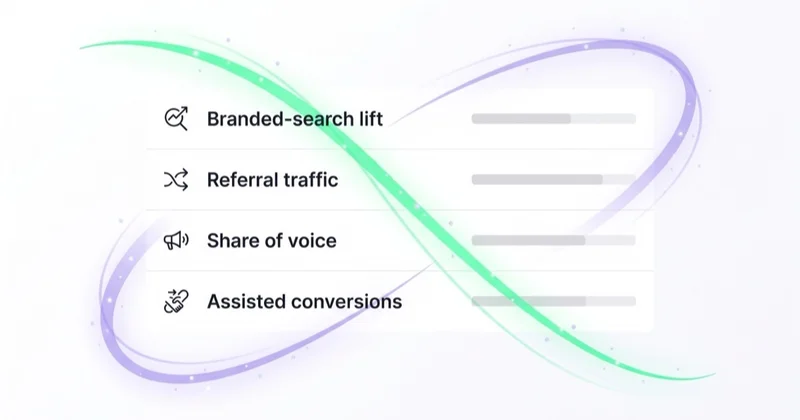
Fashion PR is measurable when objectives are defined before activity begins. AMEC's current Barcelona Principles 4.0 and Integrated Evaluation Framework emphasize planning and evaluation across paid, earned, shared and owned communication, using qualitative and quantitative evidence. A practical scorecard separates four levels:
| Level | Question | Examples |
|---|---|---|
| Outputs | What was produced or published? | relevant coverage, message inclusion, links, event attendance, content quality |
| Outtakes | What did the audience notice or understand? | recall, comprehension, sentiment, intended-message association |
| Outcomes | What changed in behavior or relationships? | qualified site visits, search change, inquiries, signups, retailer interest, stakeholder action |
| Impact | What organizational result followed? | reputation objective, launch consideration, risk reduction, fulfilled contribution or partner value |
Set a baseline, target audience, decision window and source before launch. Advertising value equivalency (AVE) does not establish PR value: it applies an advertising price to editorial exposure while ignoring context, credibility, tone and outcomes. Estimated impressions also need their method and limitations documented; do not add incompatible reach figures and call the total “people reached.”
Branded search, direct traffic and assisted conversions can change around a PR moment, but they are not causal proof. Other advertising, seasonality, retail activity and existing demand may move at the same time. Use tagged referral links where editorial policy permits, annotated time series, matched-market or holdout designs when feasible, and stakeholder research for reputation objectives. Report what is observed separately from what is inferred.
For ecommerce, interpret PR alongside availability, returns and contribution. A relevant feature can create interest yet little immediate revenue because the story is corporate, the product is unavailable or the purchase cycle is longer. Conversely, a sales spike does not prove that the coverage caused every order.
How Space Ads approaches PR-connected performance
Space Ads does not replace press, showroom, stakeholder or crisis-communication specialists. Our standard role is to prepare the paid, onsite and measurement layer around planned communication moments and to distinguish observed demand from platform attribution.
That can include auditing branded search, preparing relevant landing paths, confirming stock and site readiness, defining consent-aware audience rules and agreeing how referrals, search changes and customer outcomes will be read. Creator or editorial assets are evaluated for paid use only when the permissions and context support it. The final report separates PR outputs, site behavior, attributed outcomes, contribution and any credible incremental evidence.
For fashion and footwear brands, this connects directly with fashion and footwear paid media, Meta Ads, Google Ads, TikTok Ads and cross-channel reporting. A marketing audit is often the right starting point when PR activity is creating visibility but the business cannot see whether that visibility is being captured.
Common mistakes
| Mistake | Why it hurts | Better approach |
|---|---|---|
| Running PR and paid media in silos | Demand spikes leak into competitors, marketplaces or no follow-up | Plan capture before PR moments |
| Measuring only impressions | Reach says little about business effect | Track search, traffic, referrals, assisted demand and cohorts |
| Buying brand ads by default | Spend may cannibalize organic demand without adding value | Test coverage and use ads where they solve a real gap |
| No landing page match | Users cannot find the featured product or story | Build collection, event or campaign pages before coverage |
| Treating creator seeding as informal | Rights, disclosure and tracking become unclear | Track gifts, provide disclosure guidance and license reuse separately |
| Chasing the wrong publications | Reach may dilute positioning | Prioritize audience fit, editorial credibility and brand context |
| Digital PR as link buying | Creates search risk and weak credibility | Earn coverage with real stories and transparent relationships |
| Reporting AVE or summed impressions as impact | Activity is mistaken for reputation or commercial change | Set objectives and measure outputs, outtakes, outcomes and impact |
| Reusing press logos or quotes without permission | Can misstate endorsement and infringe rights | Confirm permissions, wording, context and duration |
FAQ
What is fashion PR?
Fashion PR is the practice of building a fashion brand's reputation and desirability through earned attention. It includes editorial coverage, press relationships, events, shows, gifting, stylist and celebrity dressing, creator seeding, digital PR, cultural partnerships and reputation management.
What is the difference between fashion PR and fashion marketing?
Fashion marketing is the broader discipline of creating demand and sales for a fashion brand. Fashion PR is one part of it, focused on earned credibility and reputation. PR creates awareness and desire; advertising, ecommerce and CRM help capture and convert that demand.
How does fashion PR work with performance marketing?
PR may influence attention, understanding or demand through coverage, events and cultural moments. Performance teams can prepare search paths, relevant pages, lawful audience use and measurement around those moments. Coordination improves readiness, but later conversions should not automatically be assigned to PR.
Is fashion PR the same as influencer marketing?
No, but they overlap. PR often includes creator seeding and relationship-building. Influencer marketing also includes paid deliverables, affiliate links, usage rights and ad amplification. A modern fashion brand should coordinate PR, influencer and social workflows so relationships and content are not managed in separate silos.
How should fashion PR be measured?
Start from the communication objective and baseline. Measure outputs such as relevant coverage and message inclusion; outtakes such as understanding; outcomes such as qualified action or relationship change; and organizational impact where evidence supports it. Search, direct traffic and assisted conversions are useful diagnostics, not automatic causal proof. Avoid AVE.
Does a small fashion brand need PR?
Small fashion brands may not need traditional agency-led PR immediately, but they still need credibility. That can come from creator seeding, local press, founder stories, niche newsletters, digital PR, community partnerships, customer content and strong organic social. The priority is to earn trust in a way the brand can operationally support.
Is digital PR good for fashion SEO?
Digital PR can support fashion SEO when it earns relevant coverage, mentions and links from credible sources. It becomes risky when it is used mainly to buy or manipulate links. The best digital PR creates stories worth referencing and supports users, search engines and brand authority at the same time.
Key takeaways
- Fashion PR builds credibility, reputation and desire through earned attention.
- PR, creators, social, SEO and performance marketing now overlap; they need shared planning.
- Planned PR moments should have a readiness plan: discoverability, landing paths, stock, customer service, lawful audience use and analytics.
- Digital PR should earn authority through real stories, not paid link manipulation.
- Luxury and accessible fashion need different PR playbooks because positioning changes what "good attention" means.
Sources and further reading
- AMEC - Integrated Evaluation Framework
- AMEC - Barcelona Principles 4.0
- Google Search Central - Spam policies for Google Web Search
- Google Search Central - Qualify paid and user-generated outbound links
- U.S. Federal Trade Commission - Disclosures 101 for social media influencers
- UK Competition and Markets Authority - Environmental claims in fashion retail
- ASA / CAP - Influencers' guide to making clear that ads are ads
Continue learning
Continue reading
Fashion Marketing in 2026: The Complete Guide to Channels, Strategy and Measurement
Fashion marketing connects brand-building, social, creators, paid media, ecommerce, retail and retention into one growth system. This guide explains the discipline, the channel roles, the 2026 market context and how to measure fashion growth without being misled by platform ROAS.

Real Estate Development and Property Developer Marketing
Property development marketing coordinates finite inventory, pricing, buyer information, sales capacity and long-cycle demand. This guide covers compliant pre-launch planning, paid media, CRM stages and measurement from enquiry to completion.
Fashion Influencer Marketing: Building a Creator Programme That Feeds Paid
Fashion influencer marketing works best when it is run as a creator system: audience fit, clear briefs, usage rights, disclosure, affiliate logic and paid amplification of the posts that prove they can create demand.