Q-commerce, or quick commerce, is a retail and delivery model built around very fast local fulfilment. Instead of waiting days for a parcel, the customer receives selected products in minutes or within a short delivery window from a nearby store, dark store, micro-fulfilment centre or local partner.
Q-commerce is not simply "faster ecommerce". It changes the economics of inventory, delivery radius, product range, pricing, advertising and customer experience. It can be powerful for groceries, convenience products, pharmacy items, food, urgent household goods and local replenishment. It can also destroy margin if the promise is faster than the operation can profitably support.
TL;DR
- Q-commerce means quick commerce: selling products with very fast local delivery, often measured in minutes rather than days.
- The model depends on local inventory, accurate stock data, fast picking, short delivery radius and efficient last-mile logistics.
- Dark stores and micro-fulfilment centres are common because they keep high-demand products close to customers.
- Q-commerce works best for frequent, urgent, convenience-driven purchases with enough order density.
- It is not suitable for every ecommerce business. Margin, basket value, delivery cost and local demand must be tested first.
- Marketing should be local, availability-led and honest about delivery times.
- Traditional ecommerce can borrow q-commerce features without building a full instant-delivery model.
- Profitability should be measured with contribution margin, not only order volume or app installs.
- The best pilot usually starts with a narrow area, curated assortment and conservative delivery promise before scaling.
What is Q-commerce?
Q-commerce is short for quick commerce. It focuses on delivering a limited range of products very quickly within a defined local area.
The model usually includes:
- local product availability;
- short delivery radius;
- fast picking and packing;
- mobile-first ordering;
- real-time inventory;
- quick payment;
- courier dispatch or local delivery fleet;
- delivery tracking;
- strong demand forecasting;
- limited but high-turnover assortment.
The difference from normal ecommerce is not only delivery speed. A standard ecommerce operation can ship from a central warehouse. Q-commerce needs goods close to customers before the order is placed.
Q-commerce vs ecommerce
| Area | Traditional ecommerce | Q-commerce |
|---|---|---|
| Delivery promise | Same day, next day or several days | Minutes or a short local window |
| Geographic model | Regional, national or international | Hyperlocal |
| Inventory | Central warehouse or store network | Local stock near demand |
| Product range | Broad catalogue | Curated high-velocity assortment |
| Customer value | Choice, price, convenience | Speed, immediacy and convenience |
| Cost pressure | Warehousing, fulfilment and shipping | Picking speed and last-mile cost |
| Marketing | Broad targeting possible | Local availability matters |
| Main risk | Slow delivery or stock issues | Unprofitable speed promise |
Q-commerce is most attractive when speed solves a real problem. If customers do not value instant fulfilment, a normal ecommerce or scheduled-delivery model may be healthier.
How Q-commerce works
A typical q-commerce flow looks like this:
- The customer opens a mobile app or mobile website.
- The system shows products available in the customer's area.
- The customer places and pays for the order.
- The nearest store, dark store or fulfilment point receives the order.
- Staff pick and pack the items quickly.
- A courier is assigned.
- The order is delivered inside the promised local window.
- The customer receives tracking, support and substitution updates where needed.
The operation only works if inventory, distance and dispatch are controlled. A fast front-end cannot compensate for poor stock accuracy or a delivery radius that is too large.
Q-commerce operating models
Q-commerce can be built in several ways. The right model depends on product type, geography, capital, existing store footprint and delivery density.
| Model | How it works | Best fit | Main risk |
|---|---|---|---|
| Store-based fulfilment | Existing shops pick local online orders | Retailers with local stores | Store staff and customer traffic compete with picking |
| Dark store | Dedicated local fulfilment site | Dense urban areas and high order volume | Fixed cost and inventory risk |
| Micro-fulfilment centre | Small automated or semi-automated local hub | Repeatable high-volume categories | Setup complexity |
| Partner network | Local partners fulfil orders | Marketplaces and asset-light pilots | Quality and stock control |
| Hybrid model | Stores, dark stores and partners combined | Multi-city operations | Operational complexity |
A store-based pilot can be faster to launch because inventory and staff already exist. A dark store can improve picking speed and route density, but only if order volume supports the fixed cost. Partner models can expand coverage quickly, but the customer experience may become less predictable.
What is a dark store?
A dark store is a retail-like fulfilment location that is not open to regular walk-in customers. It is designed for picking online orders quickly.
Dark stores are used in q-commerce because they can:
- place inventory closer to demand;
- reduce travel distance;
- support faster picking paths;
- focus on high-turnover products;
- operate without normal customer-facing retail constraints;
- improve delivery density in urban areas.
They are not always necessary. Some businesses use existing stores, franchise locations, restaurant kitchens, pharmacy branches or local partners. The right model depends on product type, geography, demand density and cost.
Why Q-commerce is growing
Q-commerce grows when several forces meet:
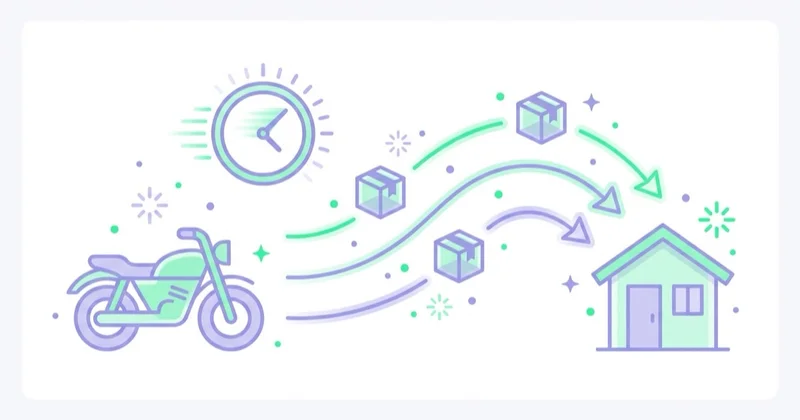
- customers expect faster convenience;
- mobile ordering becomes normal;
- delivery apps create behavioural habits;
- dense urban areas support short routes;
- payment friction decreases;
- retailers need local differentiation;
- consumers value urgent replenishment;
- data improves demand forecasting.
The strongest use cases are need-based. A missing ingredient, medicine, baby product, charger, pet food or emergency household item creates a different type of demand than a planned purchase.
Product categories that fit Q-commerce
Q-commerce usually works best for products that are:
- bought frequently;
- needed quickly;
- easy to pick;
- relatively small;
- not too fragile;
- locally relevant;
- high enough in basket value or margin;
- likely to produce repeat purchases.
Common categories include:
- groceries;
- drinks;
- ready-to-eat food;
- personal care;
- pharmacy and OTC products where allowed;
- baby products;
- pet essentials;
- household basics;
- convenience items;
- selected electronics accessories;
- emergency replacement items.
It is weaker for products that require long comparison, complex configuration, high-touch consultation, bulky delivery or very low margin.
Assortment strategy
Q-commerce assortment should be designed around speed and repeat demand, not catalogue completeness.
A strong quick-commerce assortment usually includes:
- high-frequency essentials;
- urgent replacement items;
- products with simple variants;
- compact items that are easy to pick and deliver;
- bundles that lift average order value;
- local favourites by neighbourhood or city;
- complementary items that make the order more useful;
- products with low substitution complexity.
The assortment should also remove items that create operational drag: slow-moving SKUs, fragile products, bulky items, products with unclear variants or goods that trigger too many substitutions. A smaller assortment can create a better customer experience if it is accurate, fast and relevant.
Basket design matters because delivery cost is attached to every order. Bundles, minimum order thresholds, replenishment reminders and smart recommendations can improve order economics without relying only on delivery fees.
When Q-commerce makes business sense
Q-commerce may be worth testing when:
- there is clear local demand;
- order density is high enough;
- the product range can be curated;
- stock can be updated close to real time;
- the delivery area is compact;
- average order value covers operational cost;
- customers value speed enough to pay or repeat;
- the business can handle exceptions;
- marketing can be targeted locally;
- fulfilment can scale without quality collapse.
The model needs operational discipline. Fast delivery creates a narrow margin for error. A delayed 20-minute order can feel worse than a clearly promised next-day delivery.
When Q-commerce is a bad fit
Q-commerce can be risky when:
- products have very low margin;
- demand is too spread out geographically;
- basket values are small;
- delivery cost is higher than contribution margin;
- stock data is unreliable;
- substitutions are difficult;
- customers do not expect instant delivery;
- operational teams cannot handle peaks;
- the brand promise depends more on selection than speed;
- the business copies a marketplace model without marketplace volume.
Speed is easy to advertise. It is much harder to operate profitably.
The economics of last-mile delivery
The last mile is the core economic challenge in q-commerce. The business has to pay for picking, packing, dispatch, rider time, support, failed deliveries, refunds and technology while keeping the customer promise attractive.

Key metrics:
- average order value;
- gross margin;
- contribution margin per order;
- delivery fee paid by customer;
- delivery cost per order;
- orders per courier hour;
- picking time;
- distance per delivery;
- cancellation rate;
- substitution rate;
- repeat purchase rate;
- customer acquisition cost;
- lifetime value by area.
Order volume alone is not enough. A company can grow revenue while losing money on every incremental delivery.
Q-commerce and marketing strategy
Marketing for q-commerce should be local, specific and availability-led.
Strong messages include:
- delivery time by area;
- products available now;
- urgent use cases;
- local coverage;
- convenience moments;
- first-order offers with margin control;
- subscription or replenishment reminders;
- time-limited bundles;
- weather or event-based demand triggers.
Weak messages promise speed everywhere, show products that are not available or target people outside the delivery radius.
For paid media, geotargeting is essential. A broad campaign that reaches users outside the service area wastes spend and damages trust. Campaigns should be structured around cities, zones, product categories and delivery availability.
Local SEO, ads and demand generation
Q-commerce growth depends on local demand. That means the marketing setup should be more granular than a normal national ecommerce campaign.
Useful tactics include:
- city and neighbourhood landing pages where they are genuinely served;
- delivery-area messaging by postcode or district;
- local inventory and availability messages;
- paid search campaigns for urgent local queries;
- app campaigns segmented by operating area;
- weather, event and time-of-day triggers;
- remarketing for users who browsed available products;
- CRM reminders for replenishment products;
- partnerships with local venues, offices or communities.
The landing experience must confirm eligibility quickly. If someone clicks an ad for 20-minute delivery and then discovers the address is outside coverage, the campaign pays for frustration. Clear service-area checks protect both conversion rate and trust.
For broader revenue planning, see how to increase online sales and sales funnel strategy.
Q-commerce and mobile UX
Q-commerce is usually mobile-first. The user often orders because the need is immediate.
The mobile flow should make it easy to:
- confirm delivery location;
- see only available products;
- search quickly;
- reorder previous purchases;
- choose substitutions;
- pay with saved methods or wallets;
- track courier progress;
- contact support;
- receive delay notifications;
- understand refunds and cancellations.
For broader mobile-commerce foundations, see M-commerce and mobile customer journeys.
How traditional ecommerce can use Q-commerce ideas
Not every company needs a full q-commerce model. Many ecommerce businesses can adopt smaller elements:
- same-day delivery in selected cities;
- local pickup;
- express delivery for profitable categories;
- delivery promises by postcode;
- local inventory ads;
- click and collect;
- priority fulfilment for loyal customers;
- city-level campaigns for in-stock products;
- fast delivery only for curated SKUs.
This is often safer than launching instant delivery everywhere. A limited pilot can reveal whether customers value speed enough to justify the cost.
Q-commerce for services and local businesses
Q-commerce is product-led, but service businesses can learn from the same immediacy logic.
Examples:
- urgent appointment booking;
- same-day repair slots;
- instant consultation calls;
- local availability calendars;
- mobile booking and payment;
- real-time service-area eligibility;
- rapid quote requests.
The product is not a physical item, but the customer expectation is similar: "Can this business solve the problem now or very soon?"
Measurement framework
Q-commerce should be measured at area, product and cohort level.
Track:
- orders by zone;
- conversion rate by delivery promise;
- delivery time accuracy;
- cancellation and refund reasons;
- average order value;
- delivery cost;
- margin after fulfilment;
- repeat purchase rate;
- stockout rate;
- substitution acceptance;
- first order vs returning customer economics;
- campaign cost by area;
- app install to first order rate;
- customer support contacts per order.
In analytics, connect advertising cost, mobile behavior, orders, delivery operations and margin. Platform ROAS alone can hide operational losses.
Implementation roadmap
Phase 1: Feasibility
Define product categories, target areas, expected demand, operational constraints, delivery partners, payment options and margin assumptions.
Phase 2: Pilot
Start with a limited area and curated assortment. Use conservative delivery promises that the operation can meet consistently.
Phase 3: Measurement
Review delivery accuracy, stockouts, cancellations, order value, contribution margin, repeat purchases and customer feedback.
Phase 4: Expansion
Expand only where order density and profitability support it. New areas should be treated as new operational tests, not simple campaign extensions.
Q-commerce pilot checklist
Before launching, check:
- which areas can be served profitably;
- what delivery promise can be met consistently;
- which products are in the pilot assortment;
- how substitutions will be handled;
- how stock accuracy will be maintained;
- whether delivery fees and minimum order value protect margin;
- how peak demand will be staffed;
- what happens when couriers are unavailable;
- how refunds, failed deliveries and cancellations work;
- which marketing channels are limited to eligible areas;
- how contribution margin will be reported;
- when the pilot should stop, adapt or expand.
The stop criteria are as important as the growth criteria. A q-commerce pilot should not continue just because order volume looks promising if every order loses money after fulfilment and delivery.
How we approach this at Space Ads
Q-commerce sells on immediacy: the customer wants something now and nearby. The marketing has to talk in that register — locality and urgency, clear availability and delivery time, catching the need at the moment it appears rather than building awareness slowly in advance. It shifts both bidding and message: the winner is whoever is on the spot and available right now, not whoever ran the prettiest brand campaign. The whole post-click path has to be instant and frictionless, because speed is the promise; let the purchase drag and you break the one thing the customer came to q-commerce for. Advertising here exists to reinforce immediacy, never to contradict it.
Common Q-commerce mistakes
| Mistake | Impact | Better approach |
|---|---|---|
| Promising unrealistic delivery times | Trust drops quickly | Use delivery promises the operation can meet |
| Launching with too many products | Picking becomes slow and stock errors rise | Start with high-velocity SKUs |
| Ignoring contribution margin | Growth becomes unprofitable | Measure cost after fulfilment and delivery |
| Weak inventory accuracy | Orders are cancelled or substituted | Use near-real-time stock data |
| Broad ad targeting | Spend reaches users outside service area | Use strict local targeting |
| Copying marketplace discounts | Customer acquisition becomes too expensive | Use offers tied to retention and margin |
| No exception handling | Delays create support pressure | Build delay, refund and substitution workflows |
Risks and trade-offs
Q-commerce can improve convenience, but it creates trade-offs that should be discussed before launch.
Important risks:
- delivery speed becomes more important than product quality;
- courier supply becomes a bottleneck during peaks;
- discounts attract one-time customers with weak retention;
- dark stores create fixed costs before demand is proven;
- local teams struggle with substitutions and refunds;
- customer support volume rises because expectations are immediate;
- broad marketing increases demand outside the profitable service area.
The strategic goal is not the fastest possible delivery time. The goal is a promise that customers value and the operation can repeat profitably.
FAQ
What does Q-commerce mean?
Q-commerce means quick commerce. It is a model of selling products with very fast local fulfilment, often from a nearby store, dark store or micro-fulfilment centre.
Is Q-commerce the same as same-day delivery?
No. Same-day delivery can still use normal ecommerce fulfilment. Q-commerce usually means a much shorter local promise, often measured in minutes or a narrow delivery window.
What products are best for Q-commerce?
Groceries, drinks, personal care, OTC pharmacy products where legal, baby products, pet essentials and household basics are common fits because customers often need them quickly and repeatedly.
Is Q-commerce profitable?
It can be, but not automatically. Profitability depends on order density, basket value, gross margin, delivery cost, picking efficiency, repeat purchases and customer acquisition cost.
Does a business need dark stores for Q-commerce?
Not always. Dark stores are common, but existing stores, local branches, kitchens or partner networks can also support fast fulfilment if inventory and delivery operations are controlled.
How should Q-commerce be advertised?
Advertising should be local and availability-aware. The campaign should target only areas that can be served and should promote products or categories that are actually available.
Can a normal ecommerce store use Q-commerce?
Yes, but usually through selective pilots: express delivery in one city, local pickup, fast delivery for selected categories or postcode-based availability rather than a full instant-delivery promise.
What is the biggest challenge in Q-commerce?
The biggest challenge is usually unit economics. Fast delivery requires local stock, picking, courier capacity, support and accurate forecasting. If order density or basket value is too low, speed can become unprofitable.
How should a Q-commerce pilot start?
A pilot should start with a limited area, curated products, conservative delivery promise and clear margin reporting. Expansion should happen only when repeat demand and contribution margin support it.
Conclusion
Q-commerce is a speed-based commerce model built on local inventory, mobile ordering and efficient last-mile delivery. It works when immediacy creates real customer value and the operation can deliver profitably.
The strategic question is not "Can delivery be faster?" The better question is "Where does faster delivery create enough value to cover the operational cost?" For many businesses, the right answer is a focused pilot, not a full transformation.
Sources and further reading
- DHL Logistics of Things: Quick Commerce
- DHL: On-demand delivery
- DHL: The challenging logistics of last-mile delivery
- McKinsey: Quick commerce pushes the limits on grocery delivery
- Google Analytics Help: About ecommerce metrics
Continue learning
Continue reading
What Is M-Commerce and How to Use It in Your Business?
M-commerce is the full commercial journey shaped by mobile behavior: mobile pages, apps, payments, checkout, social traffic, lead forms and interrupted multi-session decisions. This guide explains how to improve speed, UX, measurement and paid-media landing paths so mobile traffic can create real revenue or qualified demand.
What Is Online Selling?
Online selling is the full system that turns digital demand into orders, bookings, subscriptions, leads or qualified sales conversations, not just an ecommerce website. This guide explains how owned stores, marketplaces, social commerce, payments, fulfilment, analytics, margin and retention work together to create profitable growth.

How to Start an Online Store and What You Need to Know
Starting an online store takes more than a platform. Learn how to plan offer, products, payments, shipping, legal pages, analytics, Merchant Center and traffic.