AI video generators have moved from novelty demos to a real creative testing layer for paid social teams. They are not replacing directors, editors, UGC creators or product shoots in every workflow. But they can already help agencies generate concepts, test hooks, create visual variations, build storyboards and produce short ad assets faster than traditional production alone.
For advertising in 2026, Google Veo is strong when teams need high-quality cinematic clips inside the Google ecosystem, Runway is strong for controllable creative workflows, Kling is attractive for cost-sensitive volume testing, and Sora should be treated cautiously because product availability has changed and must be verified before planning production around it. The best tool is not the one with the most impressive demo. It is the one that can produce compliant, repeatable, on-brand assets for real campaigns.
The real question is not "which AI video generator is best?" It is "which creative problem needs to be solved?" A Meta Advantage+ account needs many variations. A TikTok team needs fast hooks. A B2B brand may need explainers and product scenes. A DTC brand may need UGC-style concepts. Different tools fit different jobs.
TL;DR
- AI video generators can help performance teams create short video concepts, hooks, variations and storyboards faster.
- Veo is useful for high-quality cinematic output and Google ecosystem workflows, but access and limits depend on product, plan and region.
- Sora 2 showed strong video and audio capabilities, but OpenAI's Sora product availability changed in 2026. Verify current API or product access before building workflows around it.
- Kling is often attractive for cost-sensitive testing and fast concept volume, especially where teams need many variations.
- Runway is strong for creative control, editing workflows and production teams that need more than one-off prompt outputs.
- AI video works best for concepting, paid social variants, previsualisation, abstract scenes, product mood boards and hook testing.
- AI video is weaker for legally sensitive claims, exact product accuracy, regulated industries, human likeness, final product demos and brand safety without review.
- Every AI video ad workflow needs disclosure, rights review, brand approval, platform policy checks and performance testing.
What Counts As An AI Video Generator?
An AI video generator creates or transforms video from prompts, images, storyboards, reference frames or existing footage. Depending on the tool, the input can be:
- text-to-video prompts,
- image-to-video references,
- video-to-video transformations,
- product images,
- character references,
- camera movement descriptions,
- scene-by-scene storyboards,
- audio or voice direction.
For advertising, the output is rarely "final ad after one prompt". A more realistic workflow looks like:
- Define creative angle.
- Write several scene prompts.
- Generate multiple clips.
- Select usable shots.
- Edit with captions, voiceover, music and product frames.
- Check policy, rights and accuracy.
- Test variants in Meta, TikTok, YouTube Shorts or other channels.
The advantage is not perfection. The advantage is iteration speed.
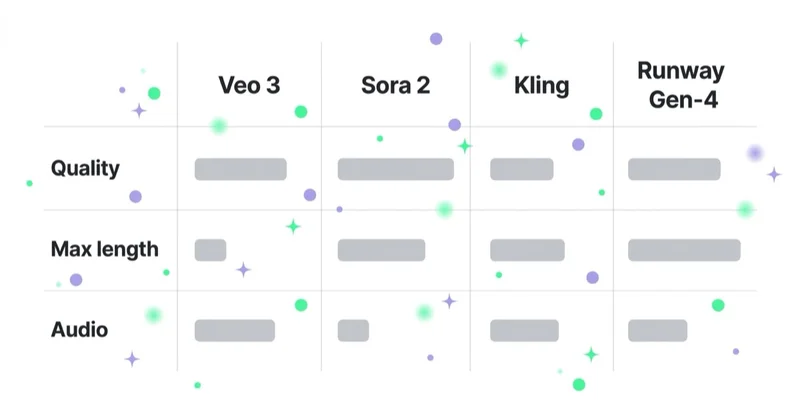
Veo, Sora, Kling And Runway Compared
| Tool | Best fit | Watch-outs |
|---|---|---|
| Google Veo | Cinematic video, Google ecosystem, short high-quality clips, Gemini/Flow/API workflows | Access, cost, duration limits and regional availability can change |
| OpenAI Sora / Sora 2 | High-fidelity model capabilities, video plus audio research and API-oriented workflows where available | Product availability changed in 2026; verify current access before planning |
| Kling AI | High-volume testing, lower-cost experimentation, social-first clips | Output consistency, rights review and quality control vary by prompt and plan |
| Runway | Creative production workflow, editing, controllability, professional experimentation | Cost and learning curve can be higher than simple prompt tools |
The comparison should be practical, not ideological. A paid social team may use Kling for rough hook exploration, Runway for controlled production assets and Veo for polished cinematic clips. The "winner" can change by campaign objective.
Google Veo For Advertising
Veo is Google's video generation model family used across products such as Gemini, Flow and developer workflows. Google has continued expanding image-to-video and developer access around Veo, including later Veo 3.x developments.
Where Veo fits:
- cinematic brand scenes,
- product mood videos,
- abstract benefit visualisation,
- short social clips,
- YouTube Shorts ideation,
- Google ecosystem testing,
- storyboards for larger shoots.
Veo is useful when quality matters more than raw volume. It is less ideal if the team needs hundreds of low-cost variants per week and has no time for approval review.
Prompting should include:
- scene type,
- subject,
- camera movement,
- lighting,
- environment,
- visual style,
- duration,
- product or brand constraints,
- negative instructions where supported.
Sora 2: Strong Capability, Unstable Planning Assumption
OpenAI announced Sora 2 as a flagship video and audio generation model. The system card and model documentation describe important capabilities and safety considerations. However, OpenAI's Sora product availability changed in 2026, and some official pages note that the Sora product is no longer available.
For marketers, this means Sora should be discussed carefully:
- it is important as a benchmark for AI video quality;
- it may matter through API or future product workflows where available;
- it should not be assumed to be a stable consumer production tool in every market;
- any campaign plan should verify current OpenAI product/API access before promising delivery.
This is a good example of why AI content strategy needs current research. A tool can dominate search demand and still be operationally risky if access, pricing or product direction changes.
Kling AI For Volume Testing
Kling has become popular because teams can produce many clips quickly and often at a more accessible cost than premium production workflows. For performance marketing, that matters.
Kling fits:
- hook testing,
- fast TikTok-style concepts,
- UGC-style scene exploration,
- product category mood boards,
- rough previsualisation,
- low-budget creative iteration.
The watch-out is quality control. Volume is useful only when there is a selection process. A team should generate many ideas, but only ship clips that pass brand, product, legal and platform checks.
Good Kling use cases:
- "show the problem before product appears";
- "visualise a benefit without showing exact product claims";
- "create 10 opening scenes for a TikTok ad";
- "turn static product lifestyle images into motion concepts."
Riskier use cases:
- exact product demonstration,
- regulated health claims,
- before/after proof,
- human likeness without consent,
- fake testimonials,
- scenes requiring precise hands, text or product details.
Runway For Creative Control
Runway is often better suited to teams that think like editors, not only prompt writers. Its Gen-4 workflows and editing environment support more controlled production and experimentation.
Runway fits:
- agencies with creative producers,
- brand films and social cutdowns,
- motion concepts,
- VFX-style experimentation,
- controlled image-to-video workflows,
- iterative editing.
The advantage is workflow depth. The disadvantage is that it may require more skill and time than simpler prompt-first tools.
When AI Video Beats Traditional Creative
AI video is often better when:
- the idea needs to be tested before a shoot;
- the team needs 20 hook variants quickly;
- the creative is conceptual or abstract;
- product accuracy is not the main risk;
- the campaign needs visual variety;
- paid social fatigue is high;
- budget is too small for repeated production;
- the output will be edited with real product assets.
For example, a brand can test three angles before booking production:
- problem-first clip,
- aspiration-first clip,
- objection-first clip.
If one angle wins, traditional production can then create a stronger final asset.
When AI Video Is A Bad Idea
AI video should be avoided or tightly controlled when:
- the product must be shown exactly;
- claims are regulated;
- legal approval is strict;
- the scene includes identifiable people without consent;
- the product has safety implications;
- the brand cannot tolerate visual inconsistency;
- platform policy risk is high;
- disclosure rules are unclear.
AI should not fabricate proof. It should not create fake customers, fake before/after results or fake product performance.
Workflow For Meta And TikTok Creative Testing
AI video works best as part of a structured creative pipeline.
1. Start With The Creative Hypothesis
Examples:
- "Price objection is the main barrier."
- "The first three seconds need a stronger problem hook."
- "Aspirational lifestyle scenes will outperform product-only shots."
- "The product needs a clearer use case."
2. Generate Variations
Create multiple clips for the same angle. Change opening frame, camera motion, setting, character type, pace and visual metaphor.
3. Edit Into Ad Units
Most AI clips need editing:
- captions,
- logo,
- voiceover,
- CTA,
- product frame,
- disclaimers,
- real packshot,
- landing page match.
4. Test In Campaigns
For Meta, AI video variants can support creative diversity in Advantage+ style campaign structures. For TikTok, they can help test hooks and fast visual storytelling. See Meta Andromeda, Meta Advantage+ and Spark Ads on TikTok for related campaign context.
5. Keep A Human Review Gate
Every generated video should be checked for:
- product accuracy,
- false claims,
- visual artifacts,
- brand fit,
- music and voice rights,
- disclosure requirements,
- platform policies,
- cultural and regional sensitivity.
Prompt Template For Ad Concepts
Use this structure:
Create a short vertical video ad concept for [product/category].
Audience: [who the ad targets].
Core problem: [pain point].
Promise: [benefit, without exaggerated claims].
Scene: [location, subject, action].
Camera: [movement, framing, pace].
Style: [realistic / cinematic / UGC-style / minimal / premium].
Constraints: [no text in scene, no logos, no medical claims, no children, etc.].
Output: [duration, aspect ratio, mood].
Example:
Create a 6-second vertical video concept for a premium ergonomic office chair.
Audience: remote workers with back fatigue.
Core problem: long workdays feel physically draining.
Promise: a more comfortable work setup.
Scene: a quiet home office in the morning, close-up of posture shifting from tense to relaxed.
Camera: slow push-in, natural light, realistic movement.
Style: premium but not glossy.
Constraints: no health cure claims, no visible brand logos, no on-screen text.
Output: 9:16, calm, realistic, suitable for paid social testing.
How we approach this at Space Ads
For years production was the bottleneck in advertising: testing needs many creative variants, and each one cost time and budget. AI video generators loosen that — we can cheaply spin up a dozen versions of a hook or a scene and let the system (Advantage+ on Meta, Smart+/Symphony on TikTok) pick the winners. Volume isn't the whole story, though. Quality control stays tight: no artificial-looking shots, consistency with the brand, and promises the product can actually keep, because a generated effect it doesn't deliver hurts more than it helps. The model gives us volume to test; what reaches air is decided by results and human judgement. We use these tools as an accelerant for creative iteration, never as a substitute for thinking about the message.
FAQ
What is the best AI video generator for ads?
There is no universal best tool. Veo is strong for polished clips, Runway for controlled creative workflows, Kling for volume testing, and Sora should be evaluated based on current access and product availability.
Can AI video replace UGC creators?
Sometimes it can replace early concept testing, but it should not automatically replace real creators. Human creators still provide authenticity, lived experience, trust and usable testimonials.
Is AI video safe for paid ads?
It can be safe when reviewed properly. Risks include false claims, likeness issues, product inaccuracy, disclosure failures, copyright questions and platform policy violations.
Should AI-generated videos be disclosed?
Disclosure requirements depend on jurisdiction, platform policy and content type. Synthetic people, political content, endorsements and regulated categories need especially careful review.
How should AI video be tested?
Test it against human-made creative, static images, UGC and traditional product video. Evaluate thumb-stop rate, hold rate, CTR, CVR, CPA, comments, quality feedback and conversion value.
Key Takeaways
AI video generators are best treated as creative acceleration tools, not automatic ad machines. They can reduce concepting time, increase creative variation and help teams test more angles before investing in production.
The winning workflow is hybrid: AI for exploration and variation, humans for strategy, editing, compliance and final judgement. In paid social, this can be a serious advantage because creative fatigue is constant and algorithms need more usable variation.
AI video works best in short, native formats — we deploy that creative within TikTok Ads campaigns.
Sources and further reading
- Google Gemini: Video generation with Veo
- Google Blog: Photo-to-video with Veo 3
- Google Blog: Veo 3.1 in Gemini API
- OpenAI: Sora 2
- OpenAI API: Sora 2 model
- Runway Help: Creating with Gen-4 Video
- Kling AI pricing plans
Continue Learning
Continue reading
ChatGPT Ad Formats and Character Limits: What Actually Fits
A ChatGPT ad appears below the response and carries six elements, with specific limits: title 3–50 characters, body up to 100. The "24 / 48 character" figures in trade coverage do not match the documentation, so this guide gives the full limits table, shows how to fit a useful message, and covers the image, product ads and end-to-end consistency with the landing page.
OpenAI Ads Manager: How to Set Up Your First ChatGPT Ads Campaign
OpenAI Ads Manager has three campaign levels, but launch also requires advertiser verification, billing, landing-page checks, measurement and deliberate choices for settings that cannot be changed later. This guide covers the setup sequence, budgets, context hints, oCPC, targeting, review and Ads API workflows.

Switching Marketing Agencies Without Losing the Account
A safe agency switch protects client-owned accounts, billing, conversion signals, creative rights and operating knowledge. Use this transition plan to assign responsibility, validate access and change partners without avoidable disruption.