Service business marketing is the work of generating qualified demand for companies that sell expertise, appointments, projects, consultations, repairs, treatments, contracts or professional outcomes rather than simple products. It includes positioning, local or category visibility, paid media, SEO, referrals, reviews, landing pages, CRM follow-up and sales process.
The main challenge is that many service categories look similar from the outside. If the website, ads and follow-up do not explain why the service is different, buyers compare providers by price, speed or convenience alone. Strong service business marketing makes the value, process, proof and fit clear before the sales conversation starts.
TL;DR
- Service business marketing should generate qualified leads, not just enquiries. A cheaper lead is not better if it does not become a booked job, proposal or contract.
- Price competition usually comes from weak differentiation. Clear process, proof, specialization and expectations reduce pressure to discount.
- Google Ads and SEO play different roles. Search captures active demand; SEO and content build trust before and after the click.
- Follow-up speed matters. For many service businesses, a slow response wastes paid media even when targeting is correct.
- Landing pages should qualify. A good page explains who the service is for, what happens next and what makes a lead a good fit.
- CRM and call tracking are essential. Service businesses need to know which leads became quotes, appointments, jobs or contracts.
- Reviews, case studies and process pages are conversion assets. They reduce perceived risk and improve lead quality.
What counts as a service business?
Service businesses include local, professional, B2B and high-ticket categories:
- legal, accounting and consulting;
- medical, dental, aesthetic and wellness clinics;
- home services and contractors;
- real estate, mortgage and insurance;
- agencies and creative services;
- SaaS implementation and IT services;
- coaching, education and advisory;
- events, entertainment and hospitality services;
- luxury or premium appointment-based services.
The marketing mechanics vary, but the same principle applies: buyers need trust before they commit.
Service business marketing vs e-commerce marketing
| Area | Service business | E-commerce |
|---|---|---|
| Conversion | lead, call, booking, quote, consultation | purchase, add to cart, checkout |
| Trust proof | reviews, credentials, process, case studies | product reviews, images, delivery, returns |
| Sales process | often human follow-up | often self-serve |
| Pricing | custom, package, hourly, project or value-based | visible product price |
| Main friction | risk, uncertainty, timing, fit | price, shipping, returns, product confidence |
| Measurement | qualified lead, booked job, contract, pipeline | revenue, ROAS, margin, repeat purchase |
This distinction matters. A service business should not copy an e-commerce dashboard or funnel without adapting the conversion model.
Positioning before traffic
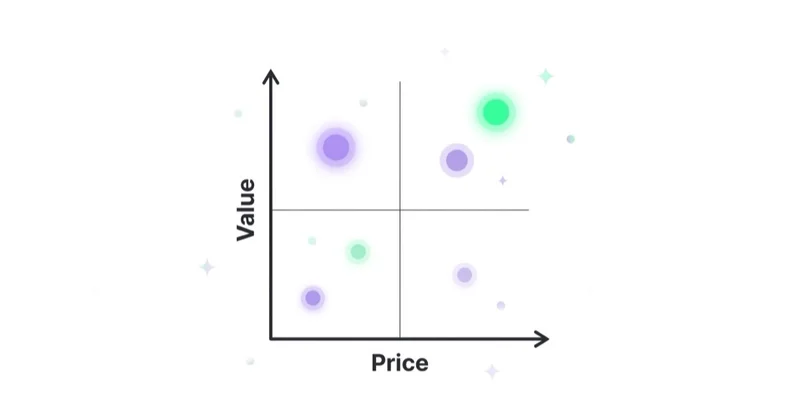
Service businesses waste budget when they buy traffic before clarifying why a buyer should choose them.
Useful positioning questions:
- What problem is the service best at solving?
- Who is the best-fit client?
- Which jobs, clients or cases should be avoided?
- What proof reduces risk?
- What process makes the service more reliable?
- What does the buyer need to know before making contact?
- Which objections appear repeatedly in sales conversations?
Price competition usually gets worse when the service sounds generic. "High-quality service" is not positioning. "Google Ads audit for companies where lead volume is rising but sales acceptance is falling" is much clearer.
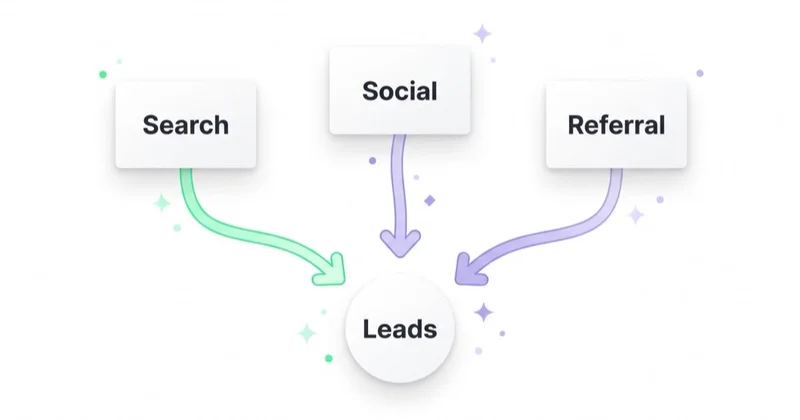
Channel mix for service business marketing
| Channel | Best role | Example |
|---|---|---|
| Google Search | capture active demand | "emergency plumber", "Google Ads audit", "CPA firm near me" |
| Local SEO | recurring demand and map visibility | location pages, reviews, service pages |
| Organic content | build trust and answer objections | guides, FAQs, comparisons, process articles |
| Meta Ads | retargeting, proof, awareness, lead forms | case study ads, local promotions |
| LinkedIn Ads | B2B role or account targeting | professional services, SaaS services |
| YouTube / video | explain process and proof | treatments, home projects, advisory |
| Referral / partner | trust transfer | accountants, realtors, vendors |
| Email / CRM | nurture and reactivation | quote follow-up, reminders, closed-lost |
For local and contractor examples, see Google Ads for local businesses and contractors and Google Local Services Ads.
Search intent and service pages
Search demand in service categories often splits into:
- emergency or urgent;
- local provider;
- category education;
- comparison;
- price or cost;
- reviews;
- specific service;
- brand.
Each intent may need a different page. A page for "cost of a service" should answer pricing factors. A location page should prove local relevance. A high-ticket consultation page should explain the process and qualification. A generic homepage cannot carry every intent.
Service pages should include:
- service definition;
- who it is for;
- problem signs;
- process;
- proof;
- pricing factors where possible;
- FAQ;
- contact path;
- disqualifiers or fit notes.
This makes the page more useful for SEO, AI search and paid traffic.
Content assets that help service businesses sell
Service business content should not be written only for traffic. It should also help buyers evaluate risk and help sales answer repeated objections.
Useful assets:
- cost and pricing-factor guides;
- "how to choose a provider" articles;
- process pages;
- comparison pages;
- checklists for preparation;
- case studies;
- FAQ pages;
- service-area pages;
- review and testimonial pages;
- industry-specific landing pages;
- before/after or project stories where appropriate.
For B2B and professional services, content can shorten the sales conversation because the buyer arrives with a clearer understanding of the problem. For local services, content can reduce unqualified calls by explaining service area, timing, scope and pricing factors. For high-ticket services, content can protect margin by showing why the service is not comparable to a low-cost alternative.
Budget planning for service businesses
Service businesses should scale budget in stages. A new account should usually prove intent, conversion path and follow-up before expanding into broader demand creation.
| Stage | Channel priority | Goal |
|---|---|---|
| Foundation | Google Search, local SEO, reviews, conversion tracking | Capture active demand and measure quality |
| Stabilization | landing pages, call tracking, CRM follow-up | Improve booking and qualification |
| Expansion | paid social, video, SEO content, retargeting | Build trust and widen demand |
| Optimization | dashboard, offline conversions, lifecycle follow-up | Shift budget toward qualified outcomes |
The budget should not be judged only by cost per lead. A more expensive source can be better if it creates higher-value projects, stronger close rates or better clients. A cheaper source can be expensive if sales spends time on poor-fit enquiries.
When paid ads are not the first fix
Paid ads should not be the default answer when the service offer is unclear. There are situations where the first fix should be operational:
- phone calls are missed;
- quotes are delayed;
- reviews are weak or outdated;
- the service page is vague;
- pricing expectations are never explained;
- the team cannot define a qualified lead;
- the CRM does not track outcomes;
- the business cannot handle more demand.
In these cases, more traffic may expose the problem faster. It will not solve it. The better first move is to improve response, proof, page clarity and measurement, then scale traffic into a funnel that can convert.
Lead quality and qualification
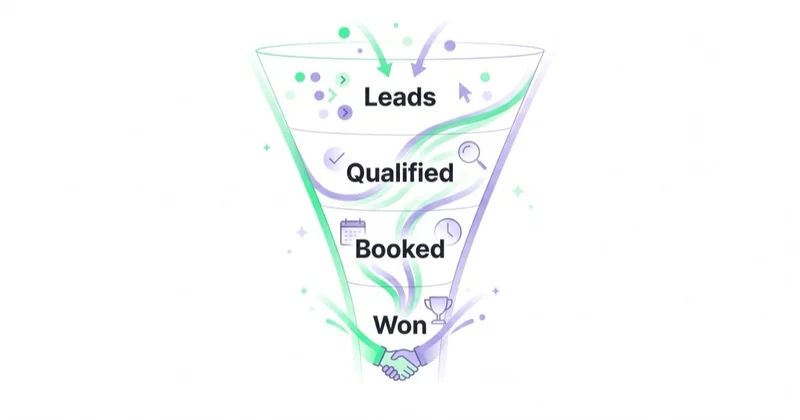
Service businesses often chase lead volume and then discover that sales or operations cannot use many enquiries.
Useful qualification fields:
- service needed;
- location or service area;
- timeframe;
- budget or project size where appropriate;
- property, company or account type;
- current problem;
- preferred contact method;
- consent for follow-up.
The form should not become a wall. It should ask for information that changes routing, qualification or follow-up. For urgent services, a phone call may be better. For high-ticket consulting, a few qualifying fields may save sales time.
Follow-up speed and process
In many service categories, the first provider to respond professionally has a major advantage. A campaign can be well managed and still fail if enquiries sit unanswered.
Minimum follow-up system:
- confirmation after form submission;
- owner assignment;
- response-time target;
- missed-call tracking;
- appointment reminders;
- no-show follow-up;
- quote follow-up;
- closed-lost reasons;
- reactivation path.
This is where CRM marketing automation, lead nurturing and marketing dashboards matter. The service business should know what happened after the lead arrived.
Reviews, proof and trust
Service buyers are buying a promise. Proof reduces risk.
Useful proof types:
- reviews and testimonials;
- before/after where compliant and appropriate;
- case studies;
- credentials;
- process explanations;
- team bios;
- guarantees or policies where realistic;
- photos of work or facilities;
- response-time expectations;
- clear terms and next steps.
For premium and luxury services, proof should also protect positioning. Discount-heavy marketing may generate leads but weaken the brand. A premium service needs selective proof, clear standards and a sales process that matches the price.
Service business marketing by category
| Category | Key conversion issue | Marketing focus |
|---|---|---|
| Home services | speed, location, trust | calls, local search, reviews, quote follow-up |
| Professional services | expertise, authority, fit | educational content, consultations, case studies |
| Health and wellness | compliance, trust, outcomes | careful claims, reviews, process clarity |
| B2B services | pipeline quality | CRM stages, LinkedIn, SEO, audits, sales follow-up |
| Hospitality / events | availability and urgency | visual proof, dates, location, remarketing |
| Luxury services | selectivity and brand | premium creative, proof, personal consultation |
The category changes the channel mix and the proof needed. A dental clinic, accounting firm, roofer and B2B consulting firm should not share the same marketing playbook.
How Space Ads approaches this
At Space Ads, we approach service business marketing by separating demand capture from lead quality. First we identify whether the market already has search demand. If it does, Google Search, local visibility and conversion-focused landing pages usually matter early. If demand is less explicit, content, paid social, video and retargeting may need to educate before the lead form.
Then we look at the post-lead path. For a service business, the first conversion is rarely the final result. A form needs a response. A call needs a qualified conversation. A quote needs follow-up. A consultation needs preparation. That is why we connect campaigns with CRM stages, call tracking and dashboard reporting where possible. It keeps the team focused on booked jobs, qualified opportunities or signed clients instead of raw lead count.
Avoiding price-only competition
Service businesses can reduce price pressure by improving the information around the offer.
| Price-only trigger | Better marketing response |
|---|---|
| Service sounds generic | Show specialization and process |
| Buyer cannot see risk reduction | Add proof, credentials and case studies |
| Pricing is unclear | Explain pricing factors or ranges |
| Many providers look identical | Create stronger category positioning |
| Sales follow-up is rushed | Use consultative questions and context |
| Landing page hides fit | Explain who the service is for |
Not every buyer should be converted. Some leads are wrong-fit, too small, outside the service area or looking only for the cheapest option. Marketing should help filter those out.
Measurement
Service business marketing should track more than lead volume.
| Metric | Why it matters |
|---|---|
| Cost per lead | Basic media efficiency |
| Contact rate | Whether leads are reachable |
| Booking rate | Whether leads become appointments |
| Show rate | Whether appointments happen |
| Quote rate | Whether enquiries become proposals |
| Close rate | Whether sales converts |
| Job or contract value | Whether lead value supports CAC |
| Reason lost | What blocks conversion |
| Source by qualified outcome | Which channels create useful demand |
Google Ads conversion measurement and offline conversion imports are useful because many service outcomes happen after the click: calls, appointments, contracts or jobs. The dashboard should make that delay visible.
Review cadence
Service lead quality should be reviewed on a fixed cadence. Weekly reviews can cover response time, missed calls, booked appointments and obvious campaign issues. Monthly reviews should look at source quality, quote rate, close rate, job value, reasons lost and whether the current positioning is attracting the right buyers. Quarterly reviews should decide whether to expand demand, narrow targeting, improve service pages or change the offer. Without cadence, the team usually notices lead quality only after budget has already been wasted.
Common mistakes
| Mistake | Why it hurts | Better approach |
|---|---|---|
| Competing only on price | Attracts low-fit buyers | Build proof, process and specialization |
| Measuring only leads | Ignores quality | Track booked, qualified and closed outcomes |
| Slow follow-up | Wastes demand | Create routing and response-time rules |
| One generic service page | Weak intent match | Build pages by service, location or problem |
| No reviews or proof | Increases perceived risk | Make trust assets visible |
| Treating every category like e-commerce | Wrong funnel logic | Measure calls, quotes, bookings and pipeline |
| No disqualification | Sales wastes time | Use page copy and form fields to filter |
30-day service business marketing plan
Week 1: clarify position and fit
Define best-fit clients, disqualifiers, service area, proof assets, pricing factors and the main reasons buyers choose or reject the service.
Week 2: fix conversion paths
Review service pages, forms, phone tracking, booking flow, reviews, FAQ and response process. Make the next step obvious.
Week 3: launch or clean acquisition channels
Prioritize Google Search and local SEO when demand exists. Add paid social, video or content when the service needs education or proof before intent.
Week 4: connect CRM and reporting
Track lead status, response time, booking rate, quote rate, close rate and reasons lost. Use this feedback to adjust ads, pages and qualification.
FAQ
What is service business marketing?
Service business marketing is the process of attracting and converting qualified demand for companies that sell services, expertise, appointments, contracts or projects rather than physical products.
What channels work best for service businesses?
The best channels depend on demand and category. Google Search and local SEO are strong when buyers search actively. Paid social, content, referrals and video help when trust and education are needed before contact.
How can a service business avoid competing only on price?
A service business can reduce price pressure by clarifying specialization, process, proof, reviews, fit, pricing factors and outcomes. Buyers compare price more aggressively when providers look interchangeable.
What should a service business landing page include?
A service business landing page should include the service definition, who it is for, process, proof, pricing factors where appropriate, FAQ, contact path and clear next step.
What metrics matter for service business marketing?
Important metrics include cost per lead, contact rate, booking rate, show rate, quote rate, close rate, job or contract value, reason lost and source by qualified outcome.
Is service business marketing only local?
No. Many service businesses are local, but professional services, B2B consulting, SaaS implementation, agencies and luxury services can operate regionally or internationally. The same principles apply with different targeting and proof.
Key takeaways
Service business marketing works when it makes value visible before the sales conversation. The business needs clear positioning, trust assets, search visibility, useful paid media, a strong conversion path and follow-up that turns enquiries into qualified outcomes.
The goal is not more leads at any cost. It is more of the right leads, with enough context and trust to move beyond price-only comparison. That is the real advantage.
Sources and further reading
- Google Ads Help - About conversion measurement
- Google Ads Help - About offline conversion imports
- Google Analytics Help - About events
- Google Search Central - Creating helpful, reliable, people-first content
Continue learning
- Google Ads for Local Businesses and Contractors
- Google Local Services Ads: Google Verified, Leads and When to Use Them
- B2B Lead Generation: How to Build a Predictable Pipeline From Paid Media and SEO
- Conversion Optimization: A Complete Guide for E-commerce, B2B, SaaS and Services
- Marketing audit · Google Ads · Sykomat lead generation success story
Continue reading
Speed to Lead: Why Response Time Decides Who Wins the Deal
Learn how to measure and improve lead response time without sacrificing quality: define the right timestamps, set channel-specific targets, fix routing and coverage, and validate the impact on sales outcomes.
B2B Lead Generation: How to Build a Predictable Pipeline From Paid Media and SEO
A predictable B2B pipeline is built from agreed stage definitions, cohort conversion rates and closed-loop feedback—not form volume. Learn how paid media, SEO, landing pages, CRM data and sales follow-up work as one measurable system.
How to Choose a Lead Generation Agency (Questions to Ask, Red Flags)
A practical framework for comparing lead generation agencies: scope, measurement, pricing, account ownership, security, contracts and the questions worth asking before you sign.