A Facebook contest is a promotion where a brand asks people to complete an allowed action for a chance to win a prize or be selected by defined criteria. It can help engagement, user-generated content, lead generation and community activity, but it needs clear rules, lawful operation, data protection discipline and compliance with Meta's platform policies.
The safest way to run a Facebook contest is to treat it like a small campaign, not a quick engagement trick. Define the goal, prize, entry method, rules, eligibility, dates, winner selection, data use, moderation plan and follow-up before publishing the post.
This article is practical marketing guidance, not legal advice. Promotions, sweepstakes, prize draws and contests are regulated differently across countries and states. Legal review is recommended for higher-value prizes, regulated industries, minors, international campaigns or any promotion connected with purchase.
TL;DR
- Facebook contests are allowed only when they follow platform rules and applicable law.
- Meta places responsibility for lawful operation on the organiser, including official rules, eligibility, terms and prize compliance.
- Promotions must release Facebook and acknowledge that Facebook is not sponsoring, endorsing, administering or associated with the promotion.
- Personal timelines and friend connections should not be used for entry mechanics, such as requiring people to share on their timeline or tag friends to enter.
- The best contest mechanic matches the business goal: engagement, UGC, leads, reviews, event attendance or product education.
- Collect only the personal data needed for the contest, explain the purpose and define retention.
- Avoid prize hunters by choosing prizes connected with the brand, not generic high-value gadgets.
- Measure more than likes: qualified leads, UGC quality, follower retention, email opt-ins, sales, remarketing audiences and post-campaign engagement matter.
What is a Facebook contest?
A Facebook contest is a promotional campaign hosted or communicated through Facebook. It may ask people to comment, submit a photo, answer a question, complete a form, vote, sign up, attend an event or create content, depending on the rules and platform restrictions.
Common forms include:
- giveaway;
- sweepstakes or prize draw;
- skill-based contest;
- user-generated content campaign;
- caption contest;
- quiz;
- product story contest;
- event contest;
- lead generation promotion.
The important distinction is that a contest is not just a normal post. It creates expectations around eligibility, prize delivery, winner selection, data use and fairness.
Facebook contest rules: what must be included
Meta's Pages, Groups and Events policy states that if Facebook is used to communicate or administer a promotion, the organiser is responsible for lawful operation, including official rules, offer terms, eligibility requirements and compliance with rules governing prizes.
A contest post or linked rules page should include:
- organiser name;
- start and end date;
- who can enter;
- territory or country eligibility;
- age restrictions;
- entry method;
- number of entries allowed;
- prize description;
- prize value where required;
- winner selection method;
- winner announcement method;
- prize delivery details;
- data use information;
- terms for UGC or content reuse;
- Facebook release and disclaimer;
- contact method for questions;
- link to full terms if the post is short.
The post can be short, but the rules must be accessible and clear.
Required Facebook disclaimer
Promotions on Facebook should include:
- a complete release of Facebook by each entrant or participant;
- acknowledgement that the promotion is not sponsored, endorsed, administered by or associated with Facebook.
In practice, a contest post often includes wording such as:
"This promotion is not sponsored, endorsed, administered by or associated with Facebook."
For larger campaigns, include that statement in both the post and the full rules page.
Entry mechanics to avoid
Meta policy says personal timelines and friend connections must not be used to administer promotions. Examples include requiring people to share on their timeline, share on a friend's timeline or tag friends in a post to enter.
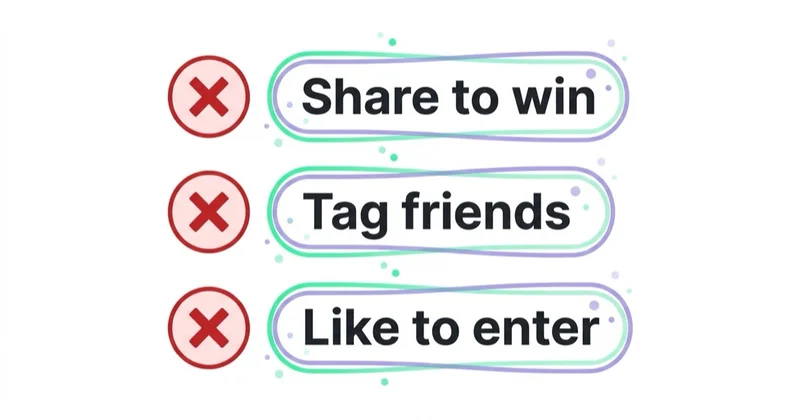
Avoid mechanics such as:
- "Share this post on your timeline to enter";
- "Share on a friend's timeline for extra entries";
- "Tag three friends to enter";
- "Ask friends to tag themselves";
- "Use personal profiles as the main contest administration channel";
- unclear winner selection based only on engagement volume.
Safer mechanics are usually:
- comment with an answer;
- submit content through a form;
- post UGC with a campaign hashtag where rules allow;
- answer a skill question;
- complete a lead form;
- register for an event;
- vote through a controlled app or form;
- comment with a product preference without tagging others.
Always check the current Meta policy before launch because platform rules can change.
Choosing the right contest type
| Goal | Better contest type | Watch out for |
|---|---|---|
| Engagement | Comment-based question | Low-quality comments |
| UGC | Photo or story submission | Rights to reuse content |
| Lead generation | Form-based entry | Consent and data quality |
| Product launch | Product use or preference contest | Prize mismatch |
| Event promotion | Registration-linked contest | Attendance quality |
| Local awareness | In-store or local answer contest | Location eligibility |
| Ecommerce | Product bundle giveaway | Prize hunters |
| B2B | Audit, ticket or consultation prize | Compliance and qualification |
The prize should attract the desired audience. A generic phone or cash prize may bring a large number of entrants who will never buy. A relevant product bundle, service audit, event ticket or brand-specific experience usually attracts better participants.
How to plan a Facebook contest
1. Define the business goal
Choose one main goal:
- increase relevant engagement;
- collect UGC;
- build email list;
- promote a new product;
- support an event;
- drive store visits;
- generate qualified leads;
- reactivate followers;
- create remarketing audiences.
The contest should not chase every goal at once.
2. Select the prize
The prize should be valuable to the target audience and connected to the brand.
Good prizes:
- brand product bundle;
- service audit;
- event ticket;
- workshop place;
- subscription;
- consultation;
- store credit;
- limited edition product;
- experience related to the brand.
Weak prizes:
- generic electronics unrelated to the brand;
- cash with no brand connection;
- prizes that attract minors when the product is adult-oriented;
- prizes that create legal or regulatory issues.
3. Write the rules
Rules should explain what happens from entry to prize delivery. They should be easy to understand and consistent across the post, landing page and ads.
For complex campaigns, use a landing page with full terms and a short Facebook post that links to it.
4. Decide how winners are selected
A sweepstakes is usually based on chance. A contest may be based on skill, creativity or judged criteria. The difference can affect legal obligations.
Define:
- random draw or judging;
- judging criteria;
- who selects the winner;
- when selection happens;
- how winner is contacted;
- how long the winner has to respond;
- what happens if the winner is ineligible or does not respond.
5. Prepare moderation
Contests can attract spam, duplicate entries, offensive content, fake accounts and support questions.
Before launch, define:
- comment moderation rules;
- duplicate entry handling;
- complaint process;
- scam warning copy;
- how winners will be contacted;
- what official brand account will be used;
- how fake winner messages will be handled.
Data protection and privacy
If personal data is collected, data protection rules apply. For UK and EU audiences, principles such as lawfulness, fairness, transparency, purpose limitation, data minimisation and storage limitation are central.
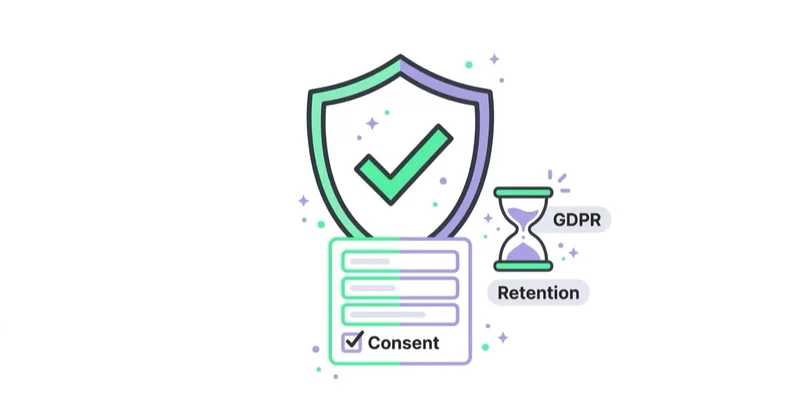
Practical rules:
- collect only data needed for the contest;
- explain why data is collected;
- do not add entrants to marketing lists without a valid basis;
- separate contest entry from marketing consent where needed;
- define how long data will be kept;
- secure exported data;
- limit access to staff who need it;
- delete data after the retention period;
- document the winner selection process.
If a contest uses a Facebook comment only, do not collect extra data until it is needed. For example, shipping address is usually needed only from the winner, not every entrant.
Facebook contests and paid ads
Boosting or advertising a contest can increase reach, but it also adds ad review and policy risk.
Before promoting a contest:
- check Meta Advertising Standards;
- avoid misleading prize claims;
- avoid personal attribute language;
- ensure landing page rules match ad copy;
- include eligibility and major conditions;
- avoid exaggerated scarcity;
- check regulated products and age restrictions;
- make the prize and organiser clear.
Paid contests should be measured by quality, not just cheap entries. A lead campaign that attracts people only interested in the prize may create poor downstream performance.
For ad setup context, read What Is Facebook Ads Manager and How to Use It? and Facebook Lead Ads: What They Are and How to Launch Instant Forms.
Facebook contests for ecommerce
Ecommerce contests can support:
- product launches;
- UGC collection;
- customer stories;
- seasonal campaigns;
- product education;
- email list growth;
- loyalty campaigns;
- local pop-ups;
- creator collaborations.
Good ecommerce mechanics:
- show how the product is used;
- share a styling idea;
- vote for a new colour;
- submit a product story;
- answer a product-related question;
- register for early access;
- win a relevant bundle.
Avoid prizes that create audience mismatch. A skincare brand should not run a generic tablet giveaway if the goal is future buyers.
Facebook contests for B2B and services
B2B contests should be more careful. Many decision-makers do not want to enter gimmicky giveaways.
Better B2B prize ideas:
- free audit;
- event ticket;
- workshop seat;
- software subscription;
- expert consultation;
- benchmark report access;
- training session.
The entry mechanic should respect the buyer's role. A thoughtful question or form can work better than a public tag-and-win mechanic.
Measuring contest performance
Track:
- qualified entries;
- cost per qualified entry if ads are used;
- new followers after 30 days;
- unfollow rate after winner announcement;
- email opt-ins with valid consent;
- UGC volume and quality;
- reach and engagement quality;
- website visits;
- sales or leads after the contest;
- audience growth for remarketing;
- customer support issues;
- spam or fake account rate.
A contest with fewer but better entries can outperform a viral giveaway that attracts irrelevant people.
Use tagged links where relevant. Read What Are UTM Parameters and How to Create UTM URLs for Google Analytics?.
How we approach this at Space Ads
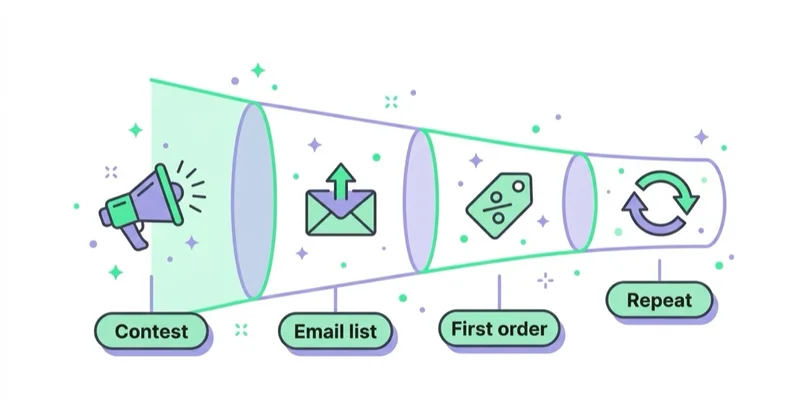
A contest is brilliant at inflating vanity metrics and just as brilliant at building no customers at all. A free prize unrelated to the offer draws prize-hunters who vanish the moment it's decided, leaving a bloated, dead audience that drags reach down and buys nothing. We run them rarely, and only with commercial mechanics: a prize tied to the product, so real prospects enter rather than collectors; a sign-up linked to an email or first-party data we can follow up with remarketing; and success measured in qualified leads and post-contest sales, not entry counts. Add five thousand prize-hunters and you've bought a cost, not a win — the empty reach gets paid back later in weaker results.
Common mistakes
| Mistake | Why it hurts | Better approach |
|---|---|---|
| No official rules | Disputes and compliance risk increase | Publish clear terms |
| Requiring shares or friend tags | Conflicts with Meta promotion restrictions | Use allowed entry actions |
| Generic prize | Attracts prize hunters | Use brand-relevant rewards |
| Collecting too much data | Privacy risk increases | Use data minimisation |
| No winner process | Complaints become likely | Define selection and notification |
| No scam warning | Fake winner messages can appear | Explain official contact method |
| Measuring only likes | Engagement may be low quality | Track qualified outcomes |
| Adding entrants to email without consent | Legal and trust risk | Separate marketing consent |
FAQ
Are Facebook contests allowed?
Yes, but they must follow Meta policies and applicable law. The organiser is responsible for rules, eligibility, prize compliance and lawful operation.
Can a Facebook contest require people to share a post?
Avoid this. Meta policy says personal timelines and friend connections must not be used to administer promotions, including share-to-enter mechanics.
Can a contest ask people to tag friends?
Avoid requiring friend tags as an entry mechanic. Meta lists tagging friends in a post to enter as not permitted.
Does a contest need official rules?
Yes. At minimum, the rules should explain eligibility, entry method, dates, prize, winner selection, organiser, data use and Facebook disclaimer.
Can a Facebook contest collect email addresses?
It can, but personal data must be collected lawfully and transparently. Marketing consent should be handled separately from contest entry when required.
Should contests be boosted with ads?
They can be, but only if the contest, ad and landing page follow Meta Advertising Standards and local law. Quality of entries matters more than volume.
Conclusion
Facebook contests can still be useful, but only when they are planned carefully. The goal is not to manufacture empty engagement. The goal is to create a relevant promotion that people understand, that Meta policies allow, and that produces usable business outcomes.
Start with the rules, prize, entry mechanic and data plan. Avoid share-to-enter and tag-a-friend mechanics. Use a prize that filters for the right audience. Measure qualified entries, UGC, leads, sales and retention after the campaign, not just likes during the contest.
Sources and further reading
- Meta: Facebook Pages, Groups and Events Policies
- Meta Terms of Service
- Meta: Advertising Standards
- Meta for Business: Ads review policy guidelines
- Facebook Help Center: About recommendations on Facebook
- ICO: A guide to the data protection principles
Continue learning
- How to Create and Manage a Facebook Page
- How to Engage Fans and Increase Reach with Facebook Posts
- What Is Facebook Ads Manager and How to Use It?
- Facebook Lead Ads: What They Are and How to Launch Instant Forms
- Meta Ads Audiences: How to Build Facebook Audiences
- What Are UTM Parameters and How to Create UTM URLs for Google Analytics?
Continue reading
How to Use Instagram Hashtags?
Instagram hashtags support discovery, classification and campaigns, but they are not a magic reach lever. Learn how to use precise tags with social SEO, captions and measurement.
How to Engage Fans and Increase Reach with Facebook Posts
Facebook posts can still build reach and community when they are native, useful and measured properly. Learn Reels, video, groups, organic reach, boosting and engagement strategy.
What Is RTM and How to Do Real-Time Marketing Well?
Real-time marketing means reacting to current trends and moments with speed, relevance and brand safety. Learn when to join a trend and when to stay silent.