Facebook posts can still support reach, community, trust and sales, but they need a clear role. Organic Facebook is no longer a simple chronological feed where every Page follower sees every update. Posts compete with content from friends, groups, creators, Pages, recommendations and ads. To increase reach and engagement, publish content that is native to Facebook, earns real interaction, works in video and Reels formats, and connects to a broader organic-plus-paid strategy.
The goal is not to post more often. The goal is to give people a reason to stop, react, comment, save, share, message or take the next step. A weak post repeated daily is still weak. A useful post with a clear audience and distribution plan can become a remarketing asset, community touchpoint or sales assist.
TL;DR
- Facebook reach depends on ranking, relevance and interaction, not only Page followers.
- Good Facebook posts are native to the platform. They should be understandable in the feed without forcing users to leave immediately.
- Reels and short video are important reach formats, especially when the content is original, clear and easy to watch on mobile.
- Quality engagement matters more than empty reactions. Comments, shares, messages, saves, meaningful clicks and repeat interaction are stronger than vanity likes.
- Avoid engagement bait. Asking people to react, tag or comment only to game distribution can hurt quality and trust.
- Groups can support community, but only when there is enough moderation and value to sustain conversation.
- Organic and paid should work together. Promote posts that already show organic promise or have a clear business goal.
How Facebook post reach works
Facebook Feed is ranked. Meta's Help Center explains that Feed ranking creates a personalised stream of posts from people, news sources, businesses and communities a user is connected with. Ranking can be influenced by how users engage with posts, whether the content type is something they often interact with, engagement the post receives and recency.
For a Page, this means reach is not guaranteed by follower count. A Page with many followers can still get weak reach if posts do not earn attention, relevance or interaction. A smaller Page can perform well when content is useful, specific and easy to engage with.
Practical implication: the question is not "how many fans does the Page have?" The better question is "why would this audience care about this specific post today?"
What Facebook engagement really means
Engagement can include:
- reactions;
- comments;
- shares;
- saves;
- link clicks;
- photo views;
- video views;
- watch time;
- message clicks;
- event responses;
- Page follows;
- profile visits;
- shop clicks;
- lead form starts;
- conversions after click or view.
Not all engagement is equal. A comment from a potential customer asking a real question is more valuable than ten low-effort reactions. A share with context can be more valuable than a like. A message that starts a sales conversation can be more valuable than a high reach number.
Measure engagement by purpose, not only by volume.
Why organic Facebook reach is limited
Organic reach is limited because:
- the feed is crowded;
- users follow many people, Pages and groups;
- Meta ranks content individually;
- ads also compete for attention;
- recommendations and video surfaces change discovery patterns;
- many Pages publish similar promotional content;
- users interact more with some formats than others;
- low-quality or repetitive posts are easy to ignore.
This does not mean Facebook organic is useless. It means a Page needs realistic expectations. Organic posts can build credibility, test angles, support community, warm up audiences and feed remarketing. They should not be the only growth engine for most businesses.
What types of Facebook posts can increase engagement
1. Short native video
Short video works because it gives users something to consume inside the platform. It can show the product, explain a concept, introduce a person, demonstrate a result or tell a quick story.
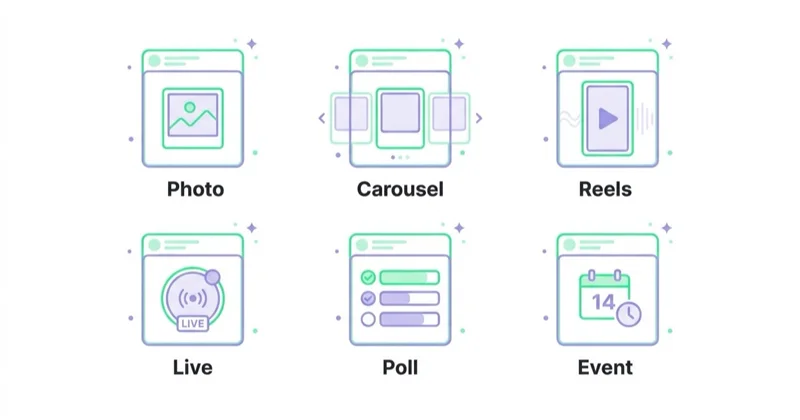
Useful formats:
- quick product demo;
- before-and-after explanation;
- expert tip;
- common mistake;
- behind the scenes;
- customer question answered;
- event recap;
- founder or team perspective;
- local update;
- short case result.
The first seconds matter. Open with the point, not with a long intro.
2. Reels
Reels are important for discovery because they can reach beyond existing followers. Meta has continued to invest in video and Reels recommendation systems, and businesses should treat short vertical video as a core creative format, not an afterthought.
Good Reels are usually:
- short enough to finish;
- clear without sound;
- captioned or visually understandable;
- native-looking;
- built around one idea;
- edited with a strong first moment;
- not just a recycled ad;
- relevant to the audience, not only to the algorithm.
For related format context, read What You Need to Know About Instagram Reels.
3. Useful educational posts
Educational posts work when they solve a real problem.
Examples:
- "3 mistakes when choosing..."
- "How to prepare for..."
- "What changes after..."
- "Checklist before buying..."
- "What this metric means..."
- "When this option is not worth it..."
The strongest educational posts are specific. A generic tip is easy to ignore. A practical explanation tied to a real decision earns more attention.
4. Opinion and perspective
A Page should not be only a noticeboard. Perspective gives people a reason to remember the brand.
Useful opinion posts:
- explain a trend;
- challenge a bad practice;
- compare two choices;
- show what the team learned;
- state a clear position;
- interpret news for the audience;
- explain why a common tactic fails.
The opinion must be relevant to the brand. Random hot takes can attract comments but weaken positioning.
5. Proof and customer stories
Proof reduces risk.
Possible proof posts:
- case study summary;
- testimonial with context;
- user-generated content;
- before/after;
- client result with caveats;
- process walkthrough;
- review highlight;
- delivery story;
- team expertise post.
Avoid unsupported performance claims. If numbers are used, explain context and limitations.
6. Questions that lead to real conversation
Questions can work, but only when they are connected to the audience's actual experience.
Better:
- "What is the hardest part of choosing a CRM for a small sales team?"
- "Which product detail is missing most often when shopping online?"
- "What would make this guide more useful for a first-time advertiser?"
Weaker:
- "Monday or Friday?"
- "Like if you agree."
- "Comment YES if..."
Good questions create insight. Engagement bait creates noise.
7. Local and community posts
For local businesses, Facebook can still be strong because people care about local updates.
Examples:
- opening hours;
- local events;
- staff introduction;
- local partnerships;
- availability updates;
- community initiatives;
- seasonal reminders;
- behind-the-scenes operations.
Local relevance can outperform generic polished content.
What to avoid
Avoid:
- posting only links with no native context;
- publishing the same sales graphic repeatedly;
- using engagement bait;
- asking questions unrelated to the brand;
- using low-quality AI-generated posts at scale;
- ignoring comments;
- deleting difficult but legitimate questions;
- promoting every post automatically;
- posting without a next step;
- judging success only by likes.
Meta has publicly discussed demoting engagement bait and spammy tactics in the past. Even where a tactic creates short-term reactions, it can damage the Page's trust and content quality.
Facebook Page vs Facebook Group
A Page is the official business presence. A Group is a community space.
| Area | Facebook Page | Facebook Group |
|---|---|---|
| Main role | Official brand communication | Community discussion |
| Tone | Brand-led | Member-led and moderated |
| Best for | Updates, proof, ads, customer contact | Discussion, support, belonging |
| Risk | Low engagement if posts are generic | Needs moderation and ongoing value |
| Paid connection | Easy to boost posts and run ads | Useful for community, less direct as ad surface |
Groups can be powerful when the topic deserves a community. They are not a shortcut for reach. A neglected group can hurt the brand more than no group at all.
For Page setup and management, read How to Create and Manage a Facebook Page.
How to combine organic posts with paid support
A useful workflow:
- Publish organic posts with clear content themes.
- Watch early engagement and qualitative comments.
- Identify posts that match a business goal.
- Promote only the posts worth amplifying.
- Build audiences from engaged users where appropriate.
- Retarget engaged users with a relevant next step.
- Learn which creative angles deserve full paid campaigns.
Boosting can be useful, but it should not replace campaign planning. A boosted post is easy to launch, but more advanced goals often need proper Meta Ads Manager setup, campaign objective selection, event tracking and audience strategy.
For paid context, read Meta Ads Audiences: How to Build Facebook Audiences and Facebook Lead Ads: What They Are and How to Launch Instant Forms.
Posting frequency
There is no universal posting frequency.
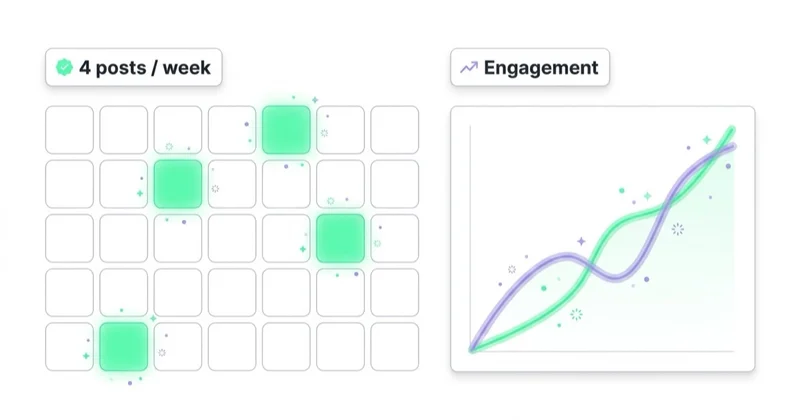
A practical rule:
- post often enough to stay useful;
- do not post so often that quality drops;
- match frequency to available ideas, assets and audience response;
- review insights instead of following generic schedules.
For many small businesses, a few strong posts per week can outperform daily filler. For media, communities or high-volume ecommerce, higher frequency may make sense if the content is genuinely varied and useful.
Content pillars for a Facebook Page
A Page should usually have several repeatable content pillars.
Examples:
| Pillar | Example post |
|---|---|
| Education | "How to avoid this buying mistake" |
| Proof | Case study, review, customer story |
| Product | Demo, feature, use case, comparison |
| People | Team, founder, behind the scenes |
| Community | Question, local update, event |
| Trust | FAQ, process, guarantee, policy explanation |
| Promotion | Offer, launch, limited availability |
The ratio depends on the business. A professional service may need more education and proof. A local venue may need more community and events. An ecommerce brand may need product, creator content, education and offers.
How to write better Facebook posts
A good Facebook post usually has:
- one clear idea;
- a strong first line;
- enough context to understand the point;
- a reason to interact;
- a relevant visual or video when useful;
- a natural CTA;
- brand voice;
- no unnecessary jargon;
- no forced engagement prompt.
Examples of better CTAs:
- "See the checklist."
- "Send a message for availability."
- "Read the full guide."
- "Compare the options."
- "Save this for the next campaign review."
- "Ask for the product size chart."
The CTA should match the user's stage. Not every post should push a sale.
How to measure Facebook post performance
Use Meta Business Suite Insights and campaign data to review:
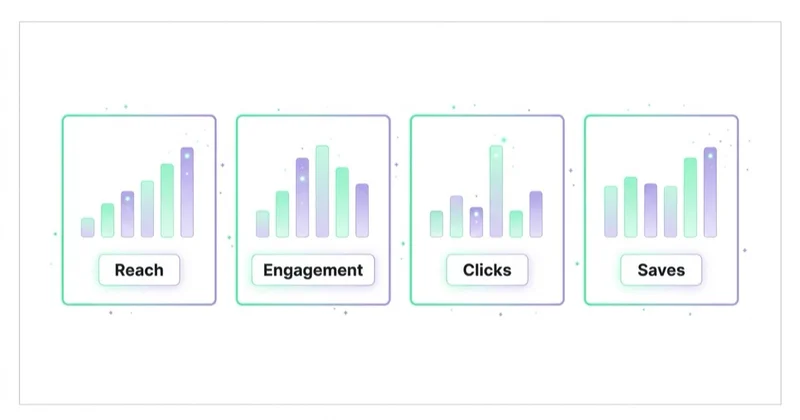
- reach;
- engaged reach;
- reactions;
- comments;
- shares;
- saves where available;
- video views;
- watch time or retention;
- link clicks;
- message starts;
- Page follows;
- cost per engagement if boosted;
- landing page sessions;
- key events or conversions;
- assisted remarketing audiences.
Qualitative review matters too. Read the comments. Check whether people ask useful questions, tag relevant people, challenge the claim or share their own experience.
Facebook posts for ecommerce
For ecommerce, Facebook posts can support discovery and trust, but the post should not always be a product card.
Useful formats:
- product demonstration;
- comparison between variants;
- customer review;
- how-to-use content;
- new collection preview;
- back-in-stock update;
- seasonal gift guide;
- founder pick;
- behind-the-scenes packing or sourcing;
- user-generated content;
- short Reel showing the product in use.
Organic content can also produce creative learning for Meta Ads. If a product angle gets real comments and saves organically, it may be worth testing in paid campaigns.
Facebook posts for B2B and services
B2B Pages often struggle because they publish company news that only the company cares about.
Better B2B content:
- explains a problem;
- answers buyer objections;
- shows a process;
- summarises a case study;
- shares a useful checklist;
- comments on an industry change;
- introduces experts;
- compares approaches;
- invites a relevant discussion.
B2B reach may be smaller, but one qualified conversation can be more valuable than thousands of casual reactions.
How we approach this at Space Ads
Organic engagement stopped being a reach lever long ago; the algorithm rewards interests and paid distribution regardless, so chasing likes for their own sake is pointless. Engagement earns its keep differently for us — as a free read on which messages and angles actually land. A post that gathers reactions and comments organically tells us what to test in ads, and the people who interacted become a warm audience for remarketing. The profile, then, is a source of signal and a way to build audiences, not a standalone growth channel. The skill isn't wringing out maximum organic reach; it's spotting within it what's worth backing with budget. Organic tests the message cheaply, and paid scales whatever passed the test.
Common mistakes
| Mistake | Why it hurts | Better approach |
|---|---|---|
| Posting only external links | Users have no reason to engage in-feed | Add native context and summary |
| Chasing likes | Likes may not support business goals | Track comments, shares, clicks, messages and conversions |
| Engagement bait | Low-quality interaction and trust risk | Ask useful, relevant questions |
| Ignoring video | Misses an important discovery format | Test short native video and Reels |
| Boosting every post | Wastes budget | Promote posts with clear purpose or proven signal |
| No response process | Conversations die | Reply, moderate and route questions |
| No content pillars | Posts feel random | Build repeatable themes |
| No measurement | Learning is lost | Review Meta Business Suite and downstream analytics |
FAQ
Is it still worth posting on Facebook Pages?
Yes, if posts have a clear role: trust, community, education, support, product discovery, remarketing or paid creative testing. It is usually risky to depend only on organic Page reach.
What type of Facebook post gets the most reach?
There is no universal format, but native video, Reels, useful educational content, community-relevant posts and content that earns meaningful comments or shares often perform better than generic link posts.
How often should a business post on Facebook?
Post as often as quality and audience response justify. A few strong posts per week can be better than daily filler. Use Page insights to find what actually works for the audience.
Should Facebook posts include links?
They can, but link-only posting is usually weak. Add context, explain why the link matters and consider whether part of the value should be delivered inside the post.
Is boosting Facebook posts worth it?
It can be worth it when the post has a clear objective and audience. Do not boost every post automatically. Use paid support for strong content, local reach, events, messages, leads or remarketing strategy.
Are Facebook Groups better than Pages?
They serve different roles. A Page is the official brand channel. A Group can build community, but it requires moderation, conversation prompts and sustained value.
What is engagement bait?
Engagement bait is content that tries to force reactions, comments, tags or shares mainly to manipulate distribution. It usually creates low-quality interaction and should be avoided.
Conclusion
Facebook posts can still matter, but they need a modern role. They are not guaranteed announcements to all followers. They are ranked content in a competitive feed.
The strongest approach is to publish useful native content, test short video and Reels, create real conversation, avoid engagement bait, respond to the community and support the best posts with paid distribution when there is a business reason.
Measure beyond likes. Look at comments, shares, watch time, clicks, messages, leads, conversions and remarketing value. A Facebook post is useful when it helps the audience and moves the relationship forward.
Sources and further reading
- Facebook Help Center: What influences the order of posts in your Facebook Feed
- Facebook Help Center: See insights for your Facebook Page posts
- Meta for Business: Boost a Facebook post
- Meta for Business: Facebook and Instagram Reels ads
- Meta Newsroom: Fighting engagement bait on Facebook
- Meta Newsroom: 2026 AI drives performance
Continue learning
- How to Create and Manage a Facebook Page
- What You Need to Know About Instagram Reels
- Facebook Lead Ads: What They Are and How to Launch Instant Forms
- Meta Ads Audiences: How to Build Facebook Audiences
- Facebook Remarketing: How Meta Retargeting Works and Why Use It
- What Is RTM and How to Do Real-Time Marketing Well?
- What Is Brand Awareness and How to Build a Successful Campaign?
Continue reading
How to Create and Manage a Facebook Page
A Facebook Page is a business asset for trust, access control, customer service, Messenger, Instagram connection, remarketing and Meta Ads infrastructure, not just a place to post updates. This guide explains how to create, secure and manage a Page so content, inbox, insights and paid activity support real customer actions.
How to Run Facebook Contests and What to Know
Facebook contests can build engagement, UGC and leads, but they need clear rules, Meta policy compliance, privacy discipline and relevant prizes.
How to Use Instagram Hashtags?
Instagram hashtags support discovery, classification and campaigns, but they are not a magic reach lever. Learn how to use precise tags with social SEO, captions and measurement.