Meta Ads audiences define who can see ads, which data can guide delivery and which users should be excluded from campaigns. They still matter, but their role has changed.
In older Facebook Ads setups, media buyers often built many narrow ad sets with detailed interests, lookalikes and separate retargeting audiences. In modern Meta Ads, automation, Advantage+ audience, creative quality, Pixel events, Conversions API and first-party data have become more important than manual microtargeting.
The practical goal is not to control every impression manually. The goal is to give Meta enough high-quality signals, creative variety and business constraints to find the right users profitably.
That shift changes the work of a media buyer. Instead of building dozens of tiny interest groups, the priority is to decide which signals should guide delivery, which users should be excluded, which first-party lists are reliable and which creative angles attract the right people.
TL;DR
- Meta Ads audiences include Custom Audiences, lookalike audiences, saved or original audiences, engagement audiences, website audiences and customer lists.
- Audience strategy now depends heavily on Pixel, Conversions API, event quality, consent-aware data and creative testing.
- Advantage+ audience lets Meta use audience suggestions and AI to find people likely to respond, while some controls remain strict.
- Custom Audiences are still essential for remarketing, exclusions, retention, customer lists and lifecycle campaigns.
- Lookalike audiences can work when the source audience is high quality, but they should be tested against broader automated targeting.
- Exclusions are often as important as inclusions, especially for existing customers, recent leads and irrelevant users.
- Audience quality should be measured by business outcomes: purchases, margin, qualified leads, pipeline, LTV and incrementality.
What are Meta Ads audiences?
Meta Ads audiences are audience definitions used in campaigns across Meta technologies, including Facebook and Instagram. They help determine who Meta should reach, re-engage or exclude.
Audience work can support several jobs:
- prospecting for new customers;
- remarketing to warm users;
- excluding current customers;
- reactivating past customers;
- nurturing leads;
- cross-selling or upselling;
- building source audiences for similar users;
- testing different creative angles;
- controlling sensitive or local targeting constraints.
Audiences are not a replacement for strategy. A campaign can target the right people and still fail if the offer, creative, landing page or conversion event is weak.
Main audience types in Meta Ads
Custom Audiences
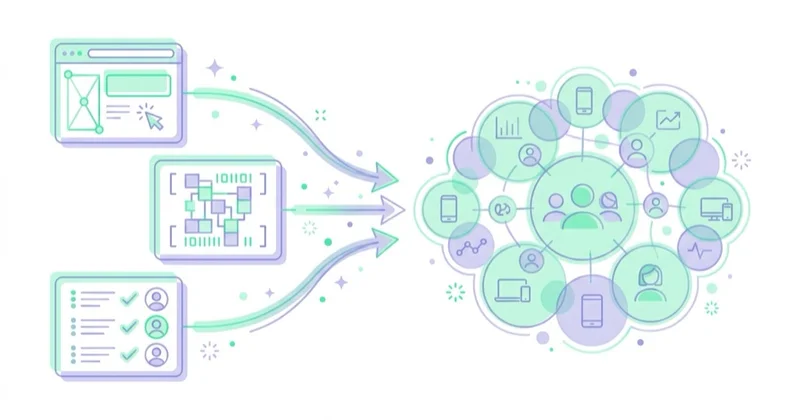
Custom Audiences are built from data sources such as:
- website visitors;
- Pixel events;
- Conversions API events;
- customer lists;
- app activity;
- Facebook and Instagram engagement;
- video views;
- lead form engagement;
- shopping activity;
- offline or CRM events where available.
Custom Audiences are useful for remarketing, exclusions, lifecycle communication and source audiences.
Examples:
- all website visitors in the last 30 days;
- product viewers who did not purchase;
- add-to-cart users who did not complete checkout;
- people who opened but did not submit a lead form;
- customers who bought a specific category;
- high-value customers;
- recent leads to exclude from acquisition.
Lookalike Audiences
Lookalike Audiences are built from a source audience. Meta looks for people who resemble that source audience.
The source matters more than the percentage. A lookalike based on all website visitors may be weak. A lookalike based on high-value purchasers, qualified leads or repeat customers is more useful.
Lookalikes should be tested, not assumed. In many accounts, broad or Advantage+ audience setups can compete strongly with lookalikes, especially when conversion data and creative are strong.
Saved or original audiences
Saved audiences use manual criteria such as location, age, gender, language, interests, behaviors and connections.
They can still be useful when:
- the market is local;
- legal or operational constraints require strict limits;
- the offer is relevant to a specific language or region;
- the campaign tests a clear hypothesis;
- the account has little conversion data.
The risk is over-narrowing. Small audiences can limit learning and increase frequency too quickly.
Engagement audiences
Engagement audiences are built from interactions with Meta assets, such as:
- Instagram profile engagement;
- Facebook page engagement;
- video views;
- lead form opens;
- event engagement;
- shopping engagement.
These are useful when a brand has strong social activity or when website tracking is limited. They are also helpful for building warmer mid-funnel sequences.
Customer list audiences
Customer list audiences use first-party customer data, such as email or phone number, to match users on Meta. They can support:
- customer exclusions;
- retention;
- reactivation;
- cross-sell;
- lookalike sources;
- lead nurturing;
- value-based segmentation.
Data must be collected and used with proper consent, transparency and platform policy compliance. Purchased lists are a poor foundation for performance and create legal and reputational risk.
What changed: from manual targeting to signal quality
Meta Ads have moved toward broader delivery and AI-assisted optimization. That does not mean audiences are irrelevant. It means their role is different.
The most important signals now include:
- campaign objective;
- conversion event;
- Pixel and Conversions API quality;
- Event Match Quality;
- customer lists;
- exclusions;
- creative angle;
- landing page behavior;
- budget and learning volume;
- historical account data.
Audience suggestions can guide the system, but the system may still search more broadly when allowed. This makes creative and event quality more important.
For broader context, see Meta Advantage+ and how it works and Meta Andromeda and campaign adaptation.
Advantage+ audience
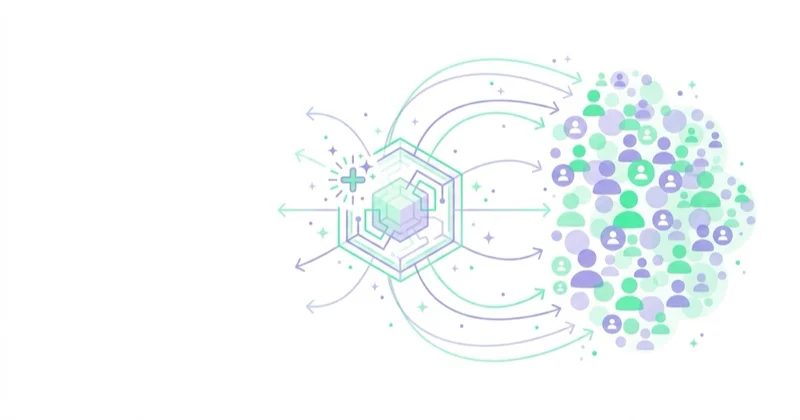
Advantage+ audience is Meta's AI-assisted audience approach. It can use audience suggestions, such as customer lists, interests, age or gender, while also looking outside those suggestions when Meta predicts better results. Certain controls, such as location, language, minimum age and exclusions, can remain stricter depending on setup and objective.
Advantage+ audience is strongest when:
- the campaign has a clear conversion goal;
- Pixel and CAPI events are reliable;
- the account has meaningful historical data;
- creative assets are diverse;
- the audience is not artificially too small;
- exclusions protect the business goal.
It is weaker when:
- the conversion event is low quality;
- lead forms collect poor leads;
- creative attracts the wrong users;
- the landing page does not qualify intent;
- the business needs very strict audience control.
Audience architecture
A useful Meta Ads account usually separates audiences by job.
| Audience job | Examples | Main purpose |
|---|---|---|
| Prospecting signal | broad audience, Advantage+ audience, lookalike from high-value customers | find new users likely to convert |
| Remarketing | website visitors, product viewers, cart users, lead form openers | bring warm users back |
| Exclusion | recent customers, submitted leads, employees, disqualified leads | prevent waste and wrong messaging |
| Retention | past customers, lapsed buyers, category buyers | support repeat purchase and reactivation |
| Source audience | high-LTV buyers, qualified leads, repeat customers | create stronger lookalikes or guidance |
| Engagement pool | video viewers, Instagram engagers, page engagers | warm social-first users |
This architecture is more useful than asking whether one audience type is universally best. The best audience depends on its role in the campaign.
How to build useful Meta audiences
1. Start with the campaign goal
Define whether the audience is for:
- new customer acquisition;
- retargeting;
- lead nurturing;
- ecommerce recovery;
- reactivation;
- cross-sell;
- exclusion;
- testing.
An audience built for remarketing should not be evaluated like a prospecting audience. A retention audience should not be mixed with cold acquisition unless the campaign goal requires it.
2. Choose the right data source
Use the strongest available source.
For ecommerce:
- purchases;
- purchase value;
- add to cart;
- checkout start;
- product views;
- category views;
- catalog events;
- repeat buyers.
For lead generation:
- qualified leads;
- submitted forms;
- booked calls;
- CRM stages;
- offline conversions;
- high-quality lead lists;
- disqualified leads for exclusion.
For content and awareness:
- video viewers;
- engaged social users;
- article readers;
- newsletter subscribers;
- event registrants.
3. Separate inclusion from exclusion
Inclusions decide who may be reached. Exclusions decide who should not receive the ad.
Useful exclusions include:
- recent purchasers;
- recently submitted leads;
- current customers in acquisition campaigns;
- employees and partners where practical;
- low-quality lead segments;
- users who already completed the target action;
- segments with active support or refund issues where messaging would be inappropriate.
Exclusions should support the campaign objective. Too many exclusions can reduce scale and learning.
4. Keep audiences fresh
Audience recency matters. A person who visited yesterday is different from someone who visited 180 days ago.
Useful windows:
- 1-7 days for hot remarketing;
- 8-30 days for active consideration;
- 31-90 days for warmer nurture;
- 90-180 days for broader reactivation;
- custom windows based on purchase cycle.
The right window depends on sales cycle and purchase frequency.
A short decision journey needs shorter windows. A high-ticket B2B service or expensive product may need longer consideration windows. The audience window should reflect how people actually decide, not a default copied from another account.
5. Measure quality, not just size
Audience size is not quality.
Evaluate:
- cost per purchase;
- revenue and margin;
- qualified lead rate;
- sales acceptance rate;
- repeat purchase;
- LTV;
- frequency;
- overlap;
- incremental lift where possible;
- new vs returning customer mix.
If a Custom Audience produces cheap leads that sales rejects, it is not a good audience.
6. Test audience strategy without fragmenting the account
Audience tests should be clear enough to learn from but not so fragmented that every ad set is underfunded.
Useful test patterns:
- Advantage+ audience vs broad audience with minimal controls;
- lookalike from all customers vs lookalike from high-value customers;
- product-view remarketing vs cart-only remarketing;
- customer list exclusion vs no exclusion in an acquisition campaign;
- website retargeting vs engagement retargeting;
- qualified lead source vs raw lead source.
Avoid testing five audience concepts, five creative concepts and three landing pages at the same time in one small budget. If everything changes, it is hard to know what caused the result.
Ecommerce audience examples
A practical ecommerce setup can include:
- product viewers by category;
- add-to-cart users excluding purchasers;
- checkout starters excluding purchasers;
- purchasers by category;
- high-LTV customers;
- lapsed customers;
- repeat buyers;
- discount-sensitive customers;
- catalog events for dynamic ads;
- customers for retention and lookalike sources.
Messages should match behavior. Cart abandoners need different copy than category browsers. Recent buyers should receive post-purchase, retention or cross-sell messaging rather than cold acquisition ads.
For shopping-specific tracking, Meta Conversions API and Pixel quality matter.
Ecommerce audience quality depends on event and catalog consistency. Product IDs in events should match the catalog. Purchase value and currency should be reliable. Out-of-stock or low-margin products should not accidentally drive the whole remarketing strategy.
Lead generation audience examples
For lead generation, audience strategy should account for lead quality.
Useful segments:
- website visitors by service page;
- pricing or contact page visitors;
- lead form openers who did not submit;
- submitted leads excluded from acquisition;
- qualified leads from CRM;
- disqualified leads excluded from optimization;
- video viewers of educational content;
- webinar registrants;
- customer list lookalike sources.
For instant forms, read Facebook Lead Ads and how to launch instant forms.
Lead generation accounts should avoid treating all leads as equal. If the CRM can send qualified stages back into reporting, audience strategy becomes more reliable. If not, at least compare source audience, creative and form quality with sales feedback.
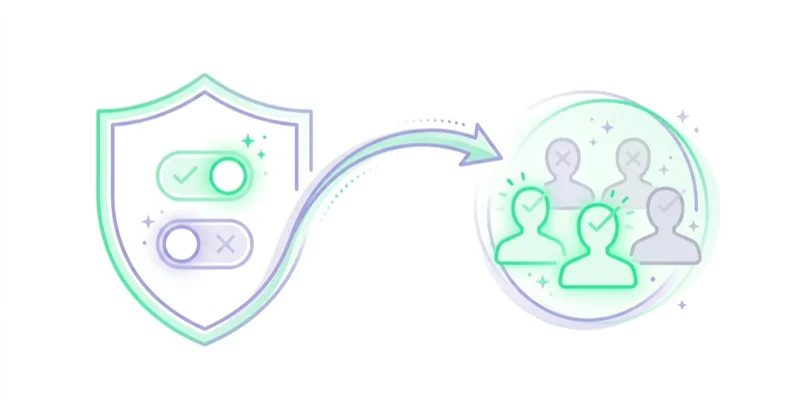
Privacy, consent and list quality
First-party data is powerful only when it is usable and trustworthy.
Before uploading or using customer data, check:
- the data was collected lawfully;
- users received appropriate information about advertising data use;
- consent or another valid basis is documented where required;
- stale records are removed;
- unsubscribed or restricted users are handled correctly;
- fields are formatted consistently;
- sensitive categories are not used improperly;
- customer lists are not bought or scraped;
- access to audience data is limited to the right people.
Match rate is not the only success metric. A large matched list can still be weak if it contains old, low-value or irrelevant users. A smaller list of recent high-value buyers may be a better signal.
How we approach this at Space Ads
On Meta we stopped treating audiences as rigid cages a long time ago. These days they're more a hint to the system than a hard wall, so we give it room and lean on strong creative, which in practice is what does the targeting. First-party data goes in where it genuinely adds an edge: customer lists as lookalike seeds and, above all, as exclusions. The exclusions usually make the difference — no paying to reach someone who just bought, or existing customers when the goal is new ones. Over-narrowing only pushes cost up and starves the system, so the precision we build comes from creative and exclusions, not one more demographic filter.
Common mistakes
- Creating many tiny ad sets with too little budget.
- Treating interests as strategy.
- Using old customer lists without updates.
- Building lookalikes from weak sources.
- Forgetting exclusions for recent buyers or leads.
- Running remarketing with one generic message.
- Optimizing lead campaigns toward raw form submissions only.
- Ignoring Pixel and Conversions API quality.
- Using the same creative for every audience.
- Judging prospecting and remarketing by the same CPA without context.
- Uploading data without consent and policy review.
Meta audience checklist
Before launching:
- The campaign goal is clear.
- The conversion event is meaningful.
- Pixel and CAPI are checked.
- Custom Audiences are fresh.
- Customer lists are consented and current.
- Existing customers are excluded where needed.
- Audience size supports learning.
- Creative matches funnel stage.
- Lead quality or purchase value can be measured.
- Retargeting frequency is monitored.
FAQ
Are Facebook Ads audiences still important?
Yes, but their role changed. Audiences are now signals, exclusions, retargeting pools and lifecycle tools, not only manual targeting boxes.
Should Meta campaigns use broad targeting or detailed interests?
It depends on the goal, data quality and constraints. Broad or Advantage+ audience setups often work well with strong conversion data and creative. Detailed targeting can still be useful for specific hypotheses, local constraints or early testing.
Do lookalike audiences still work?
They can work when the source audience is high quality. They should be compared with broader targeting and Advantage+ audience rather than treated as the default prospecting solution.
What is the best audience for remarketing?
The best remarketing audience is usually behavior-based and recent: product viewers, cart abandoners, checkout starters, pricing-page visitors, lead form openers or engaged video viewers. The message should match the behavior.
How large should a Custom Audience be?
It needs enough matched users to deliver, but quality matters more than raw size. A smaller list of high-value customers can be more useful than a large, stale list of low-intent users.
Why do Meta audiences perform poorly?
Common causes include weak source data, old lists, bad conversion events, poor creative, landing page mismatch, over-narrow targeting, missing exclusions, low budget or lead quality not connected back into reporting.
Are exclusions still needed with Advantage+ audience?
Yes. Automation can help find users, but business rules still matter. Recent customers, submitted leads, employees, disqualified leads or users who already completed the target action may still need to be excluded depending on the campaign goal.
What is better: a lookalike or a broad audience?
There is no universal answer. A lookalike from strong source data can work well, but broad or Advantage+ audience setups can also perform strongly when conversion data and creative are good. Test against the business metric, not preference.
Conclusion
Meta Ads audience strategy in 2026 is less about manually controlling every segment and more about feeding the delivery system useful signals. Custom Audiences, customer lists, exclusions, Pixel, CAPI, Advantage+ audience and creative testing all work together.
The strongest setup starts with the business goal, uses clean first-party and behavioral data, keeps audiences fresh, protects budget with exclusions and measures quality through real outcomes.
We build audiences and exclusions within Facebook and Instagram ads so they support campaign learning rather than fragment it.
Sources and further reading
- Meta for Business: Advantage+ audience
- Meta for Business: Advantage+ leads campaigns
- Meta for Developers: Custom Audiences
- Meta for Developers: Lookalike Audiences
- Meta Business Help Center: About Conversions API
- Meta Help Center: Meta Business Tools
Continue learning
Continue reading
How to Use Dynamic Creative on Facebook and Instagram
Dynamic creative in Meta Ads can accelerate creative learning when the inputs are distinct concepts, not random asset variations. This guide explains how to plan asset matrices, control Advantage+ Creative enhancements, read results beyond CPA and keep Pixel, CAPI and landing-page signals clean enough for useful learning.
Facebook Remarketing: How Meta Retargeting Works and Why Use It
Facebook remarketing reaches people who already interacted with a brand. Learn how Meta retargeting works, which audiences to build, how to use Pixel, CAPI and catalog ads, and how to measure incrementality.
What Is a Sales Campaign and How to Plan It?
A sales campaign needs a clear offer, conversion goal, tracking, creative, landing page and optimisation plan across Meta, Google and owned channels.