Precise ad targeting is not the same as making an audience as narrow as possible. It means showing the right message to the right type of user at the right stage of the decision process, with enough data and scale for the campaign to learn.
That distinction matters because modern advertising platforms rely heavily on automation, conversion signals and creative quality. A campaign can be technically targeted to a correct audience and still fail if the message is wrong, the funnel stage is misunderstood, the landing page does not match intent or the conversion event is too weak.
The marketing funnel helps organize this work. It shows why a person who has never heard of a brand should not see the same ad as someone comparing prices, reading case studies, abandoning a cart or requesting a demo.
TL;DR
- Precise targeting means relevance, not extreme audience restriction.
- The marketing funnel helps match ads to awareness, consideration, decision, loyalty and advocacy stages.
- Upper-funnel campaigns need reach, memory, education and creative testing.
- Middle-funnel campaigns need proof, comparisons, use cases, objections and remarketing.
- Lower-funnel campaigns need intent, trust, offer clarity, landing page alignment and conversion tracking.
- First-party data, Customer Match, enhanced conversions, CRM quality and consent-aware measurement are now central to targeting quality.
- AI-powered platforms perform better when the goal, conversion event, creative inputs and audience signals are strong.
What is precise ad targeting?
Precise ad targeting is the process of aligning five elements:
- audience: who should see the message;
- intent: what the person is likely trying to solve;
- funnel stage: how close the person is to action;
- message: what should be communicated now;
- measurement: which signal tells the platform and the business that the ad worked.
It is not only a media buying setting. It is a strategic discipline.
For example, a user reading a beginner's guide needs a different message than a returning visitor who has checked pricing twice. A person who bought last week should not always be treated like a new prospect. A procurement manager in a long B2B process needs different proof than an ecommerce shopper comparing delivery options.
Why very narrow targeting can reduce performance
Older paid media playbooks often treated precision as manual microtargeting: narrow interests, small lookalikes, exact demographics, many exclusions and a separate ad set for every segment. That can still be useful in some cases, but it is no longer the default answer.
There are three reasons.
First, privacy changes and browser restrictions reduce the reliability of some tracking and audience signals. Second, platforms such as Google, Meta and TikTok use machine learning to find likely converters beyond manually defined segments. Third, small audiences often do not generate enough conversions for stable learning.
This means the best targeting setup is often a balance:
- broad enough to let the system find demand;
- structured enough to reflect business logic;
- supported by high-quality conversion data;
- controlled by exclusions and value rules where needed;
- guided by creative that attracts the right people and filters out the wrong ones.
In practice, creative has become a targeting layer. The hook, problem, proof, format and offer influence who pays attention.
What is the marketing funnel?
The marketing funnel is a model that describes how people move from no awareness to purchase and long-term loyalty. Real journeys are not perfectly linear, but the model is useful because it prevents one common mistake: asking every campaign to close the sale immediately.
| Funnel stage | User state | Marketing job | Typical channels | Useful metrics |
|---|---|---|---|---|
| Awareness | Does not know the brand or problem well | Create recognition and problem awareness | YouTube, TikTok, Meta, Display, PR, content | Reach, frequency, video views, brand search, engaged visits |
| Interest | Understands the problem and wants more information | Educate and qualify | SEO, guides, newsletters, webinars, social, Demand Gen | Engaged sessions, saves, content depth, returning users |
| Consideration | Compares solutions or providers | Build trust and reduce perceived risk | Case studies, comparisons, remarketing, email, reviews | Demo views, pricing visits, assisted conversions, lead quality |
| Decision | Ready to act | Make conversion easy and credible | Search, Shopping, Performance Max, lead forms, offer pages | CPA, ROAS, conversion rate, qualified leads, revenue |
| Loyalty | Already converted | Increase repeat value and retention | Email, CRM, Customer Match, remarketing, education | Repeat purchase, LTV, churn, reactivation |
| Advocacy | Happy customer or engaged user | Encourage referrals and public proof | Reviews, referrals, community, case studies | Reviews, referrals, testimonials, user-generated content |
The funnel is not a rigid path. Someone can discover a brand on TikTok, search on Google, read a comparison, ignore remarketing, return through email and convert after a sales call. The purpose of the funnel is to decide what each touchpoint should do.
Upper-funnel targeting: awareness and demand creation
Upper-funnel campaigns reach people who may not yet know the brand, category or problem. The targeting should not be too restrictive, because the goal is to discover and shape demand.
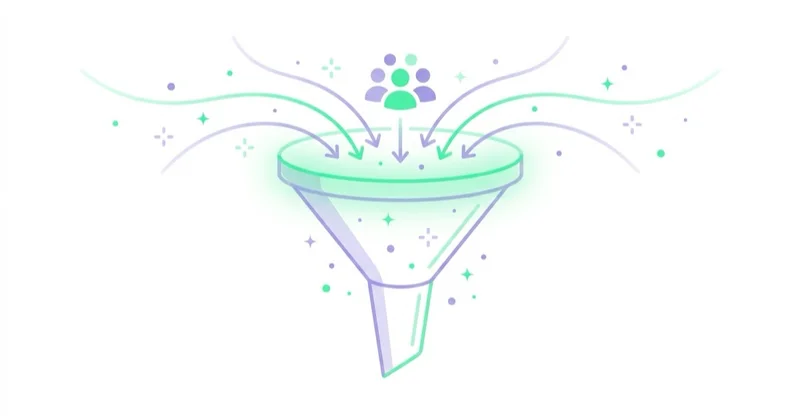
Good upper-funnel targeting can use:
- broad demographic or geographic constraints;
- interest or behavior signals;
- lookalike or similar audience logic where available;
- contextual placement choices;
- video engagement audiences;
- topic clusters;
- creator and content alignment;
- first-party customer segments used as signals rather than hard limits.
The message should be simple. It should show the problem, outcome or use case quickly. The aim is not to explain every feature. The aim is to earn attention and create a memory.
Useful metrics include:
- reach in the target market;
- frequency by audience;
- video hold rate or completion;
- cost per engaged view;
- growth in branded search;
- direct traffic quality;
- engaged visits;
- growth of warm retargeting pools.
Upper-funnel campaigns are often misjudged because they do not close sales immediately. They should still be accountable, but not only through last-click ROAS.
Middle-funnel targeting: education, proof and comparison
Middle-funnel users understand the problem but have not chosen a solution. They may compare providers, read reviews, ask colleagues, check alternatives or look for proof.
Targeting at this stage should focus on behavior and intent:
- visitors of key content pages;
- video viewers above a chosen engagement threshold;
- newsletter subscribers;
- pricing-page visitors who did not convert;
- people who engaged with lead magnets or webinars;
- category viewers;
- CRM leads that are not yet qualified;
- users who searched for comparison or alternative terms.
The message should answer objections:
- Why this solution?
- Why this company?
- What proof exists?
- What will happen after contact or purchase?
- How risky is the decision?
- What makes the offer different?
Formats that work well include case studies, comparison pages, testimonials, demos, webinars, guides, calculators, checklists and remarketing sequences.
For a broader strategy layer, see what digital marketing includes and why it matters.
Lower-funnel targeting: intent and conversion
Lower-funnel targeting focuses on people who are ready to act or close to acting. This is where intent, friction and trust become critical.
Strong lower-funnel audiences can include:
- high-intent search queries;
- Shopping or product-feed users;
- cart abandoners;
- quote or checkout visitors;
- demo-request page visitors;
- returning users from high-value channels;
- CRM leads marked as sales-qualified;
- past buyers ready for replenishment or cross-sell;
- users who engaged deeply with comparison content.
The message should be direct:
- clear offer;
- strong proof;
- pricing or next-step clarity;
- delivery, availability or implementation detail;
- guarantee, return policy or risk reduction;
- clear call to action.
Lower-funnel campaigns can be judged more directly by CPA, ROAS, revenue, qualified lead cost and conversion rate. But even here, measurement must account for margin, sales quality and repeat purchase.
First-party data: the new foundation of targeting
First-party data is information collected directly by the business from its own users, customers, subscribers, leads and transactions. Examples include email addresses, phone numbers, purchase history, lead status, website events, app events, product interests and consent preferences.
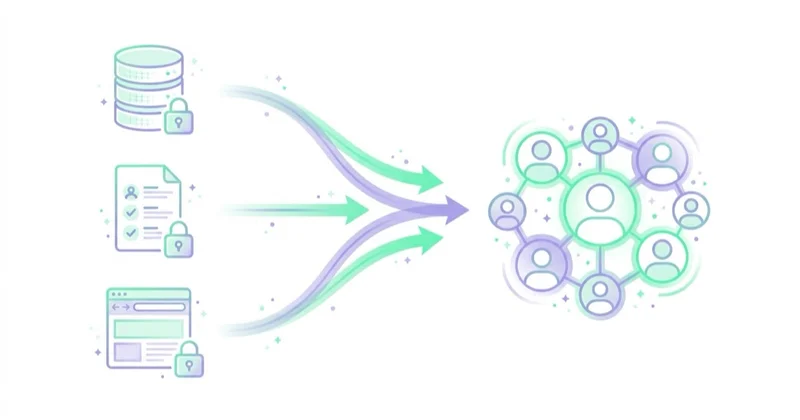
First-party data can support:
- remarketing;
- Customer Match;
- lookalike or similar modeling;
- exclusions;
- retention campaigns;
- value-based bidding;
- offline conversion imports;
- lead quality feedback;
- customer segmentation.
The point is not to upload every possible list to every platform. The point is to organize data around business value.
Useful segments may include:
- high-LTV customers;
- recent buyers;
- lapsed customers;
- qualified but unclosed leads;
- unqualified leads to exclude;
- newsletter subscribers by topic;
- product category buyers;
- cart abandoners;
- users with high engagement but no purchase.
Consent, privacy policies and platform rules must be respected. Targeting quality should never depend on unclear data collection.
Customer Match, enhanced conversions and server-side signals
Customer Match allows advertisers to use first-party customer data for targeting, re-engagement and exclusions on Google surfaces where eligible. Enhanced conversions can improve conversion measurement by sending hashed first-party conversion data in a privacy-conscious way.
These tools matter because ad platforms optimize toward the signals they receive. If a campaign only sees raw form fills, it may optimize toward cheap but low-quality leads. If the system receives qualified lead, revenue or customer value signals, it can make better decisions.
For Google Ads, see Customer Match in Google Ads and enhanced conversions in Google Ads. For Meta, see Meta Conversions API.
Targeting by funnel stage: examples
Awareness campaign
Goal: introduce a new service in a market where search volume is limited.
Targeting setup:
- broad location and language;
- interest or behavior signals;
- lookalike based on existing customers where useful;
- exclusions for existing customers;
- multiple creative angles.
Message:
- problem-led short video;
- educational hook;
- no hard sales pressure.
Measurement:
- reach, frequency, engaged views, branded search, returning visitors.
Consideration campaign
Goal: turn engaged users into qualified prospects.
Targeting setup:
- people who visited service pages;
- users who read guides;
- video viewers;
- email subscribers;
- CRM leads not yet qualified.
Message:
- comparison guide;
- case study;
- objection handling;
- webinar or consultation invite.
Measurement:
- return visits, pricing-page views, demo requests, qualified lead rate.
Decision campaign
Goal: convert high-intent users.
Targeting setup:
- bottom-funnel search terms;
- abandoned quote or checkout users;
- high-value product viewers;
- CRM sales-qualified leads;
- retargeting with exclusions for recent converters.
Message:
- offer, proof, deadline, next step;
- product availability or service process;
- trust and risk reduction.
Measurement:
- CPA, ROAS, revenue, qualified opportunity cost, margin.
How precise targeting works in ecommerce
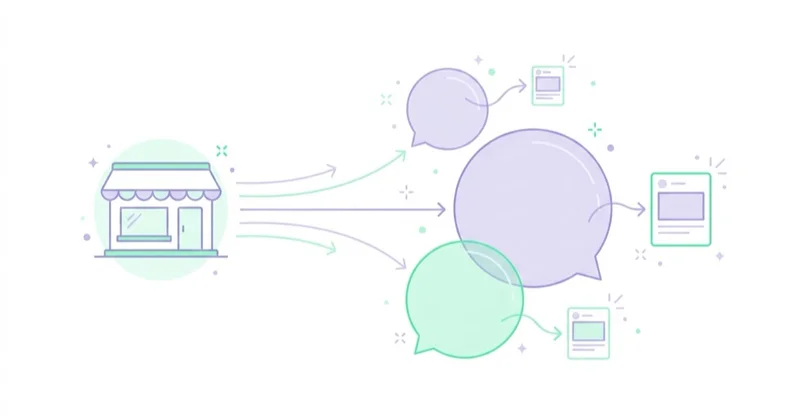
In ecommerce, targeting can be tied to product and purchase behavior.
Useful audience signals include:
- viewed products;
- category views;
- add-to-cart events;
- checkout starts;
- abandoned carts;
- purchases;
- purchase value;
- product margin;
- replenishment cycle;
- returns;
- customer lifetime value;
- discount sensitivity;
- complementary product ownership.
Examples:
- A user who viewed running shoes but did not add to cart can see product comparison content or a category-specific ad.
- A cart abandoner can receive a reminder that addresses shipping, returns or payment trust.
- A recent buyer can be excluded from acquisition campaigns and added to post-purchase education.
- A high-LTV segment can be used as a signal for lookalike-style expansion.
- Low-margin products can be excluded from aggressive ROAS targets or grouped separately.
For ecommerce, targeting is strongest when product feed quality, event tracking, creative and margin logic work together.
How precise targeting works in B2B
B2B targeting is less about a single user and more about a buying committee. A person who clicks the ad may not be the final decision-maker.
Useful B2B targeting signals include:
- job role or seniority where available;
- company size;
- industry;
- technology stack;
- content topic interest;
- website behavior;
- CRM lifecycle stage;
- lead score;
- sales feedback;
- account list;
- webinar or demo attendance.
The main risk in B2B is optimizing toward cheap leads. A campaign can look efficient while sending low-fit contacts to sales. That is why CRM feedback is essential. The real target is not the cheapest form fill. It is qualified pipeline and profitable closed revenue.
How we approach this at Space Ads
In 2026 targeting precision doesn't come from ever-tighter manual filters; if anything, audiences that are too narrow starve the algorithm and push cost up. Real precision rests on three things: signal quality (clean conversions and their value), creative that lets the system find the right people itself, and a message matched to the funnel stage. We build "precision" by feeding the machine good data and writing the ad for a specific person, not by stacking demographic criteria. First-party data sits on top of that — customer lists as exclusions and seeds — giving an edge that narrowing age and city never will. The classic mistake is confusing narrow with precise: a narrow audience is often just small and expensive, while a precise one reaches the right people even when it looks broad on paper.
Common targeting mistakes
- Treating smaller audiences as automatically more precise.
- Using the same creative for every funnel stage.
- Optimizing for traffic or microconversions that do not correlate with revenue.
- Forgetting exclusions for existing customers, employees, partners or low-quality segments.
- Running remarketing without behavior-based segmentation.
- Building too many ad sets with too little budget.
- Judging upper-funnel campaigns only by last-click conversions.
- Uploading first-party data without a clear purpose.
- Ignoring consent and platform data policies.
- Using AI-powered campaigns with weak conversion events.
- Sending high-intent users to generic landing pages.
- Failing to connect lead quality back into ad platforms.
A practical targeting checklist
Before launching a campaign, check:
- The primary business goal is clear.
- The funnel stage is defined.
- The audience is large enough for delivery and learning.
- The creative matches the user's awareness level.
- The landing page matches the ad promise.
- Conversion tracking captures the right event.
- Low-quality segments are excluded where possible.
- First-party data is consented, organized and useful.
- Existing customers are treated differently from new prospects.
- Reporting separates raw volume from business quality.
FAQ
Does precise targeting mean using a very small audience?
No. Precise targeting means relevance. Sometimes a broader audience with strong creative and high-quality conversion data performs better than a tiny manually defined segment.
Is the marketing funnel still useful?
Yes. Real user journeys are not linear, but the funnel helps decide what each campaign should do. It prevents awareness campaigns from being judged only as direct sales campaigns and prevents decision-stage users from receiving generic education.
Do AI algorithms replace targeting?
No. They change how targeting is executed. Automation can find likely converters, but it needs clear goals, good conversion signals, strong creative, enough budget and useful audience inputs.
What is the difference between remarketing and retargeting?
The terms are often used interchangeably. In practice, both refer to reaching people again based on previous behavior, such as site visits, video views, cart abandonment, app activity or CRM status.
What first-party data is most useful for targeting?
The most useful data is tied to business value: qualified leads, high-LTV customers, product category interest, purchase value, churn risk, repeat purchase behavior and consented contact data.
How should targeting be measured?
Use metrics that match the funnel stage. Awareness needs reach and engagement quality. Consideration needs returning users, content depth and assisted conversions. Decision needs CPA, ROAS, qualified lead cost, revenue and margin.
Conclusion
Precise ad targeting is not about making audiences smaller. It is about making the whole system more relevant: audience, stage, message, offer, landing page and measurement.
The marketing funnel gives structure to that system. Upper-funnel campaigns build awareness and demand. Middle-funnel campaigns educate and prove value. Lower-funnel campaigns capture intent and convert. First-party data, consent-aware measurement and AI-ready conversion signals connect those stages and make platform optimization more reliable.
We build the funnel and match messaging to its stages within Facebook and Instagram ads.
Sources and further reading
- Google Ads Help: About Customer Match
- Google Ads Help: About enhanced conversions
- Google Ads: Privacy-preserving measurement solutions
- Google Ads Help: About conversion measurement
- Meta for Business: Advantage+ audience
- TikTok Ads Manager: How to choose the right objective
Continue learning
Continue reading
What Is Storytelling in Marketing and How to Use It?
Storytelling in marketing uses narrative structure to explain a customer problem, transformation and result. Learn how to use it in ads, landing pages, ecommerce, B2B and case studies.
What Is Benefit-Led Copywriting and How to Use It?
Benefit-led copywriting translates features into customer value. Learn feature vs advantage vs benefit, with examples for ads, ecommerce, B2B, landing pages and CTAs.
What Is Brand Marketing and How to Use It?
Brand marketing builds recognition, trust, memory and preference so a company is easier to choose when buyers enter the market.