
A sales campaign is a campaign designed to generate a specific business outcome: purchases, qualified leads, bookings, orders, quote requests, demos or conversations with a sales team. It differs from a brand campaign because it needs a clear conversion goal, reliable measurement, a strong offer, a conversion-ready page or process and an optimisation plan.
A sales campaign should not start with the question "Meta or Google?" It should start with the offer, audience, margin, conversion event, sales process and user journey. Platform choice comes after the business logic is clear.
In 2026, sales campaigns are increasingly automated. Meta Advantage+ sales campaigns, Google Performance Max, broad match, AI creative tools and automated placements can help scale, but only if the campaign sends strong conversion signals and uses creative that explains the offer clearly.
TL;DR
- A sales campaign needs one primary business conversion goal.
- Start with offer, audience, margin, acceptable CPA or ROAS, measurement and post-click path.
- The main elements are goal, offer, page or product card, tracking, creative, budget, testing plan and follow-up process.
- Ecommerce campaigns need product data, catalogue/feed quality, Pixel, CAPI, Merchant Center, checkout and remarketing.
- Lead generation campaigns need qualified lead tracking, CRM feedback and speed-to-lead.
- Meta Advantage+ Sales and Google Performance Max can work well when tracking, creative and product data are strong.
- Cheap leads or high revenue are not enough if margin, LTV or customer quality are weak.
- A good sales campaign has a 30-90 day optimisation plan, not only a launch checklist.
What is a sales campaign?
A sales campaign is a focused marketing campaign that asks users to take a commercial action.
Common conversion goals:
- online purchase;
- add to cart;
- lead form submission;
- qualified lead;
- booked call;
- demo request;
- quote request;
- reservation;
- phone call;
- Messenger or WhatsApp conversation;
- trial signup;
- subscription;
- offline sale imported into the ad platform.
The most important point: the conversion goal must have business value. Optimising for clicks, page views or weak micro-conversions can make the platform efficient at finding people who do not buy.
Sales campaign vs brand campaign
| Area | Sales campaign | Brand campaign |
|---|---|---|
| Primary goal | Generate a business action | Build memory, trust and demand |
| Main metric | CPA, ROAS, leads, purchases, bookings | reach, recall, brand lift, branded demand |
| Funnel stage | Middle and bottom, sometimes full funnel | Top and middle |
| Conversion path | Clear next step | Often delayed or indirect |
| Optimisation | Based on conversion data | Based on reach, lift and demand signals |
Both campaign types can support each other. Brand creates demand. Sales campaigns capture and convert it.
For the brand side, see brand awareness campaign.
Start with the offer
A weak offer cannot be fixed by campaign settings.
Before launch, define:
- what is being sold;
- who it is for;
- what problem it solves;
- why now;
- why this brand;
- price or pricing logic;
- margin;
- delivery or fulfilment constraints;
- objections;
- proof;
- guarantee or return logic;
- next step.
The ad should make the offer clear enough for the target audience. The landing page or conversation should continue the same promise without forcing the user to decode the offer again.
Sales campaign brief template
Before opening Ads Manager or Google Ads, prepare a short campaign brief.
| Field | Question to answer |
|---|---|
| Business goal | What outcome should the campaign create? |
| Primary conversion | Which one event should optimisation focus on? |
| Audience | Who is the offer for and who should be excluded? |
| Offer | What is being sold and why should anyone act now? |
| Economics | What CPA, ROAS, margin or payback is acceptable? |
| Proof | What reviews, cases, guarantees or demos reduce risk? |
| Post-click path | Where does the user go and what should happen there? |
| Follow-up | What happens after purchase, lead, message or booking? |
| Reporting | Which platform, GA4, CRM or backend numbers decide success? |
This brief keeps the campaign from becoming a collection of disconnected ads.
Define campaign economics
Sales campaigns need commercial guardrails.
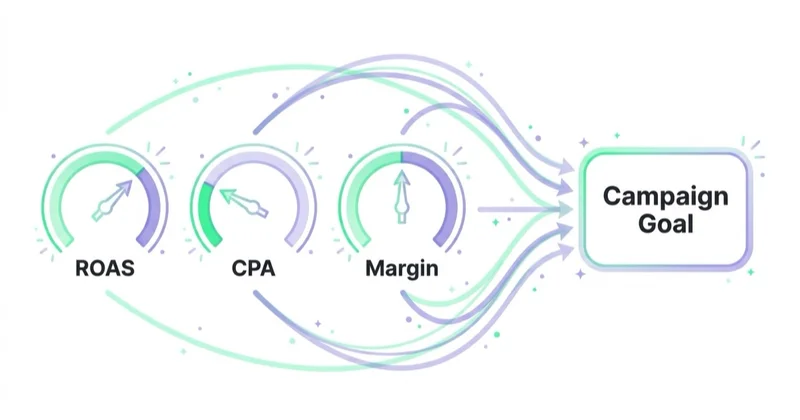
Define:
- target CPA;
- target ROAS;
- gross margin;
- contribution margin;
- average order value;
- LTV;
- repeat purchase rate;
- lead-to-sale rate;
- refund or return rate;
- maximum acceptable payback period;
- capacity limits.
For ecommerce, a 3.0 ROAS may be profitable for one category and unprofitable for another. For B2B, a high cost per lead can be acceptable if lead quality and close rate are strong.
Choose one primary conversion goal
The platform needs a clear signal.
Good primary goals:
- purchase with value;
- qualified lead;
- booked appointment;
- completed checkout;
- paid order;
- offline sale;
- demo request that meets qualification rules.
Weak primary goals:
- page view;
- time on site;
- button click with no validation;
- any form submission including spam;
- add to cart when purchase tracking is available and stable;
- message start with no lead quality review.
Micro-conversions can still be useful as secondary signals or diagnostics. They should not replace the real business event unless volume is too low and there is no better option yet.
Measurement setup
A sales campaign is only as good as its measurement.
Check:
- Google Ads conversion tracking;
- GA4 key events;
- Meta Pixel;
- Meta Conversions API;
- TikTok Pixel where relevant;
- consent handling;
- enhanced conversions where appropriate;
- purchase value;
- currency;
- duplicate events;
- UTM naming;
- CRM source tracking;
- offline conversion import;
- call tracking;
- refund and cancellation visibility.
For Meta measurement, see Meta Conversions API. For Google account diagnosis, see Google Ads audit.
Landing page or product page
The post-click experience should match the ad promise.
Review:
- first-screen clarity;
- CTA visibility;
- mobile usability;
- form length;
- checkout friction;
- payment methods;
- delivery and returns;
- trust signals;
- reviews;
- case studies;
- pricing clarity;
- product availability;
- page speed;
- tracking;
- privacy and consent.
For services, the page should explain scope, process, proof and next step. For ecommerce, the product page should make the decision easy through images, video, variants, delivery, returns and reviews.
For broader funnel work, see how to increase online sales.
Creative strategy
Sales creative should test different reasons to act.
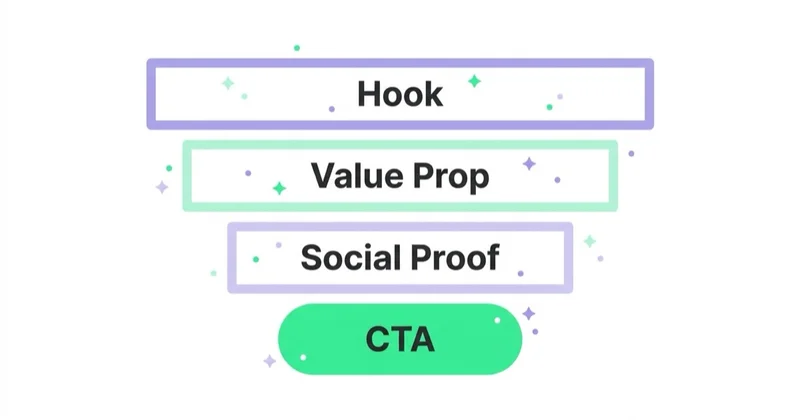
Useful creative angles:
- problem;
- benefit;
- proof;
- demonstration;
- product detail;
- comparison;
- objection handling;
- offer;
- urgency where real;
- customer story;
- before and after where compliant;
- founder or expert explanation;
- UGC-style review;
- bundle or use case.
Do not only make ten versions of the same ad. The goal is creative diversity, not cosmetic variation.
In automated platforms, creative is a targeting signal. The algorithm learns from who reacts to each message and format.
Sales campaign in Meta Ads
Meta sales campaigns work best when the account has:
- Pixel and CAPI;
- purchase or lead events;
- value tracking;
- strong creative variety;
- broad enough delivery;
- clear exclusions where needed;
- product catalogue for ecommerce;
- fast landing pages;
- CRM feedback for leads;
- enough budget for learning.
Meta Advantage+ Sales campaigns use AI across creative, targeting, placements and budget. They can reduce manual setup and find purchase-ready users, but they still need good inputs: product truth, conversion data, strong creative and commercial constraints.
For a deeper account review, see Facebook Ads audit.
Sales campaign in Google Ads
Google sales campaigns can use:
- Search campaigns;
- Shopping;
- Performance Max;
- Demand Gen;
- YouTube;
- remarketing;
- local or store visit campaigns where relevant.
Performance Max is a goal-based campaign type that can access multiple Google channels and optimise toward conversion goals. It can be powerful for ecommerce and lead generation, but it depends on conversion quality, asset quality, audience signals and product feed data.
For ecommerce, Merchant Center quality is critical. For lead generation, offline conversion import and CRM feedback can be more important than raw form volume.
For PMax details, see Performance Max campaigns.
Ecommerce sales campaigns
Ecommerce campaigns require more than a budget and a product catalogue.
Check:
- product feed;
- Merchant Center;
- Meta catalogue;
- product titles;
- product images;
- pricing;
- availability;
- shipping;
- return policy;
- checkout;
- payment methods;
- product reviews;
- abandoned cart flows;
- dynamic remarketing;
- margin by category;
- stock and seasonality;
- new vs returning customer share.
Campaigns should not push products that are out of stock, low-margin, weakly photographed or hard to buy.
For product data, see Google Merchant Center. For catalogue remarketing, see dynamic remarketing.
Lead generation sales campaigns
For services, B2B and high-consideration offers, the conversion is often not a purchase. It is a lead that should become revenue later.
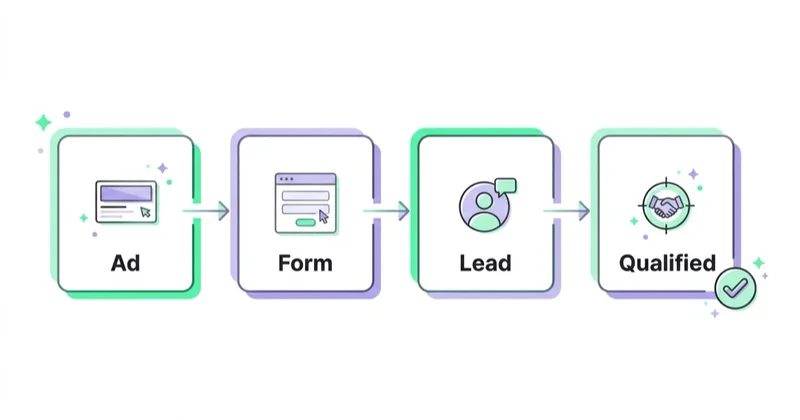
Track:
- lead source;
- lead quality;
- contact rate;
- appointment rate;
- proposal rate;
- close rate;
- sales value;
- sales cycle length;
- disqualified reasons;
- response time.
A cheap lead is not necessarily a good lead. If a campaign generates many weak enquiries, optimise toward qualified leads or offline conversions rather than raw form submissions.
Messenger or WhatsApp can support lead qualification when conversation matters. See Messenger Ads.
Budget and testing plan
Campaign budget should match the learning objective.
Before launch, define:
- test duration;
- minimum spend;
- primary KPI;
- secondary KPI;
- creative variants;
- audience or channel assumptions;
- decision rules;
- scaling rules;
- stop-loss rules;
- reporting cadence.
Avoid changing too many things at once. Also avoid waiting forever when a test clearly fails. A campaign needs enough data, but it also needs decisions.
Pre-launch QA checklist
Before going live, check:
- conversion events fire once and with the right value;
- test purchases or test leads appear in analytics;
- consent mode and cookie logic behave as expected;
- ads match the landing page promise;
- product prices and availability are correct;
- forms work on mobile;
- phone numbers, calendars and messages route correctly;
- CRM receives source, campaign and lead fields;
- thank-you pages or events cannot be triggered accidentally;
- exclusions protect existing customers or recent leads where needed;
- dashboards show the metrics that will be used for decisions.
Pre-launch QA is not admin work. It protects the learning phase from false data.
30-90 day sales campaign plan
Days 1-10: Setup
Verify offer, tracking, landing page, feed, CRM, creative, UTMs and dashboard.
Days 11-30: Launch and first learning
Launch core campaigns, monitor tracking, remove obvious waste, check lead or order quality and collect creative signals.
Days 31-60: Optimisation
Improve landing pages, add new creative angles, refine budgets, fix feed issues, strengthen remarketing and review customer quality.
Days 61-90: Scaling
Increase budget only where economics are stable. Add new channels, expand creative, test value-based bidding, segment high-value audiences and review profitability.
How we approach this at Space Ads
A "sales campaign" rarely works in a vacuum. Switch on a conversion-focused campaign and expect a cold audience to buy on the spot, and you've made the most common mistake there is. Two things matter more than the campaign setup itself. The first is measurement: if conversions and their values aren't captured correctly, the system optimises blind, and you can't scale sales you can't see. The second is demand: a closing campaign needs someone to close, so there has to be prior traffic and remarketing to draw on. We also judge it on value and profitability rather than conversion count: ten cheap, unprofitable orders is a worse result than five that pay.
Common mistakes
| Mistake | Impact | Better approach |
|---|---|---|
| Starting with platform choice | Strategy follows tools | Start with offer and economics |
| Optimising for clicks | Low buying intent | Optimise for business events |
| Weak tracking | Bad automated learning | Fix conversion data first |
| No margin view | Revenue grows without profit | Track profit and category economics |
| Too few creatives | Fatigue and narrow learning | Test multiple angles |
| Bad landing page | Paid traffic leaks | Improve post-click experience |
| No CRM feedback | Lead quality invisible | Import offline outcomes |
| Scaling too early | Wasted budget | Prove unit economics first |
FAQ
What is a sales campaign?
A sales campaign is a campaign designed to generate a measurable business outcome such as purchases, qualified leads, bookings, demos, quote requests or conversations with sales.
How is a sales campaign different from a brand campaign?
A sales campaign is optimised for conversion. A brand campaign builds awareness, trust and demand that may convert later.
Should every sales campaign lead directly to a purchase?
No. In services, B2B and high-consideration sales, the goal may be a qualified lead, booking, demo or consultation.
What is the most important part of a sales campaign?
The most important foundation is a clear offer, accurate conversion tracking and a post-click path that lets users complete the intended action.
Are Meta Advantage+ Sales campaigns worth using?
They can be useful when tracking, creative and offer quality are strong. They should still be judged by business outcomes, not only platform-level efficiency.
Is Performance Max good for sales campaigns?
It can be effective for sales and lead goals, especially when conversion data, product feed or assets are strong. It should be audited and measured carefully.
What should be measured besides ROAS?
Measure margin, CPA, AOV, LTV, new customer share, qualified lead rate, close rate, refunds, returns and sales quality.
Can a sales campaign include brand content?
Yes. A sales campaign can use proof, education and brand assets if they help users buy or enquire with more confidence. The difference is that the campaign still has a measurable commercial goal.
When should a sales campaign not be launched?
Delay launch when tracking is broken, the offer is unclear, the landing page is not ready, stock or fulfilment is unreliable, or the team cannot handle leads quickly enough.
Conclusion
A sales campaign is not just an ad set. It is a commercial system: offer, audience, measurement, creative, landing page, budget, follow-up and optimisation. The platform can help find buyers, but it cannot fix weak economics, broken tracking or a poor post-click experience.
The best sales campaigns start with business logic, use clean data, test meaningful creative angles and scale only when the numbers support it.
We run sales campaigns on Facebook and Instagram end to end — see our Facebook and Instagram ads.
Sources and further reading
- Meta for Business: Advantage+ sales campaigns
- Meta for Business: Meta Advantage+
- Google Ads Help: About Performance Max campaigns
- Google Ads Help: About conversion measurement
- Google Ads Help: Maximize online sales
Continue learning
Continue reading
Messenger Ads: What You Need to Know
Messenger Ads can generate valuable conversations, but performance depends on channel fit, response speed, automation, CRM handoff and business outcomes.
Is Video Marketing Worth Using Online?
Video marketing can build awareness, explain offers, support sales and improve retention when every video has a clear brief, channel fit and measurement plan.
What Is a Google Ads Audit and How to Do It?
A Google Ads audit should show whether spend, conversion data, account structure, search demand, Merchant Center quality and landing pages support the actual business goal. This guide explains how to turn tracking gaps, wasted queries and Performance Max risks into a prioritised roadmap, not a list of generic settings.


































