A conversion is a user action that has business value. It can be a purchase, lead form, booking, phone click, account signup, newsletter subscription, file download, trial start or another measurable action that moves the business closer to revenue or growth.
Conversions are usually divided into macro conversions and micro conversions. Macro conversions are the main business outcomes. Micro conversions are smaller actions that show progress, intent or engagement before the final outcome.
This distinction matters because not every useful event should be treated as a primary advertising goal. Micro conversions are excellent for diagnosis, remarketing and journey analysis. Macro conversions and high-quality value signals are usually better for campaign optimisation.
TL;DR
- A conversion is a meaningful user action with business value.
- A macro conversion is the main outcome, such as a purchase, qualified lead, booking or subscription.
- A micro conversion is a smaller step that indicates intent, such as add to cart, pricing page view, form start or guide download.
- Micro conversions help diagnose the funnel and find where users drop off.
- Not every micro conversion should be used as a primary bidding goal.
- Weak signals can train ad systems to optimise for easy actions rather than valuable customers.
- GA4 uses the term key event for events marked as especially important to the business.
- Conversion value helps prioritise quality, not only volume.
- Ecommerce, B2B, SaaS and content businesses need different conversion plans.
- A good measurement plan connects GA4, ad platforms, consent, CRM quality and post-conversion outcomes.
- The safest structure is to separate tracked events, key events, primary ad conversions and business outcomes.
What is a conversion?
A conversion is an action that matters to the business. The action does not need to be a sale, but it should have a clear role in the customer journey.
Examples:
- purchase;
- quote request;
- consultation booking;
- demo request;
- trial signup;
- newsletter subscription;
- account creation;
- phone click;
- lead form submission;
- product added to cart;
- checkout started;
- guide downloaded;
- webinar registration;
- app install;
- repeat purchase.
The key phrase is "business value". A random page view is not automatically a conversion. A scroll event is not automatically a conversion. A click is not automatically a conversion. The action should indicate progress, intent, revenue, lead quality or another defined business outcome.
Macro conversions
A macro conversion is the primary action the business ultimately wants.
Examples by business model:
| Business type | Macro conversion examples |
|---|---|
| Ecommerce | Purchase, subscription order, repeat purchase |
| Lead generation | Qualified enquiry, booked consultation, quote request |
| SaaS | Trial signup, paid subscription, demo booking, activation milestone |
| Education | Course purchase, application, webinar registration |
| Marketplace | Booking, transaction, supplier enquiry |
| Content/media | Paid subscription, membership, high-value lead |
| Local services | Phone call, appointment booking, contact form |
Macro conversions are usually the actions used for business reporting and advertising optimisation. They should be tied as closely as possible to revenue, qualified demand or customer value.
Micro conversions
A micro conversion is a smaller action that shows a user is moving toward a bigger goal.
Examples:
- product view;
- add to cart;
- checkout start;
- shipping method selected;
- pricing page view;
- form start;
- click on email address or phone number;
- guide download;
- video watched;
- calculator used;
- account created;
- wishlist add;
- back-in-stock signup;
- webinar signup before a sales action;
- return visit from remarketing.
Micro conversions are useful because they reveal what happens before the final outcome. If purchases fall, micro conversions can show whether the problem starts at product discovery, cart, checkout, payment, delivery cost or traffic quality.
Micro vs macro conversions
| Area | Macro conversion | Micro conversion |
|---|---|---|
| Ecommerce | Purchase | Product view, add to cart, checkout start |
| B2B | Qualified lead or booked meeting | Pricing page view, guide download, form start |
| SaaS | Paid subscription or activated trial | Signup, feature used, onboarding step completed |
| Education | Course purchase or application | Syllabus download, webinar attendance |
| Content | Paid subscription | Newsletter signup, article completion, PDF download |
Macro conversions measure outcomes. Micro conversions explain progress.
Both matter, but they should not be treated equally in reporting or bidding.
Conversion signal hierarchy
A strong measurement plan has a hierarchy. Without it, every event starts to look equally important in dashboards.
| Signal type | Example | Main use |
|---|---|---|
| Tracked event | scroll, video play, product view | Behaviour analysis |
| Micro conversion | add to cart, form start, pricing view | Funnel diagnosis and remarketing |
| Key event | lead submitted, checkout started, trial signup | Important reporting milestone |
| Primary ad conversion | purchase, qualified lead, booked demo | Bidding and campaign optimisation |
| Business outcome | revenue, margin, closed deal, retention | Management and budget decisions |
The hierarchy prevents two common problems. The first is under-tracking, where only final sales are measured and the team cannot diagnose drop-offs. The second is over-optimisation, where too many soft events are imported into ad platforms and algorithms learn to chase easy actions.
For example, "viewed pricing page" can be a useful micro conversion. It may help build audiences and understand intent. It should not automatically become the main bidding goal if the business needs qualified pipeline or purchases.
Why micro conversions are important
If only final conversions are measured, diagnosis is slow and incomplete. Micro conversions show where the funnel is working and where it is breaking.
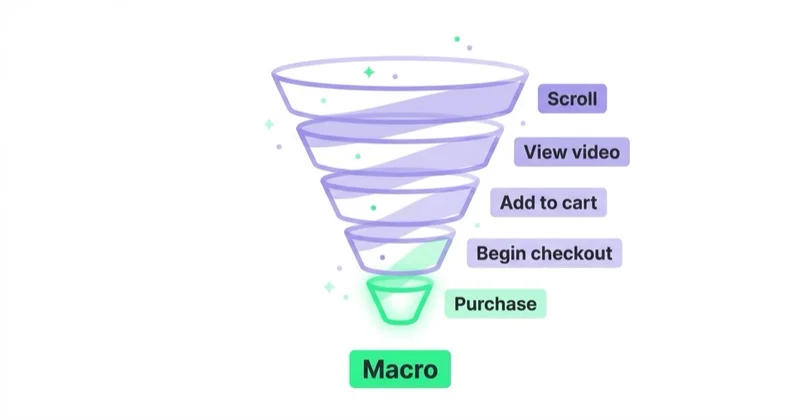
They help answer questions such as:
- Are users viewing the product but not adding to cart?
- Are users adding to cart but not starting checkout?
- Are users starting forms but not submitting?
- Are users reading content but ignoring the CTA?
- Are leads coming from the wrong source?
- Are users returning after remarketing?
- Are high-intent pages visited before conversion?
- Are mobile users dropping at a specific step?
Micro conversions can also be used for audience building. For example, users who viewed pricing, added to cart or downloaded a buying guide may be more useful remarketing audiences than all website visitors.
For journey structure, see sales funnel strategy.
What should not be treated as a valuable conversion?
Some actions are useful analytics events but weak conversion signals.
Be cautious with:
- any page view;
- very shallow scroll;
- accidental clicks;
- time on page without intent;
- automatically generated events;
- generic session start;
- low-quality newsletter signups;
- unqualified file downloads;
- form starts with very low completion;
- chatbot opens without meaningful interaction.
The issue is not that these actions are useless. The issue is that they can be too weak for optimisation. If a campaign is optimised toward a soft event, the algorithm may find users who perform that easy action but do not buy, become qualified leads or generate revenue.
When micro conversions can be used for optimisation
Micro conversions can be useful in advertising optimisation when macro conversion volume is too low, but the chosen event must be close enough to business value.
Better micro-conversion candidates:
- checkout start for ecommerce with low purchase volume;
- add to cart when purchase data is delayed or sparse;
- qualified form start when forms are long and high-intent;
- demo request step completed before sales qualification;
- trial activation milestone for SaaS;
- pricing page plus return visit for B2B remarketing audiences.
Weak candidates:
- shallow page view;
- accidental click;
- generic scroll depth;
- video play with no buying intent;
- popup close;
- newsletter signup with poor lead quality;
- file download with no qualification.
The question is not "is this event measurable?" The question is "does this event predict the outcome the business actually wants?"
Key events in GA4
In Google Analytics 4, an important event can be marked as a key event. Google describes a key event as an event that measures an action particularly important to business success.
This means the measurement plan should decide which events deserve key event status. A small site may need only a few. A complex ecommerce or SaaS business may need a wider event structure, but not every event should become a key event.
A practical split:
- track many useful events;
- mark only important business events as key events;
- separate diagnostic micro events from primary business outcomes;
- import only appropriate conversion goals into advertising platforms;
- avoid polluting reports with soft signals.
For measurement quality, see Google Analytics audit.
Event naming and documentation
Conversions are easier to manage when events are documented in a simple measurement dictionary.
Include:
- event name;
- business meaning;
- trigger condition;
- required parameters;
- platform where it is collected;
- whether it is a key event;
- whether it is imported into Google Ads, Meta or another ad platform;
- whether it is primary or secondary for bidding;
- expected value or value calculation;
- owner responsible for data quality.
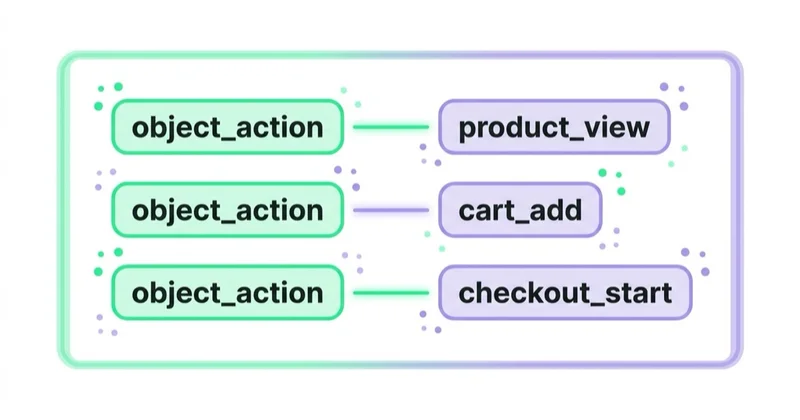
Good event naming is consistent and specific. "generate_lead" is clearer than "submit" when the event is a lead. "begin_checkout" is clearer than "button_click" when the user starts checkout. For custom events, names should be readable by marketing, analytics and development teams.
Documentation also helps during redesigns, Consent Mode changes, tag migrations and CRM integrations. Without a dictionary, teams often discover broken conversion tracking only after performance reports become inconsistent.
Conversion value
Conversion value helps distinguish high-value and low-value actions.
For ecommerce, the value is often transaction revenue. For lead generation, value may come from a lead scoring model or CRM outcome.
Example lead values:
- guide download: low proxy value;
- newsletter signup: low proxy value;
- demo request: medium value;
- qualified sales opportunity: high value;
- closed deal: real revenue value.
Value-based measurement matters because two campaigns can produce the same number of conversions with very different business quality. One may generate many weak leads. Another may generate fewer but more profitable customers.
Value-based bidding and conversion quality
Value-based bidding shifts optimisation from conversion volume toward conversion value. Google Ads describes value-based bidding as Smart Bidding that optimises based on the value brought to the business, such as maximising conversion value with or without a target ROAS.
This works best when the business sends meaningful values. If every conversion has the same value, the system has limited information. If the values reflect real business outcomes or reliable lead scoring, bidding can prioritise the actions that matter more.
Important requirements:
- reliable conversion tracking;
- at least two meaningful conversion values when using value-based strategies;
- clear primary goals;
- low duplicate-event risk;
- reasonable conversion delay;
- regular offline or CRM imports where needed;
- enough conversion volume to learn from;
- alignment between campaign objective and conversion action.
Do not use value-based bidding to hide a weak measurement plan. The values need to be credible.
Lead quality feedback loop
Lead generation needs a feedback loop because the first conversion is rarely the final business outcome.
A practical feedback loop:
- Capture the lead with source, campaign, landing page and consent data.
- Send the lead to CRM with a stable identifier where appropriate.
- Qualify the lead using clear status definitions.
- Import qualified stages or offline conversions back into ad platforms where possible.
- Compare raw leads, qualified leads, opportunities, deals and revenue by source.
- Adjust budgets and bidding based on quality, not only volume.
This is especially important in B2B, local services and high-ticket offers. A campaign can generate many form submissions and still be unprofitable if most leads are students, competitors, irrelevant locations or users with no buying authority.
Conversion tracking in ecommerce
A practical ecommerce conversion plan includes:
- Product list view.
- Product view.
- Variant selection.
- Add to cart.
- Cart view.
- Checkout start.
- Delivery and payment step.
- Purchase.
- Refund or cancellation where relevant.
- Repeat purchase.
Macro conversion:
- purchase;
- repeat purchase;
- subscription order.
Micro conversions:
- product view;
- add to cart;
- checkout start;
- wishlist add;
- back-in-stock signup.
Ecommerce analysis should combine conversion rate, average order value, revenue, margin, new customer rate and repeat purchase. A higher conversion rate with lower margin is not always better.
For practical ecommerce optimisation, see how to increase online sales.
Conversion tracking in B2B and lead generation
Lead generation requires stricter quality control because not every form submission is valuable.
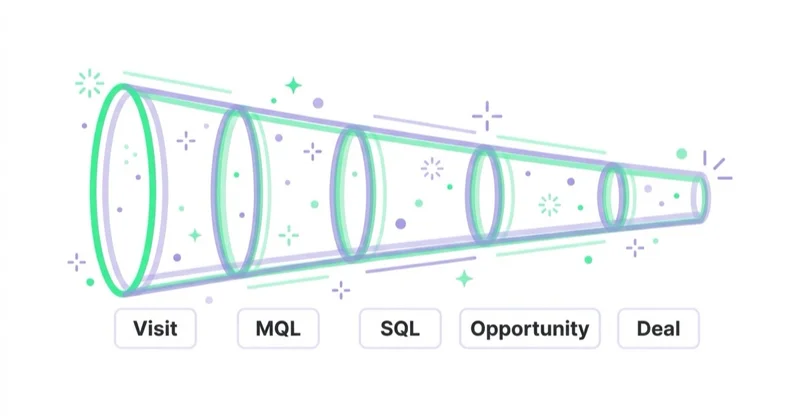
Macro conversions:
- qualified enquiry;
- booked consultation;
- demo request;
- sales-qualified lead;
- opportunity created;
- closed deal.
Micro conversions:
- pricing page view;
- case study view;
- guide download;
- form start;
- webinar registration;
- email click;
- return visit.
The strongest setup connects advertising and analytics with CRM stages. This makes it possible to optimise toward qualified leads and revenue rather than raw form submissions.
Conversion tracking in SaaS
SaaS businesses often need both acquisition and activation events.
Macro conversions:
- paid subscription;
- trial signup;
- product-qualified lead;
- activation milestone;
- expansion or upgrade.
Micro conversions:
- pricing page visit;
- signup started;
- onboarding step completed;
- first project created;
- key feature used;
- invited teammate.
For SaaS, a signup without activation may not be valuable. Conversion planning should include product behaviour, not only marketing forms.
How to build a conversion measurement plan
Use this process:
1. Define the business objective
Choose the action that truly matters: revenue, qualified lead, subscription, booking, trial activation or retention.
2. Map the funnel
List the steps users take before the macro conversion. This identifies useful micro conversions.
3. Separate reporting and optimisation
Some events are useful for analysis but too weak for bidding. Keep that distinction explicit.
4. Assign values
Use revenue where possible. Use proxy values only when they reflect realistic relative importance.
5. Implement tracking
Set up events, parameters, deduplication, consent handling and platform imports.
6. Test real scenarios
Complete the user journey on mobile and desktop. Check whether events fire once, with the right values, at the right time.
7. Review data quality
Watch for duplicate events, missing values, direct traffic anomalies, consent gaps, payment referral issues and CRM mismatch.
8. Decide what feeds bidding systems
After events are tracked, decide which ones should be primary optimisation goals. A purchase or qualified lead can be primary. A form start, pricing view or add to cart may be secondary or diagnostic unless it reliably predicts revenue.
9. Review after business changes
Conversion plans should be reviewed when pricing, checkout, lead qualification, product range, sales process or consent setup changes. A conversion that was useful last year may become misleading after the business model changes.
For consent-sensitive measurement, see Consent Mode v2.
How we approach this at Space Ads
Optimising only for the final sale sounds sensible, yet on many accounts it just doesn't work: at a dozen-odd purchases a week the algorithm has nothing to learn from and the bidding wanders. So alongside the macro conversion and its assigned value, we feed the system good micro conversions — add-to-cart, checkout started, a qualified lead. They supply the volume that steadies learning, and they warn earlier when something breaks, since a dip in add-to-carts shows up before it reaches sales. The skill is choosing the right events: we count only the micro conversions that genuinely track revenue, not a menu click or a bare page view. The macro stays the reference point and the micro conversions are fuel for the algorithm — two roles we're careful never to blur in reporting.
Common conversion mistakes
Marking everything as a conversion
This creates noisy reporting and weak campaign signals. Only meaningful actions should be treated as conversions or key events.
Ignoring micro conversions
Without micro events, it is hard to diagnose where users drop off before the final conversion.
Optimising ads for weak events
Soft goals can increase activity without increasing business value.
No conversion value
Without value, campaigns can optimise for volume even when different customers, products or leads have very different worth.
Duplicate events
Duplicate purchase or lead events can overstate performance and mislead bidding systems.
No CRM feedback
Lead generation campaigns need quality feedback. A form submit is not the same as a profitable customer.
Mixing reporting goals with bidding goals
Some events should be visible in reports but excluded from primary campaign optimisation. This distinction keeps dashboards useful without sending weak signals into bidding systems.
No ownership
Conversion tracking often breaks when no one owns it. Assign ownership for tags, consent setup, CRM stages, ecommerce events and ad platform imports.
FAQ
What is a conversion in marketing?
A conversion is a user action that has business value, such as a purchase, lead form, booking, signup, phone call or other defined goal.
What is a macro conversion?
A macro conversion is the main business outcome, such as a purchase, qualified lead, demo booking, subscription or signed contract.
What is a micro conversion?
A micro conversion is a smaller step that shows intent or progress, such as add to cart, checkout start, pricing page view, guide download or form start.
Should micro conversions be used in Google Ads bidding?
Sometimes, but carefully. Micro conversions can help when macro volume is too low, but the chosen event should still be close to business value and should not train the system toward low-quality behaviour.
What is a key event in GA4?
A key event is an event marked in GA4 as especially important to business success. It should represent a meaningful action, not every tracked interaction.
Why assign values to conversions?
Values help distinguish quality. Ten low-value leads and ten high-value purchases should not be treated as equal outcomes.
How many conversions should be tracked?
Track enough events to understand the journey, but mark only meaningful actions as key events or primary ad conversions. The exact number depends on the funnel, business model and data volume.
What is the difference between a key event and an ad conversion?
A key event is an important event inside GA4 reporting. An ad conversion is the action an advertising platform uses for reporting or optimisation. The same business action can appear in both places, but not every key event should be used as a primary bidding goal.
Conclusion
Conversion measurement should show both business outcomes and the steps that lead to them. Macro conversions explain whether the business is getting results. Micro conversions explain how users move through the journey and where they drop off.
The strongest setup separates diagnostics from optimisation. Track enough events to understand the funnel, but choose primary goals and values carefully. A clean conversion plan gives GA4, ad platforms and decision-makers better data, and that usually matters more than adding another dashboard.
Sources and further reading
- Google Analytics Help: About key events
- Google Ads Help: Set conversion values
- Google Ads Help: Value-based bidding for Search and Shopping
- Google Analytics for Developers: Measure ecommerce
Continue learning
Continue reading
What Is a CTA and How to Create an Effective Call to Action?
A CTA works when the next step is clear, relevant, low-friction and supported by enough context for the user's level of commitment.

How Much Does a Landing Page Cost?
A landing page can cost a few hundred dollars or more than $10,000 because the scope may cover only implementation—or research, copy, design, tracking, integrations and optimisation. Compare deliverables, not just quotes.

Website Audit: What to Check Before You Spend More on Ads
More ad spend magnifies both a website's strengths and its leaks. Use this evidence-led audit to find measurement, speed, accessibility, message and conversion constraints before scaling.