Conversion optimization is the disciplined improvement of a journey from visitor intent to a valuable, fulfilled outcome. The journey may include a landing page, product page, form, checkout, onboarding, phone call or sales handoff. The outcome may be a profitable order, qualified opportunity, attended appointment, activated account or retained customer.
The goal is not to maximize a percentage in isolation. A change can lift form submissions while lowering sales acceptance, lift checkout completion through an unprofitable discount, or lift trial starts while reducing activation. A sound CRO process defines the business outcome and guardrails, diagnoses the constraint, changes one coherent hypothesis and evaluates evidence without hiding uncertainty.
TL;DR
- Conversion optimization improves the value created by a customer journey. The relevant outcome may sit after the page: fulfillment, lead acceptance, activation, attendance or retention.
- Conversion rate is not the only metric. A higher form rate can be bad if lead quality drops; a lower purchase rate can still be profitable if average order value or margin rises.
- CRO should start with diagnosis. Analytics, consented research, search terms, CRM outcomes, sales feedback and operational data should guide the backlog.
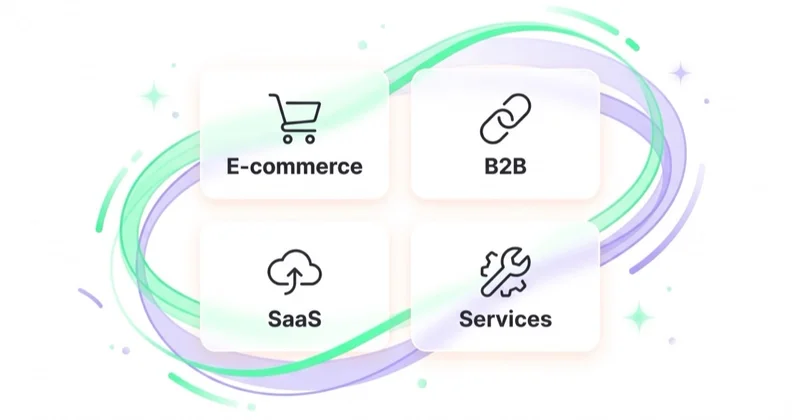
- E-commerce, B2B, SaaS and services need different conversion goals. A checkout, demo request, quote form and onboarding flow do not fail for the same reasons.
- Randomised testing is powerful, but not always feasible. Lower-volume teams can use usability research, phased releases and matched comparisons, while treating simple before/after results cautiously.
- Measurement needs shared definitions, not identical dashboards. GA4, ad platforms, CRM, payments and finance use different scopes and attribution rules.
- Accessibility and honest choice are requirements. Removing friction does not justify hidden fees, false urgency, obstructed cancellation or inaccessible forms.
- Conversion optimization protects ad spend. Fixing conversion leaks often creates more value than buying additional traffic.
Conversion optimization vs CRO
Conversion optimization and conversion rate optimization are often used interchangeably. CRO usually emphasizes improving the conversion rate. Conversion optimization is a broader operating discipline: it includes conversion quality, margin, lead value, sales follow-up, retention and measurement.
| Term | Focus | Risk if used too narrowly |
|---|---|---|
| Conversion rate optimization | Improve a defined conversion rate | Can reward weak leads or low-margin purchases if guardrails are absent |
| Conversion optimization | Improve the business value of conversions | Requires more data sources and judgement |
| Landing page optimization | Improve one page or campaign destination | Can miss CRM, sales or product problems |
| Checkout optimization | Reduce friction in purchase flow | Can miss product, price or trust issues |
For a narrower definition, see what conversion rate optimization is. This guide focuses on the wider system and uses “CRO” as shorthand.
Start with the conversion goal
The first question is not “what should we test?” It is “which business decision should this measurement improve?” Define the event, denominator, eligibility window, unit of analysis and downstream quality before looking at the rate.
Examples:
- e-commerce purchase;
- add to cart;
- checkout completion;
- qualified lead;
- booked appointment;
- demo request;
- SaaS trial activation;
- quote request;
- phone call;
- subscription;
- repeat purchase.
Each outcome has a different quality problem. A checkout may need clearer delivery and payment information. A B2B form may need better self-qualification. A SaaS trial may need a shorter path to first value. A service-business call may need staffed availability and a response standard.
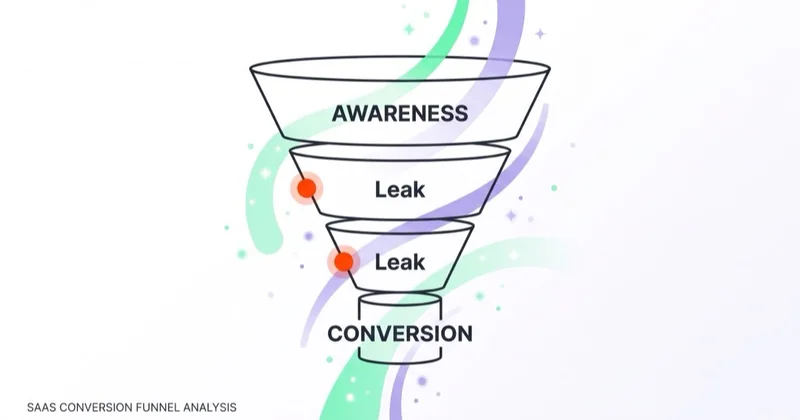
A rate without a denominator is not actionable. Purchase rate per session, per user and per checkout starter answer different questions. A demo-booked rate can rise because low-intent traffic disappeared rather than because the page improved. Segment at least by device, source, market, new or returning user and material offer changes—but avoid slicing so deeply that random noise looks like insight.
Choose one primary outcome and a short set of guardrails. Examples include gross contribution, refund or cancellation rate, qualified rate, no-show rate, activation, retention, error rate, page performance and accessibility. Guardrails prevent a local win from damaging the wider business.
The diagnostic model
A useful conversion optimization audit looks across the whole journey.
| Layer | What to check | Example issue |
|---|---|---|
| Traffic intent | Keywords, audiences, placements, creative promise | Visitors arrive with the wrong expectation |
| Offer clarity | Value proposition, proof, price, next step | The page does not explain why to act now |
| UX friction | Speed, layout, forms, checkout, mobile, accessibility | Users want to act but the interface slows them down |
| Trust | Reviews, guarantees, process, case studies, security, contact | Buyers do not feel safe enough to convert |
| Measurement | GA4 events, ad conversions, CRM stages, call tracking | The business optimizes toward the wrong action |
| Delivery | Stock, sales response, appointment capacity, onboarding, fulfillment | The front end promises an outcome operations cannot deliver |
| Economics | Price, margin, refunds, support cost, retention | The rate rises while customer value falls |
The order matters. If traffic intent is wrong, a redesign may not fix performance. If tracking is wrong, a good page can look weak. If sales follow-up is slow, a landing page may be blamed for a post-form problem. CRO is not a promise that a website change can repair weak product-market fit, price, inventory or delivery.
Qualitative research: what numbers do not explain
Analytics can show where observed behavior changes; it rarely explains why on its own. Qualitative research helps build hypotheses, but it also has sampling and interpretation bias. Speak with successful, unsuccessful and abandoned users where possible instead of treating the loudest support ticket as representative.
Useful inputs:
- sales-call notes;
- chat transcripts;
- form-field questions;
- customer support tickets;
- session recordings;
- on-site search terms;
- review language;
- lost-deal reasons;
- refund or return reasons;
- product-page questions;
- objections mentioned in demo calls.
Use session-replay and heatmap tools only after a privacy and security review. Mask form fields and sensitive pages, minimize collection, set access and retention rules, honor the applicable consent requirements and verify that the vendor does not capture credentials, payment data, health details or confidential account information. A replay is an observation of one session—not a statement of user intent.
Evidence can turn “the page converts poorly” into a testable hypothesis: visitors do not understand the delivered price; mobile keyboard behavior blocks the form; the ad promises a use case the page barely mentions; or the proof does not match the buyer's risk. Write the evidence that supports the hypothesis and what result would disconfirm it.
Conversion optimization for SEO and AI Search traffic
Do not assume that every visitor from organic results or an AI assistant is more informed than a visitor from an ad. The referrer may reveal a source, but not everything the person read, believed or intended. Continue the promise of the referring page or campaign and let the visitor orient themselves quickly.
For search and AI-assisted journeys, conversion paths should:
- continue the same topic the user came from;
- show a clear next step without forcing a hard sell too early;
- link from educational articles to relevant service pages;
- answer genuine follow-up questions in the most useful format;
- make responsible company, author and methodology information easy to verify;
- avoid hiding the commercial path at the bottom of a long article.
Google Analytics introduced an “AI Assistant” default-channel classification in May 2026 for recognized assistant referrers. It can help compare click-through sessions from those sources, but it does not capture zero-click exposure or prove that an assistant caused a later conversion. Keep campaign tagging and landing-page analysis consistent, and treat unknown or direct traffic honestly.
SEO, generative discovery and CRO share information architecture and user needs, but they are not one metric. A public guide can earn visibility and help a decision; the appropriate next action may be another guide, a calculator, a product page or contact—not always an immediate form.
Conversion optimization for e-commerce
E-commerce conversion optimization usually focuses on product discovery, product pages, cart, checkout and post-purchase behavior.
Important areas:
- product feed and landing-page match;
- category navigation and filters;
- product images and video;
- size, fit, availability and delivery information;
- price, discount and margin visibility;
- reviews and social proof;
- cart and checkout friction;
- payment methods;
- return policy;
- total price and mandatory charges before commitment;
- stock, substitution and fulfillment accuracy;
- accessible form labels, errors, focus and keyboard flow;
- post-purchase emails and repeat purchase.
For e-commerce, evaluate contribution after discounts, cost of goods, payment fees, fulfillment, returns, fraud and media. Segment new and returning customers. A high rate on an unavailable or frequently returned product is not a win.
Removing friction must not become manipulation. Fake countdowns, preselected add-ons, hidden mandatory fees, misleading scarcity, confusing consent or an obstructed cancellation path can harm users and create regulatory risk. The FTC has explicitly identified these patterns in ecommerce and subscription sales. Test clearer choice and better information, not the business's ability to trick someone into an action they would not otherwise choose.
Paid media adds another layer. Google Ads, Shopping and Performance Max need product data and conversion values. Meta Ads and catalog campaigns need creative and product relevance. TikTok Ads needs native creative that sets the right expectation before the click.
Conversion optimization for B2B lead generation
B2B conversion optimization is not only about form conversion rate. It is about qualified pipeline.
A B2B landing page should clarify:
- who the offer is for;
- what problem it solves;
- what happens after submission;
- which data is needed;
- what proof supports the claim;
- what makes a company a good fit;
- when the service may not be the right fit.
If a form converts at 12% but sales rejects most submissions, the page is not commercially optimized. The cause could be audience, offer, form design, qualification rules or sales behavior; do not assume more fields are the answer. Measure contact rate, sales acceptance, opportunity creation, win rate and time to response by mature cohort.
This is why conversion optimization should be linked to B2B lead generation, lead nurturing and CRM reporting. The website captures the lead. The CRM proves whether it mattered.
Conversion optimization for SaaS
SaaS conversion optimization spans more than the marketing website. It includes the path from landing page to signup, activation and sometimes sales handoff.
Key areas:
- homepage and use-case page clarity;
- pricing-page friction;
- demo vs trial path;
- signup flow;
- activation event;
- onboarding messages;
- product usage signals;
- sales assist triggers;
- cancellation and churn feedback.
A SaaS signup is rarely the only outcome that matters. Define activation as a behavior shown by cohort evidence to relate to retained value, not whichever event is easiest to instrument. Evaluate time to value, activation, paid conversion, retention, expansion, support burden and cancellation. A shorter signup that attracts more users but reduces retained paid accounts is not an improvement.
Pricing and cancellation experiments require particular care. State trial length, renewal, billing interval, included usage and material limits before commitment. Make cancellation and data export understandable. Do not use a hard-to-exit subscription as a retention tactic.
For SaaS acquisition, see SaaS paid acquisition.
Conversion optimization for service businesses
Service businesses usually convert through forms, phone calls, WhatsApp, bookings or quote requests. The main friction is often trust and speed.
Important areas:
- clear service area or delivery scope;
- transparent process;
- proof of previous work;
- visible contact paths;
- simple quote or booking form;
- call tracking;
- fast follow-up;
- reminders and no-show reduction;
- pricing ranges where possible;
- FAQ that handles objections.
For high-ticket services, the page should help a suitable buyer understand scope, evidence, process, constraints and the next step while allowing weak-fit visitors to self-select out. For appointment businesses, measure attended and completed appointments, not only bookings; connect promotion to real calendar and staffing capacity.
Publish price ranges only when they are representative and explain the variables. If an exact price is impossible before diagnosis, say what information is needed and what the quote will include. “Free consultation” should not hide an obligatory sales process or later mandatory fee.
Testing: when A/B tests make sense
A/B testing is useful when random assignment, traffic, event quality and the likely business effect support a decision. “Enough traffic” is not a fixed threshold. It depends on baseline rate, minimum detectable effect, desired power, acceptable false-positive risk, allocation, variance and how long the business can wait.
| Situation | Better method |
|---|---|
| High-traffic checkout | Randomised A/B test with revenue and error guardrails |
| Medium-traffic landing page | A/B test major changes only |
| Low-traffic B2B page | Usability research, message testing or phased release; cautious outcome comparison |
| Tracking issue | Fix measurement before testing |
| Sales-quality issue | CRM analysis and qualification changes |
| New offer | Controlled market or audience test with commercial guardrails |
Before launch, write the hypothesis, primary outcome, guardrails, eligible population, randomisation unit, sample plan and stopping rule. QA assignment and event capture. Run across complete relevant business cycles and avoid stopping when the dashboard first turns green. Analyse the users as assigned where possible, report uncertainty and investigate novelty or technical breakage before permanent rollout.
Multiple simultaneous tests can contaminate one another, and testing many variants or metrics increases the chance of a chance “winner.” Coordinate experiments, control access and record every test—including neutral and negative results. Multivariate testing usually needs substantially more volume and should not be the default for a busy-looking page.
A before/after comparison is not a substitute for randomisation. Seasonality, campaign mix, inventory, price, outages and market conditions may change at the same time. When randomisation is infeasible, use the strongest practical alternative: phased rollout, matched markets or accounts, interrupted time series, or comparison against an unaffected journey. Label the result as an inference and keep a rollback plan.
Google's Search guidance adds technical requirements: do not cloak test pages, use rel="canonical" for alternate test URLs, use temporary rather than permanent redirects during a redirect test and remove test infrastructure when the experiment ends.
Accessibility is part of conversion quality
An inaccessible flow excludes users and makes behavioral data misleading. Review keyboard operation, visible focus, labels and instructions, error identification, contrast, target size, zoom, screen-reader announcements and authentication. W3C's WCAG 2.2 adds criteria relevant to conversion flows, including redundant entry, accessible authentication, consistent help and focus not being obscured.
Automated scanners catch only part of the problem. Test critical forms, checkout and account flows manually with keyboard and assistive technology, and include people with disabilities in research. A rate lift that comes from hiding focus, reducing readability or making rejection errors ambiguous is not an acceptable win.
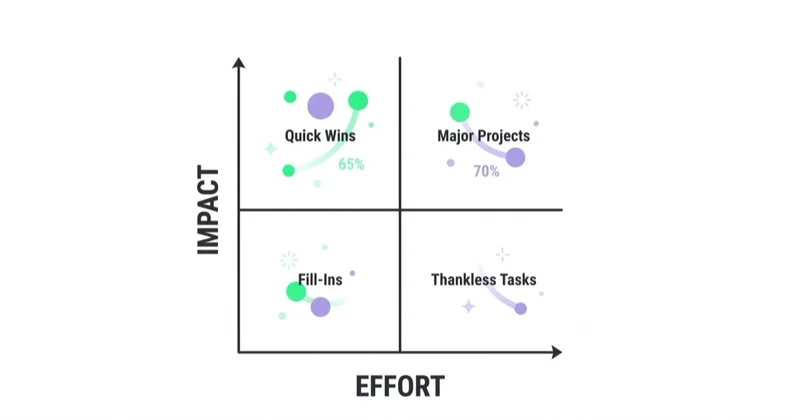
Prioritizing the conversion backlog
A CRO backlog can become endless. Prioritization keeps it commercial.
Useful scoring dimensions:
- expected business impact;
- traffic or conversion volume;
- confidence in the diagnosis;
- implementation effort;
- risk to SEO, tracking or brand;
- time to learn;
- whether the fix helps multiple channels;
- accessibility, legal and operational urgency;
- reversibility and cost of a wrong decision.
| Fix | Impact | Effort | Best when |
|---|---|---|---|
| Clarify the first-screen promise | Medium to high | Low | Research shows expectation mismatch |
| Remove unnecessary form fields | Medium | Low | The data has no operational or legal need |
| Add qualification fields | Medium | Low | Volume is high but quality is weak |
| Improve checkout payment options | High | Medium | Drop-off is late in checkout |
| Add a verified case study | Medium | Medium | A specific risk lacks credible evidence |
| Rebuild page speed / frontend | High | High | Technical friction affects many pages |
| Rework offer | High | Medium | Traffic is good but motivation is weak |
How Space Ads approaches this
We treat conversion optimization as part of the acquisition and customer system, not a decorative UX exercise. Before increasing budget, we identify the likely constraint: traffic intent, offer, page clarity, technical or accessibility friction, measurement, operations or follow-up. The intervention follows the evidence.
E-commerce and lead generation require different scorecards. For ecommerce, that includes product-level contribution, feed and availability accuracy, checkout, new-customer share, returns and repeat purchase. For lead generation, it includes form and call quality, sales acceptance, stage movement, wins and downstream economics. One blended rate can hide a change in traffic mix or business quality.
Conversion optimization and analytics
Measurement should define the funnel clearly.
Minimum measurement setup:
- GA4 events and key events for meaningful onsite actions;
- ad-platform conversion actions that match business goals;
- UTMs for non-ad traffic and email;
- CRM stages for lead quality;
- call tracking where phone leads matter;
- payments, realized value or CRM outcomes where appropriate;
- consent-aware tracking where legally required;
- QA after every major site or tag change.
Google Analytics now calls an especially important behavioral event a key event. A conversion is an important action used for advertising measurement and bidding in Google Ads. The terms are related but should not be used to make every scroll, button click or form start look like business success.
Create an event dictionary with owner, trigger, parameters, counting method, source of truth and QA status. Reconcile rather than force equality: browsers, consent, identity, time zones, attribution windows, refunds and modeled data can make GA4, Google Ads, a CRM and payments disagree. Finance or the operating system remains the source for realized revenue and margin.
Tracking must follow the applicable privacy rules. In the UK, for example, ICO guidance generally requires information and consent for non-essential analytics cookies. Requirements differ by jurisdiction and technology, so involve the responsible privacy adviser rather than treating a consent banner as a universal solution.
Common mistakes
| Mistake | Why it hurts | Better approach |
|---|---|---|
| Optimizing only conversion rate | Can increase weak leads or low-margin sales | Optimize for qualified value |
| Starting with button color tests | Ignores offer, intent and trust | Diagnose the real constraint |
| Testing without a sample and stopping rule | Produces unstable conclusions | Plan effect, power, duration and decision rule |
| Treating mobile as one experience | Hides device, browser and accessibility failures | Test critical flows on real devices and assistive technology |
| Trusting platform conversions only | May miss CRM or revenue quality | Reconcile with GA4, CRM and finance |
| Changing too many things at once | Makes learning unclear | Separate testable hypotheses |
| Treating CRO as a one-time project | Funnels change with traffic, offers and seasonality | Build a recurring review cadence |
| Using hidden fees or false urgency | Manipulates users and creates legal risk | Make total cost, terms and choices clear |
| Recording sessions without controls | Can expose personal or sensitive data | Minimise, mask, restrict and obtain required consent |
30-day conversion optimization plan
Week 1: measure the funnel
Map sources, pages, key events, ad conversions, CRM stages, payments and guardrails. Document denominators and attribution differences. Fix material tracking defects before interpreting the funnel.
Week 2: diagnose friction
Review analytics, form and checkout steps, field performance data, consented recordings, search terms, user research, accessibility and downstream outcomes. Identify a small number of evidence-backed constraints.
Week 3: implement high-confidence fixes
Fix clear defects and accessibility failures. For uncertain changes, write hypotheses and guardrails. Prioritise by value, confidence, reach, effort, risk, reversibility and time to learn.
Week 4: test and review
Run a randomized test where assignment and volume support it. Otherwise use a phased or matched comparison, usability study or monitored release. A month may establish the system, but it may not be long enough to observe B2B wins, SaaS retention or repeat purchase.
FAQ
What is conversion optimization?
Conversion optimization is the process of improving a journey from visitor intent to a valuable, fulfilled outcome. It combines research, UX, accessibility, offer, analytics, experimentation and downstream business data rather than maximizing a page rate alone.
Is conversion optimization only for e-commerce?
No. It applies to ecommerce, B2B, SaaS, services and content-led journeys. The relevant outcome changes: fulfilled contribution, accepted opportunity, activated and retained account, attended appointment or another agreed result.
What is the difference between conversion optimization and CRO?
CRO is commonly used as shorthand for conversion rate optimization. In this guide, conversion optimization is broader: it includes outcome quality, margin, accessibility, fulfillment, sales follow-up, activation, retention and measurement.
When should conversion optimization happen?
It is an ongoing operating discipline. A focused review is especially useful before major traffic increases, after product or tracking changes, when traffic grows without business value, when lead acceptance falls or when fulfillment, activation or retention reveals a problem.
Does every CRO change need an A/B test?
No. Fix verified defects and accessibility failures directly when the risk is understood. Use randomized tests for uncertain choices when the sample supports them. At lower volume, use research, phased rollouts or matched comparisons and describe simple before/after evidence cautiously.
How does conversion optimization support paid ads?
It aligns the campaign promise, destination, transaction and downstream outcome. Better qualified signals can help bidding, but CRO cannot make irrelevant traffic or weak unit economics profitable by itself. Measure incremental contribution rather than assuming a higher platform conversion rate equals growth.
Key takeaways
Conversion optimization is not a cosmetic layer added after advertising. It connects intent, offer, interface, accessibility, measurement, operations and customer value. A higher rate is useful only when the resulting customers, leads or users remain commercially and ethically valuable.
The practical goal is to find the constraint and improve it with the strongest evidence the decision supports. Sometimes that means a randomized page test. Sometimes it means fixing a form, changing traffic, clarifying price, repairing tracking, improving sales response or rejecting an offer that is not viable.
Sources and further reading
- Google Search Central - A/B testing best practices for Search
- Google Ads Help - About conversion measurement
- Google Analytics Help - About key events
- Google Analytics Help - What's new in Google Analytics
- W3C Web Accessibility Initiative - What's new in WCAG 2.2
- W3C Web Accessibility Initiative - Accessible forms tutorial
- web.dev - Core Web Vitals for business decision-makers
- US Federal Trade Commission - Dark patterns designed to trick and trap consumers
- UK Information Commissioner's Office - Guidance on cookies and similar technologies
Continue learning
Continue reading
What Is Conversion Rate and How to Increase It?
Conversion rate shows what share of users complete a desired action, but the number only matters with the right context. Learn how to calculate, segment and improve it.
PPC Landing Pages: Why Your Ad Clicks Don't Convert (and How to Fix It)
Clicks without business results can point to traffic quality, tracking, the landing page or follow-up. This guide shows how to diagnose the full PPC journey and improve message continuity, mobile use, forms and measurement.
High-Converting Landing Page Design: The Patterns That Actually Work
A strong landing page makes the offer, evidence and next step easy to understand for a specific audience. Learn how to design, measure and test message match, forms, proof, accessibility and performance.