Storytelling in marketing means using narrative structure to help people understand a problem, a change and the role of a product, service or brand. It is not simply writing a long story about the company. In most effective marketing narratives, the customer is the main character and the brand acts as a guide, tool, proof point or enabling system.
Storytelling works because it organizes information into a sequence: situation, problem, tension, choice, solution and result. That structure is easier to remember than a disconnected list of features. It also makes abstract value more concrete. A feature says what something does. A story shows why it matters in a real situation.
TL;DR
- Storytelling helps explain a problem, transformation and outcome.
- The customer should usually be the hero, not the brand.
- A useful marketing story needs a real problem, tension, proof and a believable result.
- Storytelling can support ads, case studies, landing pages, video, sales decks, employer branding and product pages.
- It is strongest when combined with specific benefits, evidence and a clear next step.
- Not every message needs a story. High-intent transactional pages may need clarity, price, availability and trust first.
- B2B storytelling works well through case studies, implementation stories and risk reduction.
- Ecommerce storytelling can show product use, origin, materials, customer experience and brand values without hiding purchase information.
What is storytelling in marketing?
Storytelling is the use of narrative structure in marketing communication. It helps the audience understand:
- who the situation is about;
- what problem exists;
- why the problem matters;
- what obstacle makes action difficult;
- what change is possible;
- how the brand, product or service helps;
- what proof makes the change believable;
- what result can be achieved.
The purpose is not decoration. The purpose is comprehension, memory and trust. A good marketing story helps a person recognize a situation and decide whether the offer is relevant.
This makes storytelling different from vague brand copy. "We are passionate about quality" is not a story. "A finance team spent every Monday joining exports from five systems until one dashboard reduced weekly reporting to one review meeting" is closer to a story because it has a situation, tension, change and outcome.
The basic structure of a marketing story
Most useful marketing stories include these elements.
| Element | Role | Practical question |
|---|---|---|
| Character | The customer, user, team or buyer in a situation | Who is this about? |
| Problem | The tension that makes action necessary | What is not working? |
| Stakes | Why the problem matters | What happens if nothing changes? |
| Guide | The brand, expert, product or process that helps | What support appears? |
| Plan | The path from problem to result | What should happen next? |
| Proof | Evidence that the change is believable | Why should this be trusted? |
| Result | The improved state after action | What becomes easier, safer or better? |
This structure can appear in a full case study, a 30-second video, a homepage section, a product page, a sales deck or a three-line ad. The length changes, but the logic stays the same.
Customer as the hero
Many companies tell the wrong story. They make the brand the hero:
"We started in 2015, we are passionate, we offer quality."
That may be true, but it is usually not the first thing the customer needs. A stronger approach puts the customer's situation in the centre:
"Marketing teams often know campaigns are wasting money, but the data is split between Google Ads, GA4, forms and CRM. The audit connects those signals and shows which fixes matter first."
The second version makes the customer's problem visible. The brand becomes useful because it helps solve that problem.
The brand can still have a story. Founder stories, product origin, values and craft can matter. The key is relevance. A brand story should help the buyer understand trust, difference or fit. If it is only self-description, it belongs lower in the journey.
Storytelling vs feature listing
| Feature-led message | Story-led message |
|---|---|
| The system has automated reporting | The team stopped building weekly reports manually from five sources |
| The boots are waterproof | Rain did not interrupt the full-day trail walk |
| The agency manages campaigns | The company found where tracking gaps were wasting ad spend |
| The checkout supports wallets | Mobile shoppers paid without typing card details |
| The course has 18 modules | A junior marketer used one checklist to launch the first campaign without guessing |
A story shows the feature in context. That context makes value easier to understand.
Feature lists are still useful. Product pages, technical documentation and comparison tables need specifics. Storytelling should not replace detail. It should make the detail meaningful.
Why storytelling works in marketing
Storytelling can help because it:

- creates context;
- makes abstract value concrete;
- connects problem and solution;
- shows before and after;
- gives proof a human shape;
- helps people remember the message;
- makes complex offers easier to explain;
- supports trust when the story is specific and true;
- helps internal teams repeat the same positioning consistently.
It should not replace clear information. It should make clear information easier to process.
For positioning context, read What Is Brand Marketing and How to Use It?.
Common storytelling frameworks
Frameworks are useful when they prevent vague writing. They should not make every campaign sound the same.
Problem, tension, resolution
This is the simplest structure:
- Name the problem.
- Show why it matters.
- Present the path to resolution.
It works in ads, landing pages, email openings and case study intros.
Before, after, bridge
This structure compares the current state with the desired state, then explains the bridge.
| Stage | Question |
|---|---|
| Before | What is frustrating, risky or slow today? |
| After | What does the improved state look like? |
| Bridge | What makes the change possible? |
This is strong for landing pages, SaaS demos, service offers and transformation-led products.
Hero, guide, plan
This is often associated with StoryBrand-style messaging. The customer has a problem, the brand acts as a guide and the offer provides a plan. It is useful because it prevents brand-centric copy.
Case study arc
For B2B and services:
- Context.
- Problem.
- Constraint.
- Decision.
- Work done.
- Result.
- Lesson.
This is one of the most credible storytelling formats because it combines narrative and evidence.
Origin story
An origin story explains why the brand, product or method exists. It can work when the origin creates trust or difference. It is weak when it becomes a long company history with no relevance to the customer.
Where to use storytelling
Storytelling can be useful in:
- case studies;
- landing pages;
- video ads;
- founder content;
- customer interviews;
- sales decks;
- social media posts;
- email sequences;
- employer branding;
- product launches;
- brand campaigns;
- product pages;
- onboarding content;
- PR and thought leadership;
- category education;
- internal positioning documents.
The format changes, but the logic stays similar: situation, problem, change, proof and result.
Storytelling in ads
Ads often have limited space, so the story must be compressed.
Example structure:
| Part | Example |
|---|---|
| Situation | Google Ads spend keeps rising |
| Problem | Lead quality is getting weaker |
| Tension | Sales wastes time on contacts that never close |
| Solution | Audit tracking, queries, landing pages and CRM feedback |
| Result | A prioritized fix roadmap |
| CTA | Book a PPC audit |
For short ads, the whole story may be one line:
"Stop guessing why leads are weak. Audit Google Ads, GA4 and CRM data before increasing spend."
For ad structure, read How to Write Ad Copy That Converts and What Is Benefit-Led Copywriting and How to Use It?.
Storytelling in video
Video is naturally suited to stories because it can show change.
Useful video formats:
- before and after;
- problem demonstration;
- product in use;
- customer testimonial;
- founder explanation;
- day-in-the-life;
- step-by-step transformation;
- mistake and fix;
- case study summary;
- comparison of old way and new way.
The first seconds should make the story clear. A video that starts with a long brand introduction usually loses attention before the problem appears.
For channel planning, read Is Video Marketing Worth Using Online?.
Storytelling on landing pages
A landing page can use narrative structure without becoming long or emotional.
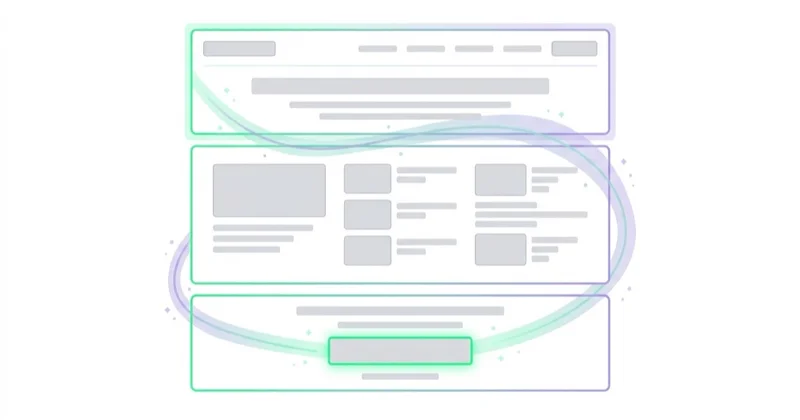
Possible sequence:
- Name the problem.
- Show why it matters.
- Explain the solution.
- Prove the method.
- Show the process.
- Reduce risk.
- Give a clear CTA.
This is storytelling as decision support. The page does not need a novel. It needs a logical journey from recognition to action.
For message sequencing, the AIDA model can help shape attention, interest, desire and action.
Storytelling in case studies
Case studies are one of the strongest storytelling formats in B2B and professional services.
A useful case study should include:
- client context;
- starting problem;
- constraints;
- decision process;
- work performed;
- obstacles;
- measurable or observable result;
- lessons learned;
- caveats;
- next steps.
Weak case studies say "we delivered great results." Strong case studies show what changed, why it changed and what the reader can learn.
The caveat matters. A believable case study does not imply that every client will get the same result. It explains the conditions that made the result possible.
Storytelling in ecommerce
Ecommerce storytelling can help when the product has context, origin, use case or emotional value.
Examples:
- how a product is made;
- where materials come from;
- how to use the product;
- why a collection exists;
- customer use cases;
- styling stories;
- sustainability or sourcing;
- founder story;
- gift context;
- product problem solved;
- before-and-after usage;
- customer routines.
But ecommerce storytelling should not hide basic purchase information. Shoppers still need price, size, delivery, returns, reviews and availability.
Example:
Feature-only product copy says: "Softshell jacket, waterproof membrane, three pockets."
Story-led product copy can add: "Built for days when the forecast changes every hour: light enough for a full-day trail, protective enough for wind and rain, with pockets that keep a phone and map reachable."
The second version does not replace specifications. It explains why the specifications matter.
Storytelling in B2B
B2B storytelling should be practical and evidence-led.
Good B2B stories show:
- costly confusion;
- operational risk;
- stakeholder tension;
- implementation difficulty;
- decision criteria;
- measurable improvement;
- risk reduction;
- process clarity;
- internal alignment;
- time saved or errors reduced.
The buyer does not need theatrical drama. The buyer needs to understand why the change is worth internal effort.
B2B stories work well when they make invisible costs visible. Examples include reporting chaos, slow approvals, poor lead quality, manual work, weak attribution, compliance risk or sales follow-up delays.
Storytelling and brand marketing
Brand marketing needs memory. Storytelling helps create memory by repeating a clear pattern:

- what the brand believes;
- who it serves;
- what problem it understands;
- what transformation it supports;
- what proof makes it credible;
- what language the audience can repeat.
The best brand stories are not separate from performance marketing. They make ads, landing pages, sales conversations and content easier to connect.
For brand campaign context, read What Is a Brand Awareness Campaign and How to Plan It?.
Storytelling for SEO, AEO and LLM visibility
Search and answer systems need clear information. Storytelling can help when it adds useful context, but it can hurt when it hides the answer.
Practical rules:
- answer the main query early;
- use clear definitions;
- keep headings descriptive;
- explain the problem before adding emotional detail;
- include examples that can stand alone;
- use FAQ for direct questions;
- cite credible sources when making factual claims;
- avoid vague metaphors where a concrete example is better;
- connect stories to entities, tools, outcomes and decisions.
For LLMs and answer engines, a good story should still be extractable. A page that only says "we transform brands through emotion" is hard to summarize usefully. A page that explains the audience, problem, process, proof and outcome is much easier to understand.
How to make storytelling credible
Use concrete details
Specific details make a story believable.
Weak:
"The client improved marketing results."
Stronger:
"The team found that paid search was generating form submissions, but CRM data showed most of them were unqualified."
Add proof
Use screenshots, quotes, data, process, timelines, photos, demos or customer examples where possible.
Avoid exaggerated drama
Not every story needs a heroic tone. In professional markets, calm clarity often works better.
Match the product experience
The story should not promise a transformation the product or service cannot deliver.
Keep the audience central
The story should help the audience recognize their own situation.
Micro-stories for short formats
Storytelling does not always need a long narrative. A micro-story can fit inside a search ad, social caption, email subject line or product card.
| Short format | Micro-story |
|---|---|
| Search ad | Stop rebuilding weekly reports from five exports. See campaign, lead and revenue data in one dashboard. |
| Product card | A travel backpack built for one-bag weekends, laptop workdays and overhead bins. |
| Email subject | The checkout fix that stopped mobile shoppers dropping at payment. |
| Social post | A founder changed the formula after customers kept asking for a lighter version. |
| Landing page hero | Turn scattered ad data into a prioritized growth roadmap. |
The key is compression. The story should still contain situation, tension and next step.
Storytelling checklist
Before publishing, check:
- Who is the main character?
- What problem creates tension?
- Why does the problem matter?
- What obstacle makes the solution valuable?
- What role does the brand play?
- What proof supports the story?
- What result is shown?
- Is the story specific?
- Is the story true?
- Does it lead to a useful next step?
- Does the format need a shorter version?
- Does the reader still get practical information?
How we approach this at Space Ads
Storytelling sells when it's about the customer's transformation, not the company's history. In campaigns we don't debate story versus hard fact — we test both and see what wins for whom. The pattern recurs: narrative tends to win on cold audiences, stopping the scroll and earning attention from someone who doesn't know us, while warm audiences who already know us respond better to a direct benefit or offer, since they need a reason to buy now, not a tale. So the form follows the audience's temperature rather than one bet for the whole campaign. The classic mistake is telling a beautiful story to people ready to buy, or leading with an offer to someone meeting the brand for the first time. Either way, the moment is wasted.
Common mistakes
| Mistake | Why it hurts | Better approach |
|---|---|---|
| Making the brand the hero | The customer does not see their own problem | Put the audience situation first |
| No real tension | The message feels flat | Show what makes the problem worth solving |
| Too much emotion | The story feels artificial | Use concrete details and proof |
| No proof | The story becomes a claim | Add data, examples, quotes or process |
| Story disconnected from offer | Engagement does not lead to action | Connect the narrative to a clear next step |
| Too long for the context | Users miss key information | Compress the story or move it lower |
| Hiding basic buying info | Conversion friction increases | Keep price, availability, CTA and terms clear |
| Copying one framework everywhere | Messaging becomes formulaic | Adapt the structure to intent and format |
FAQ
What is storytelling in marketing?
Storytelling in marketing is the use of narrative structure to explain a problem, change and result. It helps people understand why an offer matters in a real situation.
Does storytelling work in B2B?
Yes. B2B storytelling works well through case studies, implementation stories, risk reduction, decision journeys and examples that show operational change.
Does storytelling have to be long?
No. A story can be three sentences if it shows a situation, problem and change. Short ads, product cards and email subject lines can all use micro-stories.
Should the brand be the hero?
Usually no. In most marketing stories, the customer should be the hero. The brand is more useful as the guide, tool, process or proof that helps the customer move forward.
Can storytelling improve conversion?
It can improve understanding, trust and memory, but it is not a replacement for clear offers, strong proof, good UX and relevant traffic. On high-intent pages, clarity may matter more than narrative.
Is storytelling useful for ecommerce?
Yes, especially for products with context, origin, materials, use cases or emotional value. It should support product information, not hide price, size, delivery, returns or availability.
How is storytelling different from copywriting?
Copywriting is the broader discipline of writing to persuade or drive action. Storytelling is one technique inside copywriting that uses narrative structure to make value easier to understand.
Key takeaways
Storytelling organizes marketing around the change the audience wants to make. The strongest stories are specific, true, evidence-led and connected to a clear next step. They do not replace product information, pricing, proof or UX. They make those elements easier to understand.
The best starting point is simple: identify the customer, name the problem, show why it matters, explain the path forward and prove that the change is believable.
Sources and further reading
- Google Search Central - Creating helpful, reliable, people-first content
- Google Search Central - SEO Starter Guide
- Content Marketing Institute - What is content marketing?
- Harvard Business Review - How to Tell a Great Story
Continue learning
Continue reading
What Is Benefit-Led Copywriting and How to Use It?
Benefit-led copywriting translates features into customer value. Learn feature vs advantage vs benefit, with examples for ads, ecommerce, B2B, landing pages and CTAs.
What Is Brand Marketing and How to Use It?
Brand marketing builds recognition, trust, memory and preference so a company is easier to choose when buyers enter the market.
What Is Performance Marketing? (And How It Differs From Growth and Brand)
Performance marketing connects media investment with measurable business outcomes and improves those outcomes through continuous testing. Learn how it works, which channels it covers, how to measure it beyond platform ROAS and how it complements growth and brand marketing.