
Driving school marketing turns local demand into a sequence of safe, paid instructor hours. Capacity is constrained by qualified instructors, suitable vehicles, pupil schedules, travel between lessons and the availability needed around practical tests. More enquiries do not automatically create more revenue: the school must have an appropriate instructor, area and time slot, then retain the learner through completed lessons.

The commercial promise also carries unusual responsibility. The service prepares a learner for independent, safe driving — not merely for a test result. Effective marketing therefore combines capacity control, transparent terms and credible evidence with a booking experience that makes the next step clear.
TL;DR
- Map sellable capacity before buying leads. Instructor, transmission, service area, daypart and start date all determine whether an enquiry can be served.
- Design geography around route density, not an arbitrary radius. School runs, test-centre travel and pickup patterns affect paid hours and vehicle cost.
- Explain the offer in plain language. Publish lesson length, price, package and refund terms, instructor status, vehicle/transmission, payment timing and realistic availability.
- Speak to the actual decision group. The learner chooses the teaching relationship; a parent or another payer may also need safety, scheduling and cost information. Do not assume every learner is a teenager.
- Use pass rates carefully. State the source, period, denominator, first-attempt or overall basis, instructor/test-centre mix and important exclusions. Never imply that passing is guaranteed.
- Treat a response as useful only when it resolves fit. Availability, area, transmission and next action matter more than an instant generic acknowledgement.
- Respect current test-booking rules. In Great Britain, only the learner may book or manage a car test under rules introduced in 2026.
- Measure completed paid lessons, contribution per available instructor hour, learner retention and safe operational quality, not raw enquiries.
Define capacity in sellable slots
An instructor does not offer a uniform pool of hours. Capacity has dimensions:
- area and travel pattern;
- manual or automatic vehicle;
- weekday, evening or weekend availability;
- standard, refresher, motorway or intensive format where offered;
- pickup policy and lesson duration;
- learner stage and instructor suitability;
- time reserved around practical tests;
- vehicle maintenance, leave, training and administration.
This means “we have 20 hours available” is not enough. The school may have Tuesday mornings in one postcode while enquiries request automatic lessons after school in another.
Track:
Instructor utilisation = completed paid teaching hours ÷ genuinely available teaching hours
Contribution per available instructor hour = (lesson revenue − instructor pay or franchise allocation − fuel/energy − payment fees − variable vehicle and delivery costs) ÷ available hours
Document what is excluded. A booked slot that is later cancelled, a lesson refunded, a long unpaid transfer and a test-day vehicle booking have different economics.
Three consequences:
A mismatch is not a qualified lead. An enquiry outside the service area or requested schedule may be genuine but impossible to fulfil. Capture the fields needed to make that decision before optimising campaigns to “lead submitted”.
High utilisation is not automatically healthy. Excessive load can reduce recovery time, maintenance flexibility, communication and lesson quality. Define a safe target with operations rather than treating 100% as the goal.

Geography is a routing decision. Straight-line radius is a weak proxy in areas divided by traffic, rivers, rural roads or public-transport patterns. Use drive-time and real instructor routes, then build location pages only for areas the school genuinely serves.
Understand the learner, payer and instructor fit
Some learners choose and pay themselves. Others involve a parent, guardian, employer or family member. The website should let each understand the service without stereotyping the learner.
The learner needs to know who may teach them, the teaching approach, transmission, pickup arrangement, availability, accessibility and how progress is reviewed. Preferences such as a female instructor or experience supporting anxious or neurodivergent learners should be described only when the school can reliably fulfil them.
The payer, where different, needs transparent prices, package and expiry conditions, cancellation/refund rules, payment schedule and evidence of professional status. Safety and teaching quality matter to both parties.
The school needs fit: area, preferred schedule, manual/automatic requirement, provisional licence status where relevant, prior experience, target test centre and whether a test is already booked. Collect only data needed for the enquiry and explain how it will be used.
Avoid promising a universal total number of hours. Learners progress at different rates, and private practice, continuity, prior experience and confidence matter. Explain how the instructor assesses readiness, how progress is shared and what happens if a prepaid package is not enough or is not fully used.
Build a transparent lesson offer
A high-converting offer reduces uncertainty without making guarantees. For each service, state:
- lesson length and whether pickup/travel is included in that time;
- price per lesson and any legitimate package saving;
- payment timing, package expiry, cancellation, late-arrival and refund terms;
- manual or automatic availability and the vehicle used;
- areas, pickup points and times served;
- whether the instructor is fully approved or operating under a trainee licence, using the terminology required locally;
- earliest realistic start or a clearly labelled waiting-list process;
- what is included for theory support, mock tests, test-day use or progress reporting;
- who books the practical test and what the school can lawfully help with.
Intensive courses need particular care. “Intensive” should define the delivery pattern, not imply a guaranteed pass or a fixed amount of learning for everyone. Confirm instructor and test-date feasibility before taking non-refundable payment, and explain what happens if test availability changes.
Use pass rates as qualified evidence, not a promise
A pass rate can help a prospective learner evaluate a school, but only when the calculation is understandable and representative. It can also create the wrong incentive if a school delays tests selectively to protect the statistic.
In Great Britain, an approved driving instructor can request their own DVSA driving test data report covering pupils' tests over the previous 12 months. It includes tests, passes, overall pass rate and recorded faults. One instructor cannot request another ADI's report, so a multi-instructor school must be precise about whether a claim comes from DVSA instructor reports, internal records or another source.
Before publishing a figure, record:
- numerator and denominator;
- time period and minimum sample size;
- first attempts versus all attempts;
- practical car tests versus other tests;
- which instructors and test centres are included;
- treatment of tests taken in the learner's own car or without the instructor present;
- date the claim was last recalculated;
- source evidence retained for advertising substantiation.
Compare carefully with official test-centre or national statistics: learner mix, period and test type may differ. “Number one”, “best” and “highest pass rate” are objective superiority claims and need evidence covering the relevant market, not only the school's own customers.
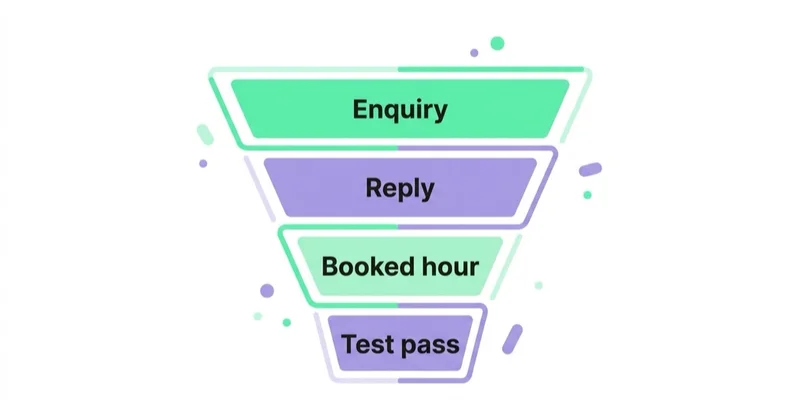
Pass rate should sit beside broader evidence: approved status, standards and professional development, verified reviews, teaching process, complaint handling and clear policies. The goal is safe independent driving, and no ethical school can guarantee a pass.
Glossary
- Instructor utilisation: completed paid teaching hours divided by genuinely available teaching hours.
- Catchment radius: the geographic area a school serves, constrained by travel time.
- Intensive course: a compressed programme delivering lessons over days rather than months.
- Test centre: the location where practical tests are conducted, with its own availability and pass characteristics.
- Contribution per available instructor hour: retained lesson contribution divided by genuine sellable instructor capacity.
- Lead-to-start rate: the share of enquiries that become learners who complete a first paid lesson.
- Learner retention: the share continuing through an agreed learning milestone or period, interpreted with legitimate reasons for leaving.
Make enquiry handling useful and measurable
Response time matters in local services, but there is no defensible universal “reply within minutes” rule. A fast automated message that cannot confirm area, instructor or start date does not resolve the enquiry.
That makes the response mechanism as important as the advertising:
- Acknowledge the enquiry and state when a human answer will arrive.
- Capture postcode or pickup area, availability, transmission, preferred start and existing test details only where needed.
- Match the enquiry to live instructor capacity before offering a slot.
- Provide a clear next step: choose a first lesson, book an assessment, speak with the instructor or join a dated waiting list.
- Support web or message-based enquiry as well as phone where the school can manage those channels reliably.
- Record why a valid enquiry could not be served: area, schedule, transmission, price, no capacity or no response.
Measure median and 90th-percentile human response time by opening hours, but optimise the process to confirmed starts and completed lessons. This avoids rewarding fast rejection or low-quality automation.
Local SEO and paid acquisition
Create one strong page for each real location or service area where the content is distinct. Include instructor coverage, pickup policy, transmission, lesson types, pricing, start-date process, contact options and relevant test centres without pretending to be located in every town. Thin doorway pages with swapped place names do not help learners.
Keep Google Business Profile name, category, address or service area, hours, phone, photos and booking links accurate. Ask genuine learners for honest reviews without incentives or selective gating, and protect pupil privacy when responding.
For paid Search, separate campaigns or ad groups where area, transmission, lesson type or economics genuinely differ. Use the matching landing page and review search terms. Exclude queries for unavailable services rather than paying for them and hoping the learner changes requirements.
Import a meaningful outcome when possible: first paid lesson, package purchase or a defined completed milestone. A form submission and a phone click can remain secondary diagnostics. Allocate value from expected retained contribution, not the full potential value of a learner who has not started.
What to measure
| Metric | What it tells you |
|---|---|
| Available, booked and completed instructor hours | Distinguishes sellable capacity from diary entries and delivered teaching |
| Contribution per available instructor hour | Tests whether pricing, route density and variable costs work together |
| Enquiry-to-match, match-to-start and start-to-repeat rates | Shows where area, availability, response or teaching fit fails |
| Response time and time to confirmed start | Separates communication speed from actual capacity |
| Cancellation, no-show and refund rate | Protects diary economics and identifies poor policy or expectation setting |
| Learner progress and test outcomes | Supports teaching improvement when interpreted by instructor and learner context |
| Referral and review themes | Indicates reputation while avoiding campaign-only attribution |
| Safety, complaint and instructor-quality indicators | Ensures utilisation growth does not override service standards |
Average lessons per learner needs care: a higher number can mean strong retention, a learner who needed more practice, slow progress or inappropriate over-teaching. Do not optimise it upward in isolation. Pair it with progress, learner feedback, cancellations and outcomes.
Great Britain: practical test booking changed in 2026
From 12 May 2026, only the learner may book, change or cancel their car driving test in Great Britain. Unofficial third-party booking and cancellation services, and instructors acting for the learner, cannot manage the booking. From 31 March 2026, learners are limited to two changes, and from 9 June they can move a test only to one of the three nearest test centres to the original booking.
The school should explain the current process accurately:
- the learner books through GOV.UK;
- learner and instructor should agree readiness and realistic timing first;
- the instructor provides their ADI reference number if the learner will use their car and availability;
- the learner can enter that number so the booking system checks instructor availability;
- the school must not advertise an unlawful test-booking or bot-based cancellation service.
Other countries and Northern Ireland have different rules. Localise the page and legal references rather than copying the Great Britain process globally.
How Space Ads approaches driving school marketing
We begin with a capacity matrix by instructor, area, transmission and daypart, then connect it to lead reasons, starts and completed lesson value. This identifies whether the immediate need is more local demand, better matching, improved retention, different pricing or instructor recruitment.
Campaigns then target only combinations the school can serve, with conversion values based on expected contribution and adjusted when a lead never starts or a package is refunded. We audit claims and landing pages against current rules in the target market. Where no Space Ads-specific evidence exists, these are described as industry-standard operating practices, not as invented client results.
Where marketing helps most
- Filling specific, viable capacity gaps by area, transmission and schedule.
- Improving route density where travel rather than demand limits completed hours.
- Making lesson scope, pricing, start date and policies understandable.
- Replacing generic lead counts with matched starts and completed value.
- Publishing substantiated evidence, including correctly qualified pass rates when useful.
- Recruiting qualified or trainee instructors responsibly when supply is the measured constraint.
Recruitment has a longer lead time than pupil acquisition. In Great Britain, paid instruction requires the correct approved or trainee status, a suitable dual-control car, insurance and compliance with DVSA rules. Advertising can build a candidate pipeline, but it cannot turn an unqualified applicant into immediate teaching capacity.
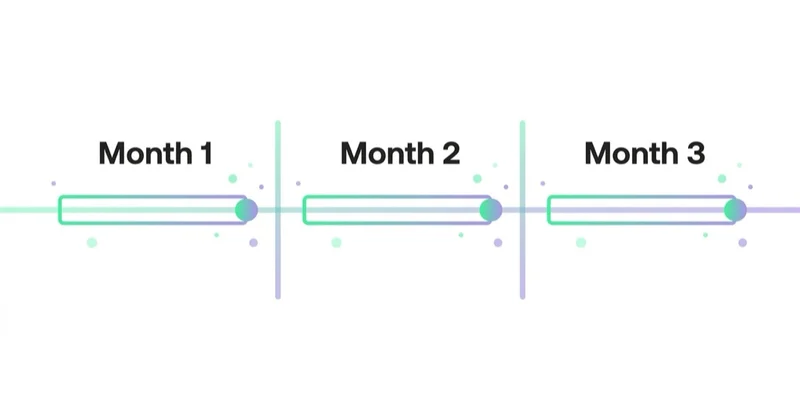
A 90-day improvement sequence
Weeks 1–2: map capacity and economics. Define available and completed hours, area/daypart gaps, travel time, contribution, refunds and current lead outcomes.
Weeks 3–4: fix the offer. Publish prices, lesson length, package terms, instructor status, transmission, service areas and a realistic start process. Qualify or remove unsupported pass-rate claims.
Weeks 5–8: connect acquisition to matching. Improve local pages and Business Profile, restructure paid Search around sellable combinations and record why enquiries do not start.
Weeks 9–12: optimise to completed value. Reconcile leads with first and repeated paid lessons, adjust targets by real capacity and assess recruitment only where instructor supply remains the constraint.
FAQ
What should a driving school advertise? Advertise real availability by area, transmission and schedule; a transparent lesson offer; instructor status and teaching approach; and substantiated evidence. Send each search to a page that answers the learner's question and offers a clear route to a matched first lesson.
Why does instructor capacity matter for marketing? Because only suitable completed teaching hours create lesson revenue. A lead may not match the available area, transmission or schedule, and overloaded diaries can damage quality. Acquisition targets should follow safe, sellable capacity and learner retention.
How large should the catchment area be? There is no universal radius. Use real drive times, pickup patterns, test-centre commitments and instructor routes. The goal is a service area the school can fulfil reliably with sensible route density, not the smallest possible map circle.
Should a driving school publish its pass rate? Only when it is substantiated and not misleading. State the source, period, sample, first-attempt or overall basis, instructors and test centres included, and update date. Avoid guarantees and unsupported “best” or “highest” claims. Teaching quality and safe independent driving are broader than one percentage.
Why is response time so important? A prompt response reduces uncertainty, but usefulness matters: confirm area, transmission, start date and next action. Measure time to a human response and to a confirmed matched start; do not assume an instant automated acknowledgement is conversion.
Should marketing budget go to recruiting instructors? It can, when qualified instructor supply is the documented constraint and the economics support expansion. Recruitment should reflect local licensing and trainee rules, vehicle and insurance requirements, expected qualification lead time and the school's real proposition to instructors.
Key takeaways
- Map capacity by instructor, area, transmission and daypart before increasing leads.
- Publish lesson length, price, package/refund terms, instructor status, vehicle, service area and realistic availability.
- Design geography around real drive time and route density rather than an arbitrary radius.
- Qualify every pass-rate claim with source, period, sample and scope; never promise a pass.
- Optimise enquiry handling to matched starts and completed lessons, not automated response speed.
- In Great Britain, reflect the 2026 rule that only learners may book and manage car tests.
- Recruit instructors when supply is proven to be the constraint, while respecting qualification and registration lead times.
How we run acquisition for local, capacity-constrained services is on our performance marketing page.
Sources and further reading
- Bike shop marketing: the workshop pays the rent
- Employer branding and recruitment marketing
- Call tracking for PPC lead generation
- Customer retention marketing: repeat revenue
- Approved driving instructor register guide — DVSA
- Request an ADI driving test data report — DVSA
- Driving test and instructor statistics — DVSA
- Changes to car test booking rules in 2026 — DVSA
- Objective superiority claims in advertising — ASA/CAP
Continue reading

Language School Marketing: Two Businesses, One Building
Language schools often combine consumer enrolment and corporate training. Market them as separate buying journeys, then connect campaigns to attendance, enrolment, group contribution and continuation.

Bike Shop Marketing: The Workshop Pays the Rent
A practical marketing system for bike retailers and workshops: model capacity and contribution, capture local service demand, promote in-stock bikes, and turn first visits into lasting customer relationships.

Car Rental Marketing: Selling a Perishable Asset on a Fixed Calendar
Car rental marketing must connect live availability, total price, location, vehicle class and completed-rental value. This guide shows how to acquire demand without separating media from fleet economics.


































