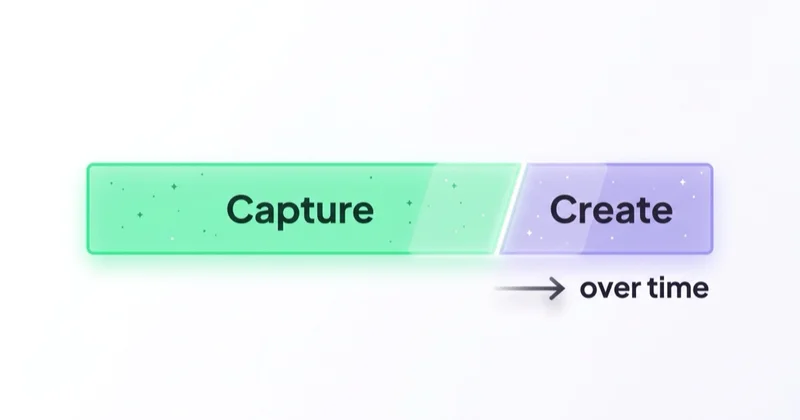
To advertise a clothing brand profitably, use paid media for two connected jobs: capture demand that already exists and create demand among people who do not yet know the label. Search and Shopping can reach shoppers expressing intent. Meta, TikTok, YouTube and creator-led ads can introduce the product, demonstrate fit and build preference. The right mix depends on whether the brand already has search demand, proven products and enough creative to support prospecting.
A common mistake is launching every platform at once with a small budget and then judging each one by the same last-click ROAS target. Clothing is visual, seasonal, catalogue-heavy and return-sensitive. A workable advertising system needs accurate variant data, native creative, reliable purchase values and reporting that reconciles ad-platform results with returns, discounts, margin and new-customer quality.
This guide focuses on advertising, not the full brand strategy. For positioning, price discipline and the wider marketing system, read how to market a fashion brand and fashion marketing.
TL;DR
- Advertising a clothing brand means capture + creation. Google captures existing demand; Meta and TikTok create demand and retarget visual interest.
- Start with the commercial constraint. A first paid-media setup should not spread a limited budget across six platforms. Start where the brand has the strongest combination of demand, product proof, margin and creative capacity.
- The product feed is infrastructure. Shopping, Performance Max, Meta catalog ads and product retargeting depend on accurate variants, sizes, colors, prices, stock and images.
- Creative is the main paid-social lever. Automated targeting needs a steady supply of native, mobile-first concepts that show fit, motion, styling and proof.
- Budgets should follow jobs. Early budgets usually prioritize branded search, retargeting and product-intent capture, then shift more into demand creation as proof grows.
- Returns must be part of measurement. Gross checkout ROAS can scale products that come back. Advertising should be judged on margin, returns, new customers and contribution.
- Platform attribution is not business truth. Use platform reports to manage campaigns, then validate them against store, finance and incrementality data. This is especially important for TikTok Shop's GMV Max reporting.
Why clothing brand advertising is different
Apparel is not a simple direct-response category. Four traits change how campaigns should be planned.
Clothing is visual and identity-led. People buy style, fit, confidence, occasion and belonging, not only fabric. Ads need to show the product on people, in motion, in context.
The purchase can be impulse-triggered but considered. A user may discover a jacket in a Reel and buy immediately, or revisit the product several times over two weeks before converting. Retargeting and branded search matter because the first touch is often not the final click.
The catalogue is complex. Sizes, colors, variants, stock, sale status, product images and category structure affect Shopping, catalog ads, recommendations and product retargeting.
Returns change profitability. Apparel returns are often driven by sizing, fit and expectation mismatch. A campaign that looks profitable on gross revenue can be weak after returns and exchanges.
Because of this, clothing advertising is not only a media-buying task. It is a system of feed quality, creative quality, tracking quality, landing page quality and commercial measurement.

Channel map: what each paid channel does
| Channel | Main job | Best use | Main measurement |
|---|---|---|---|
| Google Search | Capture active demand | Brand terms, category intent, competitor/alternative research | CPA, conversion value, brand vs non-brand |
| Google Shopping / PMax | Capture product demand | Product visibility, category and SKU-level demand | ROAS, margin, stock, new customers, returns |
| Meta Ads | Prospecting + retargeting | Visual demand, catalog ads, creator-style assets, conversion workhorse | CPA, ROAS, new customer rate, creative fatigue |
| TikTok Ads | Discovery, demand creation and commerce | Native video, creators, Spark Ads, TikTok Shop | Qualified traffic, new customers, blended sales and incrementality |
| Visual planning | Seasonal outfits, occasions, gifting, inspiration | Saves, outbound clicks, assisted conversions | |
| YouTube / Demand Gen | Brand and consideration | Launches, collection storytelling, premium proof | Reach, view quality, brand search, assisted demand |
| First-party audiences | Retention and launch support | Customer lists, subscriber growth, VIP access | repeat purchase, revenue per subscriber, margin |
The strongest setup assigns each channel a job and a decision rule. Search cannot capture much brand demand if few people know the brand. Paid social cannot compensate indefinitely for weak product-market fit or an unconvincing product page. Retargeting can recover some undecided shoppers, but it cannot create a large, profitable audience by itself.
Which campaigns should a clothing brand launch first?
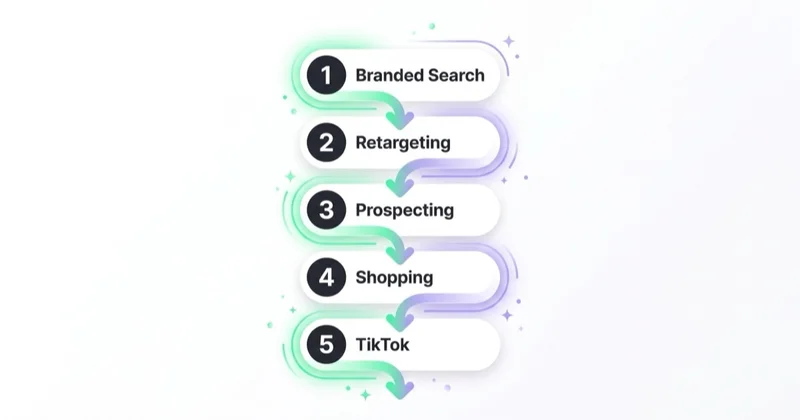
A sensible sequence for an established store with measurable traffic is:
- Economics, tracking and feed. Define the maximum customer-acquisition cost from contribution margin and expected repeat value. Validate purchase events, values, consent handling and the product feed before scaling.
- Existing demand capture. Run branded Search if competitors, resellers or organic results do not cover that demand reliably. Report it separately so it does not mask non-brand performance.
- Product-intent campaigns. Test Shopping or Performance Max on in-stock products with dependable price, margin and return data. Segment products when their economics differ materially.
- One prospecting engine. Start with Meta Advantage+ sales campaigns, TikTok or another channel that matches the audience and available creative. Give it enough concepts and budget to produce a meaningful decision.
- Retargeting where the audience justifies it. Use catalogue or product-led ads for recent product viewers and cart abandoners, while excluding purchasers as appropriate. Small sites may not need a separate retargeting campaign.
- Additional demand creation. Add YouTube Demand Gen, Pinterest, TikTok or broader Meta activity when the team can supply creative and the core campaigns no longer provide enough incremental scale.
This is a decision framework, not a universal recipe. A new label with almost no search volume may need creator content and paid social before Search can contribute meaningfully. A retailer selling known brands may start with Shopping. The rule is to fund the bottleneck that is currently limiting profitable growth.
Product feed checklist for clothing brands
The product feed is one of the highest-leverage parts of clothing advertising.
| Feed element | Why it matters |
|---|---|
| Product titles | Help platforms understand the product type, brand and attributes without keyword stuffing |
| Variant IDs and grouping | Keep each sellable size/color accurate while connecting variants with a stable group ID |
| Size and color | Essential for apparel matching, filters, shopping surfaces and user expectation |
| Images and video | Main images support accurate matching; additional views and product video show fit, texture and movement |
| Availability | Prevents ad spend on sold-out products and broken variants |
| Price and sale price | Helps platforms and users understand current offer |
| Product type | Improves campaign structure and reporting |
| Custom labels | Allows segmentation by margin, season, bestseller, stock, return risk or launch |
| Business labels | Segment products by margin, season, stock depth, bestseller status or return risk; these are management inputs, not a substitute for accurate conversion values |
For apparel, each size or color variant should represent the product a shopper can actually buy, with the correct availability, landing-page selection and image. Google also recommends showing apparel on models. As of July 2026, Merchant Center warns about product images below 500 × 500 pixels ahead of enforcement on January 31, 2027. The new video_link attribute can add up to ten product videos and has been eligible to serve since June 30, 2026. Rights to every submitted video must cover marketing use.
Feed quality matters in Google Ads for fashion e-commerce, Meta catalog ads, TikTok Shop and Performance Max. A weak feed quietly limits every catalogue-dependent campaign downstream.
Creative that sells apparel
Clothing ads need to make the product easier to imagine in real life. Studio product images are useful, but paid social usually needs motion and context.
Strong creative angles:
- fit on different body types;
- fabric in motion;
- outfit styling and full looks;
- occasion-based use: work, travel, evening, training, festival, gifting;
- creator try-ons;
- before/after styling;
- problem/solution around fit, comfort, weather or occasion;
- material and craftsmanship close-ups;
- social proof, reviews and customer content;
- drop or limited availability where it is genuinely true.
Creative principles:
- use vertical, mobile-first formats for paid social;
- show the product in the first seconds;
- build different concepts, not only small edits;
- keep product, page and promise aligned;
- monitor fatigue through delivery, response and conversion trends rather than a universal frequency threshold;
- use creators when their taste and audience match the brand;
- secure written usage rights for the channels, countries, duration and editing required;
- make paid relationships clear and hard to miss; platform labels alone may not satisfy every market's disclosure rules;
- keep premium brands careful with discount-heavy messaging.
For a deeper creator workflow, see fashion influencer marketing.
Budget: how to split spend by stage
There is no universal clothing advertising budget. The right amount depends on margin, AOV, return rate, conversion rate, creative capacity and sales targets.
A practical starting model:
| Stage | Budget priority | Why |
|---|---|---|
| Early validation | branded search, retargeting, Meta creative tests | convert existing interest and learn which products/angles work |
| Growth | Meta prospecting, Shopping/PMax, retargeting, brand search | create demand and capture product intent |
| Scaling | TikTok, YouTube/Demand Gen, Pinterest, incrementality tests | increase the ceiling once capture channels are not enough |
| Mature brand | full-funnel allocation, retention, customer value bidding | optimize contribution, not platform screenshots |
Early allocation should follow the evidence, not a fixed percentage. A brand with strong organic demand may invest more in capture. A new label may need to fund creative and prospecting first. As demand-capture campaigns approach their profitable ceiling, test additional spend in Meta prospecting, TikTok, YouTube Demand Gen, creators or other demand-creation activity. Increase budgets only while marginal contribution remains acceptable.
Budget should also include creative production. A media budget with no new assets is not a real paid-social budget for apparel.
Measurement: returns, margin and attribution
Clothing advertising should not be judged only by platform-reported ROAS.
Use several layers:
| Layer | What to check |
|---|---|
| Platform performance | CPA, ROAS, CPC, CPM, CTR, product-level performance |
| Business result | net revenue, contribution margin, returns, exchanges, discounts |
| Customer quality | new customer rate, repeat rate, AOV, LTV and cohort behavior |
| Product quality | SKU-level margin, stock, return rate and sell-through |
| Demand creation | branded search, direct traffic, assisted conversions, organic social lift |
| Incrementality | geo tests, conversion lift, holdouts or MMM where scale allows |
Two rules matter most.
First, separate brand and non-brand demand. Branded Search may capture people who discovered the label elsewhere, so blended reporting can make acquisition look more efficient than it is. Test whether brand ads add incremental sales instead of assuming they always do.
Second, report value net of returns where possible. If a campaign scales products with high return rates, gross ROAS will overstate the real result. A useful commercial view is: net sales minus product cost, fulfilment, payment fees, return costs, discounts and media spend. Upload corrected conversion values where the platform and implementation support it, and always reconcile advertising reports with ecommerce and finance data.
For TikTok Shop, treat GMV Max reporting with particular care. TikTok's June 2026 documentation states that Product GMV Max attributes all paid and organic orders for promoted products while the campaign is active, including orders from people who did not view or click an ad. That dashboard is useful for campaign operation, but its attributed GMV should not be read as incremental revenue created by advertising.
Common launch plans
Small budget, existing store
Start with tracking and one focused acquisition test around the products with the clearest demand, margin and stock. Add branded Search if there is meaningful brand demand to defend, and use retargeting only when the audience is large enough to manage separately. Keep Shopping limited to products with dependable feed data. Do not launch a video-led channel until the team can supply several credible concepts and refresh them.
New clothing brand
If brand search is tiny, Search cannot be the main growth engine. Put the first creative effort into product proof, creator-led assets, organic distribution and a focused paid-social test. Run branded Search only if the available demand and auction make it worthwhile. Shopping can be tested earlier when shoppers already search for the category and the feed is ready.
Premium clothing brand
Protect price integrity. Avoid default discount-led ads. Use richer creative, collection storytelling, editorials, creators and selective retargeting. Google Search and Shopping should capture high-intent demand, but broad paid social should reinforce desire, not train customers to wait for markdowns.
Sale or Black Friday campaign
Prepare early. Warm audiences before the sale, separate full-price and sale logic, check feed sale prices, defend branded search and plan creative refreshes. Measure whether the sale acquires valuable new customers or only discounts existing demand.
How Space Ads approaches clothing brand advertising
At Space Ads, clothing brand advertising is treated as a connected performance system, not a collection of isolated platform campaigns. The work starts with feed quality, tracking, product economics and channel role. If the feed is messy, Shopping and catalog ads will underperform. If returns are ignored, value-based optimization can scale the wrong products. If creative is thin, Meta and TikTok will fatigue quickly.
The practical sequence is usually: protect existing demand, fix retargeting and catalog foundations, launch or clean Google product-intent campaigns, build a repeatable creative system for Meta and TikTok, and then measure the whole mix against ecommerce reality rather than only platform dashboards.
For fashion and footwear brands, this connects fashion and footwear paid media, Google Ads, Meta Ads, TikTok Ads, product feed work and marketing audit. The goal is profitable growth, not the lowest CPM or the prettiest ROAS screenshot.
Common mistakes
| Mistake | Why it hurts | Better approach |
|---|---|---|
| Launching too many platforms at once | Budget and learning get fragmented | Start with capture, retargeting and one prospecting engine |
| Ignoring the product feed | Shopping and catalog ads scale bad data | Fix variants, sizes, stock, images and labels |
| Using only studio packshots in paid social | They do not show fit, motion or identity | Add try-ons, styling, creators and lifestyle context |
| Optimizing to gross ROAS | Returns and margin get hidden | Use net revenue and contribution metrics |
| Reading attributed revenue as incremental revenue | Platform models can claim sales the ads did not cause | Reconcile to blended results and run lift tests where scale permits |
| Running discounts as the main message | Customers learn to wait | Use value, styling, proof and scarcity carefully |
| No creative refresh plan | CPA rises as fatigue sets in | Build a monthly creative pipeline |
FAQ
How do you advertise a clothing brand?
Start with unit economics, reliable conversion tracking and accurate product data. Then choose one demand-capture or prospecting test based on the demand the brand already has. Add channels only when they have a clear job, enough creative or feed support and a success threshold based on margin, returns and new-customer quality.
Which platform is best for advertising a clothing brand?
There is no single best platform. Google can capture product and brand intent. Meta can combine visual prospecting with catalogue-led conversion. TikTok can support discovery, creator-led demand and TikTok Shop commerce. The best first platform depends on existing demand, audience, market, budget, creative capacity and product economics.
How much should a clothing brand spend on ads?
The budget should come from unit economics: margin after returns, AOV, conversion rate, customer value and target CPA. Early budgets should be concentrated enough to learn. A small budget spread across Google, Meta, TikTok, Pinterest and YouTube usually produces noise rather than insight.
Do Facebook and Instagram ads work for clothing brands?
They can, when the catalogue, creative, offer, product page and measurement are strong. Meta's current Advantage+ sales campaigns can automate parts of audience, placement and budget decisions, but automation does not repair weak product economics or repetitive creative. Judge the result on new-customer contribution after returns, not only Meta's attributed ROAS.
Should a clothing brand use TikTok ads?
TikTok can work when the product is visually demonstrable and the brand can produce native video consistently. Evaluate onsite acquisition with store and incrementality data. For TikTok Shop, do not equate GMV Max attributed orders with sales caused by ads, because the platform can include organic orders for promoted products while the campaign is active.
How do returns affect clothing advertising?
Returns affect profitability and optimization. If campaigns optimize to gross purchase value, they may scale products with high return rates. Better reporting looks at net revenue, margin, SKU-level returns, exchanges and contribution after media spend.
Should a clothing brand hire an agency or run ads in-house?
Early campaigns can often be managed in-house if the setup is narrow. Specialist help becomes more valuable when the brand needs feed work, multi-channel budget allocation, creative testing, tracking, returns-aware reporting and scaling across Google, Meta and TikTok. An audit is often the lower-risk first step.
Key takeaways
- Clothing brand advertising needs both demand capture and demand creation.
- The launch order should follow the brand's current constraint: demand, creative, feed quality, measurement or economics.
- Google, Meta and TikTok do different jobs and should be measured by role.
- Product feed and creative quality are the biggest controllable levers.
- Returns, margin and new customer quality matter more than platform-reported gross ROAS.
Sources and further reading
- Google Merchant Center Help - Product data specification
- Google Ads Help - About Performance Max campaigns
- Google Merchant Center Help - 2026 product data specification update
- Google Merchant Center Help - Best practices for clothing and accessories
- Meta for Business - Advantage+ sales campaigns
- TikTok for Business - GMV Max attribution
- Federal Trade Commission - Endorsements, influencers and reviews
Continue learning
Continue reading
Who Owns Your Google Ads, Meta, and GA4 When You Leave an Agency?
Your company should control its ad and analytics assets while the agency receives revocable access. This guide separates legal rights, platform roles, billing and infrastructure, then shows what to verify before an agency change.
Marketing Dashboard: What Growth Teams Should Track Across Ads, SEO and Sales
A marketing dashboard should connect ad spend, SEO, GA4, CRM and sales outcomes into one decision view. This guide explains what growth teams should track and how to avoid dashboard noise.
Google Ads vs SEO: Paid vs Organic on Google, and How to Use Both
Google Ads vs SEO is a decision about speed, control, cost and durability on the Google results page. This guide explains when to pay for clicks, when to build organic visibility, how to test brand bidding and how to connect paid and organic data.