Luxury fashion marketing is the discipline of building demand for premium apparel, footwear and accessories without eroding the reasons customers pay a premium in the first place. It connects brand, product, creative, PR, retail, ecommerce, CRM and paid media into one system that protects desire, price integrity and long-term customer value.
In 2026, this discipline matters more because the luxury market is recovering slowly after a difficult period. Bain and Altagamma forecasts point to stabilization rather than easy growth. Consumers are more selective, price increases have made value perception more fragile, and many buyers expect stronger quality, service, experience and cultural relevance before they justify a high price.
The answer is not to abandon performance marketing. The answer is to use it with constraints. Premium and luxury brands need to build desire, capture demand, protect context, measure beyond last click and avoid training customers to wait for discounts.
TL;DR
- Luxury fashion marketing builds desire before it captures demand. Paid media can convert interest, but brand, product, culture, PR and clienteling create the reason to buy.
- Discounts are a strategic cost. Markdowns can move stock, but repeated public discounting weakens price credibility and teaches customers to wait.
- Premium and luxury are not the same. Premium can scale wider; true luxury usually protects scarcity, service, context and selective access more aggressively.
- Brand investment should be heavier than in mass ecommerce. The exact ratio depends on maturity, but a premium brand cannot live only on lower-funnel activation.
- Performance marketing must protect context. Search, Shopping, Performance Max, Meta and TikTok can work, but feed quality, placement controls, remarketing pressure and product selection matter.
- CRM and clienteling are growth channels. High-value customers, wishlist behavior, early access, private appointments and loyalty signals should feed media and retention.
- Measurement must show quality. Track brand demand, full-price sell-through, margin, returns, new-customer quality, repeat purchase and incrementality, not only platform ROAS.
Premium, luxury and aspirational luxury
"Premium" is often used too broadly. Strategy improves when the brand defines which level it is actually playing at.
| Segment | What it sells | Marketing role | Main risk |
|---|---|---|---|
| Accessible premium | better quality, style or experience than mass market | scale with margin control, strong creative and CRM | sliding into constant promotions |
| Premium fashion | design, brand world, higher price and stronger aesthetic | balance brand building with performance demand capture | managing everything by short-term ROAS |
| Luxury | rarity, status, craft, heritage, selective access and service | protect context, desirability, clienteling and long-cycle demand | becoming too available, generic or promotional |
| Aspirational luxury | entry into the brand world for less frequent buyers | offer accessible routes without cheapening the core | alienating future high-value customers through poor value perception |
This distinction changes the media plan. Accessible premium can behave closer to ecommerce if margin and data are strong. Premium fashion needs a healthier brand-performance balance. Luxury has to control where the brand appears, how often it follows users, which products are amplified and how the customer experience feels before and after purchase.
The real marketing problem: value perception
Luxury growth in 2026 is not simply a reach problem. Many consumers still want luxury, but they are questioning whether price increases are matched by quality, creativity, service and emotional value.
That creates a different brief:
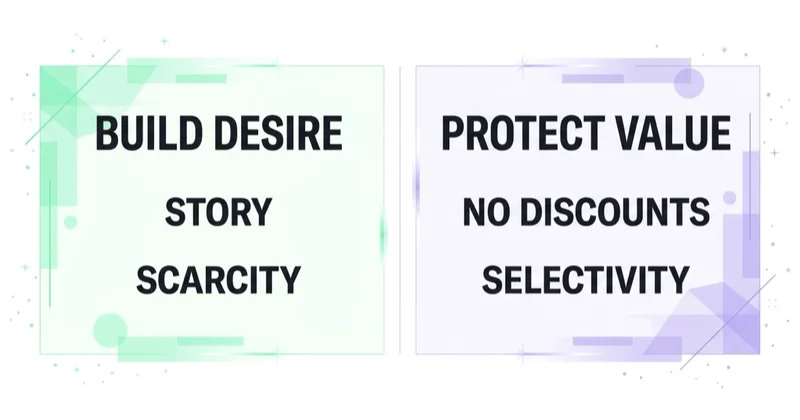
- make the product's quality, material, craft and design visible;
- give the customer a reason to buy now without relying on discounts;
- protect full-price confidence;
- improve service, personalization and post-purchase experience;
- use content and PR to create cultural relevance;
- make entry products feel intentional, not diluted;
- measure whether marketing is attracting valuable customers or only promotion-sensitive buyers.
If a brand solves only the traffic problem, it may acquire more visitors who still do not believe the price. If it solves desire and value perception, performance channels have demand worth capturing.
Desire, not discounts
The central rule is simple: a premium brand should not make discounts the main story.
Discounting has legitimate uses: end-of-season stock rotation, private client access, controlled archive sales, limited outlet strategy or inventory correction. The problem starts when the public market learns that the real price is the sale price.
High-risk behaviors:
- first-visit popups with aggressive discount codes;
- always-on acquisition built around percentage-off messaging;
- retargeting that increases pressure with bigger incentives;
- creator campaigns where the main reason to buy is a code;
- Shopping or catalog ads dominated by discounted SKUs;
- marketplace exposure that undercuts brand presentation;
- repeated "last chance" messaging that is not credible.
Better demand levers:
- collection storytelling;
- craft and material education;
- scarcity with honest access rules;
- waitlists and early access;
- editorial, PR and cultural moments;
- creator styling with brand fit;
- service, personalization and clienteling;
- private sales that protect public price perception;
- product pages that justify price clearly.
Luxury marketing is not anti-conversion. It is anti-conversion-at-any-cost.
Brand versus activation
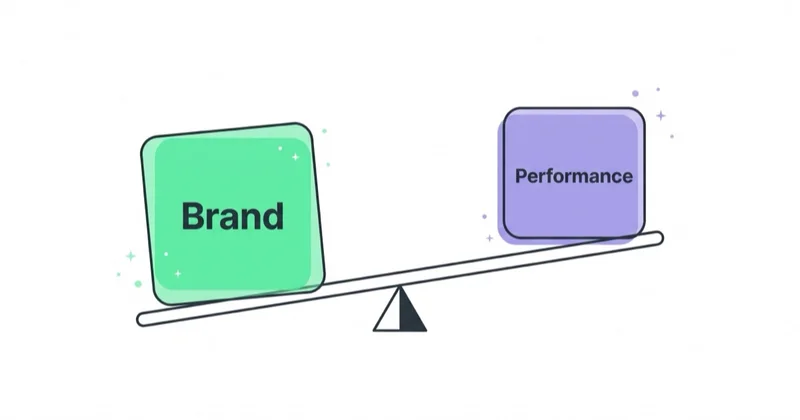
Mass ecommerce often overweights activation because it is easy to attribute. Premium brands cannot afford that bias. If all budget goes to Search, retargeting and catalog conversion, the brand is harvesting demand without creating enough future demand.
Use brand and activation as two different jobs:
| Layer | Role | Channels | Metrics |
|---|---|---|---|
| Brand building | create desire and pricing power | PR, editorial, YouTube, TikTok, Instagram, creators, events, Demand Gen | brand lift, branded search, direct traffic, qualified engagement, share of search |
| Activation | capture existing intent | Search, Shopping, Performance Max, Meta catalog, retargeting, email/SMS, Customer Match | incremental conversions, full-price sales, margin, new-customer quality, returns-adjusted ROAS |
The commonly cited 60/40 brand-to-activation rule is a useful starting point, not a law. Premium and luxury brands often need a heavier brand share because pricing power depends on mental availability, distinctiveness and reduced price sensitivity. The exact split should reflect brand maturity, distribution, stock pressure, product cycle and evidence from lift or incrementality testing.
Channel roles in luxury fashion marketing
Every channel should have a job that matches the brand's position.
| Channel | Best role | Luxury-specific discipline |
|---|---|---|
| PR and editorial | cultural authority and third-party validation | choose context and taste over raw reach |
| Instagram / organic social | brand world, styling, desirability and community | maintain aesthetic consistency without becoming generic |
| TikTok | discovery and cultural relevance | use native storytelling without forcing discount-led direct response |
| YouTube / CTV | narrative, product world and craft | measure attention and brand lift, not only clicks |
| Creators | styling, social proof and audience trust | select for taste, rights, disclosure and brand fit |
| Google Search | active demand capture | separate brand, non-brand and category intent |
| Shopping / Performance Max | product-led demand capture | control feed, sale status, margins and placement context |
| Meta Ads | creative testing, catalog, retargeting, client audiences | protect frequency, product selection and creative tone |
| Email / SMS / CRM | retention, clienteling and launch access | segment by value, behavior and relationship stage |
| SEO / AEO / LLM SEO | entity clarity and long-tail demand | publish specific, useful information about brand, products and care |
This connects to the broader fashion marketing system. Luxury simply adds tighter constraints around price, context and customer quality.
Performance marketing without cheapening the brand
Performance marketing can work for premium and luxury fashion, but it should not copy mass retail.
Practical rules:
- Split brand and non-brand. Brand Search protects demand; it should not be treated as cheap acquisition.
- Use product selection deliberately. Hero products, full-price products, high-margin products and clearance stock should not sit in one undifferentiated feed strategy.
- Pass better value signals. Margin, returns, customer type and lifetime value matter more than gross revenue.
- Control remarketing pressure. A luxury brand should not feel like it is chasing the user across the internet.
- Review placements and exclusions. Automated campaigns can scale, but they need brand-safety and context controls where available.
- Do not let sale items define the brand. Sale SKUs can convert well while weakening full-price perception.
- Measure incrementality. High ROAS on brand or retargeting may reflect demand created elsewhere.
Performance Max, Shopping and catalog ads are strongest when the product feed is clean: product titles, variant grouping, materials, color, size, price, sale status, availability, images and custom labels. For apparel and footwear, returns and size availability should influence how aggressively products are scaled.
Creative: premium aesthetics plus product proof
Luxury creative should do more than look expensive. It should make the price feel understandable.
Strong creative angles:
- editorial world and collection story;
- material, construction, craft and finishing;
- designer, founder or atelier perspective;
- product on body, in motion and in real styling;
- heritage and archive references;
- cultural collaboration with clear fit;
- service, packaging and ownership experience;
- customer or tastemaker proof without mass-market haul energy;
- care, longevity and resale relevance where appropriate.
The mistake is producing beautiful but empty creative: polished images that do not explain why the product matters. A premium customer often wants proof of quality, proportion, fit, material and longevity. AEO and LLM visibility also benefit from specificity; models can understand concrete product attributes better than vague luxury language.
Ecommerce and CRO without pressure tactics
Luxury ecommerce should convert by increasing confidence, not by adding urgency tricks.
Useful ecommerce elements:
- fast, stable site and low-friction checkout;
- high-quality detail photography and video;
- material, care, origin, sizing and fit information;
- availability by size or variant;
- wishlist and back-in-stock alerts;
- appointment, stylist, concierge or client advisor access where relevant;
- delivery, returns, packaging and aftercare clarity;
- recommendations that feel curated rather than aggressive;
- store, showroom or boutique availability where possible;
- structured product data and internal links for AI and search understanding.
Good CRO in premium is quiet. It removes uncertainty while protecting tone. The user should understand the product, trust the service and feel the brand is worth the price.
CRM and clienteling
For premium and luxury brands, CRM is not only email revenue. It is relationship infrastructure.
High-value segments may include:
- first-time customers;
- full-price buyers;
- high-AOV customers;
- repeat buyers;
- VIP or private clients;
- wishlist users;
- customers who engage with new collections;
- offline customers connected to online identity;
- clients who buy specific categories, sizes, designers or collections.
Different segments deserve different treatment. A high-value customer may receive early access, private appointments, styling support, event invitations, repairs, personalization or reserved stock. A first-time customer may need education, fit reassurance, aftercare and a second-purchase path. A sale-only buyer may need to be treated differently from a full-price loyalist.
These segments should also inform paid media. Customer Match, Meta customer lists and value-based audiences can help acquisition and retention when the underlying customer data is clean.
AEO and LLM SEO for luxury brands
Answer engines and language models need clear entities. A luxury brand that relies only on aesthetic imagery and vague copy is harder for search systems, AI assistants and users to understand.
Strengthen:
- brand history, founder, designer, creative direction and milestones;
- collection names, product families and category structure;
- material, construction, craft and origin information;
- sizing, fit, care and warranty pages;
- editorial content explaining why products exist;
- PR coverage and credible third-party mentions;
- FAQs based on real customer questions;
- internal links between collections, guides, product pages and service pages;
- structured data and consistent naming across the site.
This is not "writing for AI" at the expense of the customer. It is making the brand more specific, useful and citation-worthy. The same work supports SEO, AEO, LLM SEO, customer trust and conversion.
Measurement: what luxury dashboards should include
Luxury measurement should separate channel role and customer quality.
| Area | Useful KPIs |
|---|---|
| Brand demand | branded search, direct traffic, share of search, brand lift, quality of mentions |
| Sales | revenue, margin, full-price sell-through, discount share |
| Customer quality | new vs returning customers, LTV, high-value customer share, repeat purchase |
| Product quality | return rate, exchange rate, size availability, category margin |
| Activation | Search, Shopping, Customer Match, retargeting, incremental conversions |
| Brand channels | reach quality, frequency, branded search lift, assisted revenue |
| CRM | revenue by segment, private access conversion, wishlist and back-in-stock conversion |
| Experience | site conversion, concierge usage, appointment requests, time to purchase |
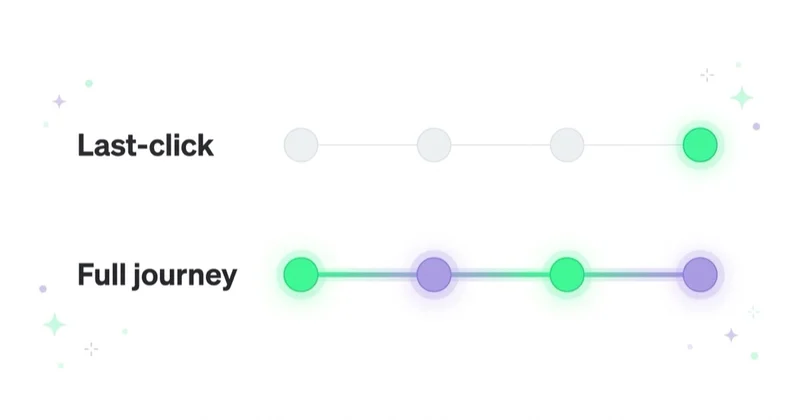
Last-click attribution is especially weak for luxury because the journey is long and non-linear. A user may see PR, social, creator content and product pages before converting on brand Search. If the brand cuts everything except the final click, future demand weakens. Use incrementality tests, geo experiments, marketing mix modeling and brand-lift studies where scale allows.
At smaller scale, start with practical discipline: split brand and non-brand, reconcile platform results with GA4 and ecommerce data, report returns-adjusted performance, monitor brand demand, and compare cohorts by customer quality.
How Space Ads approaches luxury fashion marketing
At Space Ads, premium and luxury fashion work starts with the question: can growth happen without weakening the brand's position? The review covers brand and non-brand demand, product feed quality, sale exposure, margins, returns, customer segments, creative tone, remarketing pressure, placement context, analytics and CRM.
The objective is to connect brand building with performance marketing rather than force one to replace the other. Google Ads, Meta Ads, TikTok Ads, PR, creators, CRM and ecommerce should have separate roles but one commercial truth: growth should improve valuable demand, not just platform-reported revenue.
For brands in premium fashion, accessories and footwear, the relevant paid-media service layer is fashion and footwear paid media. For brands at the high end of the market, the specialist layer is luxury marketing agency. If the current system is unclear, a marketing audit is the right starting point before scaling spend.
90-day action plan
- Define the brand level. Separate accessible premium, premium fashion, luxury and aspirational luxury because each has different rules for availability, price and media.
- Set discount rules. Decide what can be public, private, seasonal, archive-only or excluded from paid scaling.
- Audit the product feed. Check sale status, variants, materials, sizes, margin labels, availability and product imagery.
- Split channel roles. Separate brand-building, activation, CRM and clienteling metrics.
- Protect performance controls. Review brand/non-brand, remarketing frequency, PMax exclusions, product groups and customer-value signals.
- Improve product proof. Add material, craft, care, sizing, service and aftercare content where purchase anxiety is highest.
- Measure quality. Report full-price sell-through, margin, returns, new customers, high-value customers and brand demand.
Common mistakes
| Mistake | Why it hurts | Better approach |
|---|---|---|
| Discount as the growth engine | weakens full-price credibility | use discounts selectively and privately where possible |
| Performance-only budgeting | harvests demand without creating future demand | maintain brand investment and measure lift |
| Brand Search counted as acquisition | overstates efficiency | split brand and non-brand reporting |
| Sale SKUs dominate catalog ads | cheapens the brand image | segment products by role and margin |
| Aggressive remarketing | makes the brand feel mass-market | control frequency and tone |
| Last-click reporting | undervalues PR, social, creators and video | use incrementality, assisted signals and brand lift |
| Generic luxury copy | says nothing useful or memorable | publish specific product, craft, fit and service information |
FAQ
What is luxury fashion marketing?
Luxury fashion marketing is the practice of building and protecting demand for high-priced apparel, footwear and accessories through brand, product, PR, creative, retail, ecommerce, CRM and paid media. It differs from mass ecommerce because price integrity, context, desirability and customer quality matter as much as immediate conversion.
How do luxury brands market without discounts?
They build desire through product quality, craft, scarcity, storytelling, cultural relevance, PR, clienteling, service and controlled access. Discounts may still exist for stock management or private segments, but they should not become the public reason to buy. The goal is to make full price feel justified.
What is the right brand-to-performance split for luxury?
There is no universal ratio, but premium and luxury brands usually need a heavier brand-building share than mass ecommerce. The common 60/40 brand-to-activation heuristic is a starting point; true premium or luxury brands may need more brand investment because pricing power depends on desirability and reduced price sensitivity.
Which channels work best for luxury fashion?
Use channels by role. PR, editorial, YouTube, TikTok, creators, events and organic social build desire. Search, Shopping, Performance Max, Meta catalog ads, Customer Match, email and SMS capture demand and support retention. The best mix depends on brand maturity, product category, distribution and customer base.
Does Performance Max work for luxury brands?
It can work when configured carefully. The product feed must be accurate, sale exposure should be controlled, customer-value signals should be clean, and placement or brand-safety controls should be reviewed where available. On defaults, automated campaigns can create context and product-selection risks for luxury brands.
How should luxury fashion brands measure marketing?
They should measure both demand creation and demand capture. Useful metrics include branded search, direct traffic, brand lift, full-price sell-through, margin, return rate, new-customer quality, LTV, high-value customer share and incremental conversions. Last-click attribution alone is not reliable for long, considered purchases.
How does AEO or LLM SEO help a luxury brand?
AEO and LLM SEO help when the brand has clear, credible public information about its history, products, materials, collections, sizing, care, service and expertise. This makes the brand easier for answer engines, search systems and customers to understand. Specificity helps more than generic luxury language.
Key takeaways
- Luxury fashion marketing should build desire and protect price integrity before scaling conversion.
- Discounts can solve short-term stock pressure but create long-term price credibility risk.
- Premium brands need brand investment, not only lower-funnel activation.
- Performance marketing works best with feed control, context control, customer-value signals and returns-aware measurement.
- CRM, clienteling, product proof and AEO are now part of the same growth system.
Sources and further reading
- Vogue Business - Luxury will make a slow recovery in 2026, Bain forecasts
- AP News - Global luxury shoppers spurn high-end brands over steep price hikes
- Google - Decoding Decisions: the messy middle of purchase behaviour
- Google Merchant Center Help - Product data specification
- Google Ads Help - About conversion adjustments
Continue learning
- Fashion Marketing in 2026: The Complete Guide
- Fashion PR in 2026
- How to Market a Footwear Brand
- How to Market an Activewear or Athleisure Brand
- Performance Max campaigns: what to know and how to create them
- What is a Demand Gen campaign in Google Ads and how to launch one
- Fashion and footwear paid media - Luxury marketing agency
Continue reading
Google Ads for Fashion E-commerce: Capturing and Creating Demand with Search, Shopping, Performance Max & Demand Gen
This guide treats Google Ads for fashion as a merchandising and economics problem first. It covers the feed rules, Performance Max controls, Demand Gen use cases and return-adjusted conversion values that decide whether Search and Shopping scale profitably.
How to Market a Fashion Brand in 2026: A Complete Strategy for Premium Labels
This article turns broad fashion marketing advice into board-level choices: which growth you refuse to buy with markdowns, how to avoid harvesting-only media plans, what product data must be trusted, and how to separate real demand from platform attribution.
How to Market a Footwear Brand: Sizing, Drops, Returns and Paid Media
Footwear marketing needs more than generic fashion advice. This guide explains how to use sizing data, product feeds, fit content, returns-aware measurement, drops, paid media and retention to sell shoes profitably.