Social media marketing for fashion brands is not the same as posting outfits or running paid social ads. It is the operating system that connects organic content, creators, UGC, social commerce and paid amplification so a brand can create desire, prove product value and turn attention into profitable demand.

Fashion is visual, social and identity-led. A shopper may discover a jacket on TikTok, save a styling idea on Instagram, search the brand later, compare sizing, click a creator's try-on, wait for payday, buy from a retargeting ad and return one size before keeping another. If organic, creators, paid media and ecommerce are managed as separate projects, that journey becomes impossible to understand and hard to improve.
The strongest fashion brands treat social as one connected system: organic content shows the world of the brand, creators add trust and cultural proof, social commerce shortens the path to product, and paid media scales the posts that already proved they can hold attention.
TL;DR
- Social is a system, not a posting calendar. Organic, creators, UGC, paid social, product catalogue and ecommerce need one shared plan.
- Platform roles matter. Instagram is usually the shopfront and aspiration layer; TikTok creates discovery; Pinterest captures visual planning intent; YouTube adds depth and longer storytelling.
- Organic content is a creative lab. The best posts reveal hooks, styling contexts, objections and products worth scaling with paid media.
- Creators are not only reach. They provide trust, fit proof, styling language and ad assets, but rights and disclosure must be handled before amplification.
- Social commerce depends on product data. Sizes, variants, availability, images, product names and feed structure can limit sales before creative does.
- Paid social should scale proven signals. Spark Ads, Partnership Ads and whitelisted creator content work best when they amplify content that already showed pull.
- Measurement must respect the role of each surface. Discovery channels create demand that may convert later through search, direct, email or retargeting.
- Returns and margin change the story. Gross platform ROAS is not enough for fashion; net revenue, return rate, product margin and new customer quality matter.
Why fashion needs a different social playbook
Fashion is not marketed like a utility product. A garment or shoe is evaluated through taste, identity, fit, body confidence, occasion, price, status, community and timing. That changes the role of social media.
Three traits matter most.
Fashion is discovered before it is searched. Many buyers do not start by searching for a brand they have never heard of. They see the product worn by someone, in a feed, in a styling context, and intent forms later. Social media creates that first moment of desire.
Fashion needs proof in motion. Product pages and studio images are not enough. Shoppers want to see fabric movement, scale, fit, styling, body types, shoes with outfits and how an item behaves outside a packshot.
Fashion has commercial complexity. Social commerce and paid catalog ads depend on variant-level data: color, size, availability, price, sale status, product images, stock, margin and returns. A weak feed can make strong creative underperform.
This is why the social plan cannot live only with the content team. It touches creative, paid media, ecommerce, product data, customer service, merchandising and analytics.

The four-part system
Social media marketing for fashion brands has four connected parts.
| Part | Primary job | What it needs |
|---|---|---|
| Organic content | Build relevance, identity and daily visibility | Clear content pillars, native formats, product access and calendar discipline |
| Creators and UGC | Add trust, style proof and community reach | Good briefs, fit with the brand, disclosure, usage rights and feedback loops |
| Social commerce | Make products discoverable and shoppable | Clean product feeds, tagging, availability, product pages and event signals |
| Paid amplification | Scale the best signals and capture demand | Creative testing, conversion tracking, audiences, catalogue quality and budget discipline |
The value is in the handoff. Organic and creator posts reveal what people save, share, comment on and ask about. Paid media scales the content that already showed signal. Ecommerce data then shows whether the attention became profitable orders, qualified leads, new customers or returning buyers.
Platform roles for fashion brands
Do not start by asking which platform is "best." Start by assigning a job to each platform.
| Platform | Best role | Strong content | Main signals |
|---|---|---|---|
| Shopfront, aspiration, social proof and retention | Reels, carousels, Stories, creator posts, product tags, drop announcements | Saves, shares, product taps, profile quality, assisted revenue | |
| TikTok | Discovery, demand creation and cultural participation | Native video, creator try-ons, hooks, styling, problem-solution, behind the scenes | Watch quality, comments, shares, branded search, assisted sales |
| Visual planning and high-intent inspiration | Product Pins, seasonal boards, outfit ideas, occasion pages, shoppable content | Saves, outbound clicks, product engagement, assisted conversions | |
| YouTube | Depth, trust and longer product storytelling | Shorts, collection films, founder stories, fit guides, behind-the-brand content | View quality, search lift, subscribers, assisted demand |
Instagram is often the central shopfront. It shows the brand world, product styling, social proof and purchase paths through product tags and profile behavior.
TikTok is a discovery engine. It can create demand among people who were not actively searching, so judging it only by last-click ROAS will usually undervalue it.
Pinterest behaves closer to visual search and planning than a classic social feed. It is useful for occasion-led, seasonal, interior-adjacent, bridal, travel, capsule wardrobe and styling intent.
YouTube is useful when the brand needs more depth: fit education, craftsmanship, founder point of view, collection concepts, long-form proof and Shorts-based discovery.
A focused brand does not need to do everything everywhere. It is better to resource two or three platforms properly than to repost the same asset thinly across six surfaces.
Build the organic content engine
Organic social should not depend on inspiration each week. It needs repeatable content pillars that keep the feed useful between drops and launches.
A strong fashion content system usually includes:
- Product in context. Garments and shoes worn, styled, layered, moved in and shown on different bodies.
- Styling education. How to wear, how to combine, how to choose size, how to adapt a piece for occasions or weather.
- Brand point of view. Taste, culture, materials, craft, design decisions, values and the reason the brand exists.
- Community and UGC. Customers, creators, stylists, store teams and real-life outfits.
- Behind the brand. Sampling, production, packaging, sourcing, quality checks and team moments.
- Commercial moments. Drops, restocks, edits, bundles, sale periods and seasonal pushes.
- Trust content. Fit notes, reviews, care guidance, returns guidance, shipping clarity and customer questions.
The best organic content does two things at once: it gives existing followers a reason to stay close and creates raw learning for paid media. If a Reel drives saves, comments about sizing and direct product questions, it is not just engagement. It is market research.
Make content native, not merely resized
Fashion brands often waste strong assets by repurposing them badly. A campaign film, ecommerce packshot and TikTok video are not the same creative object.
Native social content usually has:
- an immediate visual or verbal hook;
- product context in the first seconds;
- motion, texture, fit or styling proof;
- a human point of view;
- captions or on-screen text when useful;
- a clear next step without sounding like a catalogue listing;
- format-specific editing rather than the same crop everywhere.
Polish is not the enemy. Over-polish is. Premium and luxury brands can preserve taste while still making content that feels alive on social. The question is whether the content belongs on the platform or looks like an ad forced into a feed.
Creators and UGC: the trust layer
Creators help fashion brands because style is socially verified. People want to see how an item looks on a real person, in real light, with a real body and a real styling point of view.
A useful creator programme has tiers:
| Tier | Role | Best use |
|---|---|---|
| Customers and organic UGC | Proof from people who already bought | Reposts, testimonials, styling examples, community trust |
| Micro-creators | Authentic niche reach and content volume | Product seeding, try-ons, styling, early product feedback |
| Mid-tier creators | Repeatable collaborations and clearer brief control | Launches, capsule edits, paid amplification assets |
| Larger creators or tastemakers | Cultural signal and reach moments | Drops, collaborations, major campaigns, category repositioning |
The operational details matter:
- match creators to audience, fit, price point and brand world;
- brief the product truth, not a script;
- require clear disclosure where there is payment, product gifting or another material relationship;
- secure usage rights before the content is needed in paid ads;
- define whether the brand can edit, crop, run, translate, subtitle or reuse the asset;
- agree duration, territories, platforms and paid usage;
- track creator content by product, hook, format and audience quality.
The FTC guidance for influencers is clear that material relationships, including free or discounted products, should be disclosed in a way people can see and understand. For international brands, local advertising rules may also apply, so disclosure should be treated as part of the workflow rather than an afterthought.
For the deeper creator strategy, see fashion influencer marketing.
Turn organic winners into paid assets
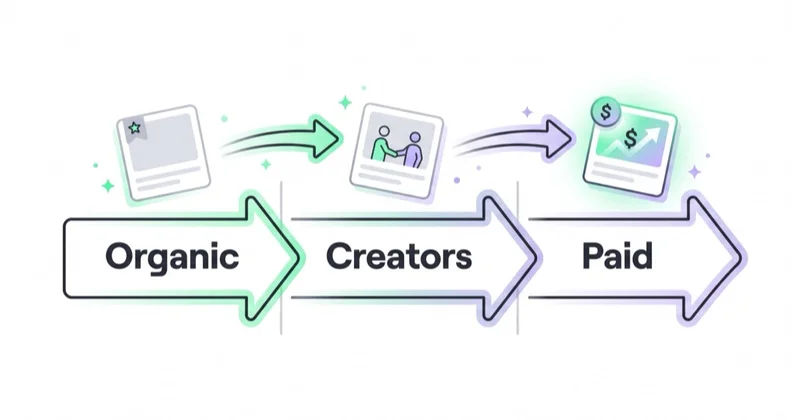
The practical pipeline is:
- Publish content organically. Use brand posts, creator posts, UGC and product education to test angles.
- Identify signal. Look for saves, shares, watch-through, comments, product questions, profile visits and branded search movement.
- Request or activate rights. Make sure the brand can legally promote, edit and reuse the content.
- Amplify the winners. Use Spark Ads on TikTok, Partnership Ads or whitelisted creator ads on Meta, and paid promotion where the content fits the objective.
- Feed results back. Track which product, hook, creator type, format and landing page produced business outcomes.
TikTok describes Spark Ads as a native ad format that uses organic TikTok posts, including creator posts with authorization, while preserving engagement on the original post. That makes Spark useful when a creator or brand post has already proven attention.
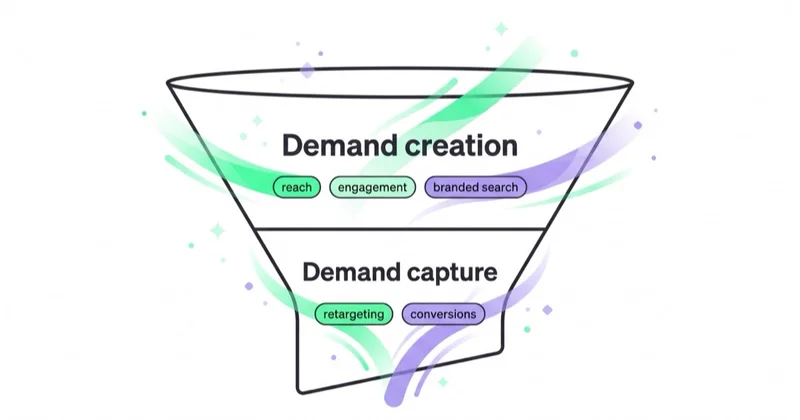
The point is not to boost every post. The point is to stop guessing inside the ad account. Paid media should scale the best creative evidence from organic and creator work.
For channel execution, see Facebook, Instagram and TikTok ads for fashion brands and Google Ads vs Facebook Ads.
Social commerce and the product catalogue
Social commerce only works when the product layer is clean. A strong video can create demand, but the purchase path still depends on product data and website experience.
Check:
- product titles that users and platforms can understand;
- correct product categories;
- variant-level size, color, material and availability;
- product images that match the content users saw;
- price, sale price and currency accuracy;
- stock status and back-in-stock logic;
- product tags connected to the right variants;
- landing pages that explain fit, care, delivery and returns;
- event tracking and catalogue signals;
- exclusions for products with poor margin, weak stock or high return risk.
Pinterest advises brands to upload their full product catalogue to get discovered in shopping surfaces, and its shopping features send people to the advertiser's own site or app rather than using Pinterest native checkout. That distinction matters: Pinterest can be a strong visual planning surface, but the ecommerce experience still has to convert.
For feed fundamentals, read what is a product feed and how to use it and Google Ads for fashion ecommerce.
Measurement: judge each surface by its job
Social media is often underfunded or overfunded for the same reason: bad measurement.
Discovery content is expected to close sales like retargeting. Retargeting is credited for demand that organic, creators or PR created earlier. Platform ROAS is taken as business truth. Gross revenue is scaled even when returns or discounts weaken contribution.
A better model separates roles:
| Role | Examples | Primary signals |
|---|---|---|
| Discovery | TikTok organic, Reels, Shorts, creator content | Reach quality, watch time, shares, comments, saves, branded search |
| Consideration | Styling guides, fit content, creator try-ons, carousels | Saves, product taps, profile visits, assisted sessions, email signups |
| Capture | Retargeting, product tags, catalogue ads, drop reminders | Conversion rate, CPA, revenue, net revenue, product-level performance |
| Retention | Stories, email/SMS integrations, community, VIP previews | Repeat purchase, revenue per customer, collection participation |
Then reconcile:
- platform data with GA4 and ecommerce data;
- gross revenue with net revenue;
- orders with returns and exchanges;
- ROAS with margin and contribution;
- creator cost with paid media and production cost;
- last click with assisted conversion and incrementality tests where scale allows.
Fashion reporting should answer: which content created demand, which products converted, which customers were worth acquiring, which items came back, and which signals deserve more budget.
A practical 90-day social media plan
| Period | Focus | Output |
|---|---|---|
| Days 1-15 | Audit platform roles, content, creator rights, catalogue, tracking and product pages | Priority list, missing rights, feed issues, measurement gaps |
| Days 16-30 | Define content pillars, creator briefs, tagging rules, reporting and paid amplification criteria | Social operating plan and first content sprint |
| Days 31-60 | Publish content, seed creators, test organic hooks, clean catalogue and promote early winners | First creative signal map by platform and product |
| Days 61-90 | Scale winning posts, refine creator tiers, improve product pages, reconcile sales and returns | Next-quarter plan by platform, product and creative angle |
This plan works because it does not separate brand and performance too early. It lets attention, product data and conversion quality inform each other.
How Space Ads approaches social media for fashion
At Space Ads, social media for fashion is treated as part of the wider growth system: paid media, organic content, creators, product feed, ecommerce UX and measurement should all support the same commercial goal. When that system is disconnected, teams often optimize the wrong thing: content chases likes, paid media chases platform ROAS, ecommerce chases conversion rate and no one checks whether the brand is acquiring profitable customers.
Our approach starts with the constraint. Sometimes the issue is not media buying but weak product data, unclear creative angles, missing usage rights, poor landing pages, stock problems, sizing anxiety or reporting that ignores returns. Once those constraints are visible, social work becomes more focused:
- define platform roles instead of copying one post everywhere;
- build content around product truth, styling and objections;
- use creators for fit proof and trust, not only reach;
- secure rights so the best posts can become ads;
- connect catalogue quality with social commerce and paid campaigns;
- reconcile social performance with ecommerce, GA4 and business outcomes.
For fashion and footwear specifically, this connects with fashion and footwear paid media, Meta Ads, TikTok Ads, performance marketing and public success stories such as Philipp Plein, Plein Sport and ZAXY.
Common mistakes
| Mistake | Why it hurts | Better approach |
|---|---|---|
| Treating social as a calendar | Posting becomes activity without a growth system | Connect organic, creators, commerce and paid |
| Reposting the same asset everywhere | Platforms reward different formats and behaviors | Define a role and format for each platform |
| Over-scripting creators | The content loses the native trust that made the creator useful | Brief product truth and boundaries, not every sentence |
| Forgetting usage rights | Winning creator content cannot be scaled as ads | Include paid usage, territory, duration and edits in agreements |
| Measuring TikTok like retargeting | Discovery gets cut because it did not close the sale directly | Measure reach quality, branded search, assisted demand and incrementality |
| Ignoring product feed quality | Tags, catalog ads and shopping surfaces break or underperform | Treat product data as marketing infrastructure |
| Scaling gross ROAS | Returns and discounts hide weak contribution | Use net revenue, margin and product-level return data |
| Letting paid work separately | The ad account guesses creative instead of scaling proven content | Use organic and creators as the creative signal engine |
FAQ
What is social media marketing for fashion brands?
Social media marketing for fashion brands is the practice of using organic content, creators, UGC, social commerce and paid amplification as one connected system. It builds desire and trust at the top of the funnel, helps shoppers understand product fit and styling, and turns the best creative signals into paid reach and revenue.
Which social media platform is best for fashion brands?
There is no single best platform. Instagram is usually strongest as a visual shopfront and aspiration layer. TikTok is strong for discovery and demand creation. Pinterest works well for visual planning and shopping intent. YouTube supports deeper storytelling, Shorts and product education. The best mix depends on audience, price point, content strengths and ecommerce readiness.
How often should a fashion brand post on social media?
The better question is whether the brand has a sustainable content system. A smaller brand may do well with fewer high-quality native posts per week if they cover product context, styling, community and commercial moments. A larger brand or fast-moving ecommerce operation usually needs higher volume because organic and paid both need fresh creative signals.
How are creators different from influencers for fashion brands?
Influencers are often evaluated by reach and audience. Creators should also be evaluated by content quality, fit proof, styling perspective, trust and whether their assets can be reused in paid media. For fashion brands, a smaller creator who produces convincing try-ons and product education may be more useful than a larger profile with weak brand fit.
Should fashion brands use UGC in ads?
Yes, when it fits the brand and usage rights are clear. UGC can show fit, movement, scale, styling and social proof in a way studio assets often cannot. The brand should still protect positioning: premium and luxury brands may need more selective UGC, tighter curation and higher production standards than mass apparel.
How should social media marketing for fashion brands be measured?
Measure each surface by its role. Discovery content should be judged on reach quality, watch time, shares, saves, comments, branded search and assisted demand. Capture activity can be judged closer to conversion. Final budget decisions should reconcile platform data with GA4, ecommerce data, net revenue, returns, margin and customer quality.
Does organic social still matter for fashion brands?
Yes. Organic social is no longer just a free-reach channel. It is the brand's daily shopfront, community layer and creative testing environment. The strongest organic and creator posts become the raw material for paid amplification, so organic and paid should compound rather than compete.
What is the biggest social media mistake fashion brands make?
The biggest mistake is running organic, creators, paid media and ecommerce separately. Social works when these parts feed each other: content creates signal, creators add trust, paid scales winners and ecommerce data shows which attention produced profitable customers.
Key takeaways
- Social media marketing for fashion brands should connect organic, creators, commerce and paid into one system.
- Each platform needs a role: Instagram for shopfront and aspiration, TikTok for discovery, Pinterest for planning intent and YouTube for depth.
- Organic content and creators are not only awareness tools; they are the creative signal engine for paid media.
- Usage rights, disclosure, catalogue hygiene and event tracking are operational requirements, not minor details.
- Fashion measurement needs net revenue, margin, returns, product-level performance and assisted demand, not only platform ROAS.
Sources and further reading
- TikTok for Business - About Spark Ads
- Pinterest Business - Shopping on Pinterest
- U.S. Federal Trade Commission - Disclosures 101 for Social Media Influencers
- Google Search Central - Creating helpful, reliable, people-first content
Continue learning
Continue reading
Fashion Influencer Marketing: Building a Creator Programme That Feeds Paid
Fashion influencer marketing works best when it is run as a creator system: audience fit, clear briefs, usage rights, disclosure, affiliate logic and paid amplification of the posts that prove they can create demand.
Fashion Marketing in 2026: The Complete Guide to Channels, Strategy and Measurement
Fashion marketing connects brand-building, social, creators, paid media, ecommerce, retail and retention into one growth system. This guide explains the discipline, the channel roles, the 2026 market context and how to measure fashion growth without being misled by platform ROAS.
Fashion PR in 2026: What It Is and How It Works With Performance Marketing
Fashion PR builds credibility, desire and cultural relevance through earned attention: editorial coverage, events, gifting, stylists, creators and digital PR. This guide explains how PR should connect with performance marketing so demand is captured, not wasted.