
Instagram Reels are short vertical videos designed for discovery, entertainment, education and brand storytelling on Instagram. They can reach followers and non-followers, which makes them one of the most important organic formats for creators, ecommerce brands, service businesses and B2B experts.
Reels do not work because they are videos. They work when the topic, opening seconds, pacing, retention, originality, usefulness and next step are strong. A weak Reel with a trend sound and random hashtags is still a weak piece of content. A strong Reel usually has one clear idea, a fast hook, visible context, captions and a reason to watch until the end.
TL;DR
- Instagram Reels are short vertical videos used for discovery, reach, education, entertainment and product storytelling.
- The first seconds matter because people decide quickly whether to keep watching.
- Retention, shares, saves, comments, profile visits and follows are more useful signals than likes alone.
- Reels should usually focus on one idea, one problem, one product use case or one clear transformation.
- Captions, on-screen text and keyword-rich descriptions help comprehension and social search.
- Original content matters. Reposting unedited content from other platforms is weaker for brand building and may reduce recommendation potential.
- Ecommerce brands can use Reels for product demos, styling, comparisons, UGC, unboxing and objections.
- B2B and service brands can use Reels for education, expert positioning, FAQs, behind-the-scenes proof and trust.
What are Instagram Reels?
Instagram Reels are vertical short-form videos published on Instagram. They can appear in the Reels tab, Feed, profile grids, Explore and recommendation surfaces depending on account settings, eligibility and user behavior.
Reels are useful because they can:
- introduce a brand to non-followers;
- show a product in use;
- answer a question quickly;
- explain a service;
- turn expertise into simple lessons;
- support creator partnerships;
- create remarketing audiences;
- send people to a profile or link path;
- build familiarity through repeated formats.
The format is flexible. It can be educational, entertaining, inspirational, product-led, founder-led, customer-led or creator-led.
Build Reels from a content brief
Reels should not start from "we need a video today." They should start from a short brief that defines the job of the video.
A practical Reels brief includes:
- target audience;
- single idea;
- user problem or motivation;
- funnel stage;
- hook;
- proof element;
- visual concept;
- spoken or on-screen keywords;
- CTA;
- destination after interest;
- metric that defines success.
This brief keeps the Reel focused. Without it, brands often create videos that are visually active but strategically empty. A Reel may get views because the edit is fast, but it may not create profile visits, saves, enquiries or sales if the idea is unclear.
The brief should also decide whether the Reel is meant to build reach, explain expertise, answer a sales objection, support a product decision, create remarketing audiences or drive a direct response. A single Reel can support more than one goal, but it should have one primary job.
Reels are not just "video posts"
A static post can be understood at the user's pace. A Reel unfolds over time. That changes the creative task.
The viewer needs to understand:
- what the video is about;
- why it is relevant;
- what to look at;
- why it is worth continuing;
- what the next step is.
This is why Reels strategy is closer to micro-storytelling than ordinary posting. The first frame, first line, pacing, subtitles, cuts and ending all matter.
How Instagram Reels reach people
Instagram uses ranking and recommendation systems to decide what content people see across different surfaces. Reels are strongly discovery-oriented, so they can be shown to people who do not follow the account.
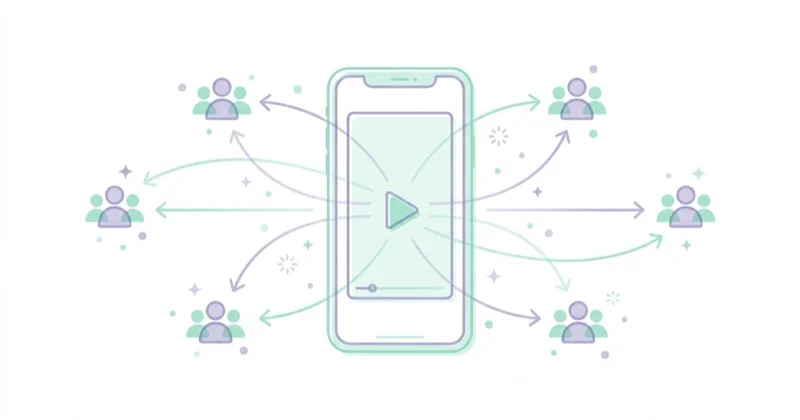
The platform may consider many signals, including:
- how people interact with similar content;
- whether they watch, skip, replay, share or save;
- information about the Reel;
- information about the creator;
- originality and recommendation eligibility;
- whether the content follows platform guidelines.
This does not mean there is a simple hack. The practical takeaway is that Reels should be made for watchability, usefulness and shareability, not only for posting frequency.
Reels strategy by business goal
| Goal | Best Reel type | Primary signal | Next step |
|---|---|---|---|
| Reach | relatable problem, trend with brand angle, visual demonstration | non-follower reach, shares, watch time | profile visit or follow |
| Education | tutorial, myth, checklist, answer to question | saves, completion, comments | guide, newsletter or consultation |
| Trust | founder, team, process, behind the scenes | profile visits, comments, returning viewers | about page, case study or DM |
| Product consideration | demo, comparison, objection handling | saves, product clicks, DMs | product page or shop path |
| Lead generation | diagnostic, audit snippet, FAQ, case insight | qualified DMs, form starts, booked calls | landing page or lead form |
| Remarketing | proof, review, offer, next objection | clicks, conversions, assisted impact | purchase, booking or quote |
This table prevents overvaluing views. A high-reach Reel can be valuable at the top of the funnel, but a lower-reach Reel that answers a buying objection may create better commercial impact.
The most important creative principles
1. One Reel, one idea
A Reel should usually answer one question, show one product benefit, explain one mistake, tell one short story or demonstrate one transformation.
Too many ideas create confusion. Confusion lowers retention.
2. Strong opening
The first seconds should make the topic clear. Useful hooks include:
- a direct problem;
- a result;
- a surprising contrast;
- a common mistake;
- a question;
- a visual demonstration;
- a before-and-after moment;
- a clear promise.
Examples:
- "Three reasons this checkout loses mobile buyers."
- "The Google Ads report that usually exposes wasted spend."
- "This is why the product looks different in real use."
- "Stop using this Reel format if the goal is leads."
The hook should be honest. If the rest of the video does not deliver, attention becomes disappointment.
3. Fast context
People need context before details.
Bad opening:
"Today we wanted to talk about something important..."
Better opening:
"If Reels get views but no profile visits, the problem is usually the next step."
The second version tells the viewer who the video is for and why it matters.
4. Retention-focused structure
Retention means people keep watching. Good Reels reduce the reasons to leave.
Helpful patterns:
- remove long intros;
- show the outcome early;
- use cuts only when they support clarity;
- keep text readable;
- match pacing to the topic;
- avoid empty filler;
- give a reason to watch the end;
- end with a useful takeaway, not only a generic CTA.
The goal is not to make every Reel artificially short. The goal is to make every second useful.
5. Captions and on-screen text
Many people watch video without sound, in public places or while multitasking. Captions improve accessibility and comprehension.
Use:
- captions for spoken content;
- short on-screen labels;
- clear section markers;
- product names;
- key terms;
- steps;
- before/after labels;
- simple CTA text.
Avoid covering important visual details with large text blocks.
6. Safe-zone and mobile readability
Reels are consumed on small screens with interface elements around the video. Important text, faces, product details and CTAs should not sit too close to the edges or under platform controls.
Before publishing, review:
- whether captions cover the product or face;
- whether text is readable without pausing;
- whether the first frame explains the topic;
- whether the CTA is visible long enough;
- whether the video still works without sound;
- whether the final frame gives enough time to act;
- whether the cover image makes sense on the profile grid.
Small readability issues can reduce performance even when the idea is strong.
7. Originality and native format
Instagram has repeatedly emphasized original content and recommendation quality. For brands, originality is also a trust issue.
Avoid:
- obvious reposts from other platforms;
- watermarked videos;
- recycled trend clips with no brand perspective;
- low-effort compilations;
- generic stock video with copied captions.
Reels can use trends, remixes or formats, but the brand should add its own idea, voice, product demonstration, customer insight or educational value.
Social SEO for Reels
Social SEO means making content easier to understand and discover inside social platforms.
For Reels, use keywords in:
- spoken words;
- captions;
- on-screen text;
- description;
- profile bio;
- alt text where available;
- series names;
- pinned comments when useful.
Hashtags can still help classify a topic, but they should not be treated as the main growth lever. A clear topic, good retention and relevant language usually matter more than a long hashtag list.
What to post as Reels
Educational Reels
Use these for expertise and search-led discovery.

Examples:
- "What is Quality Score in Google Ads?"
- "Three signs a landing page is hurting conversions."
- "How to read a search terms report."
- "Why mobile checkout fails."
Product demonstration Reels
Show the product in real use. This is stronger than describing features.
Examples:
- setup process;
- styling ideas;
- comparison;
- size guide;
- unboxing;
- durability test;
- before and after;
- common questions.
Behind-the-scenes Reels
Use these to build trust.
Examples:
- campaign planning process;
- production workflow;
- warehouse packing;
- quality control;
- founder explanation;
- team expertise;
- client onboarding;
- event moments.
Founder or expert Reels
Use these when trust depends on expertise, personality or point of view.
Examples:
- opinion on a market change;
- explanation of a repeated client problem;
- quick audit of a common mistake;
- reaction to a myth in the industry;
- "what we would do first" scenario;
- lesson from a campaign, launch or project.
Founder and expert formats work best when they are specific. "Marketing tips" is too broad. "Why this lead form creates weak Meta Ads signals" is more useful.
Social proof Reels
Show evidence:
- customer review;
- case study summary;
- creator testimonial;
- UGC;
- before/after;
- measurable result where it can be stated responsibly.
Myth and mistake Reels
These often perform well because they create immediate relevance.
Examples:
- "Likes are not the main Reel KPI."
- "More hashtags will not fix weak retention."
- "This ad creative mistake makes Meta learning harder."
- "Broad match is not the problem if tracking is wrong."
Reels for ecommerce
Ecommerce brands can use Reels to make products easier to understand.
Strong ecommerce uses:
- product in use;
- try-on or styling;
- how to choose size;
- comparison between variants;
- answers to objections;
- unboxing;
- customer-generated content;
- seasonal bundles;
- care instructions;
- delivery and return reassurance;
- product detail close-ups.
The Reel should guide viewers to a next step: profile, shop, product page, link in bio, saved highlight, comment keyword, direct message or remarketing audience.
For paid amplification, ecommerce Reels can also become source material for Meta Ads or creator-led campaigns. Connect this with Meta Ads audiences and Facebook remarketing.
Ecommerce Reels should not only show products
Product visibility matters, but ecommerce Reels can also reduce buying friction.
Useful friction-removal topics include:
- "which size should be chosen?";
- "what is included in the box?";
- "how does it look in normal light?";
- "how does this compare with the cheaper version?";
- "how should it be cleaned or maintained?";
- "what happens if it does not fit?";
- "how fast can it arrive?";
- "who is this product not for?";
- "what does a real customer say after using it?";
This is where Reels can support conversion without becoming a hard sales pitch. The video answers the question that would otherwise stop the purchase.
Reels for B2B and services
B2B Reels should usually be educational, diagnostic or trust-building rather than trend-chasing.
Useful formats:
- "3 mistakes" explainers;
- short audits;
- myth vs reality;
- process walkthroughs;
- expert commentary;
- event clips;
- case study summaries;
- answer to a sales objection;
- founder or specialist viewpoint;
- tool walkthrough.
The CTA may be softer than in ecommerce:
- read the full guide;
- save this checklist;
- send a DM;
- book an audit;
- follow for more examples;
- download a playbook;
- compare approaches.
For message structure, the AIDA model is a useful framework for short-form scripts.
B2B Reels script examples
| Format | Simple structure | Example |
|---|---|---|
| Mistake | mistake -> consequence -> better approach | "This GA4 setup mistake makes lead reports unreliable" |
| Audit | screen or example -> issue -> fix direction | "The report shows traffic, but the key event is too soft" |
| Objection | common objection -> context -> answer | "No, more budget will not fix poor conversion tracking" |
| Process | step 1 -> step 2 -> result | "How a PPC audit moves from search terms to CRM quality" |
| Point of view | belief -> reason -> implication | "Why lead quality should be measured before scaling ads" |
These formats are stronger than generic thought leadership because they make expertise visible. The viewer can see how the brand thinks, not only that the brand exists.
Organic Reels and paid media
Strong organic Reels can inform paid campaigns, but the best organic post should not be boosted automatically without review.
Before turning a Reel into paid media, check:
- whether the hook is clear without organic context;
- whether the claim is compliant and supportable;
- whether the CTA is specific enough for cold traffic;
- whether the video has a landing page or product destination;
- whether comments reveal objections that should be answered;
- whether the format fits paid placements;
- whether the first seconds work for people who do not know the brand.
Organic performance can reveal topics, hooks and objections. Paid media then needs a clearer conversion path. For paid creative testing, connect Reels learning with Meta Advantage+ and dynamic creative.
How to measure Instagram Reels
Likes are not enough. Different goals need different metrics.
| Goal | Useful metrics |
|---|---|
| Reach | plays, reach, non-follower reach, impressions |
| Attention | average watch time, retention, completion, replays |
| Value | saves, shares, quality comments |
| Community | follows, profile visits, returning viewers |
| Traffic | link clicks, DM starts, sticker taps |
| Sales or leads | attributed conversions, assisted conversions, remarketing impact |
For organic Reels, the best measurement often combines Instagram Insights with GA4, CRM, ecommerce analytics and campaign data.
Do not confuse reach with progress
Reach is useful, but it should be interpreted with the goal. A Reel that reaches many non-followers but produces no profile activity may still be useful for awareness, but it should not be presented as proof of sales impact. A Reel with modest reach but many saves, DMs or qualified profile visits may be more valuable for a service business.
A practical review should ask:
- Did the Reel reach the intended audience?
- Did viewers watch long enough to understand the message?
- Did the video create a useful action?
- Did comments reveal demand or confusion?
- Did the next step match the content?
- Can the format be repeated?
- Is the topic worth turning into an article, email, ad or landing page section?
This is where Reels can support SEO and content strategy. Repeated questions from comments and DMs can become FAQ sections, blog posts, ad angles or sales enablement material.
30-day Reels testing plan
Week 1: Build the content map
Choose 3-5 content pillars:
- education;
- product use;
- objections;
- behind the scenes;
- customer proof;
- trend adaptation;
- founder or expert commentary.
Define the audience and the desired next step.
Week 2: Test hooks
Publish several Reels with different hook types:
- problem hook;
- result hook;
- mistake hook;
- question hook;
- visual demonstration hook.
Review retention, saves, shares and profile visits.
Week 3: Improve structure
Keep the topics that perform. Improve pacing, captions, first frame, CTA and ending.
Week 4: Build repeatable formats
Turn winners into series:
- weekly audit;
- product comparison;
- question answered;
- myth busted;
- customer story;
- 30-second tutorial.
Consistency should come from repeatable formats, not random posting.
How we approach this at Space Ads
A vertical short is one asset for many jobs, not a separate "for social" chore. The same Reel runs organically, becomes an ad once authorised (like Spark), and moves to TikTok with a light re-edit. We shoot it once but build it from the start for the conditions that count: full screen, sound-off, a hook in the first second. The Reels that perform organically are our first picks for paid budget, since they've already shown they hold attention. The economics are simply better this way — one session feeds the profile and the campaigns at once, rather than commissioning separate assets per channel. So Reels aren't a bolt-on to a social strategy; they're ad-ready creative, made for several platforms in one go.
Common Instagram Reels mistakes
| Mistake | Impact | Better approach |
|---|---|---|
| Long intro | Viewers leave early | Start with the problem or result |
| Too many ideas | Message becomes confusing | One Reel, one idea |
| No captions | Silent viewers miss the message | Add captions and on-screen context |
| Hashtag dependence | Weak creative stays weak | Improve retention and topic clarity |
| Reposting watermarked content | Lower brand quality | Create native, original versions |
| Measuring only likes | Wrong optimization | Track retention, saves, shares and next steps |
| No CTA | Interest does not continue | Tell viewers what to do next |
| Trend copying without fit | Brand feels inconsistent | Use trends only when relevant |
FAQ
What are Instagram Reels?
Instagram Reels are short vertical videos on Instagram used for entertainment, education, discovery, product storytelling and brand communication.
Do Reels help reach non-followers?
Yes, Reels can appear in recommendation surfaces and reach people who do not follow the account, provided the content is eligible and performs well for relevant audiences.
How long should Instagram Reels be?
There is no universal best length. The right length is the shortest version that delivers the idea clearly. A tutorial may need more time than a visual product demonstration.
Are hashtags important for Reels?
Hashtags can help classify content, but they are not a substitute for a clear topic, strong hook, retention, original content and relevant descriptions.
Should businesses use trending audio?
Only when it fits the brand, message and audience. A trend can help format an idea, but it will not fix a weak concept.
What should be measured in Reels?
Measure retention, average watch time, shares, saves, comments, profile visits, follows, link clicks, DM starts and conversions where tracking allows it.
Should the same Reel be used as an ad?
Only after checking the hook, claim, CTA, landing page fit and paid-placement preview. Organic performance is useful input, but paid media needs a clear conversion path.
Can B2B brands use Reels?
Yes. B2B brands can use Reels for education, expert commentary, case summaries, process explanations, event clips and trust-building.
Conclusion
Instagram Reels are a discovery format, but reach is the result of useful creative, not just posting video. The strongest Reels make one idea clear quickly, keep people watching, add original value and guide the viewer to a logical next step.
For brands, the practical approach is to treat Reels as a repeatable testing system: topics, hooks, retention, saves, shares, profile visits and downstream actions. Trend awareness helps, but clarity and usefulness do more durable work.
Sources and further reading
- Meta: Introducing Instagram Reels
- Meta: Best Practices education hub for creators on Instagram
- Meta Transparency Center: Our approach to explaining ranking
- Meta Transparency Center: Recommendation guidelines
- Instagram Help Center
Continue learning
Continue reading
How to Use Instagram Stories for Effective Communication
Instagram Stories are a relationship and activation channel. Use sequences, stickers, link stickers, Highlights, DMs and measurement to turn warm attention into action.
How to Use Instagram Hashtags?
Instagram hashtags support discovery, classification and campaigns, but they are not a magic reach lever. Learn how to use precise tags with social SEO, captions and measurement.

How Much Do LinkedIn Ads Cost?
LinkedIn Ads have no fixed CPC or CPM. Cost is set by the audience auction, objective, bidding and relevance. Use this framework to model an affordable CPL, opportunity cost and test budget.


































