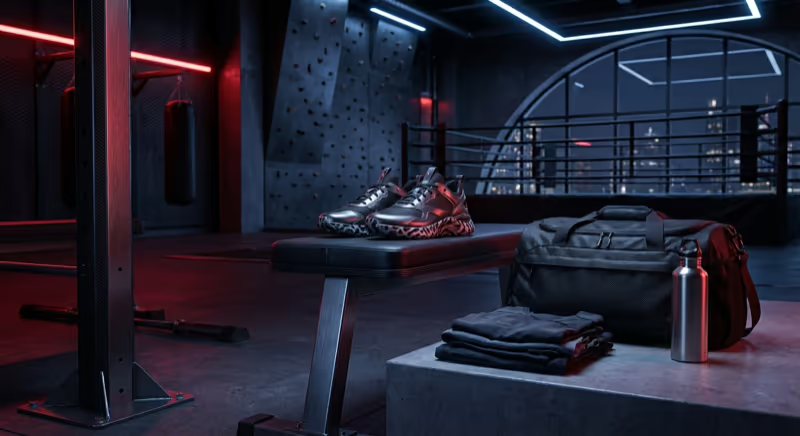
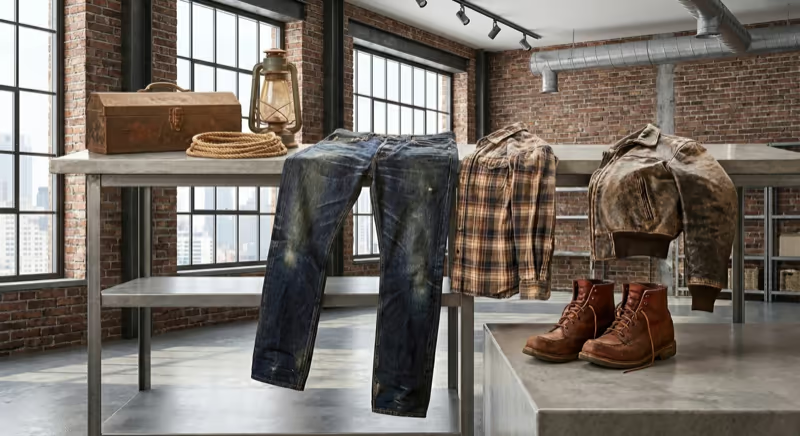
Marketing a streetwear or sneaker brand involves more than selling garment or footwear specifications. Buyers may also value design point of view, cultural references, community, access and the meaning of wearing the product at a particular moment. How much those factors matter depends on the customer: not every buyer is a collector, and not every streetwear line should operate through scarce drops.
That does not mean every streetwear brand should chase artificial hype. The brands that last build a clear point of view, earn credibility in a community, release products with discipline and use paid media to capture and compound demand. Paid advertising can help a drop, but it cannot replace culture, product credibility or an owned audience.
This guide explains how to market a streetwear or sneaker brand: positioning, community, drops, collaborations, creators, resale signals, paid media, measurement and the operational details that keep hype from turning into margin leakage.
TL;DR
- Culture comes before reach. Streetwear grows from a point of view, a community and product credibility. Broad awareness without cultural fit can make the brand feel generic.
- Drops need preparation, not only a launch date. Teasers, waitlists, creator seeding, email/SMS, retargeting and stock rules should be ready before the product goes live.
- Scarcity has to be real and disciplined. Controlled supply can increase desire, but fake scarcity, constant restocks or endless "limited" products damage trust.
- Build direct customer relationships. Permission-based email and SMS data reduce dependence on algorithms; Discord, social channels and marketplace audiences remain platform-controlled.
- Creators should add credibility, not just impressions. Cultural fit, styling fit, usage rights and disclosure matter more than follower count.
- Resale is an imperfect signal, not a strategy. Completed sale prices, listing volume and size-level liquidity can add context, but asking prices alone do not prove demand.
- Paid media needs a defined role. It can build qualified reach, capture demand, support a release or sell evergreen lines. Brand damage comes from indiscriminate execution, not from paid distribution itself.
Why streetwear and sneaker marketing is different
Streetwear does not usually win by maximizing availability. It wins by making the product mean something to a specific group of people.
Four traits shape the strategy:
| Trait | What it means | Marketing implication |
|---|---|---|
| Culture | The brand borrows from music, sport, skate, art, gaming, local scenes or fashion subcultures | The brand needs a point of view and credible references, not only product shots |
| Access | Demand is often built around limited releases, early access, raffles or members-only moments | Owned lists and community channels matter before launch day |
| Identity | Buyers use the product as a public signal of taste and belonging | Creative should sell the world around the product, not only the item |
| Secondary market | Resale can make some demand visible beyond the brand's store | Verified transactions can add context to sizing and release analysis, with strong selection and data limitations |
The risk is confusing streetwear marketing with countdowns, "limited" labels and borrowed visual codes. Those mechanics do not create product relevance. If the brand cannot explain its design point of view, customer and relationship to a scene without marketing jargon, the drop format becomes theatre.
Positioning: what world does the brand belong to?
Before planning drops or ads, define the brand's cultural lane.
Useful positioning questions:
- What subculture, scene, sport, city, sound, design language or lifestyle does the brand genuinely understand?
- What does the brand reject as much as what it celebrates?
- Why would someone wear this product publicly instead of a larger brand?
- Which creators, stylists, athletes, artists or customers already feel natural in the brand's world?
- Is the product built for collectors, everyday wear, performance, premium styling or community identity?
- What should never be done because it would make the brand feel fake?
This matters because paid media amplifies positioning. If the positioning is sharp, paid can spread it. If the positioning is vague, paid only spreads the vagueness faster.
For the broader strategic layer, see fashion marketing. For footwear-specific sizing, feed and returns issues, see how to market a footwear brand.
The drop system: from anticipation to post-launch learning
A good drop is a process, not a product upload.
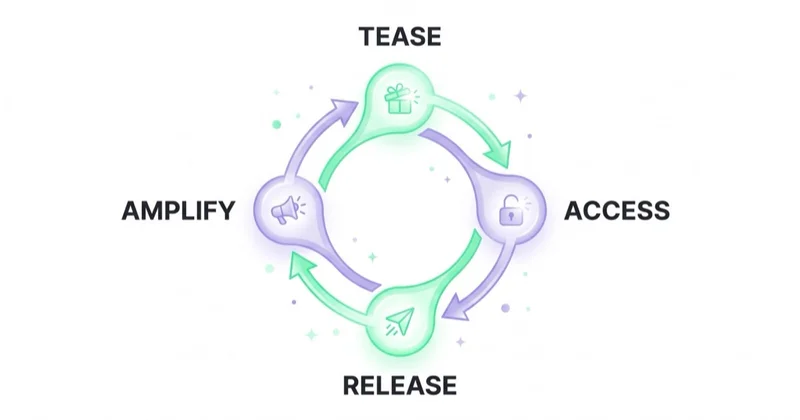
| Phase | Goal | What to build |
|---|---|---|
| Signal | create curiosity without overexplaining | details, silhouettes, design references, collaborator hints |
| Capture | turn interest into permission-based, reachable demand | waitlist, email/SMS, raffle, VIP access, calendar reminders |
| Educate | explain why the product matters | fit, material, story, styling, sizing, production limit |
| Launch | convert concentrated demand | email/SMS, retargeting, branded Search, landing page, stock rules |
| Aftermath | turn the release into the next audience | sell-through analysis, UGC, restock interest, returns, waitlist for the next drop |
The capture phase gives the brand a way to reach interested people again, but list size is not revenue. Separate existing customers, high-intent registrations, giveaway entrants and broad social engagement. Their probability of purchase and appropriate contact permissions differ materially.
Scarcity without damaging trust
Scarcity works only when it is true and understood. A limited product may be constrained by production capacity, collaboration terms, materials, craft or a deliberate release plan. Claims such as "only three left" or a countdown communicate facts about availability; resetting timers, invented stock pressure or an undisclosed planned restock can mislead customers and create legal risk.
Better scarcity rules:
- define the release quantity or access logic before launch and document who can change it;
- separate limited drops from evergreen products;
- avoid discounting a drop immediately after launch;
- communicate restocks honestly if they are planned;
- use waitlists and back-in-stock signals to size future demand;
- protect loyal customers from bots and purely extractive buying behavior;
- make the product worth wanting beyond the fact that it is scarce.
Scarcity should create focus, not frustration. If real customers cannot buy because the process is confusing, botted or unreliable, the brand may get attention but lose trust.
Community is a relationship, not a database label
For streetwear, community can support learning, advocacy and repeat demand. It should not be reduced to a list of people who can be targeted before a drop.
Different channels provide different levels of control. Permission-based customer data is first-party, but delivery still depends on email and SMS providers. Discord servers, Instagram features and social followers sit on third-party platforms whose rules and reach can change. Useful layers include:
- Email and SMS for drop alerts, early access, restocks and post-purchase flows.
- Discord or community spaces for insiders, feedback, previews and conversation.
- Instagram close friends, broadcast channels or private lists for controlled access.
- Events and pop-ups for local credibility, content and deeper relationships.
- Customer reposts and UGC for proof that the product lives outside the brand account.
- VIP or loyalty segments for early access based on purchase history, engagement or community contribution.
Participation needs value between releases: fit previews, design notes, local events, customer support, feedback and real conversation. Measure repeat participation and customer outcomes, not only member count. A silent Discord with a large headline number is not stronger demand infrastructure than a small, responsive customer list.
Collaborations and co-signs
Collaborations work because they transfer meaning. The right artist, brand, venue, team, designer, creator or cultural figure can make a release feel inevitable. The wrong collaboration looks like borrowed credibility.
Evaluate collaborations by:
- audience overlap;
- cultural fit;
- product fit;
- distribution advantage;
- creative contribution;
- launch story;
- long-term brand effect;
- operational complexity.
A genuine unpaid mention is different from contracted creator activity. Product seeding, event access, affiliate commission and other benefits can still create a material relationship that needs disclosure. The brand should record what each person received instead of assuming a post "feels organic."
For creator mechanics, usage rights and disclosure, use the system in fashion influencer marketing. In streetwear, creator fit is stricter: a creator with a smaller audience but real cultural alignment is often more valuable than a larger account with generic fashion reach.
Creator content and disclosure
Streetwear audiences are sensitive to inauthentic advertising, but that does not remove the need for disclosure. If a creator receives payment, free product, affiliate commission, event access or another material benefit, the relationship should be disclosed under the rules of the relevant market. FTC guidance says the disclosure should be hard to miss, placed with the endorsement and not assumed to be satisfied by a platform tool alone.
Operationally, every creator agreement should cover:
- content deliverables and launch timing;
- styling or product requirements;
- claims the creator can and cannot make;
- disclosure language and placement;
- organic reposting rights;
- paid usage rights;
- Spark Ads, Partnership Ads or creator licensing permissions;
- exclusivity and competitor conflicts;
- UTM links, codes or reporting requirements.
The best creator content still sounds like the creator. The brand should brief the point of view, product truth and guardrails, then let the creator translate it into the format their audience already trusts.
The resale market: read the signal carefully
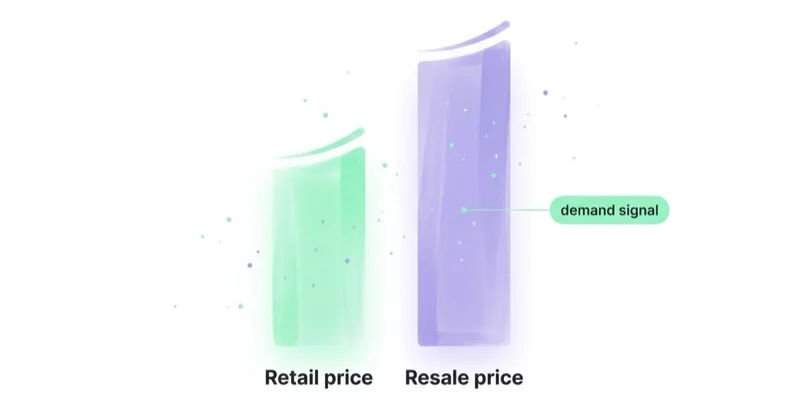
Sneaker and streetwear brands often watch secondary markets for completed sale prices, transaction frequency, listings, bids and size-level liquidity. A verified transaction above retail can indicate willingness to pay among buyers active on that venue. It does not reveal total market demand, whether the item was returned or cancelled, platform fees, authenticity disputes or how representative resellers are of end customers.
Resale should not become the entire strategy. The brand still needs to protect:
- first-party customer relationships;
- margin and stock planning;
- authenticity and counterfeiting risk;
- fairness of launch access;
- customer experience for people who actually want to wear the product;
- long-term brand trust.
Use resale data as one diagnostic beside first-party sell-through, failed checkouts, waitlists, size availability, returns, fraud and customer research. Prefer completed transactions to asking prices and compare net proceeds after fees where possible. Do not infer that a high resale premium automatically means the brand underpriced or should manufacture less; constrained supply can create the premium by design.
Channel roles for a streetwear or sneaker brand
Streetwear should not put every channel into the same ROAS target. Channels have different jobs.
| Channel | Role | Best use |
|---|---|---|
| Organic TikTok and Instagram | culture, teasers, community, proof | previews, styling, behind-the-scenes, creator reposts |
| Email and SMS | owned demand and launch conversion | early access, reminders, drop day, restocks |
| Discord or community | loyalty and feedback | insider previews, polls, raffles, local events |
| Creators | credibility and content | seeding, styling, launch story, Spark/Partnership Ads assets |
| Paid social | amplification and retargeting | waitlist growth, launch reminders, post-drop audience building |
| Google Search and Shopping | demand capture | brand, model, category and reseller-defense queries |
| SEO and content | long-tail discovery and authority | size guides, styling, care, drop archives, collection stories |
| Resale platforms | partial market signal | completed-price context, liquidity and size-level patterns |
For day-to-day mechanics, the paid social layer overlaps with Facebook, Instagram and TikTok ads for fashion brands and the content layer overlaps with social media marketing for fashion brands. Streetwear simply changes the weighting: owned and cultural demand lead, paid follows.
Where paid advertising actually fits
Paid media is useful for a streetwear or sneaker brand when the role is precise.
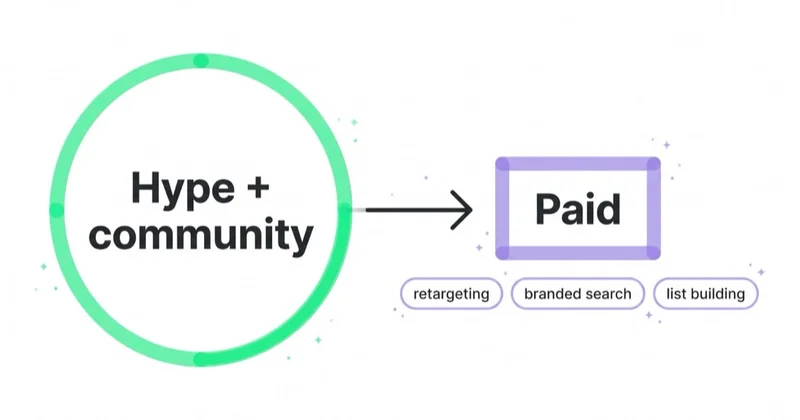
Good paid uses:
- growing a waitlist before launch;
- retargeting product-page visitors and engaged social audiences;
- reminding email/SMS subscribers close to the release;
- defending branded Search so demand lands on the brand site;
- capturing category demand for evergreen products;
- amplifying creator posts that already show strong organic response;
- building lookalike or value-based audiences from real customers;
- reconnecting missed-drop visitors to the next release or restock list.
Paid media needs closer scrutiny when it is used for:
- broad prospecting without a clear audience, story or stock plan;
- discount-led ads immediately after a limited launch;
- optimizing drops only to last-click ROAS;
- scaling creator content without usage rights;
- maximising attributed revenue while ignoring incrementality, returns and new-customer quality.
For evergreen apparel or footwear lines, paid can run as ongoing ecommerce acquisition. For limited products, paid may educate new audiences, capture existing intent or route eligible customers to access. The creative, placement, frequency and offer determine whether the execution feels generic; the fact that media is paid does not.
Creative that earns credibility
Streetwear creative should feel native to the world the brand belongs to.
Useful content types:
- lookbook shots with a clear point of view;
- on-body styling in real environments;
- short-form video built for TikTok and Reels, not cut-down brand films;
- behind-the-scenes design, sampling and production notes;
- creator styling with honest fit and size context;
- community reposts and customer outfits;
- drop countdowns with restraint;
- collaborator stories;
- event, pop-up and street-level content.
Avoid creative that looks culturally borrowed without context. If a brand uses skate, football, rap, art or local-scene codes, it should have a real relationship to that world. Otherwise the content may get reach while reducing trust.
Footwear operations still matter
Sneaker marketing often talks about hype, but the operational foundation still decides profit.
Footwear and apparel drops need:
- clear sizing and fit guidance;
- size-level stock visibility;
- a unique feed item for every sellable size, colour or material variant, connected with a stable item group ID;
- variant-specific landing-page selection, images, price and availability;
- returns and exchanges data;
- bot protection or fair-access rules where relevant;
- customer support prepared for launch volume;
- post-drop analysis by size, market and return behavior.
Google added the variant_option attribute in May 2026 to identify the properties that define a variant. When size identifies the variant, Google recommends providing both variant_option and size. This does not replace correct IDs, item groups, landing pages or inventory.
If the brand sells sneakers or shoes, the deeper operational guide is how to market a footwear brand. A drop can sell out and still be a weak business result if it creates avoidable returns, service failures or no durable customer relationship.
Measurement: track cultural demand and business quality
Streetwear measurement needs two layers: demand signals and business outcomes.
| Metric | What it tells you |
|---|---|
| Waitlist growth | whether anticipation is turning into owned demand |
| Email/SMS click and purchase rate | whether owned demand is engaged |
| Sell-through speed and sell-through rate | whether supply matched demand |
| New-customer share | whether the drop expanded the customer base |
| Repeat purchase | whether customers return beyond one hype moment |
| Branded Search and direct traffic | whether cultural demand is increasing |
| Creator saves, shares and qualified comments | whether content has real pull |
| Completed resale price, volume and liquidity | how a selected secondary market clears, not total customer demand |
| Return rate and exchanges | whether product experience matched expectation |
| Net margin | whether the drop was commercially healthy |
Paid campaigns should be reconciled to ecommerce and finance data net of returns, cancellations, discounts and payment failures. A scarcity-led brand cannot be managed only on platform ROAS, but neither should list growth or branded search automatically be credited to a campaign. Use holdouts, geo tests or timed tests where scale permits, and state when a signal is merely directional.
How Space Ads approaches streetwear and sneaker marketing
At Space Ads, streetwear and sneaker work starts with the release's commercial role: customer acquisition, community activation, collaboration, full-price sell-through or support for an evergreen line. The audit then connects positioning, reachable demand, product data, access rules, creative rights, measurement and post-drop retention.
The practical approach is to separate limited releases from evergreen products, use paid media where it strengthens the launch system, and reconcile performance with ecommerce reality: sell-through, margin, returns, new-customer share, repeat purchase and brand demand. This connects fashion and footwear paid media, Meta Ads, TikTok Ads, Google Ads, creator work, product feed quality and CRO.
If the brand needs diagnosis before scaling spend, a marketing audit is the safer starting point than adding budget to an unclear drop system.
Drop launch checklist
- Define the release role. Is it a hero drop, collab, restock, evergreen launch or clearance event?
- Estimate qualified demand before launch. Segment customers, waitlists, permissioned contacts, creator traffic and relevant site behaviour.
- Prepare product data. Check variant IDs, item groups,
variant_option, sizes, stock, selected landing-page variant and tracking. - Brief creators early. Secure content, disclosure, paid usage rights and launch timing.
- Build the launch path. Teaser, waitlist, education, countdown, early access, drop day, post-drop.
- Use paid with a role. Grow lists, retarget, defend branded Search, amplify creator winners and capture missed demand.
- Measure after the launch. Review sell-through, margin, returns, new customers, repeat purchase, community growth and resale signals.
Common mistakes
| Mistake | Why it hurts | Better approach |
|---|---|---|
| Fake scarcity | customers stop believing urgency | make scarcity real and communicate restocks honestly |
| Unqualified paid reach as the main engine | spend amplifies an unclear story | define the audience, role and economic threshold first |
| No direct customer relationship | each drop depends on platform reach | build permission-based email/SMS data and useful community participation |
| Creator choice by follower count | cultural mismatch damages credibility | choose by audience, taste, scene fit and content quality |
| No paid usage rights | winning creator content cannot scale | negotiate rights before posting |
| Reading resale asking prices as demand | listings are not completed transactions | triangulate completed sales with first-party data |
| ROAS-only launch reporting | cuts activity that built demand | track waitlist, sell-through, brand search and repeat purchase |
FAQ
How do you market a streetwear brand?
Market a streetwear brand through a clear design and cultural point of view, credible product, direct customer relationships and a release model suited to its buyers. Use creators and paid media with explicit roles, prepare variant data and access rules, and measure full-price sell-through, contribution, returns and repeat behaviour rather than hype alone.
How do sneaker brands create hype?
Sneaker hype usually comes from a mix of product credibility, scarcity, anticipation, community access, creator seeding, collaborations and visible demand after launch. The process starts before the drop: tease the product, capture interest on a waitlist, educate the audience, launch with clear access rules, then use sell-through, UGC and restock demand to build the next release.
Should a streetwear brand run paid ads?
Yes, when they have a precise role: qualified waitlist growth, demand capture, launch education, creator amplification or evergreen acquisition. Prospecting does not inherently make a brand mass-market. The risk is generic creative, unsuitable reach, excessive frequency or scaling without enough stock and customer economics.
How should a brand use the sneaker resale market?
Use resale as a partial diagnostic. Prefer completed sales, transaction frequency and bid depth to asking prices, and account for fees, cancellations and selection bias. Compare those signals with first-party sell-through, failed checkouts, returns and customer research. Resale does not replace customer, margin, access and authenticity data.
What metrics matter for streetwear drops?
Important metrics include waitlist growth, email/SMS engagement, sell-through rate, sell-through speed, new-customer share, repeat purchase, branded Search, direct traffic, resale premium, return rate and net margin. Paid media metrics matter too, but a drop should not be judged only on last-click ROAS.
What is the difference between streetwear marketing and regular fashion marketing?
Regular fashion marketing often prioritizes broad reach, availability and recurring ecommerce demand. Streetwear marketing relies more on culture, community, scarcity, product meaning and controlled access. Paid media still matters, but it supports the demand system rather than replacing it.
Key takeaways
- Streetwear and sneaker marketing should start with cultural positioning and owned demand, not only ads.
- Drops work when anticipation, access, product data, creators and measurement are prepared before launch.
- Scarcity claims should be true, documented and connected to the actual release plan.
- Paid media is strongest as support: waitlists, retargeting, branded demand, creator amplification and evergreen capture.
- Measure launch health through sell-through, community growth, repeat purchase, resale signals, returns and margin.
Sources and further reading
- FTC - Disclosures 101 for Social Media Influencers
- TikTok for Business - Creative Center
- Meta Business - Advantage+ sales campaigns
- Google Merchant Center Help - Product data specification
- Google Merchant Center Help - Size and the 2026 variant option
- UK Competition and Markets Authority - Online choice architecture and misleading scarcity
Continue learning
- How to Market a Footwear Brand: Sizing, Drops, Returns and Paid Media
- How to Market a Fashion Brand in 2026
- Social Media Marketing for Fashion Brands
- Fashion Influencer Marketing: Building a Creator Programme That Feeds Paid
- Facebook, Instagram and TikTok ads for fashion brands
- Spark Ads on TikTok: what they are and how to use them
- Fashion and footwear paid media - TikTok Ads
Continue reading
How to Market an Activewear or Athleisure Brand: Performance, Community and LTV
Activewear marketing has to serve performance users and lifestyle buyers at the same time. This guide covers positioning, community, ambassadors, product proof, paid channels, retention, fit, returns and LTV-based measurement.
Fashion Influencer Marketing: Building a Creator Programme That Feeds Paid
Fashion influencer marketing works best when it is run as a creator system: audience fit, clear briefs, usage rights, disclosure, affiliate logic and paid amplification of the posts that prove they can create demand.
How to Advertise a Clothing Brand: Channels, Budgets and the First Campaigns to Launch
A practical paid-media playbook for apparel brands: which channels to launch first, how Google, Meta and TikTok should work together, what product feed and creative foundations are needed, and how to measure advertising when fashion returns distort platform ROAS.