Marketing a footwear brand is not just fashion marketing with shoes in the image. The buying decision depends on fit, size confidence, availability of a specific variant, how the shoe looks on foot, and whether the customer trusts the return and exchange process. A sneaker drop, a premium leather boot, a running shoe and a summer sandal can live in the same catalogue, but they should not be marketed with the same playbook.
That is why effective footwear marketing starts before the ad account. The brand needs clean product data, variant-level availability, size guidance, product pages that reduce fit anxiety, a returns loop, and a catalogue split by business role. Only then do Google Ads, Shopping, Performance Max, Meta, TikTok, creators, email, SMS and SEO have something solid to scale.
This guide explains how to market a footwear brand from the commercial foundations up: feed data, sizing, product pages, paid channels, drops, creative, seasonality and measurement after returns.
TL;DR
- Footwear marketing starts with sizing and product data. Wrong variants, unclear size systems and stale availability damage Shopping, Performance Max, catalog ads, CRO and customer trust.
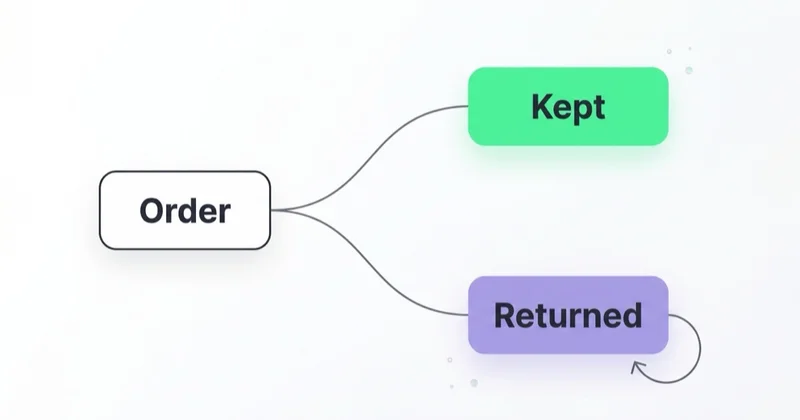
- Returns are a marketing signal. If campaigns optimize to gross revenue, they can scale shoes that sell quickly but come back too often.
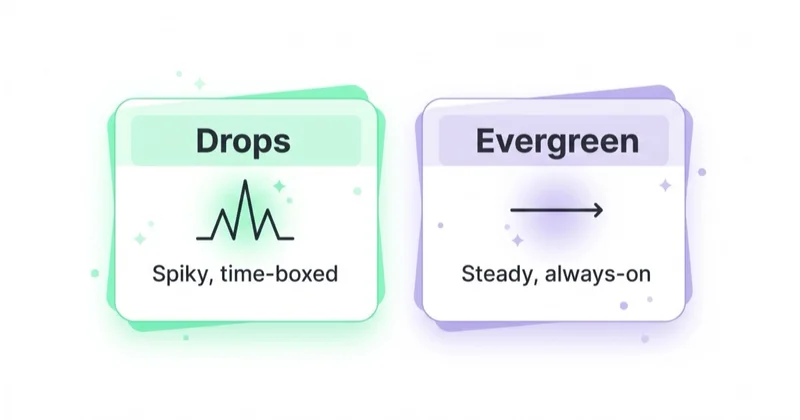
- Evergreen shoes and sneaker drops need different systems. Evergreen demand is captured through Search, Shopping and remarketing; drops need anticipation, owned lists, community and controlled supply.
- Creative has to remove fit anxiety. Show the shoe on foot, in motion, in real styling and in material detail. Packshots are necessary for feeds, but rarely enough for social.
- Product pages are part of acquisition. Size charts, insole length, fit notes, reviews, delivery, exchanges and back-in-stock alerts affect conversion rate and ad efficiency.
- Channel roles matter. Google captures active demand, Meta and TikTok build desire and retarget, creators show fit and credibility, and email/SMS handle launches, restocks and retention.
- The best dashboard includes returns, margin, size availability, new-customer share and full-price sell-through, not only platform ROAS.
Why footwear needs its own marketing strategy
Shoes are visual, functional and often seasonal. A customer evaluates the style, brand and price, but the final decision often depends on fit, comfort, material, purpose, foot width, size conversion and return confidence. Generic ecommerce advice misses those details.
| Area | What is specific to footwear | Marketing implication |
|---|---|---|
| Size | The same labelled size can fit differently across brands and models | Reduce uncertainty with size charts, insole length, fit notes and reviews |
| Availability | Revenue depends on size-level stock, not only model-level stock | Do not push products that have lost key sizes |
| Returns | Fit and comfort can turn a sale into a return | Measure net value and feed returns back into bidding where possible |
| Seasonality | Boots, sandals, sneakers, running shoes and kids' shoes peak differently | Plan media, stock and creative around category calendars |
| Function | A shoe may sell on comfort, sport, work, occasion, status or styling | Segment messaging by use case instead of using one generic story |
| Culture | Sneakers and streetwear depend on scarcity and community | Paid media should support demand, not make a limited product feel mass-market |
In practice, many footwear brands do not need "more ads" first. They need cleaner product data, clearer assortment roles and better measurement. Media amplifies the product, offer and page experience already in place. If those are weak, campaigns just learn expensively.
Segment the footwear catalogue before allocating budget
The biggest mistake is treating the whole shoe catalogue as one category. The report may say "footwear," but the business usually contains several demand patterns.
| Segment | Typical intent | Main channels | Primary KPI |
|---|---|---|---|
| Evergreen styles | need, replacement, comfort, known model | Google Search, Shopping, Performance Max, remarketing | returns-adjusted ROAS or CPA |
| Sneakers and drops | desire, novelty, limited access, status | TikTok, Instagram, creators, email, SMS, branded Search | waitlist growth, sell-through, new-customer share |
| Performance footwear | sport, discipline, function, specs | Search, YouTube, creators, comparison content | model-level sales, qualified traffic, repeat purchase |
| Premium footwear | material, craft, status, styling | paid social, video, PR, brand Search, creator styling | margin, AOV, full-price sell-through |
| Seasonal footwear | weather, travel, school, occasion | Search, Shopping, Meta, email | stock rotation, margin, size availability |
| Kids' footwear | fast replacement, trust, size change | Search, Meta, SEO guides, CRM | repeat purchase, parent acquisition cost |
This segmentation decides what each campaign should do. Evergreen styles need demand capture and stock discipline. Drops need pre-launch demand capture and community access. Premium footwear needs price integrity and brand context. Clearance needs controlled stock rotation without training the whole customer base to wait for discounts.
Product feed and sizing: the foundation of footwear marketing
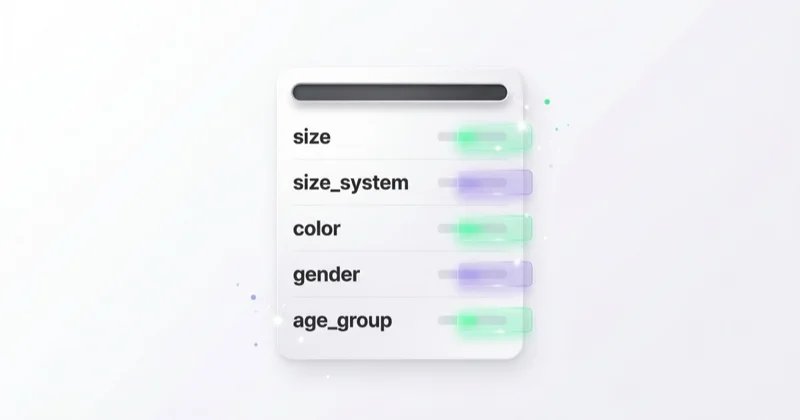
The product feed is the source used by Google Merchant Center, Shopping, Performance Max, Meta catalog ads, dynamic remarketing, marketplaces and often onsite personalization. For footwear, the feed is not a technical detail. It decides which products can show, what the user sees, and whether the click lands on the correct variant.
Key feed elements for a footwear brand:
item_group_id- groups the variants of the same model, such as sizes and colors.size,size_systemandgender- Google specifically notes that shoe sizing depends on multiple attributes, including these fields.- Variant-level availability - each advertised size and color should match the website and checkout.
gtin,mpn,brandandidentifier_exists- use correct product identifiers when they exist; do not invent values.- Product title - include brand, model, product type, gender or age group, color and material or use case where relevant.
- Images - keep a clean main image for product grids and use additional images for on-foot context, angles and details.
- Custom labels - segment by margin, season, bestseller, full-size-run, drop, clearance, return risk or stock priority.
Common footwear feed problems are simple but expensive: size variants submitted as unrelated products, missing size systems, color names that differ from the landing page, products still advertised after key sizes sell out, generic titles, weak identifiers, and URLs that do not preselect the advertised variant. A feed audit often finds performance limits that no bid adjustment can solve.
For deeper supporting context, see Google Ads for fashion ecommerce, GTIN and identifier_exists in Merchant Center, and how to use Shopping campaigns effectively.
Product pages: where fit anxiety is removed
Ads do not close the sale alone. The footwear product page has to answer the user's quiet question: "Will this fit, and will it feel right?"
A strong shoe product page should include:
- size chart with insole length and the size system used;
- guidance on whether the model runs true to size, small, large, narrow or wide;
- on-foot images from side, top, back and styling angles;
- material, sole, closure, heel height, shaft height, cushioning or intended surface where relevant;
- customer reviews with fit signals, not only star ratings;
- delivery, exchange and return information close to the decision point;
- back-in-stock alerts for missing sizes;
- similar styles when a size is unavailable;
- a fit quiz or size recommendation tool when scale justifies it.
These elements support SEO, AEO and CRO at the same time. Search engines and answer engines can understand the product better when the page contains concrete attributes, FAQs and variant information. The user converts with less risk. The ad platform receives a stronger landing-page experience and cleaner conversion signal.
Returns: the hidden marketing cost of footwear
Returns are not only a logistics issue. In footwear, returns can change whether a campaign is profitable.
If a platform optimizes toward gross revenue, it may keep scaling a model that sells fast but returns often. The ad dashboard can look healthy while the business result is weak. This is especially risky when different models, sizes or customer segments have different return behavior.
Footwear reporting should include:
- ROAS after returns;
- contribution margin after returns;
- return rate by model, size, color, campaign and source;
- full-price sell-through;
- cost of acquiring a new customer;
- repeat purchase within a useful time window;
- exchange rate and back-in-stock demand;
- operational return cost where available.
Google Ads supports conversion adjustments, including restating conversion value after partial returns and retracting conversions after returned purchases. For ecommerce, returns and conversion adjustments should be treated as a bidding input, not a finance-only clean-up. The faster the return or exchange data comes back into reporting, the better the account can learn from real value.
The CRO objective is different: prevent avoidable returns without making the buying process hostile. Better size guidance, fit content, on-foot creative and review signals help the customer choose the right model and size the first time.
Two demand patterns: evergreen and drops
Most footwear brands sell both steady-demand styles and launch-driven products. They need separate budgets, creative and metrics.
Evergreen styles are sold continuously or across a season. Users search for a specific type: "women's white leather sneakers," "men's brown chelsea boots," "trail running shoes wide fit," or "black leather loafers." This is where Search, Shopping, Performance Max, category SEO, comparison demand and remarketing do the heavy lifting. The focus is product data, margin, stock, returns-adjusted value and availability.
Drops and limited launches work differently. Demand is built before the sale through teaser content, creators, seeding, waitlists, organic social, email, SMS, countdowns and clear access rules. Paid media supports the launch, but it should not replace brand heat. If a limited drop is pushed like a normal discount campaign to every broad audience, the scarcity starts to feel fake.
A useful drop sequence:
| Phase | Goal | Example actions |
|---|---|---|
| Teaser | build curiosity | short video, product details, creator seeding, waitlist |
| Education | explain why the product matters | fit, material, story, styling, use case |
| Launch | convert concentrated demand | email/SMS, retargeting, branded Search, drop landing page |
| Post-launch | learn and retain | sell-through, returns, new customers, restock alerts, next-drop audience |
If the product is genuinely limited, the communication should match reality. False scarcity damages trust quickly.
Channel strategy for a footwear brand
Channels should have jobs, not isolated budgets.
| Channel | Best role | Watch for |
|---|---|---|
| Google Search | active demand, brand, category, model and local intent | brand/non-brand split, query control, landing page relevance |
| Google Shopping / Performance Max | product sales from the feed, remarketing, catalogue scale | feed quality, size availability, net values, brand controls |
| Meta Ads | visual prospecting, catalog ads, social proof and retargeting | creative fatigue, discount dependency, weak product segmentation |
| TikTok Ads | discovery, native video, creator-led proof, younger demand and drops | hook quality, platform-native assets, measurement discipline |
| Creators and influencers | on-foot proof, styling, fit confidence and credibility | brand fit, usage rights, disclosure, UTM/code structure |
| SEO and content | size guides, comparisons, category demand, model education | thin generic content and weak internal links |
| Email / SMS | drops, restocks, back-in-stock, retention and VIP segments | over-promotion and poor segmentation |
| Marketplaces | additional demand and comparison shopping | margin pressure, pricing control and brand presentation |
Evergreen footwear usually weights more budget toward demand capture: Search, Shopping, Performance Max and retargeting. Sneakers, premium launches and new collections often need stronger demand creation: TikTok, Instagram, YouTube, creators, PR and organic social. This sits inside the broader fashion marketing system, but footwear has stricter dependence on fit, availability and returns.
Creative that sells shoes
Footwear creative must show what a user cannot feel through the screen: shape on foot, movement, material, proportion, styling and intended use.
Useful creative angles:
- the shoe in motion, not only on a white background;
- casual, work, evening, sport or weather-based styling;
- close-ups of material, stitching, sole, texture, closure and heel;
- short "on feet" video;
- creator content that names size, fit and comfort honestly;
- problem-led content: width, rubbing, weather, stability, lightness or grip;
- launch story rather than only product presentation;
- social proof: reviews, customer styling, waitlist demand or press without hype language.
The clean packshot still matters for Shopping and product grids. Social and video need the opposite: context, motion and proof. TikTok needs a strong first frame and platform-native rhythm. Instagram can carry more styling polish but still benefits from real use. YouTube can support product education, collection stories or testing. One asset copied everywhere usually performs worse than a few simple variants built for channel role.
Premium and designer footwear
Premium footwear adds a brand-risk layer. The brand has to sell material, craft, silhouette, status and styling without becoming dependent on discounting.
For premium and designer shoes:
- protect full-price perception and avoid using discounts as the default acquisition mechanic;
- give more weight to brand-building, editorial-quality creative, PR, creators and controlled placement context;
- use Search and Shopping to capture demand, but do not let bargain-led queries define the brand;
- show craft and material detail clearly enough to justify price;
- measure across a longer consideration path, not only last-click;
- separate clearance stock from hero products and new collections.
The logic is close to luxury fashion marketing: build desire, protect price integrity and measure brand demand as well as immediate sales.
Seasonality, stock and discount discipline
Footwear is sensitive to weather, travel, school cycles, sport seasons and size availability. Budget should not move only by campaign ROAS; it should also see stock reality.
A bestseller with a full size run may deserve more budget than a product with strong historic ROAS but missing key sizes. A product with only fragmented sizes left should move into retargeting, email, controlled sale messaging or exclusion from broad campaigns. A seasonal product that is late in the cycle may need margin-aware clearance rather than broad acquisition.
Plan around:
- early season, when demand is forming;
- peak season, when availability and delivery speed matter;
- late season, when stock rotation becomes the goal;
- off-season, when SEO, lists and new collection demand can be built.
Discounts are useful for stock management, not as the core demand engine. Frequent discounting teaches customers to wait, which is especially harmful for premium footwear and scarcity-led sneakers.
Measurement: what a footwear dashboard should show
A useful footwear dashboard connects ad platforms with ecommerce, margin, returns and stock. Platform ROAS alone is not enough because it usually misses return timing, margin, size availability, customer type and long-term value.
| Area | KPI |
|---|---|
| Sales | revenue, margin, returns-adjusted ROAS, full-price sell-through |
| Returns | return rate by model, size, color, campaign and source |
| Stock | size-run completeness, stock rotation, products missing key sizes |
| Acquisition | new-customer cost, new-customer share, first-purchase source |
| Retention | repeat purchase, email/SMS revenue, back-in-stock conversion |
| Creative | CTR, hook rate, video retention, add-to-cart cost, sales by asset |
| Drops | waitlist, launch attendance, sell-through, return rate, restock demand |
For demand creation channels, look beyond last click: branded search growth, direct traffic, list growth, engaged audiences, assisted revenue and incrementality tests. For demand capture, the priority is profitability after returns and the quality of queries and products receiving budget.
How Space Ads approaches footwear marketing
At Space Ads, the first review of a footwear brand focuses on the inputs that decide profitability before media spend scales: product feed, variant structure, size availability, identifiers, product imagery, conversion values, returns, margin and the split between evergreen products, drops and seasonal stock.
The working assumption is simple: footwear performance cannot be judged only from an ad platform panel. A campaign may look strong while pushing products that come back too often, have poor margin, sell out in important sizes or rely too heavily on discounts. A professional account structure should connect performance marketing, Google Ads, Meta Ads, TikTok Ads, analytics, feed management and CRO.
For brands that need specialist paid media support across fashion and footwear, the relevant service layer is fashion and footwear paid media. For diagnosis before scaling, a marketing audit is usually the right starting point.
Action plan for a footwear brand
- Audit product data. Check
item_group_id, sizes,size_system, availability, identifiers, images, titles and landing-page consistency. - Segment the catalogue. Separate evergreen, drops, seasonal, premium, clearance, bestsellers and products with full or broken size runs.
- Measure after returns. Align conversion values with margin, returns and real net revenue.
- Improve product-page CRO. Add size charts, insole length, fit guidance, on-foot images, fit reviews, returns clarity and back-in-stock alerts.
- Assign channel roles. Use Google for active demand, Meta and TikTok for creative demand and retargeting, creators for fit proof, and email/SMS for launches and restocks.
- Build creative by task. Packshots for feeds, motion for social, product education for video, creator content for fit confidence.
- Report business results. Combine campaigns, sales, returns, margin, stock and new-customer share in one view.
Common mistakes
| Mistake | Why it hurts | Better approach |
|---|---|---|
| Dirty feed data | campaigns promote wrong variants or missing sizes | clean identifiers, grouping, size system and availability |
| Gross-revenue bidding | high-return styles absorb budget | optimize to net value where possible |
| One strategy for the whole catalogue | drops, evergreen and clearance receive the same treatment | split by business role and demand pattern |
| Packshot-only creative | users cannot judge fit, scale or movement | add on-foot, motion and material content |
| Weak product pages | users still do not know whether the shoe will fit | improve size, fit, reviews and return clarity |
| Discount-led growth | trains buyers to wait and erodes premium perception | use discounts for stock control, not brand building |
| Last-click-only social reporting | demand creation looks weaker than it is | track assisted demand, brand search, lists and incrementality |
FAQ
How do you market a footwear brand?
Start with the footwear-specific foundations: clean product feed, correct size data, variant-level availability, fit guidance, product-page CRO and measurement after returns. Then segment the catalogue into evergreen styles, drops, seasonal products, premium lines and clearance. Use Search, Shopping and Performance Max to capture active demand; Meta, TikTok and creators to build desire and proof; and email/SMS for launches, restocks and retention.
What is most important in footwear marketing?
The most important elements are size confidence, fit proof, variant availability and measurement after returns. Ads can create demand, but the customer still needs to know whether the shoe fits, whether the right size is available and whether the purchase is low-risk. Feed quality, product pages and returns-aware reporting are therefore as important as media buying.
How should footwear brands reduce returns?
Marketing reduces avoidable returns by making the buying decision clearer: size system, insole length, width notes, true-to-size guidance, on-foot images, fit reviews, material detail and clear exchange/return information. Reporting should then analyze returns by model, size, source and campaign, so budget does not keep scaling products with weak net value.
How do you market sneaker drops?
Sneaker drops need pre-launch demand. Use teasers, creator seeding, waitlists, email, SMS, organic social, retargeting and branded Search around the launch window. Paid media should support the demand the brand has already built. After the drop, analyze sell-through, new-customer share, returns, restock demand and the audience built for the next release.
Which channels work best for a shoe brand?
There is no single best channel. Google Search and Shopping are strong when users already search for a model, category or brand. Meta and TikTok are strong for visual discovery, styling, creator proof and retargeting. Influencers help show fit and credibility. Email and SMS are important for launches, back-in-stock alerts and retention. The channel should have a clear job in the system.
How should a premium footwear brand market itself?
Premium footwear should protect price integrity, show material and craft, use brand-building creative, control placement context and avoid overusing discounts. Paid search and Shopping still capture demand, but the brand should also invest in content, creators, PR, styling and longer-cycle measurement. The objective is desire and profitable full-price demand, not short-term volume at any cost.
Key takeaways
- Footwear marketing depends on sizing, fit, stock and returns more than generic fashion marketing.
- Product feed quality affects Shopping, Performance Max, catalog ads, SEO, AEO and user trust.
- Evergreen products, drops, seasonal lines and premium shoes need different channel roles and metrics.
- Creative should show the shoe on foot, in motion and in use, not only as a packshot.
- Report net performance after returns, margin and size availability before scaling budget.
Sources and further reading
- Google Merchant Center Help - Product data specification
- Google Merchant Center Help - Size attribute and shoe sizing examples
- Google Merchant Center Help - Best practices for advertising clothing and accessories
- Google Ads Help - About conversion adjustments
Continue learning
- How to Market a Fashion Brand in 2026
- How to Market a Streetwear or Sneaker Brand
- Luxury fashion marketing: build desire, not discounts
- Google Ads for fashion ecommerce
- Facebook, Instagram and TikTok ads for fashion brands
- Fashion influencer marketing
- Fashion and footwear paid media - Marketing audit
Continue reading

How to Market a Fashion Brand in 2026: A Complete Strategy for Premium Labels
This article turns broad fashion marketing advice into board-level choices: which growth you refuse to buy with markdowns, how to avoid harvesting-only media plans, what product data must be trusted, and how to separate real demand from platform attribution.

Facebook, Instagram & TikTok Ads for Fashion Brands: Creative, Catalogs and Targeting
Use this as a paid-social operating map for apparel and footwear, not a channel overview. It shows how catalogue quality, platform-specific creative, creator-style ads, retargeting and return-adjusted measurement fit together when Meta and TikTok do most of the targeting for you.

Google Ads for Fashion E-commerce: Capturing and Creating Demand with Search, Shopping, Performance Max & Demand Gen
This guide treats Google Ads for fashion as a merchandising and economics problem first. It covers the feed rules, Performance Max controls, Demand Gen use cases and return-adjusted conversion values that decide whether Search and Shopping scale profitably.