A product description that sells explains what the product is, who it is for, why it matters, what makes it different, what risk it removes and what the buyer should do next. It should combine benefits, specifications, use cases, proof, delivery or returns information, FAQs and accurate product data. A good description is not a block of SEO text. It is a decision-support system for a buyer who is comparing options.
Product descriptions matter for SEO, conversion rate, Google Shopping, Merchant Center, structured data and AI search visibility. They matter because they make product information clear and trustworthy. Length alone does not make a product page better. The description should be as detailed as the buying decision requires.
TL;DR
- A strong product description reduces purchase uncertainty.
- The first paragraph should explain what the product is, who it is for and the main reason to buy.
- Features need to be translated into benefits. A material, size or ingredient matters only when the buyer understands its practical value.
- Specifications should be scannable. Tables are usually better than long paragraphs for technical details.
- Do not copy manufacturer descriptions without editing. Duplicate, generic copy rarely helps the buyer or the brand.
- Product schema and Merchant Center data must match visible page content.
- AI can help draft descriptions, but factual review is mandatory. Product data, pricing, availability, safety claims and variants must be checked.
What a product description is
A product description is the content on a product page that explains the offer and helps the buyer decide. It can include a short summary, long description, bullet points, specifications, size guidance, use cases, compatibility notes, care instructions, delivery information, warranty details, reviews, FAQs and structured data.
It should answer questions such as:
- What is this product?
- Who is it for?
- What problem does it solve?
- What makes it different from alternatives?
- Which variant should be chosen?
- What is included?
- Will it fit, work or be compatible?
- What are the materials, dimensions or ingredients?
- How is it used?
- How fast is delivery?
- Can it be returned?
- Is there proof that it works?
The best product descriptions are specific to the product, not generic to the category.
Product description vs product feed description
On ecommerce websites, there are two related but different descriptions.
The on-page product description is written for users, SEO and conversion. It can include headings, tables, bullets, FAQs, images, videos and internal links.
The Merchant Center product description is a feed attribute used by Google to understand and show product information in ads and free listings. Google's Merchant Center specification treats the description as product data, and the submitted information should be accurate, consistent and in the same language as the relevant feed attributes.
Do not treat the feed description as a dumping ground for promotional copy. It should describe the product clearly. The on-page description can go deeper into context, use cases and objections.
Product description vs Product schema
Product schema is structured data that helps search engines understand product information such as name, image, brand, offers, price, availability, ratings and shipping or return details where applicable.
Schema does not replace visible content. It should support it.
Use Product structured data when the page represents a product and the visible page includes matching information. Search systems can use this information for product snippets and merchant listing experiences, but markup is not a guarantee of a rich result.
A practical rule:
- visible page content helps people decide;
- product feed data helps shopping systems understand inventory;
- structured data helps machines interpret product facts.
All three should agree.
What every product description should include
1. A clear opening answer
The first lines should make the product easy to understand.
Good opening:
"A lightweight 30L travel backpack for short business trips, daily commuting and carry-on travel. It fits a 15-inch laptop, has a separate shoe pocket and uses water-resistant recycled nylon."
Weak opening:
"This premium product combines quality, style and comfort for demanding customers."
The first version tells the buyer what it is, who it is for and why it may fit the use case. The second version could describe almost anything.
2. Benefits based on features
Features are facts. Benefits explain why those facts matter.
| Feature | Benefit |
|---|---|
| Water-resistant fabric | Helps protect contents during light rain |
| 30L capacity | Fits clothing, laptop and accessories for a short trip |
| Alcohol-free formula | Reduces risk of drying sensitive skin |
| 5000 mAh battery | Supports longer use between charges |
| Removable cover | Easier cleaning and maintenance |
| Adjustable straps | Better fit across different body types |
Strong product copy does not ignore features. It translates them.
3. Scannable specification
Specifications should be easy to compare.
Use a table for:
- dimensions;
- weight;
- material;
- size;
- capacity;
- colour;
- ingredients;
- compatibility;
- warranty;
- package contents;
- certifications;
- country of origin;
- care instructions.
Technical shoppers often scan the specification first. If it is hidden inside a paragraph, the product page creates unnecessary friction.
4. Use cases
Use cases help buyers imagine the product in context.
Examples:
- "Best for commuting, weekend travel and gym use."
- "Designed for oily and combination skin."
- "Suitable for small teams running weekly reporting."
- "Works with MacBook Pro 14-inch and 16-inch models."
- "Recommended for indoor plants in low-light rooms."
Use cases are especially useful when the product is not self-explanatory, has many variants or serves a specific audience.
5. Objection handling
Most product pages lose sales because they leave small doubts unanswered.
Common objections:
- Will it fit?
- Is it compatible?
- Is the colour accurate?
- How long does delivery take?
- What if the size is wrong?
- Is the material durable?
- Is it safe for children or pets?
- Does it include accessories?
- How is it installed?
- What happens if it breaks?
Address objections directly. This improves user experience and can reduce customer support tickets.
6. Trust signals
Trust signals reduce perceived risk.
Depending on the product, use:
- reviews;
- ratings;
- certifications;
- test results;
- warranty;
- returns policy;
- expert notes;
- user photos;
- case studies;
- guarantees;
- brand history;
- compliance information;
- clear contact details.
Trust signals must be real. Invented proof is worse than no proof.
7. Delivery, returns and warranty context
Buyers often compare not only the product but the buying conditions.
Important information:
- delivery time;
- delivery cost or threshold;
- return window;
- warranty period;
- payment options;
- pickup availability;
- installation options;
- subscription terms;
- international shipping limitations.
This does not mean every product description must repeat the full policy. It means the product page should make purchase conditions easy to find near the decision point.
8. FAQ
Product FAQs are useful when buyers ask recurring questions.
Examples:
- "Which size should be chosen?"
- "Is this compatible with X?"
- "Can it be used outdoors?"
- "Is the fabric machine washable?"
- "Does it include the charger?"
- "How often should it be replaced?"
- "Is it suitable for beginners?"
FAQs also improve machine readability because they present clear question-and-answer pairs. They should be written for users first, not as a trick for rich results.
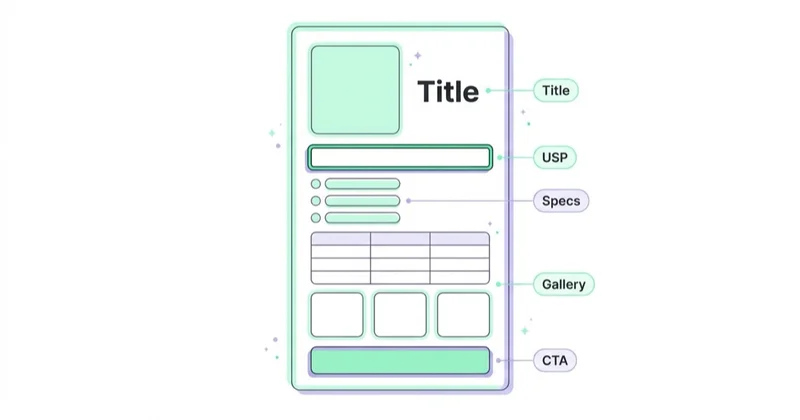
A practical product description structure
Use this structure for most ecommerce products:
- Short summary: what it is, who it is for, primary benefit.
- Key benefits: 3-5 concise bullets.
- Use cases: when and why to use it.
- Specifications: structured table.
- What's included: package contents or service scope.
- Fit, compatibility or sizing: where relevant.
- Proof and reassurance: reviews, certification, warranty, tests.
- Delivery and returns: key buying conditions.
- FAQ: objections and practical questions.
- Internal links: related categories, guides or complementary products.
Not every product needs every section. A simple low-cost product may only need a short version. A technical, expensive or regulated product needs more detail.
How long should a product description be?
There is no universal word count.
Use this rule:
- simple product: short paragraph, bullets and specification;
- comparison product: add use cases and differentiation;
- technical product: add detailed specs, compatibility and documentation;
- expensive product: add proof, warranty, objections and FAQs;
- regulated or safety-sensitive product: add limitations, instructions and compliance notes.
For Merchant Center feed data, Google supports long description fields, but the practical goal is accuracy and clarity, not filling the maximum character count. On the website, the description should be long enough to support the decision and short enough to stay scannable.
Product descriptions and SEO
Product descriptions support SEO by making pages more useful and easier to understand.
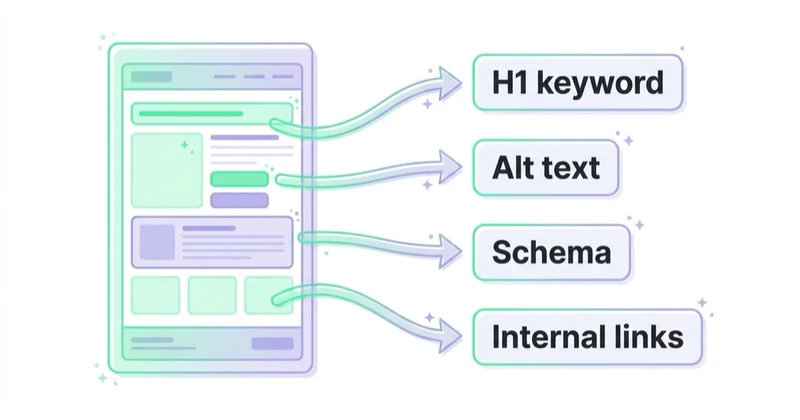
They can help with:
- unique content on product pages;
- product-type queries;
- long-tail searches;
- variant-specific searches;
- image and product result eligibility;
- internal linking;
- user engagement;
- matching page content with feed and schema data.
Do not write product descriptions only for keywords. Search systems are better at interpreting useful, coherent content than repeated phrases.
SEO-friendly product copy should include:
- product name and product type;
- important attributes;
- common use-case terms;
- brand or model where relevant;
- synonyms users search for;
- clear headings;
- structured specifications;
- internal links;
- accurate metadata;
- matching Product structured data.
For broader SEO structure, read Meta Tags in SEO: How to Write Meta Title and Meta Description and What Is an SEO Audit and How to Do It Properly?.
Product descriptions and conversion rate
A product description can improve conversion when it removes friction.
Conversion-focused copy should:
- clarify the value proposition;
- reduce uncertainty;
- make comparisons easier;
- explain the next step;
- support the visual content;
- answer practical questions;
- make pricing and delivery expectations clear;
- build trust.
The goal is not to write more persuasive adjectives. The goal is to make the buying decision easier.
For CRO context, read What Is Conversion Rate and How to Increase It? and How to Audit an Ecommerce Store.
Product descriptions and AI search
AI search systems and answer engines prefer information that is easy to parse, factually consistent and clearly structured. Product pages that hide key details, use vague language or contradict feed data are harder to use as reliable sources.
To make product pages more machine-readable:
- write a clear opening answer;
- use descriptive headings;
- add factual specification tables;
- define who the product is for;
- explain limitations honestly;
- include FAQs;
- keep price, availability and schema aligned;
- avoid unsupported claims;
- use consistent names across page, feed and structured data;
- link to relevant guides and categories.
This is not a separate "LLM SEO" trick. It is good information architecture.
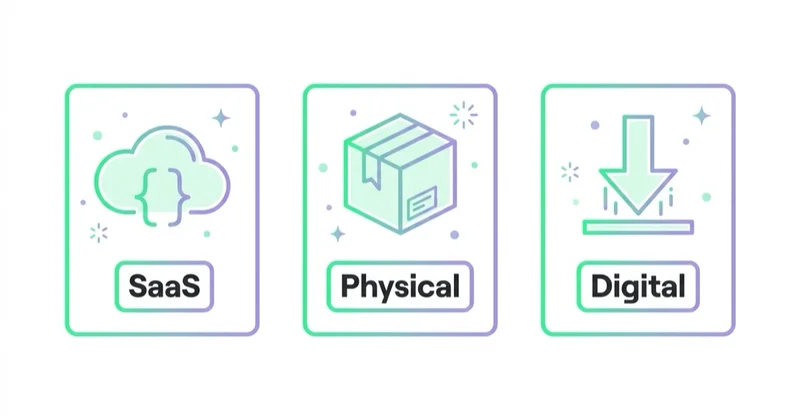
How to write by product type
Fashion and footwear
Important details:
- fit;
- size guidance;
- fabric;
- cut;
- stretch;
- care instructions;
- occasion;
- model measurements;
- returns policy.
Good description angle:
"Relaxed-fit linen shirt for warm-weather office outfits and travel. Breathable fabric keeps the shirt comfortable in heat, while the structured collar makes it smart enough for meetings."
Beauty and skincare
Important details:
- skin type;
- ingredients;
- texture;
- scent;
- routine step;
- how often to use;
- contraindications;
- patch-test advice;
- volume;
- expected result.
Be careful with medical or therapeutic claims. Claims should be accurate and compliant.
Electronics
Important details:
- compatibility;
- dimensions;
- power;
- battery;
- ports;
- warranty;
- setup;
- included accessories;
- software requirements;
- comparison with older models.
Electronics buyers often need exact specifications and compatibility reassurance.
Furniture and home
Important details:
- dimensions;
- materials;
- assembly;
- room fit;
- weight capacity;
- care;
- colour accuracy;
- delivery;
- returns;
- matching products.
Lifestyle copy helps, but dimensions and delivery details are usually decisive.
B2B and specialist products
Important details:
- standards;
- compliance;
- technical documents;
- integration;
- procurement requirements;
- service terms;
- implementation timeline;
- maintenance;
- compatibility;
- support.
B2B product copy should support rational evaluation, not only emotional appeal.
Before-and-after example
Weak version:
"High-quality office chair with modern design. Perfect for every office. Comfortable and durable."
Improved version:
"An ergonomic office chair for daily desk work, designed for people who need adjustable back support during long sessions. The mesh back improves airflow, the adjustable lumbar support helps match the chair to different body types, and the 120 kg weight rating makes it suitable for most home and office workstations."
Why it works better:
- explains who it is for;
- names specific features;
- translates features into benefits;
- gives a concrete specification;
- avoids empty claims.
Product description checklist
Before publishing a product description, check:
- Does the first paragraph explain the product clearly?
- Is the target user or use case obvious?
- Are the main benefits connected to real features?
- Is the specification complete and scannable?
- Are dimensions, materials, ingredients or compatibility details accurate?
- Are variants explained?
- Are delivery, returns and warranty details easy to find?
- Are claims supported by proof?
- Are product images consistent with the description?
- Does the description differ from the manufacturer's generic copy?
- Is the page title aligned with the product and search intent?
- Is Product structured data correct?
- Does the Merchant Center feed match the page?
- Are price and availability consistent across page, feed and schema?
- Are FAQs based on real user questions?
- Are internal links useful?
How we approach this at Space Ads
A good product description works on three fronts at once, and we write it with all three in view. It has to convince the buyer: specifics and real answers (size, material, fit, what it's for), not a heap of adjectives. It has to help SEO, because those words are how the search engine grasps what the product is. And it has to feed product campaigns: the same facts flow into titles and attributes in Merchant Center and decide which queries the product appears for. None of that is cosmetic page copy. One solid description pays off in three places — the product page, organic results and Shopping — while a weak one quietly costs you in all three.
Common mistakes
| Mistake | Why it hurts | Better approach |
|---|---|---|
| Copying manufacturer copy | Duplicate, generic content | Rewrite for the buyer and the store's positioning |
| Writing only features | Buyer does not see practical value | Explain the benefit of each important feature |
| Writing only benefits | Missing factual detail | Add specifications and proof |
| Hiding specifications | Hard to compare products | Use a structured table |
| Overusing SEO phrases | Copy feels unnatural | Use terms naturally in helpful context |
| Making unsupported claims | Trust and compliance risk | Use evidence, limits and accurate wording |
| Ignoring variants | Buyer may choose incorrectly | Explain size, colour, model or compatibility differences |
| Feed and page mismatch | Merchant Center and user trust issues | Keep page, feed and schema aligned |
| No FAQ | Repeated objections stay unanswered | Add real purchase questions |
| No internal links | Buyer journey stops | Link to guides, categories and related products |
FAQ
How many words should a product description have?
There is no fixed number. A simple product may need a short paragraph, bullets and specifications. A technical, expensive or high-risk product needs more detail, objections, proof and FAQs.
Should product descriptions include keywords?
Yes, but naturally. Use the product name, product type, important attributes, brand, model, use cases and synonyms. Do not repeat keywords in a way that makes the description less useful.
Can manufacturer descriptions be used?
They can be used as source material, but they should usually be rewritten. Add store-specific context, benefits, use cases, FAQs, comparisons, sizing guidance and internal links.
Can AI write product descriptions?
AI can create drafts and variations, but final copy must be checked against real product data, images, variants, price, availability, policy, compliance requirements and brand tone.
Is Product schema required?
It is not required to rank, and it does not guarantee rich results. It is strongly recommended for ecommerce because it helps search systems understand product facts when implemented correctly and matched with visible content.
What should be in Product schema?
Common elements include product name, image, description, brand, SKU or identifiers, offers, price, currency, availability and review or aggregate rating where valid. Requirements depend on the rich result or merchant listing feature.
Should product descriptions mention delivery and returns?
Yes, when those details affect purchase confidence. It is often enough to summarise the key point and link to the full policy.
Are long product descriptions better for SEO?
Not automatically. A long description helps only when it answers real questions and adds useful detail. Thin, repetitive text can hurt user experience even if it contains many keywords.
Conclusion
A product description that sells is not a slogan and not a keyword block. It is a clear explanation of the product, its value, its specifications, its use cases and the reasons a buyer can trust the purchase.
The strongest descriptions combine human usefulness with structured data discipline. The page should help users decide. The feed should describe the product accurately for shopping systems. Product schema should reflect the same facts in machine-readable form.
When those layers agree, the product page becomes easier to understand for customers, search engines, ad systems and AI tools. That is the real advantage.
Sources and further reading
- Google Search Central: Intro to Product structured data
- Google Search Central: Merchant listing Product and Offer structured data
- Google Search Central: Structured data markup supported by Google Search
- Google Search Central: Creating helpful, reliable, people-first content
- Google Merchant Center Help: Product data specification
- Google Merchant Center Help: Product data specification, description attribute
Continue learning
- Meta Tags in SEO: How to Write Meta Title and Meta Description
- What Is an SEO Audit and How to Do It Properly?
- What Is Google Merchant Center and How to Manage It?
- How to Audit an Ecommerce Store
- What Is Conversion Rate and How to Increase It?
- Product Photography: How to Take Product Photos and Packshots
Continue reading

Conversion Optimization: A Complete Guide for E-commerce, B2B, SaaS and Services
Conversion optimization improves the percentage and quality of visitors who become customers, leads, users or booked appointments. This guide explains how to diagnose friction before scaling paid ads.

How to Use Push Notifications
Push notifications can support sales, retention and service journeys when they are timely, permission-based, segmented, preference-aware and measured for incremental impact.
Are Product Recommendations Important?
Product recommendations can improve discovery, cross-selling, upselling and AOV when they are relevant, measured and privacy-aware.