Pest control marketing has two jobs. The first is immediate: capture urgent searches from homeowners or property managers who need help with ants, rodents, wasps, termites, mosquitoes, bed bugs or other pest problems. The second is more valuable over time: turn one-time treatments into recurring service plans that create predictable revenue.
That changes how the account should be managed. A cheap call is not success if it does not become a booked job. A booked job is not the full story if it never becomes a recurring plan. A strong pest control program connects Local Services Ads, Google Search, Google Business Profile, landing pages, call tracking and CRM feedback around booked jobs, completed treatments and plan lifetime value.
TL;DR
- Pest control marketing should optimize for booked jobs and recurring plans. Calls are early signals; recurring-plan lifetime value is the stronger business outcome.
- Local Services Ads can be a strong front door. Google lists pest control services among eligible categories, but badge wording and screening details should match the active account and market.
- Search should be split by pest and intent. Emergency removal, pest-specific treatment, termite inspection and recurring plan queries need different pages and conversion goals.
- Seasonality drives budget timing. Ants, termites, mosquitoes, wasps, rodents and indoor pests peak in different windows, so campaigns should not run flat all year.
- Trust and safety language affects conversion. Licensing, treatment process, inspection detail, child/pet considerations and technician professionalism matter.
- Negative keywords protect margin. DIY, product-only, jobs, licensing, training and unserved pest terms can waste expensive local demand.
- Plan starts deserve higher value. Bidding should distinguish one-time calls from completed jobs and recurring agreements.
Why Pest Control Marketing Is Different
Pest control is local, urgent, seasonal and recurring. That combination makes generic lead generation advice weak.
First, urgency varies by pest. A wasp nest near a doorway, a rodent in the kitchen or bed bug concern can trigger immediate phone-first demand. A mosquito program, termite inspection or quarterly pest plan may be considered earlier and booked before the peak season. The campaign has to serve both urgency and prevention.
Second, the service is delivered inside or around the home. Customers worry about children, pets, food areas, bedrooms, gardens and repeat exposure. The ad and landing page need to build confidence in process, safety, licensing and professionalism without making careless chemical or health claims.
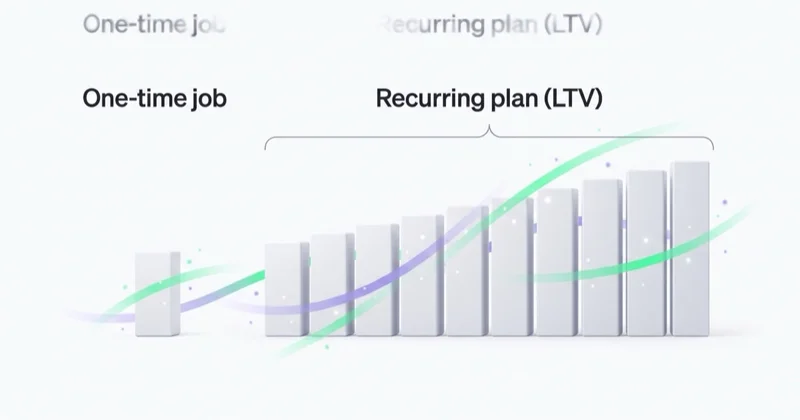
Third, the economics are not limited to one treatment. A first visit can become a quarterly plan, seasonal mosquito program, annual termite monitoring agreement or recurring commercial contract. The marketing account should reward sources that produce lifetime value, not only immediate appointments.
Fourth, demand follows a pest calendar. Markets differ by climate, but the pattern is rarely flat. Budget, keywords, landing pages and creative should shift before the next pest type peaks.
Fifth, reviews and local trust are decisive. Pest control is often chosen quickly, but not casually. The customer may call the first credible company that appears, answers and can schedule soon.
Local Services Ads For Pest Control
Local Services Ads are worth evaluating for pest control where the category is eligible and the company can meet screening requirements. Google's documentation lists pest control services among eligible Local Services Ads categories and describes a model where prospects can call or message through the ad. Google also describes screening procedures that vary by category and region and may include license, insurance and background checks.
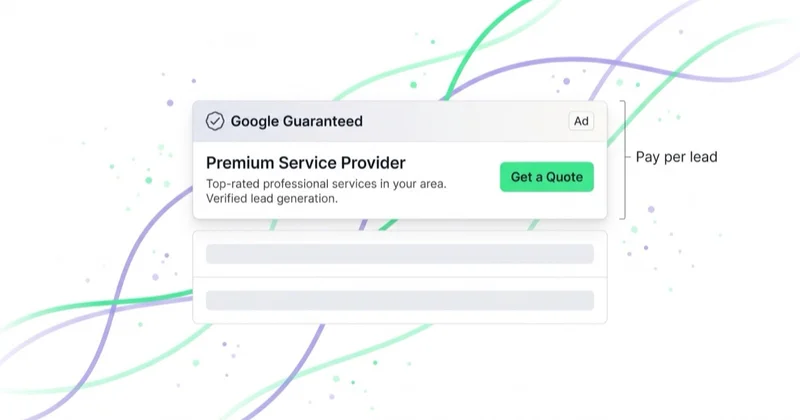
Badge language should be handled carefully. Older home-services playbooks often mention Google Guaranteed. Current Google Local Services documentation also emphasizes Google Verified language in many places. The safest approach is to use the badge and screening wording visible in the active account and market, and avoid promising anything beyond Google's displayed terms.
LSA can work well when:
- service areas are accurate;
- pest categories are configured correctly;
- calls and messages are answered quickly;
- profile reviews are strong;
- license and insurance information is current where required;
- lead feedback is reviewed consistently;
- booked jobs and plan starts are tracked outside the LSA interface.
LSA should not be managed as a standalone lead counter. It should be compared with Search by qualified calls, booked jobs, completed treatments and recurring-plan starts.
For deeper mechanics, see Google Local Services Ads and Google Verified / Google Guaranteed guide.
Google Search Structure
Search gives more control than LSA. It can separate emergency intent, pest type, recurring plan demand and brand traffic.
| Campaign Group | Example Search Pattern | Better Landing Page |
|---|---|---|
| Emergency removal | wasp nest removal, rodent exterminator near me | phone-first page, fast scheduling, service area |
| Pest-specific treatment | ant control, cockroach treatment, bed bug treatment | pest process, inspection, prep, treatment expectations |
| Termite | termite inspection, termite treatment, termite control | inspection, monitoring, treatment options, local proof |
| Mosquito / tick | mosquito control, tick treatment, yard mosquito service | seasonal program, plan schedule, outdoor treatment details |
| Rodent exclusion | mouse control, rat removal, rodent exclusion | entry-point inspection, sealing, follow-up visits |
| Recurring plan | quarterly pest control, pest control plan | plan tiers, coverage, renewal value |
| Commercial | restaurant pest control, property management pest control | compliance, reporting, recurring contract path |
| Brand | company name, reviews, phone number | direct booking, reputation and local proof |
The ad group should not mix "bed bug heat treatment" with "quarterly pest control plan" and "termite inspection". These searches imply different urgency, service complexity, pricing and sales scripts.
Negative keyword review should happen frequently during active seasons. Common exclusions include:
- DIY, homemade, home remedy and "how to";
- product-only searches such as sprays, traps, bait and foggers;
- jobs, salary, training, exam and license searches;
- school project or pest identification research;
- wholesale, supplier and equipment queries;
- wildlife terms if not offered;
- pests outside the service scope;
- free-only or coupon-only intent if not profitable;
- out-of-area city and county names.
Some educational queries can support SEO, but they usually should not consume high-intent paid Search budget unless the funnel is deliberately built for education and retargeting.
Seasonal Pest Calendar
Pest demand should be planned by service line and market. Exact timing varies by region, but the operating idea is consistent: prepare before the spike, not during it.
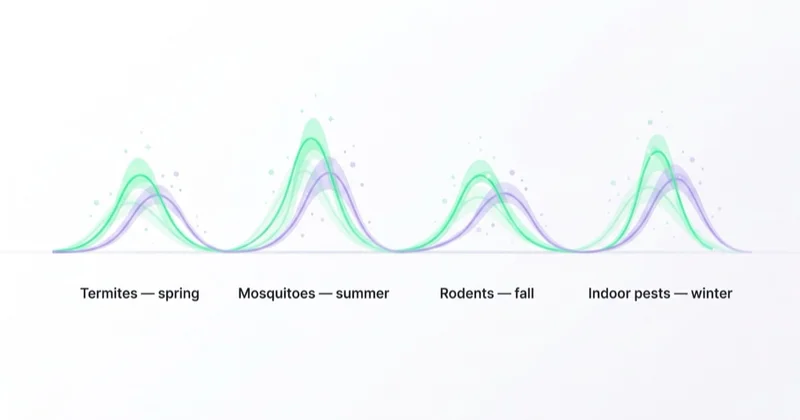
| Window | Common Demand Pattern | Campaign Focus |
|---|---|---|
| late winter / early spring | preventive planning, early ants, termite awareness | inspection offers, plan sign-ups, termite pages |
| spring | ants, termites, wasps beginning, general pests | pest-specific Search and local trust |
| late spring / summer | mosquitoes, ticks, wasps, fleas, ants | seasonal programs and emergency availability |
| late summer / fall | rodents, spiders, wasps, stinging insects | rodent exclusion, fall prevention, plan retention |
| winter | rodents, cockroaches, bed bugs, indoor pests | indoor treatments, commercial, recurring plans |
| year-round | bed bugs, cockroaches, commercial service | always-on Search and intake readiness |
Budget should also reflect technician capacity. If the schedule is full for several days, buying more urgent leads can create missed calls and poor reviews. If recurring-plan technicians have open routes, the account can shift toward preventive and plan-intent campaigns.
Emergency vs Preventive Intent
Emergency and preventive pest control need different conversion paths.
| Intent | User State | Conversion Path |
|---|---|---|
| emergency | wants immediate removal or treatment | call-first, availability, fast dispatch |
| pest-specific | wants a solution for a known pest | inspection, treatment explanation, quote |
| preventive | wants to avoid future pests | plan education, seasonal benefits, recurring agreement |
| commercial | wants compliance and reliability | consultation, contract, reporting and service schedule |
| brand | already considering the company | direct phone, reviews and booking path |
Emergency campaigns should not bury the phone number under a long page. Preventive campaigns need more explanation because the customer may not yet feel urgent pain. Commercial campaigns need different proof: reporting, discreet service, documentation, recurring route reliability and property type experience.
Trust And Safety Signals
Pest control marketing should address trust without overclaiming. EPA consumer guidance advises people to ask questions before choosing a pest control company. That should influence landing-page content: make the questions easier to answer before the customer has to ask.
Useful trust content includes:
| Trust Signal | Why It Helps |
|---|---|
| license and certification information where applicable | validates professionalism |
| technician screening and training language | reduces in-home service anxiety |
| inspection process | explains how treatment decisions are made |
| pest-specific treatment plan | avoids vague extermination promises |
| child/pet preparation guidance | answers common safety concerns |
| follow-up policy | sets expectations for recurring or repeat visits |
| product or method explanation | improves transparency without chemical overclaims |
| reviews by pest type | makes proof more relevant |
| service-area clarity | reduces poor-fit calls |
| emergency and after-hours policy | prevents false expectations |
Avoid universal promises. Pests are biological, environmental and property-dependent. Strong copy can explain inspection, treatment, monitoring, exclusion and follow-up without promising impossible certainty.
Landing Pages For Pest Control
A strong pest control landing page should match the pest and the urgency level.
Emergency pages should include:
- visible click-to-call CTA;
- service area;
- hours and response expectations;
- pest-specific photos or illustrations;
- what happens during the first visit;
- preparation instructions where relevant;
- reviews and local proof;
- recurring-plan path after the immediate issue.
Plan pages should include:
- plan frequency;
- covered pests;
- seasonal treatment schedule;
- inspection and prevention process;
- follow-up and re-service policy;
- pricing or quote framing where appropriate;
- homeowner benefits;
- easy booking or callback CTA.
Commercial pages should include:
- industries served;
- documentation and reporting;
- discreet service options;
- recurring route schedule;
- audit/compliance support where accurate;
- property manager or business-owner CTA.
For conversion structure, see what a landing page is and how to build one.
Google Business Profile And Local SEO
Pest control is local trust work. Google Business Profile supports paid campaigns because many users compare reviews, photos, hours and location before calling.
Google's local ranking documentation describes relevance, distance and prominence as core local factors. For pest control, that means practical work:
- accurate service categories;
- real service areas;
- current hours;
- active review generation;
- review responses;
- pest-specific photos where appropriate;
- services listed by pest type;
- appointment and phone paths;
- local pages for priority markets;
- content that answers local seasonal questions.
GBP should reflect the same services promoted in ads. If Search promotes termite inspections, the profile and site should clearly show termite capability. If emergency service is advertised, call routing and hours should support it.
Measurement: Jobs, Plans And LTV
The measurement model should follow the customer from first contact to recurring revenue.
| Stage | Meaning | Platform Use |
|---|---|---|
lead |
call, form, chat or LSA contact | early signal only |
qualified_call |
in service area and in scope | better quality signal |
job_booked |
appointment scheduled | strong optimization signal |
job_completed |
treatment delivered | confirms service revenue |
plan_started |
recurring plan created | lifetime-value signal |
plan_retained |
customer remains after renewal window | retention signal |
job_value |
one-time revenue | value bidding input |
plan_ltv |
expected or actual recurring value | stronger value bidding input |
Google Ads call reporting can help measure phone demand from ads, but call duration alone is not enough. A two-minute out-of-area call and a two-minute recurring-plan sale should not have the same value. CRM stages should distinguish one-time treatments from recurring agreements.
When the data is reliable, offline conversion imports can send booked jobs, completed jobs and plan-start values back to Google Ads. If plan LTV is not stable yet, the account can start with weighted values: one-time job, completed high-value treatment, recurring plan start and commercial contract.
Recurring Plans And Retention
The recurring plan is where pest control marketing often becomes profitable.
Plan conversion depends on:
- how the technician explains prevention after the first visit;
- whether the plan covers the pest that triggered the call;
- whether pricing is easy to understand;
- whether follow-up visits are clear;
- whether the customer trusts safety and professionalism;
- whether the CRM reminds the team to offer the plan;
- whether renewal and cancellation data is visible.
Paid media should not be credited only for the first appointment. If Search generates emergency ant treatment that becomes a quarterly plan, the source produced recurring value. If LSA generates many one-time low-value jobs with no plan conversion, the visible lead cost may look good while the business outcome is weaker.
How Space Ads Approaches Pest Control Accounts
At Space Ads, pest control accounts start with job economics, seasonality and plan conversion. The audit maps pest types, service areas, technician capacity, one-time job value, recurring plan LTV, commercial contracts, call handling, LSA setup, Google Business Profile quality and CRM stages.
Then campaigns are rebuilt by intent. LSA is evaluated where eligible. Search is separated into emergency, pest-specific, termite, mosquito/tick, rodent, recurring plan, commercial and brand demand. Landing pages match pest type and urgency. Call tracking and CRM imports connect spend to booked jobs and plan starts.
For an existing company, a marketing audit can show whether spend is producing recurring revenue or only calls. Ongoing execution connects Google Ads, Local Services Ads, call tracking, Google Business Profile and performance marketing.
30-Day Optimization Plan
- Map pest economics. Break down job value, plan conversion and plan LTV by pest type.
- Review capacity. Check technician availability, service areas, call coverage and seasonal constraints.
- Audit LSA. Validate categories, service areas, screening status, reviews, profile completeness and lead feedback.
- Rebuild Search. Separate emergency, pest-specific, termite, mosquito, rodent, plan and commercial intent.
- Clean negatives. Remove DIY, products, jobs, licensing, training, wholesale and unserved pest searches.
- Upgrade landing pages. Match pest type, add safety/trust content, explain treatment and show plan path.
- Improve GBP. Update categories, services, photos, reviews, hours and local content.
- Track deeper stages. Record qualified calls, booked jobs, completed jobs, plan starts and plan retention.
- Assign values. Weight recurring plans higher than one-time jobs in reporting and bidding.
- Plan the next pest window. Build campaigns and pages before seasonal demand rises.
Common Mistakes
| Mistake | Why It Hurts | Better Approach |
|---|---|---|
| Measuring calls only | call volume hides job and plan quality | track booked jobs and recurring plans |
| Assuming one badge name everywhere | LSA wording varies by market/account | use the badge visible in the active account |
| Running flat budgets | pest demand changes by season | shift budget by pest calendar and capacity |
| Mixing emergency and plan intent | urgency and conversion paths differ | separate campaigns and pages |
| Overpromising elimination | pests are property- and environment-dependent | explain inspection, treatment and follow-up |
| Ignoring safety questions | homeowners hesitate before in-home treatment | address process, preparation and technician proof |
| No plan-value feedback | bidding favors cheap one-time calls | import or weight plan starts |
| Weak negatives | spend leaks into DIY and product searches | review search terms weekly |
FAQ
What is pest control marketing?
Pest control marketing is the system used to generate qualified pest control calls, booked treatments and recurring service plans through Local Services Ads, Google Search, Google Business Profile, SEO, landing pages, reviews, call tracking and CRM follow-up.
Should pest control companies use Local Services Ads?
Local Services Ads are worth testing where pest control is eligible and the company can meet screening requirements. They can generate calls and messages from local prospects, but performance should be judged by qualified calls, booked jobs, completed treatments and recurring-plan starts.
Is Google Guaranteed still the right wording for pest control ads?
Badge language should match the active account and market. Some home-services contexts and older playbooks refer to Google Guaranteed, while current Google documentation often emphasizes Google Verified and screening language. Campaign copy should not promise more than the badge actually displays.
How should pest control campaigns handle seasonality?
Campaigns should follow the pest calendar. Termite, ant, mosquito, tick, wasp, rodent, bed bug and commercial demand can peak at different times. Budget, ads, landing pages and call coverage should prepare before each window rather than react after demand rises.
What should pest control companies track?
The core funnel should track lead, qualified call, booked job, completed job, recurring plan start, plan retention and value. Plan starts should usually receive higher value than one-time treatments because they create recurring revenue.
What negative keywords matter for pest control?
Common negatives include DIY, home remedy, spray, traps, products, jobs, salary, training, license, school projects, wholesale, unserved pests and out-of-area locations. The final list should be built from real search terms and adjusted by season.
How can pest control ads generate more recurring plans?
Recurring plans should be built into the landing page, quote process, technician script and CRM. Emergency calls can become plan opportunities when the company explains follow-up, prevention, seasonal coverage and re-service expectations clearly.
In Short
- Pest control marketing should optimize for booked jobs, completed treatments and recurring plan value.
- LSA can be a strong channel where eligible, but badge language and screening claims must match the active market.
- Search should be separated by pest type, emergency intent, preventive plans, commercial demand and brand.
- Trust content should explain licensing, inspection, safety considerations, process and follow-up without overpromising.
- CRM feedback and plan LTV turn pest control PPC from call buying into recurring-revenue growth.
Sources
- EPA - Choosing a Pest Control Company
- Local Services Help - Getting started with Local Services Ads
- Local Services Help - How providers qualify for Local Services Ads
- Google Ads Help - About call reporting
- Google Business Profile Help - Improve local ranking on Google
Continue Learning
- Google Ads for local businesses, home services and contractors
- Google Local Services Ads and Google Verified / Google Guaranteed guide
- Call tracking for PPC and lead generation
- Negative keywords in Google Ads
- HVAC marketing: Google Ads and lead generation
- Tree service marketing and lead generation
- Google Ads · Performance marketing · Marketing audit
Continue reading
Tree Service Marketing: Storm Leads and Booked Jobs
Tree service marketing has to capture emergency storm demand and steady planned work without wasting crew capacity. This guide covers Google Search, Local Services Ads, Google Verified, storm budgets, safety proof, call triage and cost per booked job.

Moving Company Marketing: Capture High-Intent Movers in Google
Moving company marketing is won through high-intent Search, fast quoting, local trust and booked-move measurement. This guide covers Google Ads, Local Services Ads, local vs long-distance intent, interstate trust signals, seasonality, capacity and CRM feedback.
Electrician Marketing: Google Ads and Local Services for Steady Jobs
Electrician marketing should produce profitable completed work, not just cheap calls. Learn how to connect Google Ads, Local Services Ads, dispatch capacity and job economics.