Tree service marketing is not a steady lead-generation category. Demand can change in one afternoon. A normal week may be built around pruning, trimming, stump grinding and planned removals. Then a storm hits, emergency searches spike, phones light up and the highest-value jobs go to companies that can answer, qualify, price and dispatch quickly.
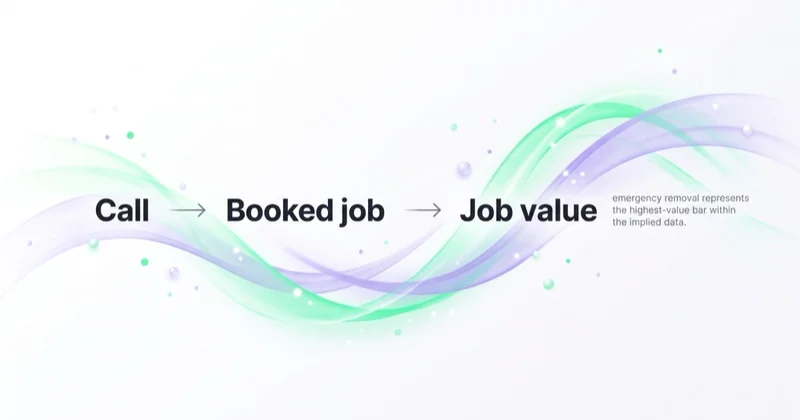
That makes tree service marketing a capacity and trust problem as much as an advertising problem. Google Ads, Local Services Ads and Google Business Profile can all generate calls, but those calls are only valuable when the job is in area, in scope, profitable, safe to perform and matched to crew availability. The KPI is not cost per click or even cost per lead. The KPI is cost per booked job, cost per completed job and job value by service line.
TL;DR
- Tree service marketing should optimize for booked jobs. Calls are only useful when they become in-area, in-scope work.
- Storm demand needs a prepared playbook. Budgets, emergency copy, call routing and crew capacity should be ready before weather-driven demand spikes.
- Emergency and planned work need separate campaigns. A fallen-tree query behaves differently from a pruning or stump-grinding query.
- Trust proof is a conversion lever. OSHA highlights fatal hazards in tree care; homeowners need proof that the company takes safety, insurance and process seriously.
- Local Services Ads are eligible for tree services. Google currently lists tree services under eligible home services and emphasizes the Google Verified badge in select verticals.
- Measurement has to include job value. A small branch cleanup and a hazardous removal should not be treated as equal conversions.
Why Tree Service Marketing Is Different
Tree service combines weather-driven urgency, high liability, local competition and wide job-value variance.
First, demand is uneven. Wind, ice, heavy rain and storm damage can create immediate emergency intent. Between those events, the same company still needs planned work to keep crews utilized.
Second, job value varies. Tree trimming, pruning, stump grinding, crane-assisted removal, emergency cleanup, commercial property maintenance and land clearing can have very different economics. A campaign that treats every call as equal will send budget toward volume, not profit.
Third, trust matters. Tree work can involve overhead power lines, falling branches, heavy equipment, climbing, chainsaws and property risk. OSHA's tree care resources describe hazards such as overhead power lines, falling branches and faulty safety equipment as potentially fatal. Marketing should not exaggerate safety, but it should make qualifications, insurance documentation, process and scope clear.
Fourth, response speed matters. A homeowner with a fallen tree across a driveway does not behave like a homeowner researching pruning for next month. Emergency leads need phone-first routing, fast qualification and clear service area coverage. Planned leads need education, seasonality and estimate scheduling.
Channel Mix for Tree Service
| Channel | Best role | What to measure |
|---|---|---|
| Local Services Ads | High-intent local leads and Google Verified trust signal where eligible | Valid leads, booked jobs, lead credits, job value |
| Google Search | Emergency and planned keyword control | Qualified calls, booked jobs, cost per service line |
| Google Business Profile | Local visibility, reviews, calls and trust | Calls, direction requests, profile actions, review velocity |
| Retargeting | Re-engage planned-work visitors | Estimate requests and seasonal service bookings |
| Meta | Planned-work awareness, before-storm reminders, seasonal promos | Assisted leads, quote requests and local reach |
| SEO/local pages | Long-term service-area coverage | Organic calls, local rankings and estimate requests |
The local framework is similar to other home services covered in Google Ads for local businesses, roofing marketing, HVAC marketing and pest control marketing. Tree service simply has sharper weather spikes and stronger safety expectations.
Local Services Ads and Google Verified
Local Services Ads can be a strong front door for tree service because they show in local search, charge for leads rather than standard clicks and include verification signals when the business completes Google's screening requirements. Google currently lists tree services as an eligible home-services category for Local Services Ads and describes the Google Verified badge as a trust signal in select verticals.
The practical setup matters more than turning LSA on:
| LSA area | What to check |
|---|---|
| Business verification | Name, address, service area, license or insurance uploads where required |
| Service categories | Emergency tree service, tree removal, trimming, stump grinding and related services only if actually offered |
| Service area | Crew-reachable ZIPs/cities, not every market that looks attractive |
| Lead management | Call response, message response, dispute/credit review and notes |
| Reviews | Review requests after completed jobs where allowed |
| Capacity | Pause or reduce lead flow when crews are fully booked |
Older content and some markets may use different badge language, so the account should use the badge and requirements shown in the current Local Services Ads interface. The key point is not the badge name. The key point is that screening, profile accuracy, service selection and lead management affect whether the channel produces profitable work.
Search Structure: Emergency vs Planned
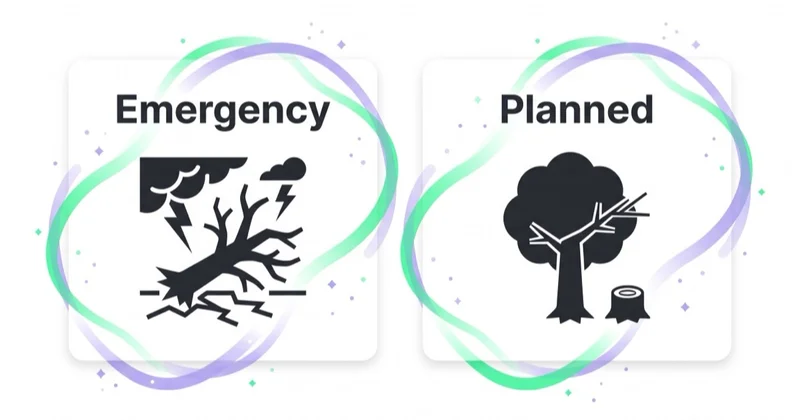
Google Search should not blend every tree query into one campaign. Emergency intent, planned removal intent and maintenance intent behave differently.
| Campaign | Example intent | Landing page and CTA |
|---|---|---|
| Emergency tree service | emergency tree removal, fallen tree removal, storm damage tree service |
Phone-first page, emergency availability, service area, triage script |
| Tree removal | tree removal near me, tree removal cost, remove large tree |
Estimate-focused page, process, risk factors, proof |
| Tree trimming/pruning | tree trimming service, tree pruning [city], arborist pruning |
Seasonal education, tree health, quote scheduling |
| Stump grinding | stump grinding near me, stump removal service |
Clear add-on pricing logic and bundling |
| Brand and reviews | Company name, reviews, phone number | Direct booking, reviews, proof and location signals |
This split prevents storm spikes from distorting normal planned-work economics. Emergency campaigns can run with tighter call coverage and higher short-term budgets. Planned campaigns can use stronger landing pages, quote scheduling and education.
The Storm Playbook
Storm demand is won before the storm. The account should have a prepared operating routine:

- Forecast monitoring. Watch weather alerts in the actual service area, not only broad regional forecasts.
- Capacity check. Confirm crew count, equipment, call coverage, emergency hours and dispatch limits.
- Budget release. Increase emergency campaign and LSA budgets only to the level crews can handle.
- Ad copy activation. Switch to storm-specific copy for emergency removal, blocked access, damaged limbs and cleanup.
- Call triage. Ask the right questions before booking: location, hazard, access, power lines, property damage, urgency and photos.
- Post-storm review. Compare calls, booked jobs, completed jobs, average ticket and rejected leads.
The main mistake is increasing spend without dispatch capacity. That creates missed calls, poor reviews and wasted media. Storm budgets should follow the operator's ability to answer and perform work.
Trust Proof That Converts
Homeowners are not only buying tree removal. They are buying reduced risk. A strong page or ad gives them enough evidence to call without feeling they are gambling with their property.
| Trust element | Why it matters |
|---|---|
| Proof of insurance | Reduces property and liability anxiety |
| Workers' compensation information where applicable | Shows the company treats crew safety seriously |
| Certified arborist credentials if true | Supports expertise for pruning, tree health and complex removals |
| Equipment explanation | Helps customers understand how large removals are handled |
| Photos of real jobs | Shows scale, cleanup quality and professionalism |
| Reviews mentioning responsiveness and cleanup | Matches the customer's main fears |
| Clear exclusions | Avoids calls for work outside scope or unsafe conditions |
The language should be accurate. If the company does not employ certified arborists, the page should not imply that it does. If emergency service is not truly available after hours, the campaign should not promise it. Trust is built through specificity, not inflated claims.
Landing Page CRO for Tree Service
Emergency and planned pages should be different.
| Page element | Emergency page | Planned-work page |
|---|---|---|
| Primary CTA | Tap-to-call | Request estimate |
| Above-the-fold proof | Service area, emergency availability, insurance proof | Services, credentials, reviews |
| Qualification | Hazard, location, access, photos, power lines | Tree type, service need, timeline, property type |
| Conversion path | Phone and short form | Form, call and quote scheduler |
| Content | What to do now, what information to have ready | Process, timing, pruning/removal guidance, FAQ |
For emergency pages, clarity beats long copy. For planned-work pages, education improves conversion quality. A homeowner researching pruning needs to know whether the company understands tree health, seasonal timing and cleanup. A homeowner with a fallen tree needs to know whether the company can respond and what information is required for triage.
Negative Keywords
Tree service CPCs can rise quickly, especially after storms. Search-term hygiene is essential.
| Exclusion group | Examples |
|---|---|
| DIY | how to cut down a tree, chainsaw, tree removal equipment, rent wood chipper |
| Products | firewood, mulch for sale, logs, wood chips |
| Jobs | tree service jobs, arborist salary, tree trimmer hiring |
| Municipal | city tree removal, county tree service, public works |
| Low fit | cheap, coupon, permit only, services not offered |
| Education | how to become an arborist, tree care class, certification |
Negatives should be reviewed more often during storm periods because query patterns change quickly. Emergency campaigns also need stricter geographic control so paid calls do not arrive from outside the practical dispatch area.
Measurement: Calls Are Not Enough
Tree service reporting should connect ad spend to real work.
| Event | Meaning | Use in optimization |
|---|---|---|
call_started |
Someone called from an ad | Early signal only |
qualified_call |
In-area and relevant service request | Removes spam and wrong-service calls |
estimate_booked |
On-site or remote estimate scheduled | Better quality signal |
job_booked |
Work scheduled | Primary lead-quality KPI |
job_completed |
Work delivered | Business outcome |
job_value |
Revenue or gross profit where available | Enables value-based budget decisions |
Google call reporting can track call assets and call ads through forwarding numbers and can count calls of a specified duration as conversions. For tree service, call duration is still only a proxy. The CRM, dispatch tool or spreadsheet should capture whether the call became an estimate, booked job, completed job and revenue amount.
This is where call tracking for PPC, negative keyword discipline, conversion tracking and margin-based conversion value matter. The account should learn from completed jobs, not every phone ring.
Google Business Profile and Local SEO
Google says local results are mainly based on relevance, distance and prominence, and recommends complete, accurate business information, up-to-date hours, review responses and photos. For tree service, that means the Business Profile is not a side task. It supports both organic local visibility and paid conversion.
High-impact GBP work includes:
- accurate service areas and categories;
- emergency hours and special hours during storms where appropriate;
- recent photos of crews, equipment, cleanup and completed work;
- reviews that mention specific services and locations;
- responses to reviews;
- clear phone routing;
- consistent name, address and phone information across the site and profile.
Storm periods also create operational risk. If the profile says the business is open, calls need to be answered. If service areas are too broad, lead quality drops. If photos are generic, homeowners have less reason to trust the company with a risky job.
How Space Ads Approaches Tree Service Accounts
Across 25+ client accounts audited daily and roughly 14 million monthly data points analyzed through Space Ads OS, local home-services accounts usually fail in predictable ways: calls are counted as success, job value is missing, campaign structure mixes urgent and planned intent, and budget is not aligned with crew capacity.
For tree service, the Space Ads approach starts with job economics and operations. Emergency removal, planned pruning, stump grinding and commercial maintenance are separated by campaign, page and KPI. LSA is managed with lead feedback and capacity controls. Search is split by intent and supported by a storm budget playbook. Reporting moves toward booked jobs, completed jobs and value by service line. For an existing account, a marketing audit should show whether spend is generating profitable work or just phone volume.
30-Day Optimization Plan
- Days 1-3: define service economics. Separate emergency removal, planned removal, trimming/pruning, stump grinding and commercial work by average ticket and margin.
- Days 4-7: fix tracking. Track qualified calls, estimate bookings, booked jobs, completed jobs and job value.
- Days 8-12: audit LSA and GBP. Verify categories, service areas, badge status, insurance uploads, reviews, photos and phone routing.
- Days 13-18: rebuild Search. Separate emergency and planned campaigns, build negative lists and create service-specific pages.
- Days 19-24: create the storm playbook. Set forecast triggers, call coverage, budget limits, copy variants and capacity rules.
- Days 25-30: optimize by outcome. Shift spend toward service lines and geographies with profitable completed jobs.
FAQ
What is tree service marketing?
Tree service marketing is the system used to generate booked jobs for tree removal, emergency storm cleanup, trimming, pruning, stump grinding and related services. It usually includes Google Search, Local Services Ads, Google Business Profile, local SEO, call tracking, service-area pages and review generation.
Which channel works best for tree service leads?
Google Search and Local Services Ads are usually the first channels to evaluate because tree service demand is highly local and often urgent. Google Business Profile supports both paid and organic conversion. Meta can help with planned work and seasonal reminders, but it is usually weaker for immediate emergency intent.
Should tree service companies use Local Services Ads?
Where eligible and operationally ready, Local Services Ads can work well. Google lists tree services as an eligible home-services category, and LSA lets businesses receive local leads after screening and verification. The channel still needs service-area accuracy, lead feedback, call response and capacity management.
How should storm demand be handled in Google Ads?
Storm demand should be handled with a prepared playbook: forecast monitoring, emergency copy, call routing, budget limits, crew capacity checks and post-storm review. Spend should increase only when the company can answer calls and perform the work.
What should tree service campaigns optimize for?
Tree service campaigns should optimize for booked jobs, completed jobs and job value. Calls are useful, but call volume alone can hide spam, out-of-area requests, municipal issues, DIY questions and low-value jobs.
What makes a tree service landing page convert?
A strong page matches the intent. Emergency pages need phone-first design, service area, response availability and triage clarity. Planned-work pages need service details, process, proof of insurance, credentials if true, real job photos, reviews and an estimate CTA.
Why does safety proof matter in tree service ads?
Tree work is visibly risky for homeowners. Proof of insurance, worker safety practices, credentials where applicable, equipment explanation, real job photos and reviews reduce perceived risk and make a premium service easier to trust.
In Short
- Tree service marketing should be measured by booked jobs, completed jobs and job value.
- Emergency storm demand and planned work need separate campaigns, pages and budget logic.
- Local Services Ads and Google Business Profile can be strong sources of local demand when profile accuracy and lead management are strong.
- Safety, insurance proof, real photos and reviews are conversion assets, not secondary details.
- The best storm campaigns are prepared before the storm and scaled only to crew capacity.
Sources
- OSHA - Tree Care Industry overview
- OSHA - Tree Care Industry hazards and solutions
- Google Ads - Local Services Ads
- Local Services Help - Getting started with Local Services Ads
- Google Business Profile Help - Improve local ranking on Google
- Google Ads Help - About call reporting
Continue Learning
- Google Ads for local businesses, home services and contractors
- Local Services Ads guide
- Call tracking for PPC and lead generation
- Negative keywords in Google Ads
- Roofing company marketing and lead generation
- HVAC marketing: Google Ads and lead generation
- Google Ads · Marketing audit · Performance marketing
Continue reading

Pest Control Marketing: Google Ads, LSA and Recurring Plans
Pest control marketing should turn urgent pest searches into booked jobs and recurring service plans. This guide covers Local Services Ads, Google Search, seasonal pest demand, emergency vs preventive intent, safety trust signals, negative keywords, call tracking and plan lifetime value.

Moving Company Marketing: Capture High-Intent Movers in Google
Moving company marketing is won through high-intent Search, fast quoting, local trust and booked-move measurement. This guide covers Google Ads, Local Services Ads, local vs long-distance intent, interstate trust signals, seasonality, capacity and CRM feedback.

Electrician Marketing: Google Ads and Local Services for Steady Jobs
Electrician marketing should produce profitable completed work, not just cheap calls. Learn how to connect Google Ads, Local Services Ads, dispatch capacity and job economics.