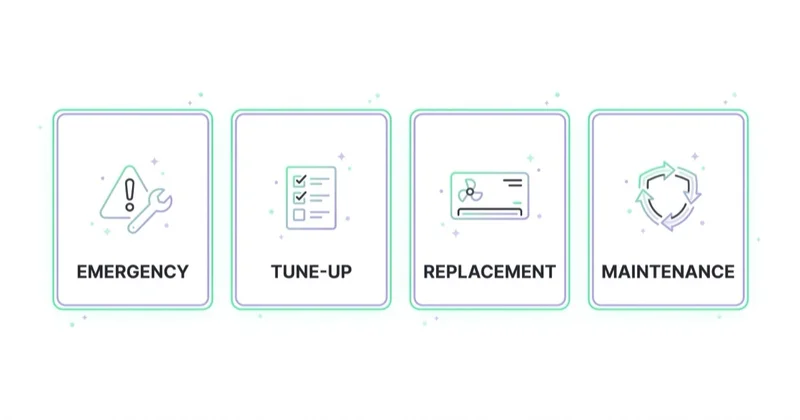
HVAC marketing is local lead generation under weather pressure. When an air conditioner fails during a heat wave or a furnace stops during a cold snap, the homeowner is not casually browsing. The business that appears locally, answers the phone, proves trust and can book the job quickly often wins. At the same time, not every HVAC lead has the same value. Emergency repair, seasonal tune-up, full system replacement and maintenance-plan enrollment have different margins, timelines and follow-up needs.
That is why a strong HVAC Google Ads account should not optimize for the cheapest form or call. It should optimize for booked jobs, replacement opportunities, maintenance-plan value and real service-area fit. Local Services Ads can be a powerful front door for high-intent home services demand. Search campaigns capture urgent and research-stage queries. Landing pages, call handling and CRM feedback decide whether that demand becomes revenue.
TL;DR
- HVAC marketing should measure booked jobs, not raw leads. Calls, forms and messages are useful only when they become qualified appointments, repairs, replacements or maintenance plans.
- Local Services Ads belong near the top of the channel mix where available. Google lists HVAC as an eligible home service category and describes LSA as pay-for-leads rather than pay-for-clicks.
- Search still matters. Google Search captures emergency repair, replacement research, brand demand and local service queries that may not all be covered by LSA.
- Seasonality creates two demand peaks. Cooling demand rises in hot periods; heating demand rises in cold periods. Shoulder seasons are better for tune-ups, inspections and maintenance plans.
- Lead value varies widely. A tune-up, emergency repair, indoor air quality add-on and system replacement should not receive the same target.
- Call tracking and offline conversion imports are essential. HVAC is phone-heavy, so Google Ads needs feedback from the call center, dispatch tool or CRM.
Why HVAC Marketing Is Different
HVAC combines urgency, local intent, technical complexity and recurring customer value.
First, many searches are urgent. Queries such as "AC repair near me," "furnace not working," "emergency HVAC repair" and "no heat service" carry immediate need. The ad, landing page and phone routing must reduce time to contact.
Second, the category has two major seasons. Air conditioning demand can surge during heat. Heating demand can surge during cold. Between those peaks, the contractor still needs useful work for technicians, which is where inspections, tune-ups and maintenance plans become important.
Third, job value varies. A capacitor repair, seasonal tune-up, ductless system quote and full replacement have different economics. If all conversions are reported as equal, bidding systems learn from the wrong signal.
Fourth, trust and operations matter as much as media. Reviews, licensing, insurance, service area, response time, financing, warranties and technician availability all influence conversion. A good account can still fail if calls are missed or the dispatch team cannot handle demand spikes.
Channel Mix for HVAC Lead Generation
HVAC contractors usually need more than one Google surface.
| Channel | Best Role | Main Risk |
|---|---|---|
| Local Services Ads | High-intent local leads and calls | Lead quality depends on service area, categories and intake discipline |
| Google Search | Emergency repair, replacement, brand and service queries | Wasted spend without tight keywords and negatives |
| Google Business Profile | Local trust, calls, reviews, Maps visibility | Weak photos, hours or reviews reduce conversion |
| Performance Max | Incremental coverage after measurement is stable | Poor lead quality if weak conversions are used |
| Remarketing | Return visitors, replacement researchers, abandoned forms | Easy to over-credit without CRM outcomes |
| Meta | Awareness, seasonal offers, maintenance plans | Weak for urgent intent without follow-up and targeting discipline |
Google Ads for local businesses provides the general framework. HVAC needs extra attention because weather and response speed can change demand quality within hours.
Local Services Ads for HVAC
Local Services Ads are often one of the first channels to evaluate for HVAC in eligible markets. Google says Local Services Ads help local customers find businesses when they need services and that advertisers pay when potential customers get in touch through the ad. Google's eligible home services list includes HVAC.
The strengths are clear:
- local placement for service searches;
- lead-based payment model rather than click-based payment;
- trust signal through Google verification where available;
- strong fit for call-heavy emergency demand;
- simple route to phone calls, messages or booking requests depending on setup.
The limitations are also important:
- category eligibility and verification requirements vary by market;
- service area and job category settings need careful control;
- lead disputes, invalid leads and intake quality need review;
- LSA volume can be constrained by budget, profile quality and competition;
- reporting still needs booked-job feedback from CRM or dispatch.
LSA should not be managed as "set and forget." Review lead recordings or details where available, classify lead quality, compare booked jobs by service type and keep the Google Business Profile consistent with the service area and categories.
Google Search for HVAC
Search campaigns still matter because HVAC demand is not one intent.
| Search Intent | Example Queries | Landing Page Need |
|---|---|---|
| Emergency repair | AC repair near me, furnace repair now, no heat | Phone-first page, service area, availability, trust |
| Replacement | HVAC replacement cost, new AC installation, heat pump installer | Financing, quote process, brands, warranties, proof |
| Maintenance | AC tune-up, furnace maintenance, HVAC inspection | Seasonal offer, checklist, maintenance plan |
| Brand | Contractor name, reviews, phone number | Direct booking path and trust reinforcement |
| System type | ductless mini split, heat pump, boiler, central AC | Technical fit, service area, quote CTA |
The account should separate emergency, replacement and maintenance. Emergency campaigns can prioritize phone calls and response speed. Replacement campaigns usually need more proof, financing and remarketing. Maintenance campaigns can run ahead of seasonal peaks and support recurring revenue.
Search term control is critical. HVAC keywords are expensive because a booked job can be valuable. Broad matching without negatives can quickly spend on jobs, training, parts-only research, DIY repairs, manuals, wiring diagrams, product-only shopping and out-of-area searches.
Seasonality: Cooling, Heating and Shoulder Seasons
HVAC demand has a different rhythm from many trades. Roofing may be heavily storm and spring-summer driven. HVAC has cooling and heating cycles.
| Period | Demand Pattern | Campaign Focus |
|---|---|---|
| Pre-summer | Homeowners prepare for cooling | AC tune-ups, inspections, maintenance plans |
| Heat waves | Urgent cooling repair and replacement | Call coverage, LSA budget, emergency search |
| Late summer | Replacement and maintenance follow-up | Quote nurturing, plan enrollment |
| Fall | Heating preparation | Furnace tune-up, heat pump inspection, maintenance plan |
| Cold snaps | Urgent heating repair | Phone-first campaigns, service area discipline |
| Slow periods | Lower emergency demand | Reviews, SEO, remarketing, plan renewals, content |
The media plan should be ready before the weather spike. If campaigns, call routing, landing pages and budgets are built only after search demand rises, the contractor enters the auction late and often pays for the most competitive clicks.

Weather also affects operations. If technicians are fully booked, a campaign that keeps buying emergency calls may create missed calls and poor customer experience. Budget should reflect capacity, not only search volume.
Lead Value: Repair, Replacement and Maintenance
HVAC campaigns should assign different business meaning to different outcomes.
| Lead Type | Typical Business Role | Measurement Note |
|---|---|---|
| Emergency repair | Immediate revenue and customer acquisition | Track booked job and completion, not call alone |
| Tune-up | Lower initial value, plan entry | Track conversion to maintenance plan |
| System replacement | High value, considered purchase | Track quote, close rate, revenue and financing |
| Maintenance plan | Recurring value and retention | Track plan start, renewal and future jobs |
| Indoor air quality | Add-on or specialty service | Track attach rate and margin |
| Commercial HVAC | Longer cycle, higher qualification need | Separate from residential demand |
If every form and call is marked as the same conversion, bidding may chase high-volume, low-value work while starving replacement or commercial opportunities. A better setup sends staged events back into Google Ads: qualified lead, booked job, completed job, sold replacement, maintenance plan started and job value where available.
Landing Pages and Phone Handling
HVAC landing pages should be built for the customer's urgency level.
Emergency repair pages need:
- phone number visible immediately on mobile;
- service area confirmation;
- hours and emergency availability;
- license, insurance and trust signals;
- reviews and rating proof;
- what happens after the call;
- financing or estimate language where relevant;
- fast page speed.
Replacement pages need more education:
- system types served;
- quote or assessment process;
- financing options;
- warranties and brands;
- signs that replacement may be needed;
- comparison of repair versus replacement considerations;
- completed project proof where available;
- form plus phone option.
Maintenance pages need recurring-value framing:
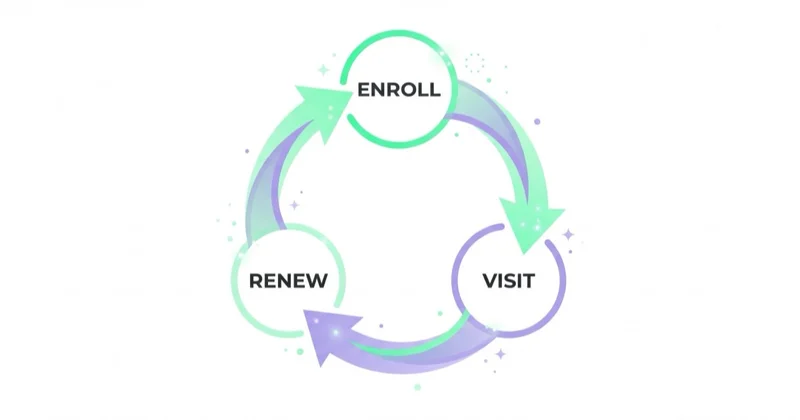
- tune-up checklist;
- seasonal timing;
- plan benefits;
- what is included and excluded;
- online booking or call path;
- renewal or reminder logic.
Landing page structure matters, but phone operations often matter more. For urgent HVAC, a missed call can be a lost job. Call routing, call recording where legal, response-time reporting and dispatch status should be part of marketing review.
Call Tracking and Offline Conversion Feedback
Google's call reporting can show call details from ads and assets. That is a start, but HVAC needs outcome feedback: Was the call relevant? Was it in the service area? Was it booked? Did the technician complete the job? Was it a repair, replacement or maintenance plan?
A practical measurement model:
| Event | Meaning | Use |
|---|---|---|
call_started |
Phone lead from ad or site | Early signal only |
qualified_call |
Relevant service-area call | Filters spam and wrong intent |
appointment_booked |
Dispatch or estimate scheduled | Better bidding signal |
job_completed |
Service delivered | Main quality signal |
replacement_sold |
High-value installation sold | Value-based optimization |
maintenance_plan_started |
Recurring plan sold | Lifetime value signal |
Google's offline conversion imports can connect later CRM outcomes back to earlier ad interactions. That matters because the valuable event often happens after the first phone call, inside dispatch or sales software. When imported data is clean, Smart Bidding can optimize toward outcomes closer to revenue.
For phone-heavy accounts, call tracking should include source, campaign, keyword or match data where possible, plus call status and booked-job outcome. The report should separate branded and non-branded demand; blending them can hide the real cost of acquiring new customers.
Negative Keywords for HVAC
Negative keywords protect budget in a category with many informational and DIY searches. A starting list should be adapted to the contractor's actual services.
| Category | Example Exclusions |
|---|---|
| Hiring | jobs, careers, salary, apprentice, resume |
| Training | certification, school, course, training, exam |
| DIY | how to, reset, troubleshooting, diagram, YouTube |
| Parts-only | capacitor, filter, thermostat manual, wiring, part number |
| Wholesale | supplier, distributor, bulk, wholesale |
| Unserved services | boiler, duct cleaning, commercial, refrigeration, if not offered |
| Geography | cities, counties or states outside the service area |
| Low fit | free, cheap parts, used unit, manual, PDF |
This does not mean all informational queries are bad. Some replacement and maintenance research is valuable. The point is to keep education, repair, replacement and DIY intent in the right campaign and budget.
Google Business Profile and Local Trust
HVAC buyers compare trust quickly. Google Business Profile should support paid traffic and organic local discovery:
- verified profile and correct categories;
- service area and hours;
- emergency or after-hours notes where accurate;
- current phone number;
- reviews and responses;
- photos of team, vehicles and work;
- services listed clearly;
- booking or appointment link if used;
- consistent name, address and phone across the site.
Reviews often affect conversion after the ad click. A user may click a Search ad, check the profile, compare competitors and then call. The marketing system should treat the profile as part of the funnel.
Meta and Demand Creation
Meta is not usually the strongest channel for "furnace broken right now" intent. It can still support HVAC growth when used for the right jobs:
- pre-season tune-up offers;
- maintenance plan education;
- heat pump or efficiency content;
- replacement financing awareness;
- customer testimonial creative;
- retargeting website visitors and quote starters;
- reactivation of previous customers where consent allows.
Meta lead forms should qualify service type, property type, location and urgency. Without qualification, the sales team may receive cheap but weak leads. For emergency demand, Google and LSA usually carry stronger intent.
How Space Ads Approaches HVAC Accounts
Across 25+ client accounts audited daily and roughly 14 million monthly data points analyzed through Space Ads OS, home-services accounts tend to fail in the same places: weak call tracking, no booked-job feedback, mixed job values, broad search queries and budget plans that react too late to seasonality.
For HVAC, the Space Ads approach starts with service economics and capacity. Which jobs are profitable? Which ZIP codes or service areas convert? How many emergency calls can the team handle? What is the close rate on replacement estimates? How valuable is a maintenance plan over time? The campaign structure follows those answers.
For an existing account, a marketing audit can show whether spend is creating booked HVAC work or only calls. Ongoing execution usually connects Google Ads, Local Services Ads, landing pages, call tracking, CRM feedback and performance marketing.
30-Day Action Plan
- Days 1-3: map job economics. Separate emergency repair, tune-up, replacement, commercial, indoor air quality and maintenance plans.
- Days 4-7: fix tracking. Track calls, forms, booked appointments, completed jobs, replacement sales and maintenance-plan starts.
- Days 8-12: audit LSA and Google Business Profile. Check categories, service areas, verification, reviews, hours, phone routing and lead quality.
- Days 13-18: rebuild Search. Split emergency, replacement, maintenance, brand and geography. Add negative keyword lists before scale.
- Days 19-24: improve pages and phone operations. Build service pages, mobile call paths, proof, financing and dispatch feedback.
- Days 25-30: review quality. Compare qualified calls, booked jobs, completed jobs, close rate, service area fit and customer value by campaign.
Common Mistakes
| Mistake | Better Approach |
|---|---|
| Optimizing for calls only | Track qualified calls, booked jobs and completed jobs |
| Treating repair and replacement equally | Use separate campaigns, targets and value signals |
| Starting campaigns after a heat wave begins | Prepare budget, pages and intake before seasonal peaks |
| Ignoring LSA where eligible | Test Local Services Ads for local home services demand |
| Using broad keywords without negatives | Exclude jobs, training, DIY, parts and out-of-area searches |
| Blending brand and non-brand results | Report them separately to see true acquisition cost |
| Scaling while calls are missed | Fix phone handling before increasing budget |
FAQ
What is the best HVAC marketing channel?
For urgent local demand, Local Services Ads and Google Search are usually the first channels to evaluate. LSA can work well where HVAC is eligible and the profile is strong. Search adds control for emergency repair, replacement, maintenance and brand demand. Meta can support tune-ups, maintenance plans, replacement education and remarketing.
Should HVAC companies use Local Services Ads?
Yes, in eligible markets where verification and lead quality make sense. Google lists HVAC among eligible home services and describes Local Services Ads as a pay-for-leads format. The account still needs service-area control, lead review, call handling and booked-job measurement.
When should HVAC contractors advertise most?
HVAC contractors should maintain presence year-round but adjust focus by season. Cooling repair and replacement rise in hot periods, heating demand rises in cold periods, and shoulder seasons are useful for tune-ups, inspections and maintenance plans. Campaigns should be ready before demand spikes.
How should HVAC lead generation be measured?
Measure calls, forms, qualified calls, booked appointments, completed jobs, replacement sales, maintenance plans and customer value. Raw lead cost is not enough because a tune-up, emergency repair and replacement estimate have different business value.
What negative keywords should HVAC campaigns use?
Common categories include jobs, salary, training, certification, DIY repairs, manuals, wiring diagrams, parts-only searches, wholesale terms, unserved services and out-of-area locations. Search term reviews should continue every week in active campaigns.
How can HVAC campaigns generate more replacement leads?
Replacement leads need a different path from emergency repair. Use replacement-intent keywords, financing and warranty proof, estimate pages, remarketing, review assets and CRM feedback from quote to sold installation. Bidding should value sold replacements higher than low-value repair clicks.
In Short
- HVAC marketing should optimize for booked jobs, replacement revenue and maintenance-plan value.
- Local Services Ads can be a strong HVAC front door where eligible, but quality still needs review.
- Search campaigns should separate emergency repair, replacement, maintenance, brand and geography.
- Seasonality requires preparation before cooling and heating demand spikes.
- Call tracking, CRM outcomes and offline conversion imports are what turn Google Ads from lead volume into revenue control.
Sources
- Google Ads - Local Services Ads
- Local Services Help - Getting started with Local Services Ads
- Google Ads Help - About call reporting
- Google Ads Help - About offline conversion imports
- Google Business Profile Help - Improve local ranking on Google
Continue Learning
- Google Ads for local businesses, home services and contractors
- Google Local Services Ads and Google Guaranteed: the guide
- Call tracking for PPC and lead generation
- Negative keywords in Google Ads: cut wasted spend
- Plumbing company marketing with Google Ads
- Roofing company marketing and lead generation
Continue reading
Tree Service Marketing: Storm Leads and Booked Jobs
Tree service marketing has to capture emergency storm demand and steady planned work without wasting crew capacity. This guide covers Google Search, Local Services Ads, Google Verified, storm budgets, safety proof, call triage and cost per booked job.

Moving Company Marketing: Capture High-Intent Movers in Google
Moving company marketing is won through high-intent Search, fast quoting, local trust and booked-move measurement. This guide covers Google Ads, Local Services Ads, local vs long-distance intent, interstate trust signals, seasonality, capacity and CRM feedback.

Electrician Marketing: Google Ads and Local Services for Steady Jobs
Electrician marketing should produce profitable completed work, not just cheap calls. Learn how to connect Google Ads, Local Services Ads, dispatch capacity and job economics.