There is no single best type of online advertising for every business. A Search campaign can be excellent when people already know what they need. A social video campaign can be better when the category requires discovery. A remarketing campaign can look profitable in reports, but only because other channels created the demand first.
The better question is not "which ad platform is best?". The better question is "which channel fits the goal, the audience, the stage of demand and the available data?". Effective online advertising is a system: offer, message, media, measurement, landing page and follow-up all have to work together.
TL;DR
- The best online advertising channel depends on the goal: demand capture, demand generation, lead generation, ecommerce sales, retention or brand growth.
- Google Search works best when there is existing search demand and clear commercial intent.
- Meta Ads, TikTok Ads, YouTube and Demand Gen are stronger when the market needs education, inspiration or repeated exposure before conversion.
- Performance Max, Shopping and feed-based campaigns are important for ecommerce, but they need product data, margin logic and conversion tracking.
- Remarketing should support the system, not replace the system. If no channel creates demand, remarketing lists eventually run dry.
- Last-click ROAS is not enough for judging the whole media mix. Use business outcomes, assisted conversions, incrementality tests, lead quality and customer value.
- AI-powered campaigns work best when the inputs are good: clean conversion data, useful audiences, strong creative assets, landing pages and realistic budgets.
What does "effective online advertising" actually mean?
Effective advertising is not the campaign with the cheapest click. It is the campaign that helps the business acquire profitable customers at the right scale.
That distinction matters because different platforms optimize for different signals. A cheap traffic campaign may bring a lot of visitors who never buy. A high-CPM video campaign may look expensive in isolation but improve branded search, direct traffic, retargeting pools and future conversion rates. A Search campaign may have the best last-click ROAS but only because buyers already knew the brand before they searched.
A useful definition of effectiveness should include:
- business outcome: revenue, qualified pipeline, booked calls, trials, subscriptions or repeat purchases;
- profitability: margin, cost of goods, delivery cost, sales cost and return rate;
- scale: whether the channel can keep growing without collapsing efficiency;
- quality: whether leads, orders or users match the target segment;
- durability: whether the channel builds future demand, brand recall or owned audiences;
- measurement confidence: whether the result is observable, modeled, assisted or only inferred.
For this reason, channel selection should start with the business model, not with platform popularity.
Start with the goal, not the channel
Before choosing Search, Meta, TikTok, YouTube, Display or email, define what the campaign has to achieve. The same platform can behave very differently depending on the objective.
Common goals include:
- capturing existing demand from people already searching for a product or service;
- generating demand among people who are not yet actively searching;
- producing qualified leads for a sales team;
- selling products directly through an online store;
- recovering users who visited, compared or abandoned checkout;
- launching a new product, category or market;
- increasing brand awareness and mental availability;
- improving retention, cross-sell and repeat purchase.
If the goal is urgent lead volume from people already looking for help, Google Search may be the first test. If the product is visual, emotional or new to the category, paid social or video may be needed before Search can scale. If the buying process is long, content, email, remarketing and sales enablement will matter as much as the first click.
Map channels to the funnel
Most underperforming media plans fail because every channel is judged as if it should close sales immediately. A full-funnel plan gives each channel a role.
| Funnel stage | Main job | Useful channels | What to measure |
|---|---|---|---|
| Awareness | Reach relevant people and make the problem, brand or product memorable | YouTube, TikTok, Meta, Display, PR, content | Reach, frequency, video completion, brand search, direct traffic |
| Consideration | Explain the offer and help people compare options | SEO, content, YouTube, Demand Gen, Meta, email, remarketing | Engaged sessions, assisted conversions, saves, returning users, lead quality |
| Decision | Capture intent and convert users who are ready | Google Search, Shopping, Performance Max, lead forms, high-intent remarketing | CPA, ROAS, conversion rate, qualified leads, revenue, margin |
| Retention | Bring customers back and increase lifetime value | Email, CRM, Customer Match, remarketing, loyalty offers, content | Repeat purchase, LTV, churn, reactivation rate, margin |
This does not mean every business needs every channel on day one. It means each channel should be judged against its actual job.
Google Search Ads: best for active demand
Google Search is usually strongest when people already know what they want. It captures intent expressed through keywords. That makes it valuable for local services, B2B queries, urgent problems, category searches and branded demand. We run Google Ads search, Shopping and Performance Max campaigns across exactly these intent-driven formats.
Search is a good first channel when:
- people already search for the product, service or problem;
- there are keywords with clear commercial intent;
- the landing page can answer the query directly;
- conversion tracking is reliable;
- the business can separate brand, competitor, generic and long-tail terms;
- the sales team can qualify leads quickly.
Search is weaker when the market does not yet know the solution, the product is highly visual, the category is impulse-driven or the offer requires education before someone searches. In those cases, Search may still be useful, but it will not create enough demand by itself.
For a deeper operational view, see what PPC advertising is and how pay-per-click works and how Quality Score affects Google Ads performance.
Performance Max and Shopping: best for ecommerce and feed-driven sales
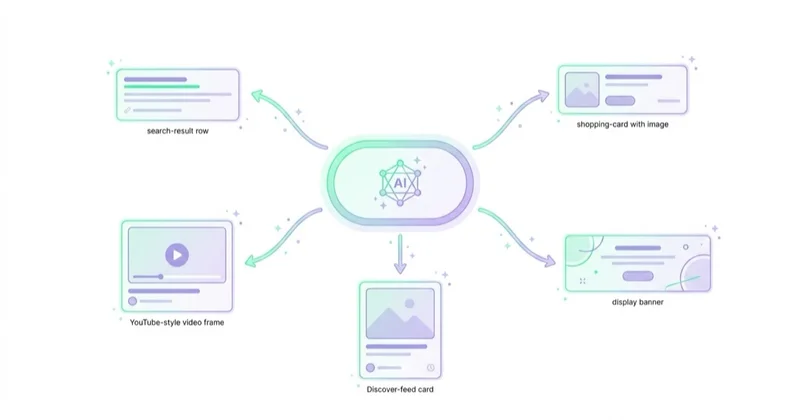
For ecommerce, Shopping and Performance Max often become core sales channels because they connect product data, user intent, visual inventory and automated bidding.
They work best when:
- the product feed is clean, complete and segmented;
- titles, images, prices, availability and GTINs are reliable;
- conversion values reflect revenue or margin;
- the store has enough conversion volume for bidding to learn;
- brand and non-brand performance are understood separately;
- asset groups, listing groups and audience signals are organized around business logic.
Performance Max is powerful because it can serve across multiple Google surfaces, but it should not be treated as a black box that solves weak fundamentals. Bad product data, weak landing pages, missing conversion value or unrealistic ROAS targets can limit performance.
For ecommerce, the practical question is not only "does it generate sales?". It is also "which products, categories and customer types are profitable after margin, discounts, delivery and returns?".
Meta Ads: best for demand generation, creative testing and social proof
Meta Ads can work across Facebook, Instagram, Messenger and Audience Network placements. It is often strong for visual products, lead generation, remarketing and offers that benefit from repeated exposure. We run Facebook and Instagram ads across these placements and objectives.
Meta is a strong choice when:
- the offer can be explained visually;
- creative quality can be tested continuously;
- there is enough budget for learning and iteration;
- the business has customer data, Pixel events and ideally Conversions API;
- the landing page or lead form removes friction;
- the message can match different awareness levels.
The platform has moved toward broader targeting and AI-assisted delivery. That increases the importance of creative, offer clarity and event quality. Instead of relying only on narrow interest targeting, campaigns need multiple angles: problem-led, outcome-led, product-led, testimonial-led and offer-led.
For related reading, see Meta Advantage+ and how it works, Facebook Lead Ads for instant forms and Meta Conversions API implementation.
TikTok Ads: best for discovery, creators and fast creative learning
TikTok Ads are useful when the product, service or idea can be shown in a native, fast and human way. The platform is not only for ecommerce, but ecommerce brands, apps, consumer services, education, events and some B2B categories can benefit when the message is adapted to TikTok behavior. We run TikTok Ads campaigns built around native creative and fast learning.
TikTok is worth testing when:
- the audience can be reached through short-form video;
- the product has a clear demonstration, transformation or use case;
- creators, customer stories or founder-led content can make the offer credible;
- the team can produce new creative frequently;
- Pixel, Events API or app events are configured;
- the business accepts that early learning is often creative-led, not targeting-led.
TikTok often punishes ads that look too much like traditional ads. The creative should earn attention quickly, show the problem clearly and make the next step obvious.
For more platform-specific guidance, see how to start and run TikTok Ads, TikTok Pixel setup, Spark Ads and TikTok Creative Center.
YouTube and Demand Gen: best for visual education and assisted demand
YouTube and Demand Gen are useful when people need to see, understand or trust the offer before they convert. They are not only awareness channels. With good conversion tracking, audiences, creative and landing pages, they can also support lead generation and ecommerce sales.
Use YouTube or Demand Gen when:
- the offer benefits from demonstration, comparison or education;
- short videos can answer objections quickly;
- there is a need to reach people before they search;
- Search is profitable but capped by query volume;
- paid social works and the business wants to expand visual demand beyond social platforms;
- product feeds or visual assets can be used to create more relevant ads.
Demand Gen is especially relevant for advertisers who already understand social-style creative but want access to Google's visual surfaces. It should be measured with a wider lens than last-click Search, because its role is often to create or accelerate demand.
Read more in the Demand Gen campaign guide.
Display and remarketing: best as support, not the whole strategy
Display can support reach, frequency, seasonal communication and remarketing. It is rarely the strongest standalone channel for a business that has no demand creation or demand capture strategy.

Remarketing is useful because it reconnects with people who already showed interest. But it has limits:
- audiences must be large enough;
- frequency must be controlled;
- exclusions are needed for recent buyers, low-quality users and irrelevant segments;
- creative should match behavior, not repeat the same generic banner;
- incrementality should be questioned, especially for users who would have returned anyway.
A strong remarketing setup can include product viewers, cart abandoners, quote-page visitors, content readers, high-value lead segments and past customers. The message should change by stage: comparison, proof, incentive, urgency, onboarding or repeat purchase.
For ecommerce recovery, see how to reduce and recover abandoned carts.
SEO and content marketing: not ads, but part of the acquisition system
SEO and content marketing are not paid ad formats, but they affect advertising performance. Good content can educate buyers before a sales conversation, lower dependence on paid traffic, support remarketing audiences, improve landing page quality and answer questions that ads cannot answer in one headline.
Content is especially valuable when:
- the buying cycle is long;
- the product is complex or expensive;
- the market compares multiple solutions;
- trust and expertise matter;
- search demand includes informational queries;
- AI search, answer engines and LLM visibility are part of the acquisition strategy.
Commercial pages should not carry the full educational burden. A useful content layer can cover definitions, comparisons, implementation guides, checklists, mistakes, benchmarks and decision frameworks.
For more context, see why content marketing builds a professional company image and why evergreen content matters.
How to choose the best advertising channel
Use this decision framework before assigning budget.
1. Is there existing search demand?
If people actively search for the offer, start with Search, Shopping or SEO. If they do not, use social, video, PR, content or Demand Gen to create demand.
2. Is the product visual or easy to demonstrate?
If the product looks better when seen, test Meta, TikTok, YouTube or Demand Gen. Static Search text may not communicate the value well enough.
3. Is the decision urgent or considered?
Urgent decisions often work well in Search. Considered decisions need education, remarketing, comparison content, lead nurturing and sales follow-up.
4. Is the conversion online, offline or hybrid?
For ecommerce, product feeds and purchase values matter. For lead generation, lead quality, CRM stages and offline conversion imports matter. For offline sales, measurement must connect ad interactions to qualified outcomes.
5. Is the budget large enough for learning?
A small budget should not be split across too many channels. It is usually better to test one or two clear hypotheses than to run five underfunded campaigns.
6. Is conversion tracking reliable?
Before scaling, measure the right events. Purchases, qualified leads, booked calls, pipeline stage changes and customer value are more useful than page views alone.
Practical media mix examples
Different businesses need different channel combinations.

Local service business
A practical starting mix can include:
- Google Search for high-intent local queries;
- call tracking and form tracking;
- remarketing for website visitors;
- local SEO and Google Business Profile activity;
- Meta or YouTube for proof, testimonials and before-after content.
B2B service or agency
A stronger mix may include:
- Search for bottom-funnel queries;
- LinkedIn or Meta for targeted demand generation;
- educational content for problem-aware and solution-aware users;
- email or CRM nurture for leads that are not ready;
- remarketing by content depth and service-page visits;
- offline conversion imports or CRM-based lead quality scoring.
Ecommerce store
For ecommerce, a typical mix may include:
- Shopping or Performance Max for product sales;
- Search for brand, category and high-intent non-brand terms;
- Meta and TikTok for creative testing, discovery and remarketing;
- email and SMS for abandoned carts, post-purchase flows and retention;
- SEO for categories, buying guides and long-tail queries;
- YouTube or Demand Gen when product education or visual proof matters.
This is the only point where ecommerce should become the main context. For a broad advertising strategy article, ecommerce is one use case, not the universal default.
SaaS or subscription product
A SaaS mix may include:
- Search for category, problem and competitor queries;
- product-led content and comparison pages;
- YouTube or Demand Gen for feature education;
- paid social for use-case storytelling;
- retargeting by trial, demo, pricing-page and abandoned sign-up behavior;
- CRM reporting by activation, retention and lifetime value.
How to measure online advertising properly
Measurement should match the role of the channel. Search can often be judged closer to direct conversions. Awareness and consideration channels need broader evaluation.
Useful metrics include:
- revenue, profit and contribution margin;
- customer acquisition cost;
- qualified lead cost, not only raw lead cost;
- conversion rate by landing page and device;
- return on ad spend with margin context;
- new customer revenue versus returning customer revenue;
- assisted conversions and path analysis;
- branded search growth and direct traffic quality;
- retention, repeat purchase and LTV;
- incrementality tests where budget and volume allow them.
Google Ads conversion tracking, enhanced conversions, Consent Mode, Meta Pixel, Conversions API, TikTok Pixel and server-side events all exist for one reason: ad platforms need reliable signals to optimize. Better data does not guarantee better results, but poor data makes scaling harder.
How we approach this at Space Ads
"Which type of advertising is best?" is, to us, the wrong question. The best one is whatever fits the goal and the stage the customer is at. Search harvests demand that already exists: someone searches, we appear. Social and video create that demand, reaching people before the search begins. For most clients, then, there's no single "best channel" — we combine them to complement each other, and make sure they don't claim one another's results in the measurement. Budget follows what genuinely adds to the outcome, not fondness for a channel: we check whether a channel actually lifts sales or merely collects conversions that would have happened anyway.
Common mistakes when choosing online advertising channels
The most common mistakes are strategic, not technical.
- Choosing a platform because a competitor uses it, without checking whether the business model is similar.
- Comparing Search and awareness campaigns only by last-click ROAS.
- Spreading a small budget across too many channels and learning nothing from any of them.
- Running broad campaigns before the offer and landing page are clear.
- Treating AI-powered campaigns as a replacement for strategy.
- Measuring leads without checking sales quality.
- Using the same creative across Meta, TikTok, YouTube and Display.
- Ignoring existing customers and focusing only on acquisition.
- Scaling spend before conversion tracking is trustworthy.
- Blaming the channel when the real issue is price, positioning, stock, checkout, sales follow-up or weak proof.
Recommended starting approach
For most businesses, the safest starting point is a focused test plan:
- Define one primary business outcome.
- Choose one demand-capture channel if demand already exists.
- Add one demand-generation channel if the market needs education or discovery.
- Set up remarketing only after enough qualified traffic exists.
- Fix conversion tracking before judging performance.
- Test creative and landing pages, not only bids and audiences.
- Review results by business quality, not only platform metrics.
This approach avoids the illusion that one platform is always best. It also creates a system that can be improved month by month.
FAQ
What is the best form of online advertising?
There is no universal best form. Google Search is usually strongest for active demand. Meta, TikTok, YouTube and Demand Gen are stronger for creating demand and explaining offers. Shopping and Performance Max are often important for ecommerce. The best choice depends on the goal, audience, funnel stage, budget and measurement quality.
Which online advertising channel should a small business start with?
A small business should usually start with the channel closest to purchase intent. If people already search for the service or product, Search may be the first test. If the offer needs visual explanation or demand creation, paid social or video may be better. The budget should be focused enough to generate a clear learning signal.
Are Google Ads better than Meta Ads?
Neither platform is automatically better. Google Ads often captures people who are already looking for a solution. Meta Ads can create demand, build trust, test creative angles and bring people back through remarketing. Many businesses need both, but they should not be measured in exactly the same way.
Is remarketing always profitable?
No. Remarketing can look profitable because it targets people who were already close to conversion. It should be checked for incrementality, frequency, audience quality and exclusions. It works best as part of a broader system that creates qualified traffic.
Should ecommerce start with Performance Max?
Performance Max can be a strong ecommerce channel when the product feed, conversion values, Merchant Center setup and creative assets are ready. It is less effective when product data is weak, values are missing or the campaign is expected to fix poor pricing, stock, landing pages or margins.
How long does it take to know if a campaign works?
It depends on budget, conversion volume and sales cycle. A lead form can generate early signals in days, but lead quality may take weeks to validate. Ecommerce campaigns need enough purchase data to judge product-level profitability. B2B campaigns with long sales cycles should be evaluated through qualified pipeline, not only form submissions.
Conclusion
The most effective online advertising is not a single channel. It is a media system built around demand, funnel stage, offer quality and measurement. Search captures intent. Social and video create demand. Shopping and Performance Max support ecommerce scale. Remarketing helps users return. SEO and content strengthen the whole path.
The best decision is to choose the channel that matches the current business constraint. If demand exists but is not captured, start with Search. If the offer is unknown, create demand with social, video or content. If traffic converts poorly, fix the landing page, tracking and offer before adding more media spend.
Sources and further reading
- Google Ads Help: Create a Search campaign
- Google Ads Help: Choose the right campaign type
- Google Ads Help: About Performance Max campaigns
- Google Ads Help: Create a Demand Gen campaign
- Google Ads Help: About conversion measurement
- Meta for Business: Awareness objective
- Meta for Business: Advantage+ audience
- TikTok Ads Manager: How to choose the right objective
Continue learning
Continue reading

Google Ads vs SEO: Paid vs Organic on Google, and How to Use Both
Google Ads vs SEO is a decision about speed, control, cost and durability on the Google results page. This guide explains when to pay for clicks, when to build organic visibility, how to test brand bidding and how to connect paid and organic data.

PPC vs SEO: What to Choose, How to Measure and When to Combine Both
PPC vs SEO is not a channel popularity contest. PPC buys controlled demand now; SEO builds durable organic visibility. This guide shows how to choose and combine them using margin, LTV, payback period, intent, measurement quality and AI search risk.
Google Ads vs Facebook Ads: Which Is Better for Your Business in 2026?
Google Ads vs Facebook Ads is not a question of one universally better platform. Google is strongest when demand already exists; Facebook and Instagram ads are strongest when the product needs discovery, creative proof and repeated exposure.