Digital marketing is the use of digital channels, data and technology to attract, educate, convert and retain customers. It includes search engines, paid advertising, social media, email, content, analytics, automation, conversion optimization, ecommerce, CRM and increasingly AI search visibility.
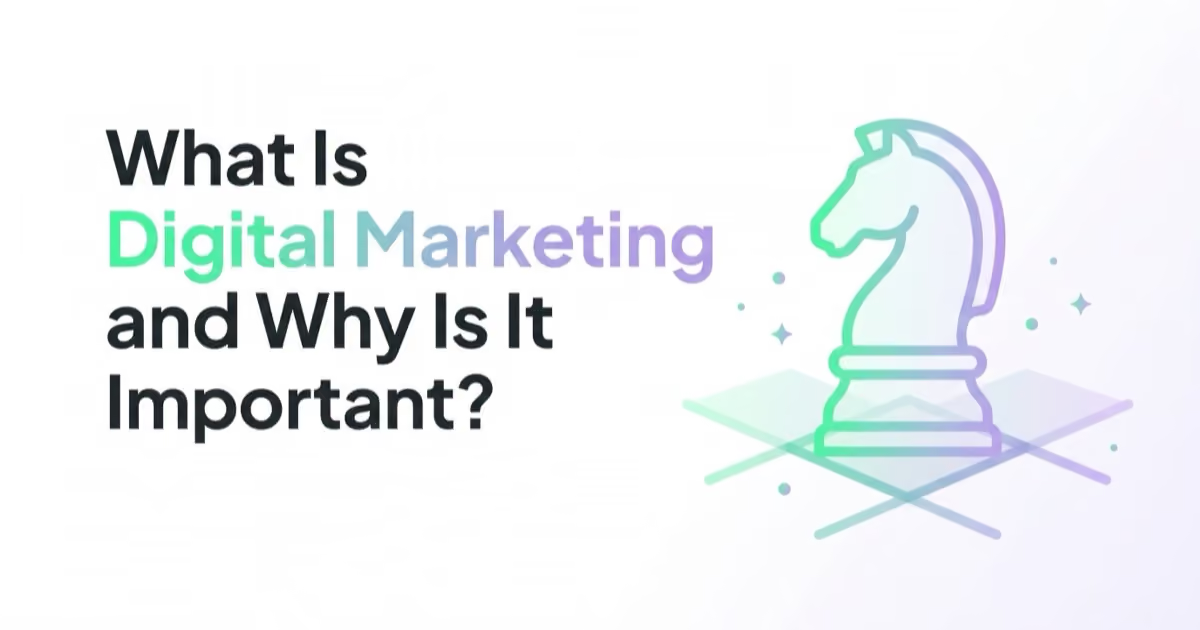
It is not a single channel. It is the operating system that connects how people discover a brand, compare options, trust a company and decide whether to buy, subscribe, book a call or return later.
Digital marketing matters because most decisions now have a digital stage, even when the final purchase happens offline. People search, compare, read reviews, watch videos, ask AI tools, visit social profiles, check delivery options, browse competitors and expect the brand to be consistent across channels.
TL;DR
- Digital marketing covers SEO, paid media, social media, content, email, analytics, CRO, automation, CRM and ecommerce.
- Its main advantage is measurability: traffic, conversions, revenue, lead quality and customer value can be tracked and improved.
- The best strategy connects demand generation, demand capture, conversion and retention instead of treating channels separately.
- SEO and content build durable visibility, while paid media accelerates testing and scale.
- AI search, answer engines and LLM visibility make structured, trustworthy, expert content more important.
- Digital marketing is not only for online stores. It applies to B2B, SaaS, local services, education, healthcare, recruitment, personal brands and offline businesses.
- Ecommerce is one major use case, where digital marketing connects product feed quality, paid traffic, SEO, checkout conversion, email flows and retention.
What is digital marketing?
Digital marketing is every marketing activity that uses digital environments or digital data to reach customers and influence business outcomes.
That includes obvious channels such as Google Ads, SEO, Facebook, Instagram, TikTok, YouTube, LinkedIn, newsletters and display ads. It also includes less visible systems: analytics, consent management, CRM segmentation, server-side tracking, marketing automation, product feeds, landing page testing and customer lifecycle reporting.
A good digital marketing setup answers four questions:
- Who should be reached?
- What should that person understand, feel or do next?
- Which channel is most suitable for that stage?
- How will the business know whether it worked?
The answer is rarely one campaign. It is usually a connected path: someone discovers a problem, searches for solutions, compares suppliers, reads reviews, clicks an ad, visits a landing page, receives an email, talks to sales, returns later and finally converts.
Digital marketing vs traditional marketing
Traditional marketing can include TV, radio, outdoor, print, events and sponsorships. Those channels can still be valuable, especially for reach and credibility. The difference is that digital marketing usually offers more granular targeting, faster feedback and better behavioral measurement.
Digital marketing can show:
- which keywords, ads, pages or campaigns generated valuable actions;
- which audiences engaged with content;
- where users dropped out of a funnel;
- which products, services or offers produced revenue;
- how much a lead or sale cost;
- which campaigns assisted conversions even if they did not get the final click.
This does not make digital marketing automatically better. It makes it more testable. Poor strategy can still waste budget quickly. But when the data is clean and the offer is strong, digital channels make it easier to learn, iterate and scale.
Why is digital marketing important?
Buyers research online before they decide
Even offline purchases often begin online. A local service customer may check reviews and opening hours. A B2B buyer may compare agencies, read case studies and ask colleagues before filling a form. A retail shopper may compare prices, shipping, return policies and product videos before visiting a store.
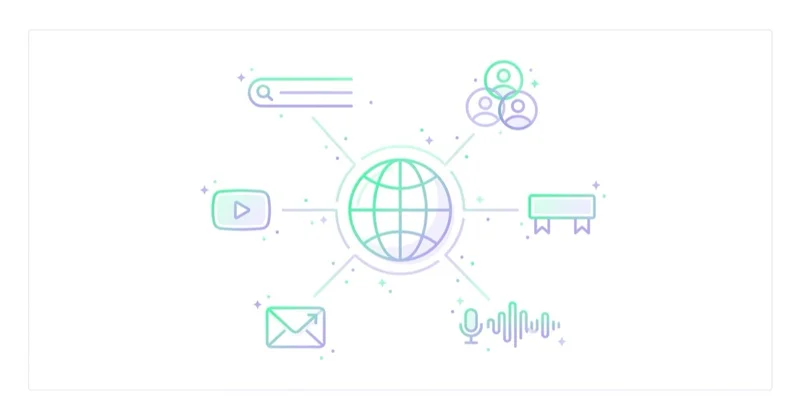
Digital visibility is therefore not only about ecommerce checkout. It is about being present when the decision is being shaped.
Results can be measured and improved
Digital marketing makes it possible to connect activity with outcomes. With proper analytics and conversion tracking, a company can measure leads, purchases, booked calls, subscriptions, revenue, margin, repeat purchase and customer lifetime value.
Measurement is also what makes optimization possible. If a campaign brings traffic but not conversions, the issue may be targeting, intent, ad promise, price, landing page speed, form friction, stock, trust signals or sales follow-up.
Segmentation makes communication more relevant
Digital channels allow segmentation by behavior, intent, lifecycle stage, location, device, product interest, previous purchase, CRM status and more. This makes it possible to say different things to a first-time visitor, a returning comparison shopper, a qualified lead and a loyal customer.
Personalization should not mean invasive messaging. It should mean better relevance, fewer generic offers and more useful next steps.
Testing is faster
Digital marketing allows fast testing of:
- value propositions;
- landing page structure;
- headlines and creative angles;
- audiences;
- search keywords;
- product images;
- pricing messages;
- lead magnets;
- email flows;
- remarketing sequences.
The advantage is not just speed. It is reduced guesswork. A business can learn which message the market responds to before committing larger budgets.
AI search changes how people find answers
Search behavior is expanding beyond traditional search results. People use Google AI features, ChatGPT, Perplexity and other answer engines to summarize, compare and shortlist information. This makes content structure, topical authority, clarity and source quality more important.
Digital marketing now has to support both classic search visibility and answer visibility. Content should answer real questions directly, define terms clearly, show practical experience, cite credible sources and make entities easy to understand.
Core areas of digital marketing
SEO
SEO builds organic visibility in search engines. It includes technical health, crawlability, indexation, content quality, search intent, internal linking, structured data, page experience and authority.
SEO is strongest when there is meaningful search demand and when the business can publish genuinely useful content. It is slower than paid media, but successful SEO can reduce dependency on paid traffic over time.
Useful SEO assets include category pages, service pages, guides, comparison pages, glossaries, case studies, FAQs, tools and evergreen articles. See why evergreen content matters.
Paid media
Paid media includes Google Ads, Microsoft Ads, Meta Ads, TikTok Ads, LinkedIn Ads, YouTube Ads, Demand Gen, display and programmatic. It is useful for demand capture, demand creation, product promotion, retargeting, lead generation and market testing.
Paid media is not just "buying traffic". It requires offer-market fit, conversion tracking, creative testing, landing pages and budget discipline. For a channel selection framework, see which type of online advertising works best.
Content marketing
Content marketing creates assets that help users understand problems, compare options and trust the brand. It supports SEO, sales, email, paid social, remarketing and AI search visibility.
Content can include blog posts, guides, reports, videos, webinars, newsletters, calculators, templates, case studies, landing pages and documentation. The strongest content usually answers a real buyer question better than competing pages.
Read more in the content marketing guide.
Social media
Social media can build reach, trust, community, proof and distribution. It can also support paid campaigns through creative testing and audience learning.
Organic social is not only about posting frequently. It should clarify the brand's expertise, show people behind the work, distribute useful content, collect feedback and make the brand easier to remember.
Paid social is different. It must be judged by campaign objective: awareness, engagement, leads, sales, app installs, retargeting or creative testing.
Email marketing and automation
Email remains important because it is an owned channel. It can nurture leads, educate prospects, recover abandoned carts, onboard customers, increase repeat purchase and reactivate dormant users.
Automation makes email more relevant by triggering communication based on behavior: newsletter sign-up, product view, cart abandonment, trial start, demo request, purchase, inactivity or contract renewal.
See also email marketing principles for campaigns that convert.
Analytics and conversion tracking
Analytics shows what happens. Conversion tracking tells ad platforms what to optimize for. Reporting connects marketing activity with business outcomes.
A modern measurement setup may include:
- GA4 events and ecommerce tracking;
- Google Ads conversion tracking;
- enhanced conversions;
- Meta Pixel and Conversions API;
- TikTok Pixel and Events API;
- Consent Mode where required;
- CRM integration for lead quality;
- server-side tagging for more durable data;
- dashboarding by channel, campaign, product, margin and funnel stage.
Measurement does not need to be perfect to be useful. It does need to be consistent enough to support decisions.
CRO and landing page optimization
Conversion rate optimization improves the percentage of users who take a valuable action. It includes page speed, mobile UX, forms, checkout, copy, proof, hierarchy, trust signals, pricing clarity and offer design.
CRO is often the hidden multiplier in digital marketing. If the same media budget starts converting better, every channel becomes more efficient.
CRM and lifecycle marketing
Many companies overinvest in acquisition and underinvest in retention. CRM and lifecycle marketing help turn one-time users into repeat customers, qualified leads into clients and existing customers into higher-value accounts.
Lifecycle work can include lead scoring, onboarding, cross-sell, upsell, renewal campaigns, customer education, loyalty programs and win-back sequences.
Digital marketing strategy: how the pieces connect
A digital strategy should not be a list of channels. It should explain how the business will create demand, capture demand, convert demand and retain customers.
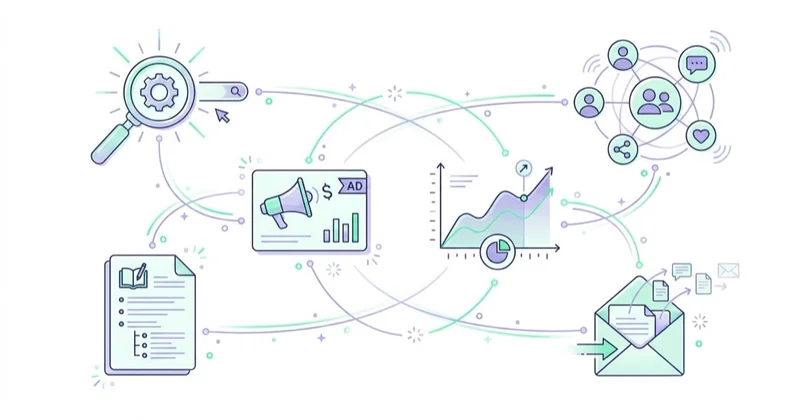
1. Business objective
Define the primary business objective first. Is the goal revenue, qualified leads, market entry, product launch, retention, brand awareness, recruitment or category education?
The objective changes everything. A campaign built for booked demos will not look like a campaign built for repeat ecommerce purchases.
2. Audience and buying journey
Define who the audience is, what problem they have, what triggers the search for a solution, what objections they raise and how they decide. The goal is not to create a decorative persona. The goal is to understand buying behavior.
3. Positioning and message
Digital marketing amplifies the offer. It cannot fully compensate for unclear positioning. Before scaling, the brand should know what it promises, why it is different, which proof supports it and which segments it serves best.
4. Channel role
Assign each channel a role:
- SEO captures informational and commercial demand over time;
- Search Ads capture high-intent demand now;
- paid social and video create demand and test messages;
- content educates and supports trust;
- email nurtures and retains;
- remarketing reconnects with warm audiences;
- analytics and CRO improve the whole system.
5. Measurement
Define primary and secondary KPIs. For ecommerce, primary KPIs may include revenue, margin, ROAS, repeat purchase and LTV. For B2B, qualified leads, pipeline value, win rate and sales cycle may matter more than raw form submissions.
A practical 90-day digital marketing plan
Days 1-30: audit and foundations
Start with the basics:
- audit analytics, conversion tracking and consent setup;
- review website speed, mobile usability and landing pages;
- identify the highest-value products, services or customer segments;
- map the buying journey and content gaps;
- review existing SEO rankings and paid media data;
- define primary KPIs and reporting structure;
- decide which one or two channels deserve the first focused test.
The goal of month one is not to do everything. It is to remove measurement chaos and choose a sensible starting point.
Days 31-60: launch controlled tests
In the second month, run tests with clear hypotheses:
- Search campaign for high-intent queries;
- paid social campaign for one or two creative angles;
- landing page test for a key offer;
- email flow for new leads or customers;
- content update for pages with existing search potential;
- remarketing sequence for qualified visitors.
Each test should have a defined audience, message, budget, success metric and review date.
Days 61-90: optimize and scale what works
In month three, move budget toward the clearest signals:
- reduce spend on low-quality traffic;
- improve landing pages that receive qualified visitors;
- expand winning creative angles;
- refine keyword and audience structure;
- connect CRM outcomes to campaign reporting;
- publish supporting content for common objections;
- create a retention or reactivation flow.
The aim is to build a repeatable growth system, not a one-off campaign spike.
How digital marketing works in ecommerce
Ecommerce is one of the clearest examples of a connected digital marketing system. A store needs traffic, product visibility, conversion, recovery and retention.
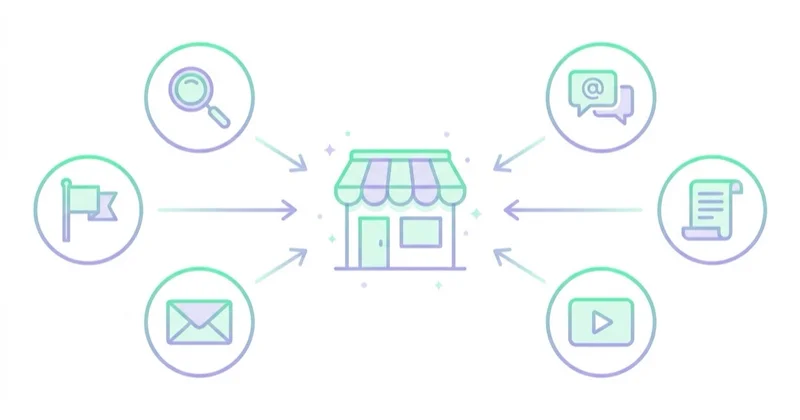
Important areas include:
- product feed quality for Shopping, Performance Max and catalog ads;
- category SEO and product content;
- paid search for brand, category and high-intent queries;
- Meta and TikTok creative for discovery and retargeting;
- email and SMS flows for welcome, cart recovery and post-purchase;
- checkout CRO and payment trust;
- abandoned cart recovery;
- margin-aware reporting;
- customer retention and repeat purchase.
The store should not depend only on acquiring new visitors. Profit often depends on average order value, repeat purchase, return rate, discount discipline and customer lifetime value.
For ecommerce-specific recovery, see abandoned carts and how to recover them.
Digital marketing for B2B and services
B2B and service businesses need a different lens. The website may not sell directly, but it still shapes demand and trust.
Important assets include:
- service pages that explain outcomes, process and fit;
- case studies and proof;
- expert articles for research-stage buyers;
- Search Ads for high-intent needs;
- LinkedIn, Meta or YouTube for education and credibility;
- CRM tracking from lead to qualified opportunity;
- remarketing for visitors who compare options;
- email nurture for long decision cycles.
The most important metric is rarely the cheapest lead. It is the cost and volume of qualified opportunities that can become profitable clients.
How we approach this at Space Ads
What sets digital apart from traditional marketing isn't reach; it's the feedback loop — you see what works in days, not quarters. So the thing that wins isn't a clever year-long plan, it's a fast learning loop. Every channel is a measurable experiment: what doesn't return gets switched off without sentiment, what delivers gets more, and the lessons travel between clients and campaigns, so each month the aim improves. In practice that means not falling in love with our own ideas — we test them against data and let the market be right. The brands that win in digital are rarely the ones with the deepest pockets; more often they're the ones that learn from their own results fastest. Channels, formats, tools all come second to the speed at which you reach a conclusion and act on it.
Common digital marketing mistakes
- Treating digital marketing as isolated channel activity instead of a connected system.
- Launching campaigns before conversion tracking is reliable.
- Measuring everything by clicks or traffic rather than business outcomes.
- Publishing content without search intent or buyer questions.
- Scaling paid media before the landing page can convert.
- Ignoring retention and only chasing new users.
- Using the same creative in every channel.
- Letting AI-powered campaigns optimize toward weak or misleading conversion events.
- Confusing reporting precision with real accuracy.
- Building dashboards that look impressive but do not change decisions.
FAQ
Is digital marketing the same as online marketing?
The terms are often used interchangeably. Digital marketing is slightly broader because it can include digital systems beyond a website browser, such as apps, CRM, automation, digital signage, ecommerce feeds and integrated customer data.
What channels are included in digital marketing?
Digital marketing includes SEO, paid ads, social media, content marketing, email, analytics, CRO, marketing automation, CRM, ecommerce, affiliate activity, influencer campaigns and digital PR.
Why is digital marketing important for small businesses?
It helps small businesses reach people who are already searching, test offers with controlled budgets, measure results and compete in local or niche markets. It also creates owned assets such as content, email lists and customer data.
Can digital marketing work without paid ads?
Yes, but it usually works more slowly. SEO, content, email, referrals, organic social and PR can build durable visibility. Paid ads accelerate testing and reach, but they should not be the only growth engine.
How much should a company spend on digital marketing?
The right budget depends on the objective, market size, margins, sales cycle, competition and conversion rate. A practical first budget should be large enough to generate useful learning without spreading spend across too many channels.
What is the role of AI in digital marketing?
AI supports bidding, targeting, reporting, content workflows, personalization, creative production and search experiences. It does not remove the need for strategy. AI systems perform better when conversion data, creative inputs, product data and business goals are clear.
Conclusion
Digital marketing is important because it connects visibility, trust, measurement and growth in the places where people now research and decide. It is broader than ads and broader than ecommerce. It includes the complete digital path from first discovery to repeat purchase or long-term customer relationship.
The strongest digital marketing strategies are not built around one fashionable platform. They are built around a clear business goal, a useful offer, reliable measurement, relevant content, effective media and continuous optimization.
Sources and further reading
- Google Search Central: SEO Starter Guide
- Google Ads Help: About conversion measurement
- Google Analytics Help: About ecommerce metrics
- Google Search: How Search works
- Meta for Business: Advantage+ audience
Continue learning
Continue reading
What Is Storytelling in Marketing and How to Use It?
Storytelling in marketing uses narrative structure to explain a customer problem, transformation and result. Learn how to use it in ads, landing pages, ecommerce, B2B and case studies.
What Is Benefit-Led Copywriting and How to Use It?
Benefit-led copywriting translates features into customer value. Learn feature vs advantage vs benefit, with examples for ads, ecommerce, B2B, landing pages and CTAs.
What Is Brand Marketing and How to Use It?
Brand marketing builds recognition, trust, memory and preference so a company is easier to choose when buyers enter the market.