A social media marketing strategy is the plan that connects organic content, paid social, creators, community, retargeting and business goals. It defines who the brand needs to reach, what content should make them care, which platforms deserve focus, how paid distribution supports the funnel and how social activity will be measured beyond likes.
The strongest social media strategies are not posting calendars. A calendar organizes output. A strategy explains why the content exists, what role each channel plays, how creative will be tested, how paid media will scale winning messages and how social activity supports sales, leads, brand demand or retention.
TL;DR
- A social media marketing strategy should start with business goals. Awareness, lead generation, e-commerce sales, community and retention need different content and measurement.
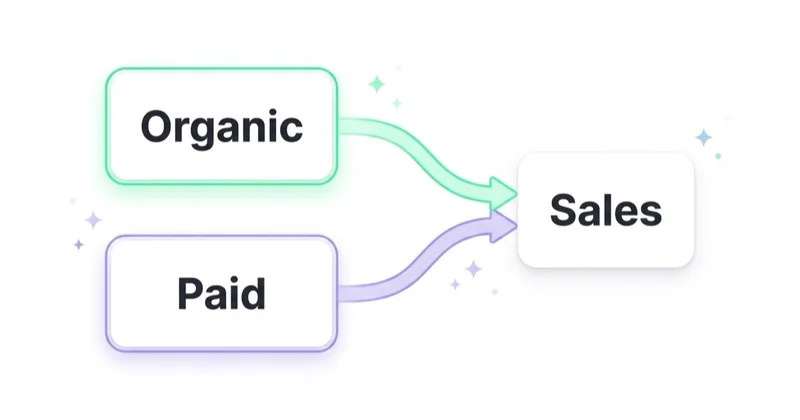
- Organic and paid social should work together. Organic content tests ideas and builds trust; paid social distributes winners and creates measurable demand.
- The channel mix depends on the buyer. TikTok, Instagram, Facebook, LinkedIn, YouTube and Pinterest do not have the same role.
- Creative is the operating system. Hooks, formats, proof, creators, product demos and objections decide whether paid social has enough signal.
- B2B social is not just LinkedIn. Expert content, founder-led posts, retargeting and educational video can support long sales cycles.
- E-commerce social needs product and margin context. Catalog ads, UGC, product videos, retention and landing pages all affect paid social results.
- Measurement should include business outcomes. Reach and engagement matter, but the dashboard should connect social to traffic, leads, sales, pipeline or assisted demand.
What is a social media marketing strategy?
A social media marketing strategy defines the role of social channels in the wider growth system. It should answer:
- who the audience is;
- what the brand needs them to understand;
- which platforms matter;
- what content pillars will be used;
- how paid social supports organic activity;
- what creators or partners add;
- how social connects to website, CRM and sales;
- which metrics decide success;
- how the team learns from creative performance.
Without those answers, social media becomes a production habit. The team posts because the calendar says so, not because the content moves a buyer, follower or customer toward a useful action.
Social media strategy vs posting calendar
| Area | Strategy | Posting calendar |
|---|---|---|
| Main role | Defines purpose and decisions | Schedules output |
| Time horizon | quarters and campaigns | days and weeks |
| Focus | audience, message, channel role, measurement | format, date, caption, asset |
| Success | business and funnel impact | publishing consistency |
| Risk | can become too abstract | can become activity without direction |
A calendar is useful after the strategy is clear. It should not be the strategy itself.
Start with the business goal
Social media can support several goals, but each goal needs a different plan.
| Goal | Content role | Paid social role |
|---|---|---|
| Brand awareness | make the brand recognizable and memorable | reach and frequency, video, creator amplification |
| Lead generation | explain problem and build trust | retargeting, lead forms, landing-page traffic |
| E-commerce sales | show product value and urgency | catalog ads, conversion campaigns, UGC testing |
| B2B pipeline | educate and reduce risk | retargeting, expert content, LinkedIn or Meta distribution |
| Recruitment | show culture and role clarity | targeted promotion and employee advocacy |
| Retention | keep customers engaged | lifecycle content and customer audiences |
The mistake is mixing these goals into one set of metrics. A brand campaign should not be judged only by last-click sales. A lead campaign should not be judged only by likes.
Platform roles
| Platform | Better role | Watch-out |
|---|---|---|
| visual brand, community, creators, social proof | weak if content is only product pushes | |
| broad reach, groups, retargeting, older demographics | organic reach can be limited | |
| TikTok | discovery, creator-style video, trend-native hooks | creative must feel native |
| B2B authority, founder/expert content, account targeting | paid CPCs require strong value | |
| YouTube | education, proof, search-like video intent | production and retention matter |
| inspiration and product discovery | category fit is important | |
| X / Threads | commentary and community in some niches | not universal for every brand |
The strategy should choose platforms by buyer behavior and content capability, not by trend. A brand with no video process will struggle on TikTok. A B2B company with strong expert opinions may do well on LinkedIn and YouTube. A fashion brand may need Instagram, TikTok and Meta catalog advertising working together.

Content pillars
Content pillars keep social media focused.
Common pillars:
- education;
- proof;
- product or service demonstration;
- behind the scenes;
- founder or expert commentary;
- customer questions;
- objection handling;
- trend or category commentary;
- case studies;
- community and user-generated content.
Each pillar should have a job. Education creates understanding. Proof reduces risk. Demonstration shows value. Expert commentary builds authority. UGC can make the product feel real. Case studies support conversion.
Organic and paid social together
Organic and paid social should not be separate worlds.
Organic content helps:
- test messages cheaply;
- learn what the audience saves, shares or questions;
- build familiarity;
- create proof;
- support community;
- give paid teams creative signals.
Paid social helps:
- distribute the best content beyond existing followers;
- retarget site visitors and engaged users;
- scale creator or UGC concepts;
- test offers and landing pages;
- drive measurable leads or sales;
- build reach in priority markets or audiences.
For channel execution, see Meta Ads, TikTok Ads, Facebook and Instagram ads for fashion brands and TikTok Ads: how to start and run campaigns.
Paid social funnel
| Funnel stage | Social content | Paid media role |
|---|---|---|
| Awareness | hooks, POV, education, creators | reach, video views, engagement |
| Consideration | proof, comparisons, case studies | retargeting, traffic, lead magnet |
| Conversion | offer, product demo, service CTA | conversion, lead, catalog, booking |
| Retention | customer education, new use cases | customer audiences, email support |
| Advocacy | UGC, reviews, referral stories | amplify social proof |
The paid funnel should not push every user to buy immediately. A cold audience may need education. A retargeting audience may need proof. A warm audience may need a direct offer.
B2B social media strategy
B2B social media should support trust and sales conversations.
Useful B2B social content:
- expert posts;
- founder point of view;
- short educational videos;
- problem breakdowns;
- webinar clips;
- case study summaries;
- comparison snippets;
- data explanations;
- FAQ carousels;
- sales objection posts.
B2B social rarely works as a direct response machine on every post. Its value often appears in branded search, direct traffic, better sales conversations, event attendance, retargeting pools and assisted pipeline. That does not mean measurement should be vague. It means the dashboard should include both leading and lagging signals.
For B2B strategy, see content marketing in B2B and B2B lead generation.
E-commerce social media strategy
E-commerce social media needs product, margin and lifecycle context.
Important elements:
- product videos;
- UGC and creator assets;
- catalog ads;
- product-page match;
- launches and seasonal drops;
- reviews;
- bundles and cross-sells;
- post-purchase content;
- customer audiences;
- new vs returning customer splits.
For fashion and premium retail, creative should protect the brand while still giving platforms enough variation to learn. Case studies such as Philipp Plein, Plein Sport, Billionaire and Embassy London show why social and paid media need brand context, not only performance numbers.
Service business social media strategy
Service businesses should use social to make expertise and trust visible.
Useful formats:
- before/after where compliant;
- process explanations;
- team introductions;
- customer questions;
- short case stories;
- myth-busting;
- appointment reminders;
- testimonials;
- educational clips;
- local proof.
The commercial path may be a call, booking, quote, consultation or audit. Social content should reduce uncertainty before the contact.
Creator and UGC strategy
Creators and UGC can help when the message needs to feel native, credible or demonstrable. The strongest creator briefs are specific without over-controlling the delivery.
Brief elements:
- audience and product context;
- main problem or use case;
- proof point or demonstration;
- required claims and prohibited claims;
- visual requirements;
- hook options;
- CTA;
- usage rights for paid ads;
- disclosure requirements;
- review process.
For AI-assisted creative production, see AI UGC ads and AI ad copywriting.
Creative testing matrix
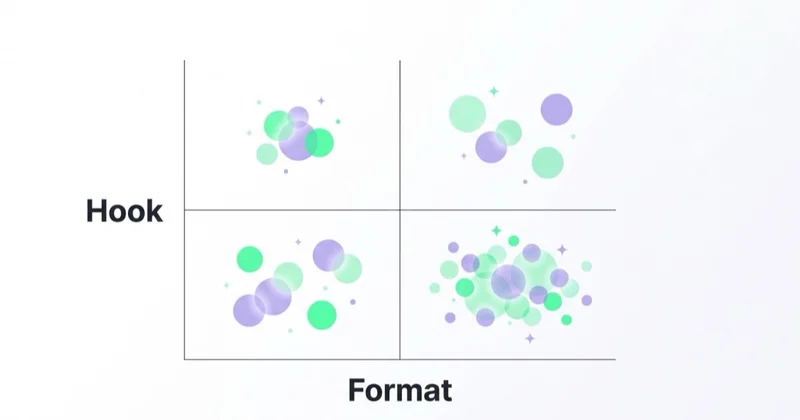
Paid social needs a creative testing system, not random new assets. A practical matrix separates the variables so the team can learn what works.
| Variable | Examples |
|---|---|
| Hook | problem, result, myth, comparison, question |
| Format | UGC, founder video, product demo, carousel, static proof |
| Angle | price, quality, speed, risk reduction, status, convenience |
| Audience stage | cold, engaged, site visitor, lead, customer |
| Proof | review, case study, demonstration, expert explanation |
| CTA | learn more, shop, book, request audit, get quote |
The testing plan should not change every variable at once. If a creator video outperforms a static asset, the team should know whether the win came from the person, hook, proof, product, format or audience. Without that discipline, paid social becomes a constant search for new assets without learning.
Operating cadence
Social media strategy needs a working rhythm.
Weekly:
- review top and weak creative;
- check paid social spend, CPA or ROAS;
- read comments and questions;
- identify content that deserves paid distribution;
- note landing-page or tracking issues.
Monthly:
- review channel roles;
- compare organic and paid learning;
- update content pillars;
- refresh creator briefs;
- check contribution to leads, sales or pipeline.
Quarterly:
- decide whether the channel mix still fits the business goal;
- update positioning and content themes;
- review success stories and proof assets;
- remove formats that create activity but no useful signal.
This cadence keeps social from becoming either a daily posting habit or a quarterly brand exercise with no operational feedback.
Social media and AI/search visibility
Social content can also support search and AI visibility indirectly. Public posts, expert commentary, creator content, video transcripts, social profiles and brand mentions can become part of the wider set of signals a buyer or AI tool sees around a company.
For B2B and service brands, this means social content should reinforce the same entities as the website: services, experts, methodology, case studies and problem categories. For e-commerce and premium brands, social content should reinforce product categories, brand positioning, launch narratives and proof. The goal is consistency. If the website says one thing and social says another, buyers and AI systems receive a weaker signal.
How Space Ads approaches this
At Space Ads, we treat social media marketing strategy as a bridge between content and performance marketing. We start by defining the business job: reach, lead quality, e-commerce sales, retargeting, proof, community or sales support. Then we decide which content pillars and channels can realistically do that job.
For paid social, creative testing is central. We do not judge the strategy only by whether a post looks polished. We look at whether the creative creates the right expectation before the click, whether the landing page continues the message, whether the conversion event is meaningful and whether the dashboard connects social activity to sales, leads or revenue. For brands with existing social assets, we often use organic signals to decide what deserves paid distribution.
Measurement
Social media measurement should separate attention, traffic and business outcomes.
| Metric layer | Examples |
|---|---|
| Attention | reach, impressions, video views, watch time |
| Engagement | saves, shares, comments, profile visits |
| Traffic | sessions, landing page views, UTMs |
| Conversion | leads, purchases, booked calls, trials |
| Quality | sales accepted leads, new customers, repeat purchase |
| Brand | branded search, direct traffic, follower quality |
| Creative | hook rate, hold rate, CTR, conversion by concept |
The dashboard should not collapse all of these into one number. A creative with high engagement and weak conversion may still be useful for awareness or retargeting. A boring-looking ad with strong qualified leads may be commercially valuable.
Common mistakes
| Mistake | Why it hurts | Better approach |
|---|---|---|
| Treating the calendar as strategy | Produces activity without direction | Start with goal, audience and channel role |
| Measuring every post by sales | Undervalues awareness and proof | Match metrics to funnel stage |
| Separating organic and paid teams | Creative learning is lost | Share insights and promote proven concepts |
| Chasing every trend | Weak brand consistency | Use trends only when they fit the message |
| No landing-page match | Clicks do not convert | Continue the same promise after the click |
| Weak creator briefs | Content becomes inconsistent or unusable | Define claims, use case, rights and CTA |
| No CRM or sales feedback | Lead quality is invisible | Connect social leads to stages and outcomes |
30-day social media marketing strategy plan
Week 1: define the goal and audience
Choose the primary business goal and audience. Audit current channels, content, paid results, website paths and conversion events.
Week 2: build content pillars and creative tests
Define 4-6 content pillars. Create hook ideas, proof formats, creator briefs and paid test concepts.
Week 3: connect paid social and landing pages
Launch or clean Meta, TikTok or LinkedIn tests. Make sure the landing page continues the same promise and tracking is clean.
Week 4: review and scale learning
Review attention, traffic, conversion and quality. Promote concepts that create useful demand. Cut formats that create activity without business signal.
FAQ
What is a social media marketing strategy?
A social media marketing strategy is a plan that defines how social channels, organic content, paid social, creators, community and measurement support business goals such as awareness, leads, sales, retention or pipeline.
Is a posting calendar the same as a social media strategy?
No. A posting calendar schedules content. A social media strategy defines the audience, goal, channel role, content pillars, paid distribution, measurement and commercial path.
How should organic and paid social work together?
Organic social can test ideas, build trust and create community. Paid social can distribute winning content, retarget engaged audiences and drive measurable leads or sales. The two should share creative learning.
Which platforms should a social media strategy include?
The right platforms depend on audience, product, service and creative capability. Instagram, TikTok, Facebook, LinkedIn, YouTube and Pinterest can all work, but they should have different roles.
How should social media be measured?
Social media should be measured by funnel stage: reach and video metrics for awareness, engagement for resonance, traffic for consideration, conversions for action and qualified outcomes for business impact.
Does B2B social media generate pipeline?
B2B social can support pipeline when it builds trust, answers buyer questions, creates retargeting audiences and helps sales conversations. It should be measured with assisted demand, qualified leads and sales feedback, not only likes.
Key takeaways
A social media marketing strategy should connect content, paid social and business goals. It should define what each channel does, what creative will be tested, how paid distribution supports the funnel and how results connect to leads, sales or customer value.
The practical goal is not to post more. It is to create social content that earns attention from the right people and gives paid media, sales and retention something useful to work with.
Sources and further reading
- LinkedIn Ads - Ad tips and best practices
- TikTok Business - Creative best practices
- Google Analytics Help - About events
- Google Search Central - Creating helpful, reliable, people-first content
Continue learning
Continue reading
Social Media Advertising Tools That Run Campaigns (Not Just Schedule Posts)
A scheduler will not tell a team where the next budget increase should go. This guide defines the paid-social stack around spend governance, creative evidence, pacing, approvals and AI-assisted changes, then shows when it belongs beside native platform panels.

UGC Ads: How to Brief, Source and Run Creator Content That Performs
Creator-led ads can make a product easier to understand, but paid content must not masquerade as an independent customer opinion. Learn how to source, brief, contract, disclose and test creator content responsibly.
An Ad Creative Testing Framework That Actually Finds Winners
Creative testing should separate finding an ad that can scale from proving why it works. This framework covers hypotheses, controls, randomised experiments, primary metrics, sample size, conversion delay, decision rules, and iteration.