A target audience is the specific group of people, companies or decision-makers a business wants to reach with its offer, content and marketing communication.
Good audience definition makes marketing sharper. It helps choose channels, write better copy, build better landing pages, prioritize budgets, create stronger creative and avoid wasting money on users who are unlikely to buy or become valuable customers.
The target audience is not just age, gender and location. In modern marketing, the most useful audience insights are needs, problems, intent, buying behavior, objections, customer value, lifecycle stage and the decision process.
TL;DR
- A target audience is the segment most relevant to a product, service, offer or campaign.
- Demographics alone are not enough. Use needs, intent, behavior, value, objections and decision context.
- A buyer persona can help with communication, but only if it is based on data rather than imagination.
- Segmentation helps match channels, offers, landing pages, ads and content to different audience needs.
- First-party data from CRM, analytics, purchases, forms, support and sales conversations is often more useful than generic market assumptions.
- In ecommerce, audience segments can be based on category interest, cart behavior, purchase frequency, average order value, margin and lifetime value.
- In B2B, the audience may include several roles in one buying committee, not one person.
What is a target audience?
A target audience is the group most likely to find value in the offer and take the action the business needs: buy, subscribe, request a quote, book a demo, visit a store, download a resource or return for another purchase.
Examples:
- founders of early-stage SaaS companies looking for paid acquisition support;
- marketing directors in B2B companies with long sales cycles;
- parents comparing safe products for young children;
- local homeowners who need urgent repair services;
- repeat ecommerce customers ready for complementary products;
- procurement teams comparing enterprise software;
- students searching for a course with flexible scheduling.
The point is not to describe everyone who could possibly buy. The point is to identify the segments that should influence decisions.
A useful audience definition should be specific enough to answer:
- who should see the offer first;
- what problem or goal makes the offer relevant;
- what proof is needed before trust appears;
- which channel can reach the segment efficiently;
- what action should happen next;
- what makes the customer valuable after the first conversion.
Target audience vs buyer persona
A target audience is a segment. A persona is a simplified profile representing part of that segment.
| Element | Target audience | Buyer persona |
|---|---|---|
| Scope | Broader segment | Humanized representative |
| Use | Strategy, budget, targeting, offer | Copywriting, UX, messaging, content |
| Source | Market and customer data | Data plus practical synthesis |
| Risk | Too broad to guide decisions | Fictional details with no evidence |
Personas are useful when they make work more concrete. They are harmful when teams invent names, hobbies and demographics that do not change any business decision.
A good persona should answer practical questions:
- What problem triggers the search?
- What does the person compare?
- What would make the person trust the company?
- What objections need to be answered?
- Which channel is likely to influence the decision?
- What proof is needed?
- What happens after the first conversion?
Why defining the target audience matters
It improves positioning
Positioning is clearer when the business knows who the offer is for and why that segment should care. A generic message has to be acceptable to everyone. A targeted message can be specific, useful and memorable.
It improves channel selection
Different audiences use different channels and make decisions differently. A consumer product may need TikTok, Meta and creator content. A high-value B2B service may need Search, LinkedIn, content, webinars and CRM-based nurturing. A local service may need Search, maps, reviews and local landing pages.
For channel planning, see effective online advertising and how to choose the right channel.
It improves creative and copy
Creative that speaks to a real problem can filter the audience before the click. The headline, image, video hook, proof and offer all signal who the message is for.
This is especially important as platforms use more automation. Audience inputs still matter, but creative and conversion signals increasingly influence delivery.
It improves budget allocation
Not all customers are equally valuable. Some buy once. Some return often. Some have high support costs. Some create referrals. Some generate margin. Some generate revenue but not profit.
Budget should prioritize segments that combine strategic fit, profitability, reachable demand and realistic conversion potential.
See how to plan a marketing budget.
Dimensions of a useful target audience
Demographics and firmographics
Demographics can include age, location, income, household situation or language. Firmographics can include industry, company size, region, revenue, growth stage or technology stack.
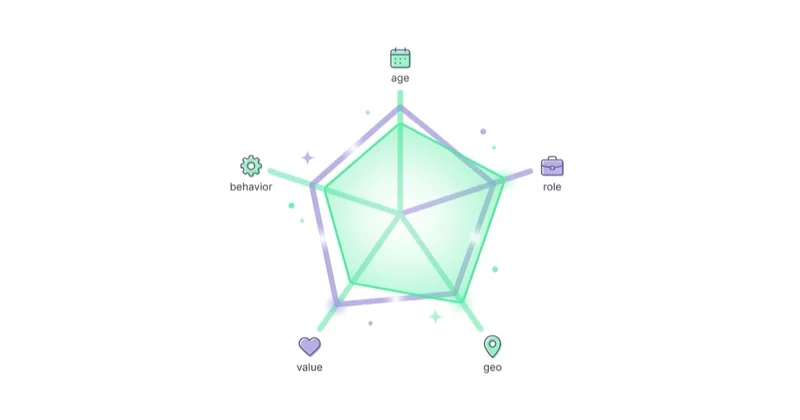
These are useful, but they rarely explain motivation on their own.
Psychographics
Psychographics include attitudes, motivations, fears, priorities, values and decision criteria. This is where messaging becomes more precise.
Examples:
- wants speed more than low price;
- cares about risk reduction;
- wants expert support, not DIY;
- values sustainability;
- needs social proof before buying;
- fears implementation complexity.
Behavioral data
Behavior shows what people actually do.
Useful signals include:
- pages viewed;
- content downloaded;
- search queries;
- product categories viewed;
- cart activity;
- previous purchases;
- frequency of purchase;
- email engagement;
- return behavior;
- support topics;
- CRM stage.
GA4 audiences, ad platform audiences and CRM segments can turn behavior into practical marketing actions.
Intent
Intent shows how close someone is to action.
Examples:
- informational intent: wants to understand a problem;
- comparison intent: evaluates alternatives;
- commercial intent: checks price, reviews or suppliers;
- transactional intent: ready to buy, book or request.
Intent should change the message. A beginner guide, a comparison page and a booking page should not use the same language.
Customer value
The best target audience is not always the biggest audience. It may be the most profitable, most loyal or most strategically important one.
Value-based segmentation can include:
- high-LTV customers;
- high-margin categories;
- repeat buyers;
- low-return customers;
- enterprise accounts;
- customers likely to refer;
- accounts with expansion potential.
Target audience template
A practical target audience description can be written in one paragraph.
Use this structure:
The target audience is [segment] that needs [problem or goal], usually at [decision stage], with [main objection], reachable through [channels], and valuable because [business value].
Examples:
| Weak definition | Better definition |
|---|---|
| Women aged 25-45 | Working parents looking for safe, fast weekday meal options, comparing quality and delivery reliability |
| Small businesses | B2B service companies with 10-50 employees that generate leads online but cannot connect campaigns with sales quality |
| Ecommerce customers | Returning buyers of skincare products who purchase every 30-60 days and respond to replenishment reminders |
| People interested in marketing | Marketing managers who already run paid campaigns but need clearer attribution, landing pages and conversion quality |
The stronger version gives marketing teams something to act on. It suggests message, proof, channel, offer and measurement.
Data sources for audience research
No single data source is enough. The best audience work combines quantitative and qualitative evidence.
| Source | What it reveals | Risk if used alone |
|---|---|---|
| CRM | lead quality, sales cycle, deal size, lost reasons | missing anonymous early-stage users |
| GA4 | behavior, events, returning users, pages | weak without business context |
| Search Console | organic queries and content demand | does not show all conversion value |
| Google Ads search terms | active commercial intent | limited to paid search traffic |
| Meta/TikTok engagement | creative and social interest | engagement can be low intent |
| Customer interviews | language, objections, triggers | small sample bias |
| Support tickets | friction, confusion, post-purchase needs | overrepresents problems |
| Reviews | benefits, objections, comparison points | can skew toward extreme opinions |
| Purchase data | value, frequency, categories, margin | says what happened, not always why |
| Sales calls | decision process and objections | may reflect sales-team bias |
The goal is not to collect every possible data point. The goal is to find repeatable patterns that change decisions.
How to define a target audience
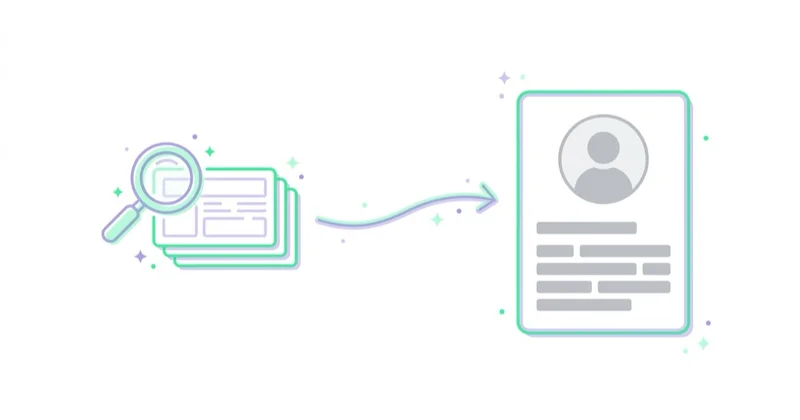
1. Analyze current customers
Start with reality:
- Who buys most often?
- Who spends the most?
- Who has the highest margin?
- Who returns?
- Who churns?
- Who needs the most support?
- Who refers others?
- Who closes fastest?
- Who creates the best case studies?
Do not confuse loud customers with valuable customers. The target audience should be based on business value, not only visibility.
2. Interview sales, support and customers
Sales and support teams hear objections that analytics cannot show. Customer interviews reveal the language people use before and after buying.
Useful questions:
- What made the problem urgent?
- What alternatives were considered?
- Why was this company selected?
- What almost stopped the decision?
- What information was missing?
- What changed after purchase?
3. Review analytics and search data
Use:
- GA4 audiences and events;
- Google Search Console queries;
- Google Ads search terms;
- CRM lifecycle data;
- ecommerce purchase reports;
- product category behavior;
- email engagement;
- form submissions;
- heatmaps and recordings.
Look for patterns by segment, not only averages.
4. Segment the market
Segment by factors that change marketing decisions.
Possible segmentation criteria:
- problem or need;
- industry;
- company size;
- role in the buying process;
- urgency;
- intent stage;
- category interest;
- budget;
- customer value;
- lifecycle stage;
- location;
- purchase frequency;
- objection type.
If a segment does not change the message, channel, offer or budget, it may not be useful.
5. Prioritize segments
Score segments by:
- revenue potential;
- margin;
- fit with the offer;
- ease of reaching them;
- competition;
- sales cycle;
- conversion likelihood;
- retention potential;
- proof available;
- operational capacity.
The best segment is not always the largest. It is the segment where the business can win profitably.
6. Turn segments into actions
Audience work is only useful when it changes execution.
For each priority segment, define:
- main message;
- strongest proof;
- best channel;
- landing page or content path;
- offer or CTA;
- exclusions;
- conversion goal;
- value metric;
- next lifecycle step.
Example:
| Segment | Message | Channel | Measurement |
|---|---|---|---|
| High-intent service page visitors | Reduce risk and show proof | Search, remarketing, email nurture | qualified leads and close rate |
| New ecommerce category visitors | Explain product fit and use cases | SEO, Shopping, Demand Gen, Meta | product views, add-to-cart rate, new buyers |
| Returning buyers | Replenishment and complementary products | email, Meta remarketing, customer lists | repeat purchase rate and LTV |
| B2B buying committee | Different proof by role | Search, LinkedIn, content, sales enablement | opportunities, pipeline and sales-cycle velocity |
This step prevents audience research from becoming a document that nobody uses.
Target audience in ecommerce
Ecommerce segmentation can be very practical because user behavior is observable.
Useful segments include:
- new visitors by category;
- returning product viewers;
- add-to-cart users;
- checkout abandoners;
- first-time buyers;
- repeat buyers;
- high-average-order-value customers;
- discount-sensitive customers;
- high-return customers;
- customers by brand or category preference;
- buyers ready for replenishment;
- buyers of complementary products.
Each segment can receive a different message. A new visitor may need category education. A cart abandoner may need delivery, payment and returns reassurance. A repeat buyer may need replenishment, bundles or loyalty content.
Ecommerce teams should also separate revenue from profit. A segment that buys discounted, frequently returned products may look attractive in ad platforms but be weak commercially. Audience priority should consider margin, return rate, support cost and lifetime value, not only ROAS.
For cart-stage behavior, see abandoned carts and recovery tactics.
Target audience in B2B
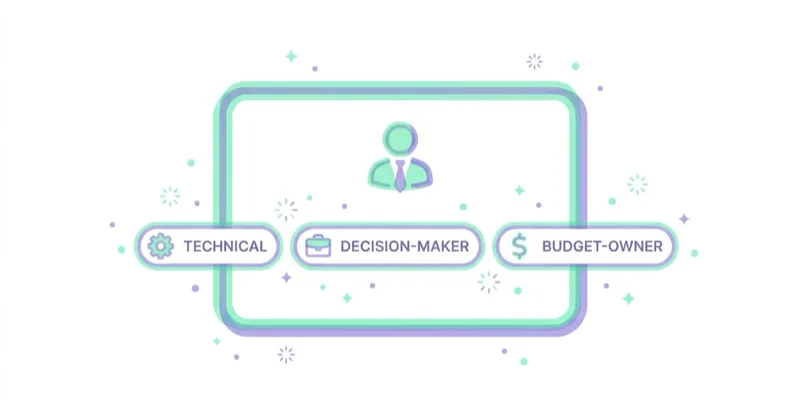
B2B targeting must account for buying committees. The user searching may not be the final signer.
Segments can include:
- economic buyer;
- technical evaluator;
- end user;
- marketing owner;
- procurement;
- founder;
- department head;
- external advisor.
Each role needs different proof. A CFO may want risk and payback. A marketing manager may want workflow and outcomes. A technical lead may want integration details. A founder may want speed and accountability.
The campaign should not only generate leads. It should help the buying group reach confidence.
For B2B, a useful audience strategy usually includes both the account and the role. The account defines whether the company is a fit. The role defines the message. A technical evaluator may need integration documentation, while the economic buyer may need payback logic and risk reduction.
How audience definition improves SEO and content
Target audience work should influence organic content as much as paid campaigns.
It helps decide:
- which problems deserve educational articles;
- which comparison pages are needed;
- what examples should appear in product and service pages;
- which objections need FAQ answers;
- what proof should be added to landing pages;
- which internal links support the buying journey;
- how to avoid content that attracts visitors who will never buy.
For LLM SEO and answer engines, audience clarity helps because content can answer specific questions directly. A vague article about "marketing" is harder to use than a clear answer for "how should a B2B SaaS team define target accounts before running Google Ads?".
How audience definition improves paid advertising
Modern ad platforms automate more targeting than before, but audience strategy still matters.
It informs:
- campaign objectives;
- conversion actions;
- creative angles;
- exclusions;
- customer lists;
- lookalike or similar-source quality where available;
- landing-page variants;
- offer sequencing;
- value-based bidding inputs;
- retention campaigns.
Automation can find more users, but it cannot decide which customers are strategically valuable unless the account sends good signals. That is why target audience work should connect with conversion quality, CRM feedback and customer value.
How we approach this at Space Ads
We define the target audience from data, not from a persona invented in a workshop. The opening picture of the customer is a hypothesis to test, not a given, because once campaigns run the data often tells a different story from the brief. Real buyers regularly differ in age, location or device from the "ideal customer" on the slide. We look at who actually buys and what they're worth, then shape the message and creative around that. Inside the ad systems we narrow audiences by hand less and less; what has to be precise is the definition of the customer in our own heads, so we read the signals right and write to the right person, while the matching we largely leave to the algorithm. A target audience, to us, is a living conclusion from the numbers, not a slide made once and forgotten.
Common mistakes
- Defining the audience only by age and gender.
- Saying "everyone can buy this".
- Creating personas without data.
- Treating low-value and high-value customers the same.
- Ignoring who influences the decision.
- Using the same message for new and returning users.
- Targeting only users who are ready to buy and ignoring future demand.
- Building campaigns from platform targeting options instead of customer insight.
- Failing to update segments after the offer changes.
- Letting automation optimize toward low-quality conversions.
FAQ
Can a business have more than one target audience?
Yes. Most businesses have several segments. The key is to prioritize them and avoid using the same message, budget and landing page for all of them.
How narrow should a target audience be?
It should be specific enough to guide decisions and broad enough to support scale. If the segment does not change messaging, offer, channel or budget, it is probably not specific enough.
What data is best for defining a target audience?
The best data combines customer interviews, CRM records, analytics, purchase behavior, search data, campaign results, support topics, sales feedback and market research.
Are buyer personas still useful?
Yes, if they are based on data and help teams write, design and sell more clearly. Personas built from guesses are less useful than simple, evidence-based segments.
How often should a target audience be updated?
Review it after major offer changes, new product launches, market shifts, pricing changes, new customer data or changes in acquisition performance. In active growth teams, audience assumptions should be reviewed at least quarterly.
How does AI affect target audience work?
AI changes execution, not strategy. Platforms may find users more automatically, but they still need clear goals, good conversion signals, useful audience inputs and creative that attracts the right type of customer.
What is the difference between a target audience and a segment?
A target audience can contain several segments. A segment is a smaller group defined by a meaningful difference such as need, value, intent, behavior, industry, role or lifecycle stage.
Should target audience work come before channel selection?
Yes. Channels should be chosen after understanding who needs to be reached, how they decide and what proof they need. Starting with a channel often leads to campaigns optimized around platform options instead of customer reality.
Conclusion
A target audience is not a decorative persona slide. It is a decision tool. It clarifies who the offer is for, why they care, how they decide, what they need to trust and which channels should reach them.
The best audience work combines data and judgment: current customers, CRM, analytics, interviews, search behavior, campaign results and business value. That foundation improves targeting, content, creative, landing pages and budget allocation.
Sources and further reading
- Google Analytics Help: Introduction to audiences
- Google Analytics Help: Create and edit audiences
- Google Ads Help: About Customer Match
- Google Search Central: Creating helpful, reliable, people-first content
- Meta for Business: Advantage+ audience
Continue learning
Continue reading
What Is Storytelling in Marketing and How to Use It?
Storytelling in marketing uses narrative structure to explain a customer problem, transformation and result. Learn how to use it in ads, landing pages, ecommerce, B2B and case studies.
What Is Benefit-Led Copywriting and How to Use It?
Benefit-led copywriting translates features into customer value. Learn feature vs advantage vs benefit, with examples for ads, ecommerce, B2B, landing pages and CTAs.
What Is Brand Marketing and How to Use It?
Brand marketing builds recognition, trust, memory and preference so a company is easier to choose when buyers enter the market.