Accounting and CPA firm marketing is not about getting the lowest possible lead cost. A tax return, a one-off question and a multi-year bookkeeping or advisory retainer can all arrive through the same form, but they are not worth the same amount to the firm. The marketing system has to separate them before budget decisions are made.
The strongest accounting campaigns are built around trust, specialization and client value. They capture active search demand such as "small business accountant near me", "bookkeeping services", "CPA for ecommerce" or "tax preparation", then send that demand to pages that explain the exact service, industry fit, onboarding process, fee logic and proof points. For a CPA firm, the winning metric is usually signed client value and retention, not raw cost per lead.
This guide is written for accounting firms, CPA practices, bookkeeping firms, tax preparers and outsourced finance teams that want lead generation without turning the brand into a commodity.
TL;DR
- Accounting and CPA firm marketing works best when it is built around client value. A retainer client, payroll account or advisory relationship should be measured differently from a one-off tax enquiry.
- Niche positioning usually beats a generalist pitch. "CPA for SaaS companies", "bookkeeping for ecommerce sellers" or "accounting for contractors" gives paid ads and SEO a clearer reason to convert.
- Google Search captures high-intent demand. Local, service-led and problem-led keywords are usually stronger than broad "accounting services" traffic.
- Local SEO still matters. Google says local results are influenced by relevance, distance and prominence, so a complete Business Profile, reviews and local service pages support both SEO and paid conversion.
- Meta, LinkedIn and remarketing support consideration. They are better for education, proof and nurture than for replacing search intent.
- Compliance language matters. Claims about tax advice, guarantees, refunds, savings or credentials should match the firm's actual permissions, evidence and jurisdiction.
- CRM and call tracking are not optional for serious lead generation. Google Ads can optimize toward better outcomes only when the account receives signals beyond the first form fill.
- The best campaign structure mirrors the firm's commercial model. Services, industries, locations and client stages should not be forced into one generic campaign and one generic page.
Why accounting marketing is different
Accounting is a trust service with a long commercial tail. The buyer is not only buying a task. They are choosing who will handle sensitive financial information, deadlines, payroll, tax records, reporting, compliance workflows and sometimes strategic decisions. That makes the decision more considered than a typical local-service purchase.
Three features shape the strategy.
First, client value varies widely. A simple individual tax return, a monthly bookkeeping client, a payroll client with 40 employees, a multi-entity ecommerce business and an advisory engagement all have different economics. Optimizing all of them as "leads" hides the difference.
Second, demand is often trigger-based. Prospects search when they start a business, outgrow a freelancer, change entity type, receive poor service from the current accountant, enter a new market, hire employees, prepare for tax season, receive a notice, or need cleaner management reporting.
Third, trust has to be earned before the first call. Reviews, credentials, service scope, onboarding process, data security, communication cadence and transparent fee logic often decide whether a prospect becomes a consultation or disappears after comparing three firms.
Build the strategy around the right client
The first strategic question is not "which channel should the firm use?" It is "which client is worth acquiring?"
Useful segmentation usually includes:

| Segment | Search intent | Landing page angle | Lead-quality signal |
|---|---|---|---|
| Local small businesses | "accountant near me", "small business accountant" | local availability, service packages, reviews | booked consultation, entity type, monthly fee range |
| Bookkeeping retainers | "bookkeeping services", "monthly bookkeeping" | recurring process, software stack, reporting cadence | monthly revenue potential and document volume |
| Tax preparation | "tax preparer", "CPA tax return" | deadlines, credentials, document checklist | return type, urgency, one-off vs recurring fit |
| Payroll and HR admin | "payroll services for small business" | employee count, compliance process, payroll schedule | number of employees and service scope |
| Industry niche | "CPA for ecommerce", "accountant for contractors" | industry-specific pain points and proof | niche fit, complexity, advisory potential |
| Client switching firms | "change accountant", "switch CPA" | handover process, cleanup, risk reduction | current problem, timeline, records quality |
This is where many firms lose efficiency. A generic campaign for "accounting services" competes broadly, sends every click to the same page and then judges success by form volume. A segmented structure produces fewer but better conversations because the prospect recognizes their own situation earlier.
Google Ads for accountants and CPA firms
Google Ads is usually the strongest paid channel for immediate demand because it reaches people already searching for a solution. The account should normally separate brand, local service, industry niche, tax-season, payroll and problem-led searches instead of mixing them into one broad campaign.
High-intent keyword themes include:
- local intent: "CPA near me", "accountant in [city]", "bookkeeper near me";
- service intent: "small business bookkeeping", "payroll services", "tax preparation", "outsourced accounting";
- niche intent: "CPA for ecommerce", "restaurant accountant", "accountant for contractors", "SaaS accounting";
- switching intent: "switch accountant", "change CPA firm", "bookkeeping cleanup";
- brand intent: firm name, partner names and review-led queries.
Negative keywords are just as important as keywords in this category. Job seekers, salary searches, accounting courses, free templates, DIY software comparisons, textbook queries and "how to become an accountant" searches can drain budget without producing commercial demand. The detailed workflow is covered in our guide to negative keywords in Google Ads.
The bidding setup should follow lead quality. Google Ads conversion measurement can track website actions, calls and offline conversions, and Smart Bidding can use conversion goals to optimize toward business objectives. For an accounting firm, that means the account should eventually distinguish "form submitted", "qualified consultation", "proposal sent", "client signed" and, where possible, estimated retainer value. That topic connects directly with call tracking for PPC and lead generation, enhanced conversions and Smart Bidding.
Local SEO and Google Business Profile
Many accounting firms are still local or regionally anchored even when they serve clients online. Local SEO matters because prospects often want a professional they can trust, verify and contact quickly.
Google's Business Profile guidance emphasizes complete and accurate business information, verification, up-to-date hours, review responses, photos and the local ranking factors of relevance, distance and prominence. In practice, that means an accounting firm should keep the following consistent:
- business name, address, phone and service area;
- primary and secondary categories;
- opening hours and seasonal changes;
- appointment and contact links;
- service descriptions for bookkeeping, tax, payroll and advisory;
- review responses that sound professional and specific;
- team, office or process photos where appropriate.
Local SEO should not stop at the profile. Service pages and FAQ content should answer real selection questions:
- How does the onboarding process work?
- What documents are needed to switch accountants?
- What is included in monthly bookkeeping?
- What changes when payroll is added?
- Which accounting software is supported?
- Does the firm work with remote clients?
- What does the fee depend on?
- Which industries does the firm understand?
This helps organic search, paid conversion and answer-engine visibility because the site becomes easier to parse and quote.
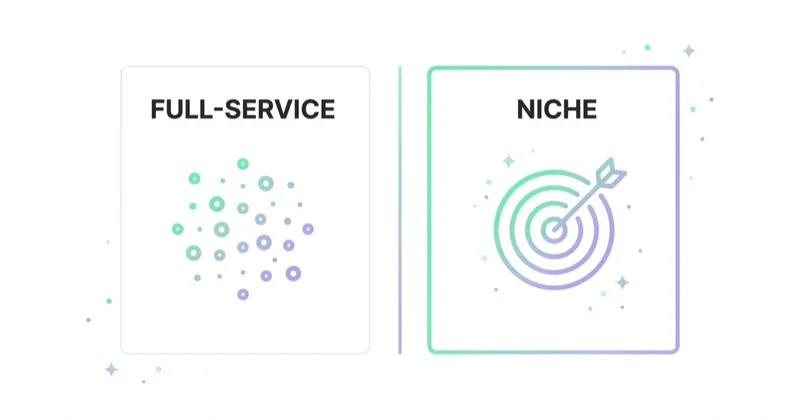
Positioning: niche beats "full-service"
"Full-service accounting firm" sounds safe, but it is usually weak as a marketing message. It does not tell a SaaS founder, ecommerce seller, restaurant owner or contractor why this firm is the better choice.
Niche positioning gives the campaign a sharper commercial reason:
- Ecommerce accounting: marketplace payouts, inventory, sales tax/VAT complexity, payment processors, returns and multi-channel data.
- SaaS and startups: revenue recognition, runway, fundraising reporting, investor-ready metrics and subscription tools.
- Contractors and trades: job costing, payroll, equipment, subcontractors and seasonal cash flow.
- Restaurants and hospitality: payroll, tips, inventory, margins and location-level reporting.
- Medical and professional practices: privacy, payroll, insurance flows, partner compensation and cash-flow planning.
- Nonprofits: restricted funds, grant reporting, board reporting and donation systems.
The firm can still accept broader work. Marketing does not have to describe every possible client. Its job is to make the most valuable prospects feel understood.
Landing pages that qualify, not just convert
A good accounting landing page should reduce uncertainty before the consultation. It should also filter out poor-fit enquiries.
Core elements:
- one clear segment or service;
- explanation of who the service is for and who it is not for;
- service scope: bookkeeping, tax, payroll, advisory, reporting or cleanup;
- onboarding steps and expected timeline;
- software stack and document workflow;
- credentials, licenses, professional memberships or partner status where relevant;
- data-security and confidentiality signals;
- fee logic or at least the variables that affect pricing;
- reviews, testimonials or case examples that do not overclaim;
- qualifying form fields: entity type, industry, revenue range, employee count, current software, current issue and desired start date.
The form can be slightly longer if the page is aimed at higher-value retainers. A four-field form may produce more leads, but it often gives the sales team less context. A segmented form helps separate one-off tax prep from recurring bookkeeping, payroll and advisory demand. For broader CRO context, see what a landing page is and how to build one.
Meta, LinkedIn and remarketing
Meta Ads and LinkedIn rarely replace Google Search for high-intent accounting demand. They are more useful for staying present during a considered decision.
Practical use cases include:
- retargeting people who visited service, pricing or switching-accountant pages;
- promoting checklists, tax-season reminders or industry-specific guides;
- building awareness in a local business community;
- promoting niche content such as "bookkeeping checklist for ecommerce sellers";
- re-engaging past consultations or inactive leads where consent and policy allow it;
- supporting employer-brand or referral campaigns separately from client acquisition.
LinkedIn can make sense for higher-value B2B segments, but it needs a precise audience, strong proof and a follow-up workflow. A generic "book a consultation" ad to broad job titles is usually too expensive. If the service is more like outsourced finance or fractional CFO support, LinkedIn can support account-based nurture, but the economics should be judged against signed revenue, not lead count.
Customer Match and remarketing require clean consent and data governance. Google describes Customer Match as a way to use online and offline first-party data to reach and re-engage customers across Google surfaces. For professional services, that does not remove the need to respect privacy notices, local law and platform policy.
Compliance and trust signals
Accounting marketing should be precise. The risk is not only platform disapproval. The larger risk is promising more than the firm can substantiate or deliver.
In the US, CPA advertising and solicitation rules can vary by state board and professional body. In other English-speaking markets, terms such as CPA, chartered accountant, tax adviser and bookkeeper have different meanings and regulatory expectations. The safe marketing principle is universal: claims about credentials, tax outcomes, savings, refunds, audit protection, guarantees or "specialist" status should be accurate, current and supportable.
The FTC's small-business advertising guidance explains that an ad can be deceptive if it is likely to mislead reasonable consumers and is material to their decision. It also states that advertisers need proof before an ad runs, including for implied claims. That standard is a useful discipline for accounting copy even outside the US: avoid vague promises such as "maximum refund guaranteed", "we save every client money" or "audit-proof books" unless the claim is properly qualified and evidenced.
Good trust signals are more specific:
- credentials and licensing where applicable;
- partner or software certifications;
- professional memberships;
- professional liability insurance where relevant;
- clear scope of tax, bookkeeping, payroll and advisory services;
- documented onboarding process;
- secure document exchange;
- named team members and areas of expertise;
- review profile and transparent response policy.
Measurement: from lead to client value
Lead generation becomes expensive when the account optimizes toward the wrong signal. A CPA firm should not treat every form fill as equal.
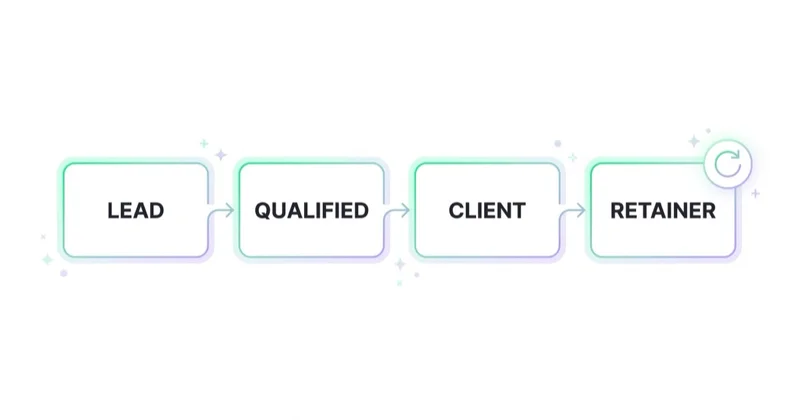
A better measurement ladder is:
- ad click or organic visit;
- form submission, call or booked appointment;
- qualified prospect;
- consultation completed;
- proposal or quote sent;
- signed client;
- monthly fee or project value;
- retained client after 3, 6 and 12 months;
- margin or service complexity.
This is why CRM discipline matters. Google Ads offline conversion imports and enhanced conversions for leads can connect ad interactions with later sales outcomes, including conversions that happen after a phone call or consultation. When qualified stages and client values are imported, bidding can learn from better signals than the cheapest enquiry.
For firms with sensitive data, measurement should be designed around consent, privacy notices and the minimum data needed. The marketing team does not need access to confidential client records. It needs stage, source, value band and outcome quality.
How Space Ads approaches accounting lead generation
Across the 25+ accounts audited daily and roughly 14M monthly data points analyzed through Space Ads OS, professional-services accounts tend to fail in the same place: the campaign gets leads, but nobody can prove whether those leads become profitable clients.
For accounting and CPA firms, the practical setup is:
- define the target client segments before media spend;
- split Google Search by service, location, niche and intent;
- build landing pages that explain scope, process and fit;
- protect budgets with negative keywords;
- use Meta or LinkedIn for remarketing and education, not as a replacement for search intent;
- connect calls, forms and CRM stages to campaign data;
- judge performance by signed client value and retention.
If an existing account is already spending but the lead quality is unclear, a marketing audit can show where budget leaks, which search terms convert into real opportunities and whether tracking is giving Smart Bidding the wrong goal. Ongoing channel execution sits under performance marketing, with channel-specific work across Google Ads and Meta Ads.
Common mistakes
| Mistake | Why it hurts | Better approach |
|---|---|---|
| Optimizing for the cheapest lead | Attracts one-off, low-fit or unqualified enquiries | Optimize toward qualified consultation, signed client and retainer value |
| One campaign for every service | Mixes tax prep, payroll, bookkeeping and advisory economics | Separate campaigns by service, location, niche and intent |
| Sending all traffic to the homepage | Forces the prospect to find the relevant proof alone | Use dedicated service and industry landing pages |
| Ignoring phone calls | Many high-intent local prospects call first | Use call tracking and import qualified call outcomes |
| Claiming expertise too broadly | Weakens trust and can create compliance risk | Make specific, supportable claims tied to people, credentials and process |
| Running only during tax season | Misses recurring bookkeeping and advisory clients | Capture seasonal demand while building year-round retainer acquisition |
| Treating Meta leads like Google leads | Passive demand needs faster nurture and clearer qualification | Use Meta for education, remarketing and carefully qualified offers |
FAQ
What is accounting firm marketing?
Accounting firm marketing is the process of attracting, qualifying and converting clients for bookkeeping, tax, payroll, advisory or outsourced finance services. Good marketing does not only generate enquiries; it helps the firm win the right client type at a cost that makes sense against lifetime value.
Do Google Ads work for accounting and CPA firms?
Yes, when the campaigns are built around specific intent and measured beyond the first lead. Local CPA searches, bookkeeping searches, payroll queries, tax-preparation demand and niche industry searches can all work. Broad "accounting services" campaigns without negative keywords, landing pages or CRM feedback usually waste budget.
Should a CPA firm advertise by niche?
Usually, yes. Niche positioning makes ads, landing pages and SEO more relevant. A message such as "bookkeeping for ecommerce sellers" or "CPA for contractors" gives the prospect a reason to engage that a generic "full-service accounting" message does not.
What should an accounting landing page include?
It should explain the target client, service scope, onboarding process, software workflow, credentials, trust signals, pricing variables and next step. For lead quality, the form should ask enough questions to identify the prospect's entity type, industry, service need and timeline.
How should CPA firms measure lead generation?
The minimum is form submissions and calls. A stronger setup tracks qualified prospects, consultations, proposals, signed clients, monthly fee and retention. Importing offline conversions or lead stages into Google Ads helps bidding optimize toward business quality rather than cheap enquiries.
Is Meta Ads useful for accountants?
Meta Ads can be useful for remarketing, local awareness and educational content, especially when the firm has a niche. It is usually weaker than Google Search for immediate high-intent demand, so performance should be judged by assisted pipeline and qualified follow-up, not only platform leads.
In short
Accounting and CPA firm marketing should be designed around profitable client acquisition. The core system is simple: identify the right clients, capture high-intent demand, build niche landing pages, show trust clearly, measure lead quality through the CRM and optimize toward signed client value. The firms that win are not necessarily the firms with the most leads. They are the firms that know which leads turn into durable, profitable relationships.
Sources and further reading
- Google Business Profile Help - Local ranking documentation
- Google Ads Help - About conversion measurement
- Google Ads Help - About offline conversion imports
- Google Ads Help - About Customer Match
- Federal Trade Commission - Advertising FAQs: A Guide for Small Business
Continue learning
Continue reading

Language School Marketing: Two Businesses, One Building
Language schools often combine consumer enrolment and corporate training. Market them as separate buying journeys, then connect campaigns to attendance, enrolment, group contribution and continuation.

Driving School Marketing: Selling Instructor Hours, Not Courses
A practical system for growing a driving school around real instructor capacity: local demand, transparent lesson offers, compliant proof, responsive booking and completed-pupil value.

Bike Shop Marketing: The Workshop Pays the Rent
A practical marketing system for bike retailers and workshops: model capacity and contribution, capture local service demand, promote in-stock bikes, and turn first visits into lasting customer relationships.