Hair and beauty salon marketing should be built around booked appointments, rebooked clients and recurring value. A first haircut, manicure, brow appointment or facial is only the beginning of the economics. The real profit appears when a new client chooses the salon again, follows a stylist or technician, buys higher-value services and returns on a predictable cycle.
That means the strongest salon marketing is not a collection of attractive Instagram posts or one discount campaign. It is a local acquisition and retention system: Google captures people already looking for a salon nearby, Instagram and Meta show the style and trust signals that create demand, the booking path removes friction, and the CRM or booking software reports which first visits turn into repeat clients.
TL;DR
- Hair and beauty salon marketing should measure bookings and rebooking. Clicks, likes and first-visit discounts are not enough.
- Google captures local service intent. Searches such as "hair salon near me," "balayage [city]," "nail salon [neighborhood]" and "brow lamination [city]" need service-specific pages and clean local targeting.
- Google Business Profile is a conversion surface. Photos, hours, service lists, reviews, booking links and responses often influence the choice before the website is opened.
- Meta and Instagram sell the visual proof. Reels, carousels and before/after-style storytelling can show skill, atmosphere and available appointments, but claims and body-image language need care.
- The booking path decides how much demand is wasted. A slow form, missing price context or hidden calendar can turn interested prospects into messages that never become appointments.
- Retention is the profit layer. Rebooking, reminders, seasonal packages and customer lists usually matter more than a constant chase for discounted first visits.
What Kind of Salon Marketing Is This?
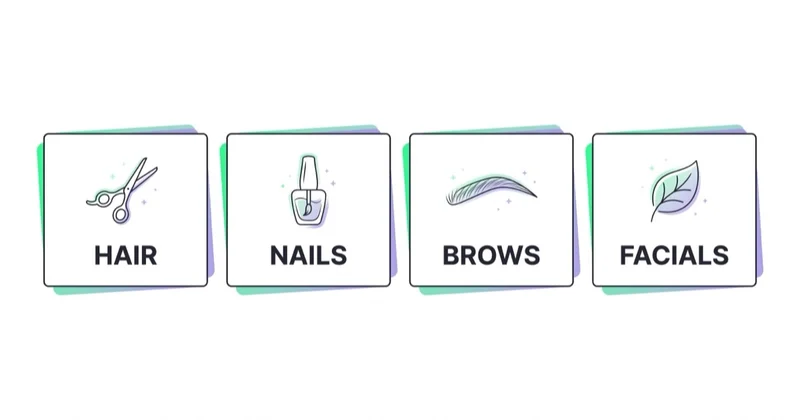
The phrase "hair and beauty salon marketing" covers several businesses that should not all use the same campaign:
- hair salons and color specialists;
- barbershops;
- nail salons;
- brow and lash studios;
- makeup artists;
- facial and skincare studios;
- waxing and sugaring studios;
- massage and wellness rooms;
- multi-service beauty salons;
- medical aesthetic clinics and med spas.
This guide focuses on non-medical salon services such as hair, nails, brows, lashes, skincare, makeup, massage and similar local appointment businesses. Medical aesthetics, injectable treatments, prescription products and invasive procedures require stricter claims, eligibility and platform policy checks. For that category, a separate med spa marketing strategy is safer.
The practical goal is simple: fill the calendar with the right appointments at the right margin, then create a habit of returning. The account should not optimize for reach or cheap inquiries unless those inquiries become completed visits and repeat clients.
Why Salon Marketing Is a Local Decision
Most salon choices happen locally and quickly. A prospect compares a few options by distance, reviews, photos, service match, price, availability and first impression. A salon can have strong paid ads and still lose the decision if the Google profile is weak, the website hides the service menu or the booking system is hard to use.
Google Business Profile is therefore not only an SEO asset. It is a sales surface. Google says local results are mainly based on relevance, distance and prominence, and recommends complete business information, accurate hours, reviews, replies, photos and videos. For a salon, that means the profile should show:
- correct primary and secondary categories;
- real photos of the salon, stations, work, team and entrance;
- service list with important treatments;
- opening hours and special holiday hours;
- phone number and booking link;
- address, parking or access details;
- review responses that sound professional and specific;
- fresh visual proof, not old stock imagery.
Paid media should strengthen this foundation, not compensate for a neglected profile. Many prospects click an ad, return to Google Maps to compare reviews, then choose from the local pack. If the profile has weak photos, outdated hours or no booking route, the paid click can be wasted.
Google Ads for Hair and Beauty Salons
Google Ads works best for active local intent. The strongest queries usually combine a service and location, for example:
- hair salon near me;
- hair colorist [city];
- balayage [city];
- keratin treatment [neighborhood];
- nail salon near me;
- gel manicure [city];
- brow lamination [city];
- lash lift [city];
- facial [neighborhood];
- massage [city].
The campaign should not send all of this traffic to one generic homepage. Service intent deserves a matching page or booking path. A person searching for balayage needs proof of color work, consultation details, pricing context, appointment length and stylist experience. A person searching for gel manicure needs availability, hygiene signals, nail work examples and fast booking. A massage search may need therapist information, duration, location and cancellation policy.
A practical Google Ads structure includes:
| Campaign Area | Purpose | Notes |
|---|---|---|
| Brand search | Protect salon and stylist demand | Important when competitors advertise locally |
| Core service search | Capture high-intent bookings | Separate hair, nails, brows, lashes, skincare and massage |
| Location search | Match city and neighborhood terms | Use realistic catchment areas |
| High-value services | Focus on margin and repeat value | Color, extensions, packages or premium treatments |
| Remarketing lists for search | Adjust bids for returning visitors | Useful for people comparing salons |
Negative keywords are just as important. Common exclusions include jobs, training, courses, wholesale products, DIY tutorials, free images, templates, reviews-only research and services not offered by the salon. Otherwise the budget can drift toward people who are not trying to book an appointment.
Location targeting needs review after launch. Google Ads can target countries, regions, cities, radius areas and location groups, but its own documentation notes that targeting is based on signals and is not guaranteed to be perfectly accurate. A salon should compare lead locations and completed visits against the intended catchment area, especially in dense cities.
Meta and Instagram for Beauty Demand
Beauty services are visual, so Meta and Instagram can carry the proof that search ads cannot show in the same way. The best assets usually come from the real salon:
- short clips from the chair, station or treatment room;
- finished hair color, cuts, nails, brows or lashes;
- process clips that show care, hygiene and craft;
- stylist or technician introductions;
- available appointment slots;
- seasonal inspiration;
- client review overlays with permission;
- calm first-visit explanations.
Instagram Reels are useful because many salon decisions start with visual taste. A client needs to feel that the salon's style matches the desired outcome. The creative should therefore show real work clearly, with consistent lighting and honest results.
Meta can support several campaign roles:
| Meta Role | Best Use | Measurement |
|---|---|---|
| Local awareness | Show the salon and team nearby | Profile visits, engaged users, assisted bookings |
| New-client offer | Fill available slots or introduce a service | Booked visits and show-up rate |
| Service promotion | Push high-margin or seasonal services | Booking value and rebooking |
| Retargeting | Bring back website visitors and engagers | Appointment completion |
| Customer list campaigns | Reactivate previous clients | Return visit and revenue |
Facebook lead ads can work for simple offers, but direct booking usually produces clearer intent when a calendar is available. If lead forms are used, they should ask for service interest, preferred date range and preferred contact method. Otherwise reception teams may spend time chasing low-intent leads.
Offer Strategy: First Visit Without Discount Addiction
Salon offers need balance. A first-visit incentive can reduce friction, but permanent discounting can train clients to wait for promotions and reduce perceived quality. The offer should create a first appointment while protecting margin and rebooking potential.
Better offer mechanics include:
- first consultation with a service recommendation;
- new-client package for a defined service;
- add-on treatment with a main appointment;
- off-peak appointment incentive;
- seasonal package with clear capacity limits;
- consultation deposit credited toward the service;
- rebooking incentive after the first visit.
The offer should match business goals. A hair colorist may prefer consultation-based campaigns rather than broad discount leads. A nail salon may promote recurring appointment slots. A brow studio may focus on service bundles and maintenance cycles. A massage studio may push package value and therapist fit.
The landing page or booking flow should state the service, location, price context, appointment length, availability and cancellation terms. Hidden pricing can create more messages, but not necessarily more completed visits.
Booking Path and CRO
The booking path is where many salon campaigns leak value. The user has enough interest to click, but the page or calendar creates friction.
A strong salon booking path includes:
- service-specific page or section;
- real photos of the service result and space;
- price range or starting price;
- appointment duration;
- clear "book appointment" action;
- phone and message options for complex services;
- staff or stylist selection where relevant;
- available dates or easy request flow;
- location details and parking/access notes;
- trust signals such as reviews, hygiene and training;
- consent and privacy language where data is collected.
For more complex services, a landing page can qualify before booking. Hair color, extensions, corrective work and some skincare services may need consultation forms, photos, contraindication questions or a deposit. Simpler services such as manicure, brow shaping or blow-dry appointments can often go straight to calendar booking.
Mobile matters because much of the discovery happens inside Instagram, Maps or mobile search. If the calendar loads slowly, requires account creation too early or hides available appointments, paid demand turns into abandoned intent.
Rebooking and Retention
The most valuable salon clients return. That makes retention part of acquisition, not a separate afterthought.
Useful retention mechanics include:
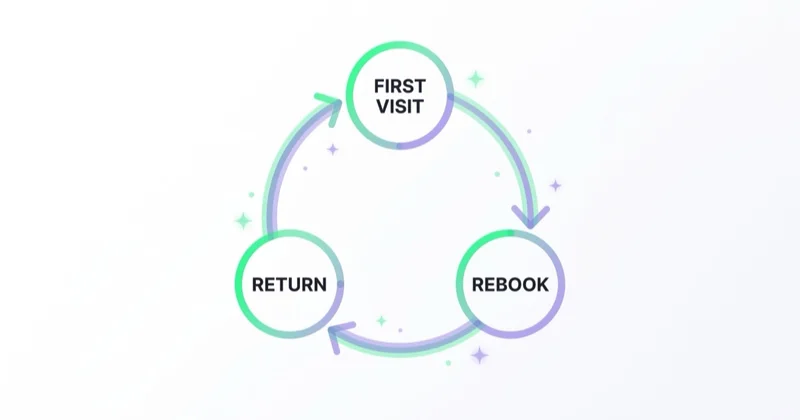
- rebooking before the client leaves;
- automated reminders before the next expected service cycle;
- post-visit care instructions;
- reminders for color refresh, nail maintenance, brow/lash maintenance or massage packages;
- win-back campaigns for inactive clients;
- referral prompts after positive visits;
- VIP or package logic for high-value clients;
- customer list retargeting with clear exclusions.
The strongest first-visit campaign may not be the one with the lowest cost per booking. It may be the one with the best second-visit rate, highest average ticket, strongest stylist fit or lowest no-show rate.
Remarketing should respect the customer stage. A first-time website visitor may need proof and availability. A previous client may need a reminder. A lapsed client may need a reason to return. A recently booked client should usually be excluded from acquisition ads and moved into service communication or retention.
Measurement: From Click to Repeat Client
The minimum tracking setup should capture calls, forms, online bookings and booked service type. A stronger setup connects the booking system or CRM with campaign data.
| Event | Meaning | Why It Matters |
|---|---|---|
booking_started |
The user opened calendar or form | Shows intent before completion |
booking_completed |
Appointment booked | Primary conversion for many salons |
visit_completed |
Client attended | Removes no-shows from performance claims |
rebooked |
Next appointment booked | Key recurring-value signal |
client_value |
Revenue or expected value | Helps compare service types |
inactive_reactivated |
Previous client returned | Retention performance |
For Google Ads, conversion tracking, phone call tracking and offline conversion imports can connect ad clicks with booked and completed visits. For Meta, Pixel and Conversions API can improve event reliability when the booking system allows clean integration.
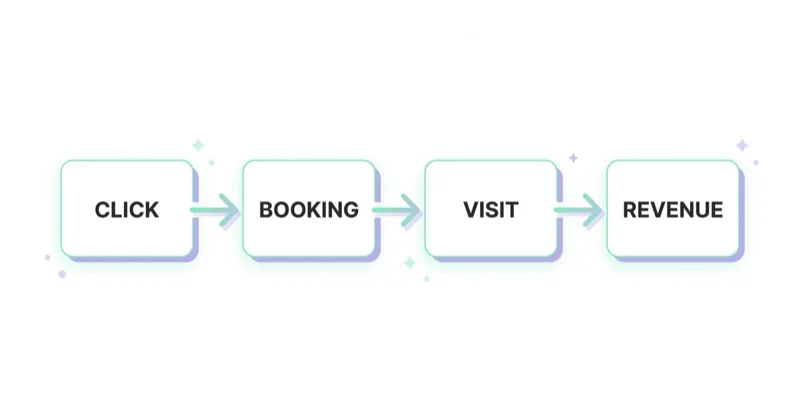
The reporting dashboard should separate first bookings, completed visits, rebooked clients, revenue, average ticket, no-shows and cancellations. Without that separation, a campaign can look strong because it generates cheap first appointments while weakening the calendar with low-margin or unreliable bookings.
Seasonality and Service Mix
Salon demand changes across the year. The calendar should shape campaigns and creative.
| Period | Typical Demand | Campaign Angle |
|---|---|---|
| January-February | New routines, maintenance, lower post-holiday demand | Reactivation and value packages |
| Spring | Events, weddings, color refresh, skincare | Service bundles and consultations |
| Pre-summer | Nails, waxing, color, skincare, lashes | Availability and seasonal packages |
| Late summer | Routine reset, back-to-work, school season | Rebooking and returning clients |
| Holidays | Styling, nails, gifts, gift cards | Capacity management and premium packages |
Service mix matters as much as seasonality. A booked appointment is not always equally valuable. Hair color, extensions, premium skincare or packages may deserve different targets than low-margin one-off services. Campaigns should follow capacity and margin, not only demand volume.
Compliance and Brand Safety
Beauty advertising should avoid language that pressures insecurities or implies a personal flaw. A calmer message usually works better anyway: service, style, technique, availability, care, team, hygiene and realistic results.
For non-medical beauty services, before/after style content should be honest and not manipulated. For cosmetic procedures, body transformation, medical aesthetics, weight loss, skin conditions or health-adjacent treatments, platform rules become stricter and may limit claims, targeting or imagery. In those cases, the safe default is neutral education and consultation-led copy rather than aggressive transformation promises.
Review permissions, image consent and client privacy also matter. A result photo may be strong creative, but it should not expose private information or imply a result that every client can expect.
How Space Ads Approaches Salon Campaigns
Across 25+ client accounts audited daily and roughly 14 million monthly data points analyzed through Space Ads OS, salon and beauty accounts usually fail in one of two places: the local trust layer or the retention data layer. Either the profile, reviews, service pages and booking path do not support the ad, or the account cannot tell which first bookings became repeat clients.
The Space Ads approach starts with the calendar and economics. Which services have capacity? Which have margin? Which create repeat visits? Which staff members or locations need demand? Then campaigns are split by service intent, visual creative, local catchment area and booking value.
For an existing account, a marketing audit can show whether paid media is generating profitable appointments or only inquiries. Ongoing execution usually connects Google Ads, Meta Ads, landing pages, booking data and performance marketing.
30-Day Action Plan
- Days 1-3: map service economics. List services by margin, appointment length, repeat potential, seasonality and current capacity.
- Days 4-7: fix local trust. Update Google Business Profile, photos, services, hours, booking links and review responses.
- Days 8-12: improve booking paths. Add service pages, price context, real photos, clear CTA, calendar flow and phone tracking.
- Days 13-18: launch Google Search. Separate brand, service and location intent. Add negative keywords and realistic geotargeting.
- Days 19-24: launch Meta creative tests. Test service proof, team content, seasonal offers, appointment availability and retargeting.
- Days 25-30: review quality. Compare booking cost, completed visits, no-shows, average ticket and rebooking before scaling.
Common Mistakes
| Mistake | Better Approach |
|---|---|
| Measuring likes and reach as success | Measure bookings, completed visits and rebooking |
| Sending all traffic to the homepage | Use service-specific pages and booking paths |
| Ignoring Google Business Profile | Treat the profile as a local conversion page |
| Running constant discounts | Use controlled offers tied to margin and retention |
| Using stock beauty images | Show real work, team, space and service outcomes |
| Chasing every service equally | Prioritize margin, capacity and repeat value |
| No exclusions after booking | Move booked clients into retention and exclude them from acquisition |
FAQ
What is the best way to market a hair or beauty salon?
The best approach combines local Google visibility, a complete Google Business Profile, visual Instagram and Meta creative, service-specific booking pages and a retention system. The business should measure completed visits and rebooking, not only clicks or first inquiries.
Should salons use Google Ads or Meta Ads?
Both channels can work. Google Ads captures people actively searching for a salon or service nearby. Meta and Instagram show visual proof, style, staff, atmosphere and offers to local audiences before or after they search. The right split depends on service mix, brand strength, local competition and booking capacity.
What should a salon promote first?
Start with services that have healthy margin, available capacity, repeat potential and clear visual proof. Hair color, nail maintenance, brows, lashes, facials, massage packages and premium services may all work, but the best starting point depends on the calendar and economics.
How should salon marketing ROI be measured?
Measure the full path: ad click, call, booking, completed visit, revenue, rebooking and return visits. A cheap first appointment can be weak if it no-shows or never returns. A more expensive booking can be profitable when it becomes a recurring client.
Are discounts necessary for salon advertising?
Discounts are not always necessary. A clear service, strong photos, reviews, easy booking and available slots can be enough. When incentives are used, they should protect margin and encourage the second visit rather than train clients to wait for the next promotion.
What role does Instagram play in salon marketing?
Instagram is a visual trust channel. It helps show style, outcomes, staff, space and current availability. It should connect to booking and retargeting rather than operate only as a gallery.
In Short
- Hair and beauty salon marketing should generate booked appointments, completed visits and repeat clients.
- Google captures local service intent; Meta and Instagram show visual proof and create demand.
- Google Business Profile, reviews, photos and booking links often decide the local choice.
- Service-specific pages and simple booking flows reduce wasted demand.
- Retention, rebooking and client value are more important than the cheapest first appointment.
Sources
- Google Business Profile Help - Improve local ranking on Google
- Google Ads Help - Target ads to geographic locations
- Google Ads Help - About conversion tracking
- Google Ads Help - About offline conversion imports
- Meta for Developers - Conversions API
- Meta Transparency Center - Advertising Standards
Continue Learning
Continue reading
Language School Marketing: Two Businesses, One Building
Language schools often combine consumer enrolment and corporate training. Market them as separate buying journeys, then connect campaigns to attendance, enrolment, group contribution and continuation.
Driving School Marketing: Selling Instructor Hours, Not Courses
A practical system for growing a driving school around real instructor capacity: local demand, transparent lesson offers, compliant proof, responsive booking and completed-pupil value.
Bike Shop Marketing: The Workshop Pays the Rent
A practical marketing system for bike retailers and workshops: model capacity and contribution, capture local service demand, promote in-stock bikes, and turn first visits into lasting customer relationships.