Hotel and hospitality marketing is not simply about more reservations. It is about profitable demand: direct bookings, healthier margins, better occupancy in the right dates, stronger average daily rate, longer stays and less dependency on online travel agencies. OTA visibility can bring valuable reach, but every OTA booking has an economic trade-off. A hotel that can shift part of demand to its own booking engine keeps more control over margin, guest data, upsell and remarketing.
That is why hotel marketing in 2026 needs a more precise model than "run Google and Meta ads." Google Hotel Ads and booking links capture travelers while they compare prices. Performance Max for travel goals can reach potential guests across Google inventory with hotel-specific assets. Search protects brand and destination intent. Meta and Instagram build inspiration, retarget warm audiences and promote seasonal packages. The booking engine, rate strategy and measurement decide whether that traffic becomes profitable direct revenue.
TL;DR
- Hotel and hospitality marketing should prioritize profitable direct bookings. OTA volume is useful, but direct demand protects margin and first-party guest data.
- Google Hotel Ads require Hotel Center data. Hotel list, prices and landing pages need to be current because hotel ads show real rates and booking links.
- Commission-based Hotel Ads bidding is no longer the default path. Google sunset commission-based Hotel Ads bid strategies in 2025; current planning should focus on Target ROAS, Enhanced CPC, Hotel Ads CPC setups and Performance Max for travel goals.
- Rate competitiveness decides metasearch conversion. If the direct rate, cancellation policy or direct perk is worse than OTA alternatives, paid traffic will leak.
- Meta supports inspiration and retargeting. It is strongest for destination appeal, seasonal demand, packages, events, amenities and abandoned booking recovery.
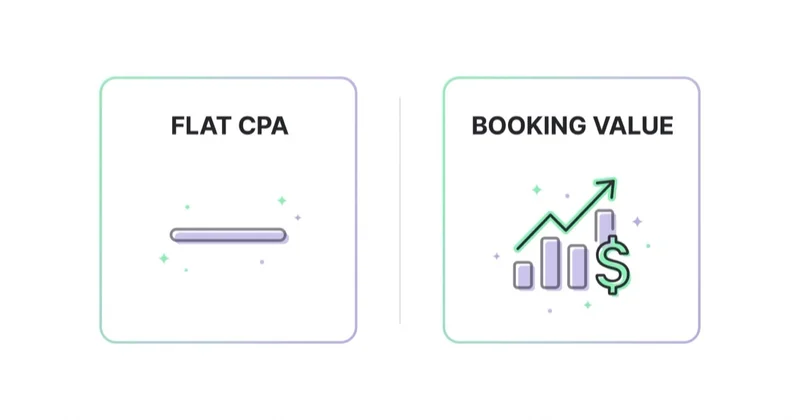
- Measure booking value, not flat CPA. ADR, length of stay, margin, cancellation risk, commission avoided and ancillary revenue should shape bidding and reporting.
Why Hotel Marketing Is Different
Hotels sell perishable inventory. A room night that is not sold today cannot be sold tomorrow. At the same time, not every booking has equal value. A one-night discounted booking on a low-demand date, a five-night direct booking in peak season and a corporate stay with repeat potential should not be treated as the same conversion.
Hospitality marketing also sits between several demand sources:
- direct website bookings;
- Google Hotel Ads and free booking links;
- branded search;
- destination and category search;
- Performance Max for travel goals;
- Meta and Instagram;
- OTAs and metasearch partners;
- email, loyalty and repeat guests;
- group, event, wedding and corporate demand.
The strategic problem is not choosing one channel. It is deciding which channel should win which demand, at what acquisition cost and with what value signal. A hotel that measures only booking count can accidentally buy low-margin reservations while more profitable dates, rooms or packages remain under-supported.
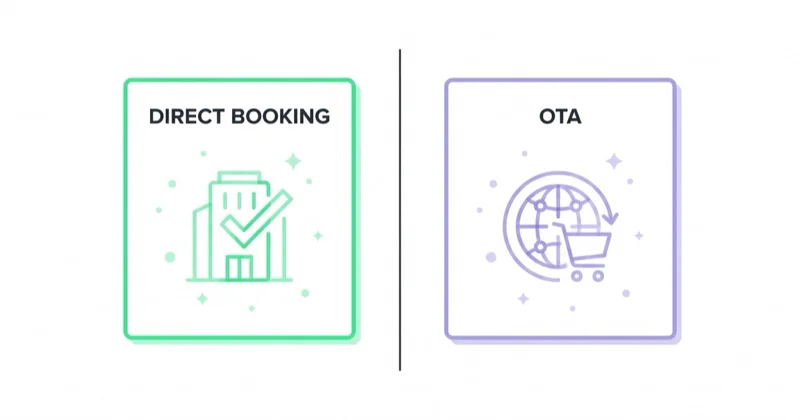
Direct Bookings Versus OTA Dependence
OTAs can be valuable distribution partners. They provide reach, comparison visibility and demand in markets where a hotel has limited brand awareness. The issue is dependency. When a large share of bookings comes through intermediaries, the hotel gives up commission, some guest relationship control and often weaker remarketing access.
Direct booking campaigns should therefore be judged against the margin they protect. A direct booking can justify paid acquisition cost when it avoids an OTA commission, increases guest data ownership, supports upsells and improves repeat marketing.
The direct offer does not always need to be cheaper than every OTA. It does need to be compelling and credible. Examples include:
- rate parity with a direct booking perk;
- flexible cancellation;
- breakfast or parking included;
- room upgrade priority;
- loyalty points or return-stay incentive;
- package value that OTAs do not show clearly;
- direct support for special requests.
If the OTA listing is cheaper, clearer or easier to book, direct booking campaigns will struggle no matter how well the media account is managed.
Google Hotel Ads and Hotel Center
Google's hotel campaigns let advertisers bid for hotel ads that appear when a traveler searches for a hotel on Search or Maps. Google explains that these ads can appear in a booking module with photos, amenities, prices and a link to book. To run them, a hotel needs a Hotel Center setup or an integration partner that provides a hotel list, up-to-date prices and landing pages.
This makes Hotel Ads different from ordinary Search. The ad depends on inventory, price feed accuracy and a booking link. Google also states that Hotel Ads ranking considers bids and ad quality, including price accuracy and how well the ad addresses the user's need.
The operational checklist is:
- Hotel Center account or integration partner is active;
- hotel list is correct;
- rates and availability are refreshed reliably;
- landing pages match the selected itinerary;
- taxes, fees and cancellation terms are clear;
- booking engine loads quickly on mobile;
- direct rate is competitive with OTA rates;
- tracking captures booking value, room nights and cancellation status.
Free booking links also matter. Google Hotel Center describes free booking links under "All options" in hotel searches, separate from paid booking links. They are not a substitute for paid strategy, but they are part of the direct booking surface and should not be neglected.
Bidding in 2026: What Changed
Older hotel marketing advice often describes commission-based Hotel Ads bidding as a normal option. That advice is now outdated. Google announced that commission-based bid strategies for Hotel Ads were sunset on February 20, 2025, and stated that new commission-based strategies stopped being available for new Hotel Ads campaigns from April 30, 2024.
The practical 2026 planning options are:
| Option | Best Use | Main Requirement |
|---|---|---|
| Hotel Ads with CPC or Enhanced CPC | Direct control and metasearch capture | Accurate Hotel Center feed and active bid management |
| Target ROAS for Hotel Ads | Value-based optimization | Reliable conversion value and sufficient data |
| Performance Max for travel goals | Broader Google inventory with hotel-specific assets | Strong creative, property data and conversion measurement |
| Branded Search | Protect brand demand and direct booking intent | Clean landing pages and rate competitiveness |
| Standard Search | Destination, package and segment demand | Clear keyword structure and landing pages |
Performance Max for travel goals is especially relevant because Google describes it as a hotel-focused campaign type that can run across Google channels and use hotel data, property-specific assets and travel inventory. It should not be treated as a black box replacement for revenue strategy. It still needs clean value tracking, strong assets, rate competitiveness and reporting by property or segment.
Meta and Instagram in Hospitality Marketing
Meta usually does not replace Hotel Ads for active rate comparison. Its strongest role is earlier or softer demand:
- destination inspiration;
- hotel atmosphere and experience;
- amenities such as spa, pool, restaurant, view or family facilities;
- seasonal packages;
- wedding, event and conference demand;
- local staycation offers;
- restaurant and bar promotion for non-staying guests;
- retargeting after website visits or booking starts;
- reactivation of previous guests through customer lists where consent allows.
The creative should show the real stay experience. Strong assets include room walkthroughs, exterior context, breakfast, restaurant, spa, event setup, nearby attractions, seasonal scenery and guest-use cases such as weekend break, family stay, workation, wedding weekend or business travel.
Meta campaigns should be split by intent and offer. A romantic weekend package, conference venue, family holiday, spa break and city-break room sale are different buying contexts. One generic hotel ad usually cannot carry all of them.
Search, PMax and Meta by Guest Journey
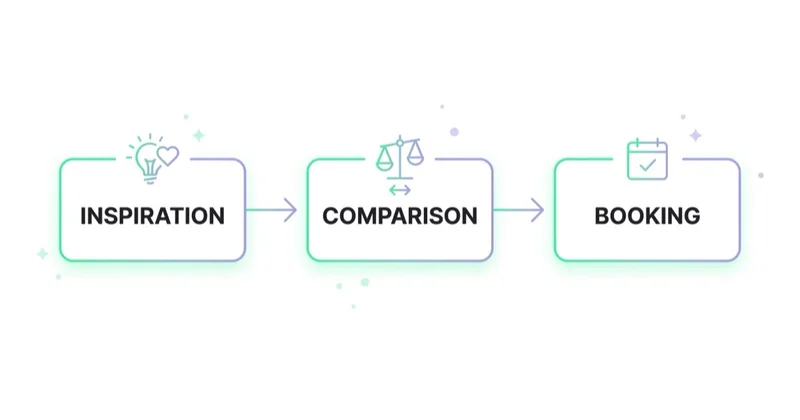
Hotel decisions move through inspiration, comparison and booking. The channels should match that path.
| Journey Stage | User Need | Channel Role |
|---|---|---|
| Inspiration | Place, mood, occasion, experience | Meta, Instagram, YouTube, Performance Max |
| Research | Compare hotels, location, reviews, amenities | Google Search, organic content, Maps, Hotel Ads |
| Rate comparison | Price, room, cancellation, dates | Hotel Ads, booking links, OTAs, direct booking engine |
| Booking | Complete reservation with confidence | Direct site, booking engine, call center |
| Recovery | Return after abandonment | Meta remarketing, Google remarketing, email where consent allows |
| Repeat | Return guest or loyalty action | CRM, customer lists, email, direct offers |
Dynamic remarketing can be useful when the hotel or group has structured offers, rooms, locations or packages. The same logic applies to abandoned booking recovery. The message should reflect the stage: a destination browser needs inspiration, while a booking-engine abandoner needs clarity, availability or a reason to finish direct.
Booking Engine and CRO
The booking engine is part of performance marketing. If it is slow, confusing or less trustworthy than an OTA checkout, paid media will lose bookings at the final step.
A direct booking path should make these elements obvious:
- selected dates and number of guests;
- total price, taxes and fees;
- cancellation and payment terms;
- room differences and photos;
- amenities included in the rate;
- direct booking perks;
- trust badges and secure payment;
- mobile speed and simple forms;
- language and currency for target markets;
- confirmation and modification flow.
For broader campaigns, the landing page should match intent. A wedding ad should not land on a generic rooms page. A conference ad needs capacity, layouts, catering, equipment and inquiry routing. A spa weekend ad needs package inclusions and dates. A restaurant promotion should connect with the hospitality ecosystem but may deserve separate measurement, much like restaurant marketing.
Measurement: Booking Value, Not CPA Alone
Flat CPA is a weak hotel metric because booking value varies heavily. A useful measurement model includes:
| Metric | Why It Matters |
|---|---|
| Booking value | Main revenue signal for bidding and ROAS |
| ADR | Shows rate quality, not only occupancy |
| Room nights | Distinguishes one-night and longer stays |
| Length of stay | Changes acceptable acquisition cost |
| Cancellation rate | Prevents overvaluing fragile demand |
| Commission avoided | Shows direct booking margin benefit |
| Ancillary revenue | Spa, restaurant, parking, upgrades and events |
| Booking window | Helps forecast demand and pace campaigns |
| Device and market | Supports bid and landing page decisions |
For Google Ads, booking value should be passed as conversion value where technically possible, then used with value-based bidding such as Target ROAS when data quality is strong enough. The same commercial principle is covered in margin-based conversion value: the platform should learn from business value, not from raw conversion count.
GA4 and booking-system reporting need reconciliation. Payment referrals, booking-engine domains, cross-domain tracking, cancellation adjustments and duplicate transactions can distort performance. A Google Analytics audit is often needed before scaling hotel media, because a broken booking event can make any channel look better or worse than reality.
Segment by Property and Demand Type
Hospitality campaigns should not treat all properties or offers as equal.
| Segment | Campaign Focus | Measurement Note |
|---|---|---|
| Independent city hotel | Brand, local destination, direct rate | ADR, weekday/weekend mix, booking window |
| Resort | Destination inspiration, packages, seasonality | Length of stay, package value, market mix |
| Boutique hotel | Experience, design, local story | Direct share, ADR, room type mix |
| Hotel group | Property-specific PMax and Hotel Ads | Reporting by property and market |
| Conference hotel | Events, meetings, corporate demand | Qualified inquiries, event value, sales cycle |
| Wedding venue | Visual proof and lead quality | Tour bookings, date availability, close rate |
| Aparthotel | Longer stays and work travel | Stay length, occupancy by period, repeat |
Segmentation also matters by market. Domestic weekend travelers, international guests, business travelers, wedding leads and conference planners should not all receive the same creative, landing page or target ROAS.
Rate Strategy and Direct Booking Perks
Media cannot fix a weak direct proposition. Before increasing ad spend, a hotel should audit:
- whether direct rates are competitive for the same room and dates;
- whether OTAs show lower apparent prices because fees are displayed differently;
- whether mobile users can see total cost before checkout;
- whether direct perks are visible in Hotel Ads callouts, landing pages and booking engine;
- whether cancellation terms are clear;
- whether packages are genuinely easier to understand direct;
- whether promo codes or loyalty offers create tracking issues.
The best direct-booking strategy is not always a discount. Often it is clarity and value: better terms, exclusive package, room upgrade priority, direct guest support or flexible add-ons.
How Space Ads Approaches Hotel Marketing
Across 25+ client accounts audited daily and roughly 14 million monthly data points analyzed through Space Ads OS, hospitality accounts usually have three hidden problems: booking values are tracked incorrectly, direct rates are not competitive enough in the final comparison, or campaigns optimize for volume without cancellation and margin context.
The Space Ads approach starts with distribution economics. How much demand is OTA, direct, brand, metasearch, corporate, group or repeat? Which dates need demand? Which room types or packages carry margin? Which markets have useful booking windows? Only then does channel structure follow.
For an existing hotel account, a marketing audit can show whether media spend is shifting demand toward profitable direct bookings or simply buying traffic that would have booked elsewhere. Ongoing execution usually connects Google Ads, Meta Ads, booking analytics, feed quality and performance marketing.
30-Day Action Plan
- Days 1-3: map distribution economics. Separate OTA, direct, brand, metasearch, corporate, group and repeat demand. Add commission and margin context.
- Days 4-7: audit Hotel Center and booking links. Check hotel list, rates, availability, landing pages, tracking and direct rate competitiveness.
- Days 8-12: fix booking measurement. Validate booking value, transaction IDs, cross-domain tracking, cancellations and booking-engine referrals.
- Days 13-18: restructure Google. Separate brand search, Hotel Ads, PMax travel goals, destination/package search and remarketing.
- Days 19-24: build Meta demand campaigns. Split seasonal packages, amenities, events, weddings, staycations and abandoned booking audiences.
- Days 25-30: review value and leakage. Compare direct share, booking value, ROAS, cancellations, OTA displacement and booking-engine conversion rate before scaling.
Common Mistakes
| Mistake | Better Approach |
|---|---|
| Measuring all bookings equally | Use booking value, room nights, ADR and cancellation status |
| Treating Hotel Ads like normal Search | Manage feed, rates, booking links and hotel-specific bidding |
| Using outdated commission-bidding assumptions | Plan around Target ROAS, ECPC, CPC setups and PMax travel goals |
| Sending package ads to a generic booking page | Match landing pages to package, dates and audience |
| Ignoring rate competitiveness | Make direct rate and direct perks visible before buying traffic |
| Running Meta only for pretty visuals | Tie creative to audience stage, package, booking recovery or event lead |
| Scaling before analytics is fixed | Reconcile booking engine, GA4, Ads and cancellation data first |
FAQ
What are Google Hotel Ads?
Google Hotel Ads are ads that can appear when travelers search for hotels on Google Search or Maps. They use hotel data such as prices, availability, photos, amenities and booking links. They require Hotel Center data or an integration partner that provides the hotel list, rates and landing pages.
Are commission-based Hotel Ads still available?
Commission-based Hotel Ads bid strategies were sunset in 2025. Google stated that new commission-based strategies stopped being available for new campaigns from April 30, 2024, and active commission-based campaigns continued only until February 20, 2025. Current planning should focus on options such as Target ROAS, Enhanced CPC, CPC management and Performance Max for travel goals.
How can hotels increase direct bookings?
Direct bookings increase when the hotel has competitive rates, clear direct perks, accurate Hotel Center data, fast booking pages, brand search protection, Hotel Ads or PMax travel coverage, and remarketing for people who started but did not complete a booking. The booking engine and rate strategy are as important as media buying.
Should hotels use Google or Meta Ads?
Both can support the journey. Google captures active comparison and booking intent through Hotel Ads, Search and Performance Max for travel goals. Meta and Instagram create inspiration, promote packages, support events and retarget warm audiences. The strongest mix depends on property type, demand calendar and measurement quality.
How should hotel marketing ROI be measured?
Hotel ROI should be measured by booking value, direct share, ROAS, ADR, room nights, cancellation rate, commission avoided and ancillary revenue. A flat CPA target can mislead because different stays have different margin and value.
Is Performance Max for travel goals useful for hotels?
It can be useful when property data, creative assets and conversion measurement are strong. It can reach across Google inventory and use hotel-specific assets, but it still needs commercial guardrails: value tracking, rate competitiveness, property-level reporting and budget discipline.
In Short
- Hotel and hospitality marketing should increase profitable direct bookings, not only reservation count.
- Google Hotel Ads depend on accurate Hotel Center data, rates and booking links.
- Commission-based Hotel Ads bidding is outdated for 2026 planning after Google's 2025 sunset.
- Meta supports inspiration, packages, events and remarketing; Google captures comparison and booking intent.
- Booking value, ADR, room nights, cancellation rate and commission avoided should guide optimization.
Sources
- Google Ads Help - About hotel campaigns in Google Ads
- Google Ads Help - Commission-based bid strategies in hotel ads to sunset
- Hotel Center Help - What makes up a hotel booking link
- Google Ads Help - About Performance Max for travel goals
- Google Ads Help - Metrics available in the Report Editor for hotel ads
Continue Learning
Continue reading
Language School Marketing: Two Businesses, One Building
Language schools often combine consumer enrolment and corporate training. Market them as separate buying journeys, then connect campaigns to attendance, enrolment, group contribution and continuation.
Driving School Marketing: Selling Instructor Hours, Not Courses
A practical system for growing a driving school around real instructor capacity: local demand, transparent lesson offers, compliant proof, responsive booking and completed-pupil value.
Bike Shop Marketing: The Workshop Pays the Rent
A practical marketing system for bike retailers and workshops: model capacity and contribution, capture local service demand, promote in-stock bikes, and turn first visits into lasting customer relationships.