Restaurant marketing is not one channel problem. A neighbourhood restaurant, tasting-menu venue, hotel restaurant, quick-service brand, delivery kitchen and wedding venue all sell food, but their economics are different. The right campaign for a low-ticket lunch special can be a bad campaign for private dining. The right campaign for takeaway can be irrelevant for a reservation-led dining room.
The practical job is to separate demand types: people looking for a place nearby, people comparing menus, people responding to food creative, people planning a group booking, people ordering delivery, people returning after a good experience and people searching for the restaurant by name. Each group needs a different channel role, conversion signal and margin rule.
Strong restaurant marketing usually starts with Google Business Profile and local SEO, then uses Meta for visual demand, remarketing and repeat visibility, while Google Ads captures high-intent searches that can support the acquisition cost. The account should be judged on booked tables, orders, event enquiries, repeat visits and contribution margin, not on reach alone.
TL;DR
- Restaurant marketing starts with local discovery. Google Business Profile, reviews, photos, menu data, hours, booking links and location pages often affect demand before paid media gets a chance.
- Meta is strongest when the offer is visual. Dish photography, Reels-style creative, seasonal menus, brunch, events and remarketing work better than generic "book now" posts.
- Google Ads needs commercial intent. Brand, "near me", cuisine, private dining, catering, delivery and event queries can work; broad informational searches can burn budget quickly.
- One campaign cannot cover every goal. Reservations, takeaway, delivery, private dining, catering, events and loyalty need separate measurement and usually separate budgets.
- Margins decide the ceiling. A table of four, a corporate event and a single discounted lunch order cannot carry the same acquisition cost.
- Measurement should follow the booking path. Track reservation clicks, calls, online orders, booking form submissions, event enquiries, voucher redemptions and repeat purchase signals where the systems allow it.
Why Restaurant Marketing Is Different
Restaurants combine local search, hospitality, ecommerce, reputation and operations. That makes the media plan more sensitive than a simple traffic campaign.
Four constraints matter most.
| Constraint | What it changes |
|---|---|
| Low or mixed ticket value | Acquisition cost must match average order value, table size and margin |
| Local decision making | Google Maps, reviews, distance, photos and opening hours affect conversion heavily |
| Visual persuasion | Meta, Instagram, short video and menu imagery can create appetite before active search begins |
| Operational capacity | A campaign that fills Saturday evening but ignores Tuesday lunch may not improve profit |
This is why a single "restaurant ads" setup is usually weak. A restaurant may need more Tuesday covers, fewer no-shows, more direct online orders, private dining leads, lunch footfall, delivery demand outside peak hours, catering enquiries or repeat visits from locals. Each objective should be measured differently.
The Channel Roles
Restaurant marketing works better when every channel has a job.
| Channel | Role | Note |
|---|---|---|
| Google Business Profile | Local discovery and trust | Keep hours, menu, photos, attributes, booking links and reviews current |
| Local SEO | Non-paid demand capture | Build cuisine, location, occasion and event pages that answer real searches |
| Google Search Ads | High-intent capture | Use for brand, cuisine, "near me", reservations, private dining, catering and delivery intent |
| Meta and Instagram | Visual demand and remarketing | Use strong food creative, offers, events, Reels formats and local audiences |
| Email, SMS and loyalty | Repeat visits | Improve customer lifetime value and reduce dependence on paid acquisition |
| Delivery platforms | Marketplace demand | Useful reach, but margin and customer ownership need separate review |
| Website and reservation system | Conversion layer | Menu, booking, ordering, call and event enquiry paths must be fast and trackable |
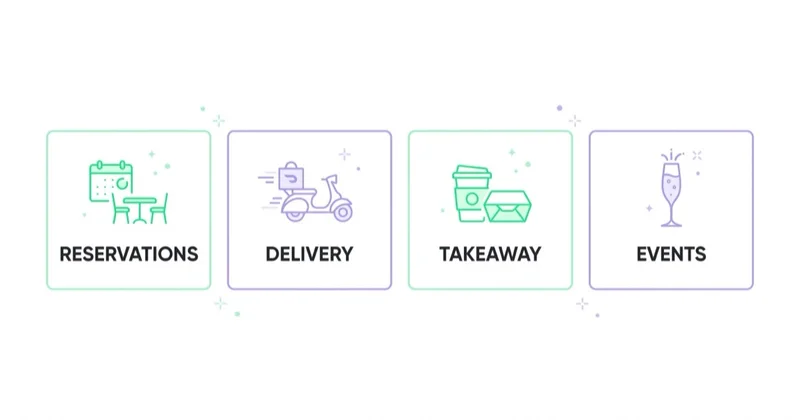
The correct mix depends on the restaurant model. A fine dining venue may invest more in brand, PR, reservation search and private event pages. A quick-service restaurant may lean harder into local Meta creative, Google Maps, offers and repeat purchase flows. A delivery-first kitchen may need menu economics, marketplace visibility, direct ordering and retention.
Google Business Profile Is the Local Foundation
Before scaling paid spend, the restaurant needs a clean local presence. Google says local results are based mainly on relevance, distance and prominence, and that complete, accurate business information helps local visibility. For restaurants, that information is not just name, address and phone number. It includes the details people use to decide whether to visit.
The profile should be checked for:
- primary and secondary categories;
- accurate address, pin, phone number and website;
- regular hours and special hours for holidays or closures;
- menu links, menu items and prices where the feature is available;
- reservation, order, appointment or booking links where available;
- attributes such as outdoor seating, accessibility, takeaway, delivery or dining options;
- fresh photos of dishes, interior, exterior, menu and atmosphere;
- review response process;
- UTM-tagged links where the platform and destination allow clean attribution.
This work supports both SEO and ads. A person who clicks a Google ad may still check the profile before booking. A person who sees a Meta ad may search the restaurant later. A weak profile leaks demand from every channel.
Paid Search: Use It Where Intent Can Pay
Google Ads can work for restaurants, but not every restaurant query deserves paid budget. The difference is intent and value.
Good paid search candidates:
- brand searches when competitors or delivery platforms are intercepting demand;
- "restaurant near me" and cuisine searches in a tight service area;
- high-value occasions such as private dining, business lunch, wedding rehearsal dinner, birthday dinner or group booking;
- catering and corporate orders;
- direct delivery or takeaway searches;
- seasonal demand such as Valentine's Day, Mother's Day, Christmas parties or New Year's Eve menus.
Weak paid search candidates:
- recipes;
- menu inspiration;
- jobs and careers;
- restaurant equipment;
- free event spaces;
- broad "best food" searches without local or commercial intent;
- delivery zones the restaurant cannot serve profitably.
The account should use location targeting carefully, protect brand terms, separate high-value event or catering campaigns from ordinary covers and maintain a mature negative keyword list. For search query control, the dedicated guide to negative keywords in Google Ads is useful.
Meta and Instagram: Make the Food Do the Work
Meta campaigns can be strong for restaurants because the product is visual and repeat exposure matters. The campaign still needs commercial structure. A beautiful food video is not a strategy if the destination, offer and measurement are unclear.
Strong restaurant creative usually shows:
- real dishes, not stock-style food images;
- portion, texture, service style and plating;
- menu moments such as brunch, lunch, tasting menu, seasonal specials or late-night food;
- atmosphere and seating context;
- people and service where permissions are handled correctly;
- direct hooks for occasions: date night, business lunch, group booking, pre-theatre dinner, weekend brunch or catering;
- a clear next step, such as reserve, order, call, view menu or enquire about events.
Meta should usually be segmented by objective:
| Objective | Campaign angle | Conversion signal |
|---|---|---|
| Reservations | Table booking, menu, ambience, social proof | Booking confirmation, reservation click, phone call |
| Delivery / takeaway | Specific dishes, bundles, fast ordering | Online order, checkout, order click |
| Events / private dining | Room, capacity, menu packages, enquiry form | Event enquiry, qualified lead, booked event |
| Slow-period demand | Lunch, weekday offers, happy hour, limited menu | Offer redemption, booking, in-store code |
| Remarketing | Recent site visitors, menu viewers, engaged social audiences | Return booking, order or call |
For setup detail, the Meta Advantage+ guide explains how automation changes audience, placements and creative delivery. For lead capture, Facebook Lead Ads can be useful for event enquiries, not as a default for normal table reservations.
Reservations, Orders and Events Need Separate Economics
The biggest strategic mistake is treating every conversion as equal.
| Conversion | Typical business value | Measurement problem |
|---|---|---|
| Single cover | Low to medium | Often booked by phone or third-party reservation tool |
| Table of four | Higher | Needs reservation value or party size where possible |
| Direct online order | Depends on basket and margin | Checkout tracking may be separate from reservation tracking |
| Third-party delivery order | Revenue can be visible, but margin is reduced by fees | Platform data may not connect cleanly to ad platforms |
| Private dining enquiry | High | Lead quality and booked event value arrive later |
| Catering enquiry | High | Requires CRM or manual qualification feedback |
| Repeat visit | High lifetime value | Harder to attribute without loyalty, email or POS data |
Budget should follow the economics. A $20 lunch order cannot justify the same acquisition cost as a private event enquiry. A campaign that looks expensive at lead level may be efficient after booked event value is imported. A campaign that looks cheap at click level may lose money if orders are discounted, low-margin or fulfilled through a high-fee channel.
Landing Pages and Booking Paths
Restaurant landing pages do not need to be complicated, but they need to reduce decision friction fast.
A strong reservation or ordering path should include:
- menu access without heavy PDF friction where possible;
- mobile-first booking or ordering;
- visible hours and location;
- clear dining options: dine-in, takeaway, delivery, private dining, catering;
- real photos;
- reviews, press or social proof;
- parking, access, dress code or dietary information where relevant;
- phone number for high-intent callers;
- event enquiry form for larger bookings;
- page speed and tracking checks.
For campaign-specific traffic, a focused page often performs better than a generic homepage. Private dining, catering, seasonal menus and delivery offers deserve dedicated pages because the questions, proof and CTAs are different. The general CRO logic is covered in What Is a Landing Page and How to Build One?.
Measure covers, not reach
Restaurant reporting should connect media to business outcomes. Platform reach, likes and video views can help diagnose creative, but they are not the commercial result.
Useful measurement layers:
- Google Business Profile performance: website clicks, calls, direction requests and booking link clicks where available.
- Website events: menu views, booking clicks, completed reservations, order starts, completed orders and event form submissions.
- Call tracking: phone reservations, missed calls, call duration and qualified calls.
- Reservation system: party size, date, time, no-show rate and source where available.
- Ordering system: basket value, discount, delivery/takeaway split and margin.
- CRM or spreadsheet feedback: private dining enquiries, booked events and event value.
- Retention data: email, loyalty, repeat order or repeat reservation behaviour.
Google Ads conversion measurement and call reporting can support part of this stack. For higher-value offline outcomes, importing qualified or booked events is stronger than optimizing only for a first click. The logic is similar to other local lead systems described in call tracking for PPC and lead generation and Google Ads Smart Bidding.
Budgeting by Margin and Capacity
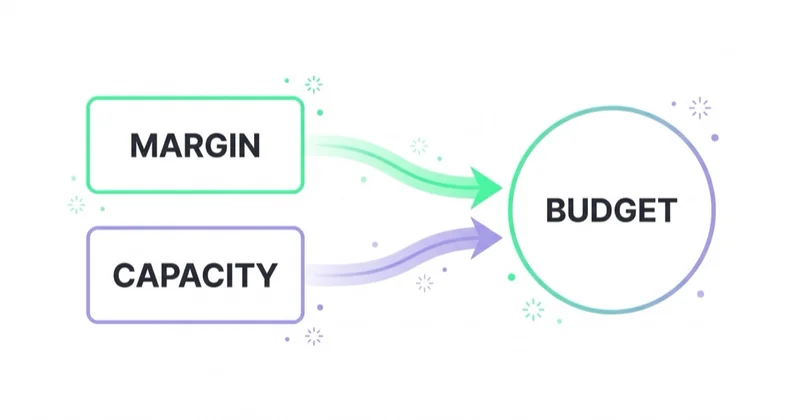
Restaurant budgets should not be set only as a percentage of revenue or by copying a benchmark. The better question is what the restaurant can afford to pay for each incremental outcome.
Example decision rules:
| Situation | Budget logic |
|---|---|
| Empty weekday lunches | Spend can be justified if contribution margin improves during unused capacity |
| Fully booked Saturday evenings | Spend should shift away from demand that does not add profit |
| New location launch | Awareness and trial may receive a temporary budget, but repeat visit tracking matters |
| Private dining push | Higher cost per lead can be acceptable if qualified event value is high |
| Delivery growth | Budget should account for packaging, discounts, delivery fees and platform commission |
| Seasonal menu | Short campaign window, tighter creative testing and booking urgency |
This is where restaurant marketing becomes operational. Media cannot fix slow service, poor reviews, long ordering paths, unprofitable discounts or a reservation system that loses attribution. It can only amplify the system already in place.
How we approach this at Space Ads
Across the 25+ accounts we audit daily, with analysis on the order of 14M monthly data points through Space Ads OS, local and hospitality accounts usually break in the same places: weak local profiles, generic Meta creative, broad paid search, missing phone attribution, no separation between table bookings and events, and reporting that stops at reach or clicks.
Our restaurant marketing audit starts with the commercial model before the media account. The important questions are:
- Which days and dayparts need demand?
- Which services matter most: dine-in, takeaway, delivery, events, catering or loyalty?
- Which booking and ordering systems can pass data back?
- Which conversions have enough margin to scale?
- Which local searches and occasions are worth paying for?
- Which reviews, photos, menu details or profile gaps reduce conversion?
From there, the plan usually combines Google Business Profile cleanup, local SEO, selective Google Search, Meta creative testing, call and booking tracking, and a reporting view tied to reservations, orders and event value. A marketing audit is the fastest way to find whether the current setup is generating profitable demand or only visible activity. Ongoing execution fits under performance marketing.
A practical way to market a restaurant
- Map the business goals. Separate reservations, direct orders, delivery, events, catering, slow-period traffic and repeat visits.
- Clean the local foundation. Verify Google Business Profile data, menu, hours, photos, attributes, reservation links and review responses.
- Fix tracking before scale. Track booking clicks, completed reservations, online orders, event forms, calls and qualified event value where possible.
- Build Google campaigns around intent. Protect brand, capture high-value cuisine and occasion searches, and exclude low-value or irrelevant terms.
- Build Meta around creative and objective. Test food, occasion, atmosphere, offer and event angles separately.
- Create specific pages for high-value demand. Private dining, catering, holiday menus and delivery should not all land on the homepage.
- Review margin and capacity weekly. Shift spend toward days, services and offers that add profit rather than only activity.
- Invest in retention. Email, SMS, loyalty and remarketing make paid acquisition more sustainable.
Stop doing / do instead
| Stop doing | Do instead |
|---|---|
| Running one generic campaign | Separate reservations, orders, events, catering and retention |
| Using stock-style food creative | Show real dishes, service moments and dining context |
| Treating all bookings as equal | Use party size, daypart, margin and event value |
| Sending every click to the homepage | Build specific pages for high-value occasions and offers |
| Counting every phone tap as a conversion | Use call duration, call review or booking confirmation where possible |
| Letting delivery apps own all demand | Grow direct ordering and retention where margin supports it |
| Spending on broad local searches without negatives | Protect the account with search terms and negative keywords |
| Optimizing for reach | Optimize for reservations, orders, event enquiries and repeat value |
FAQ
What is restaurant marketing?
Restaurant marketing is the system used to create and capture demand for a restaurant. It includes Google Business Profile, local SEO, Google Ads, Meta and Instagram ads, email, loyalty, reviews, reservation systems, direct ordering, delivery visibility, events, catering and retention.
What is the best advertising channel for restaurants?
There is no universal best channel. Google Business Profile is usually the local foundation. Meta and Instagram are often strong for visual demand, offers, events and remarketing. Google Ads works best when search intent has clear commercial value, such as reservations, cuisine searches, direct ordering, catering or private dining.
Do Google Ads work for restaurants?
Yes, when the account focuses on high-intent searches and the booking or ordering path is measurable. Brand protection, "near me" searches, cuisine searches, private dining, catering, delivery and seasonal menus can work. Broad searches, recipe traffic, job queries and low-value clicks should be excluded.
How should restaurant marketing be measured?
The core metrics are reservations, covers, online orders, call quality, event enquiries, booked event value, cost per booking, cost per order, contribution margin and repeat visits. Reach and engagement can explain creative response, but they should not be treated as final business outcomes.
Should restaurants use Meta Lead Ads?
Meta Lead Ads can work for private dining, catering, events, franchise enquiries or waiting lists. They are usually not the best default for ordinary table reservations because a reservation system or direct booking page often creates a cleaner user path and stronger operational data.
How much should a restaurant spend on marketing?
The budget should follow margin, capacity and goal. A restaurant trying to fill unused weekday capacity can tolerate different economics than a venue already full on weekends. High-value private dining or catering can support a higher cost per lead than a single low-ticket order.
What should be fixed before restaurant ads scale?
The usual prerequisites are accurate Google Business Profile data, strong photos, current menu and hours, review response process, fast mobile booking or ordering path, call tracking, event enquiry tracking, conversion events and clear campaign goals by service line.
In short
- Restaurant marketing should be built around local discovery, visual demand, conversion tracking and margin.
- Google Business Profile is the foundation because restaurant decisions often happen inside local search and maps.
- Meta and Instagram are useful when real food creative, occasion hooks and remarketing are connected to a clear booking or order path.
- Google Ads should focus on high-intent searches that can support the acquisition cost.
- Reservations, orders, private dining, catering and repeat visits need separate measurement.
- The strongest accounts optimize for profitable demand, not reach.
Sources
- Google Business Profile Help - Local ranking documentation
- Google Business Profile Help - Business Profile editing documentation
- Google Ads Help - Conversion measurement documentation
- Google Ads Help - Call reporting documentation
- Meta Transparency Center - Advertising Standards
Continue learning
Continue reading
Language School Marketing: Two Businesses, One Building
Language schools often combine consumer enrolment and corporate training. Market them as separate buying journeys, then connect campaigns to attendance, enrolment, group contribution and continuation.
Driving School Marketing: Selling Instructor Hours, Not Courses
A practical system for growing a driving school around real instructor capacity: local demand, transparent lesson offers, compliant proof, responsive booking and completed-pupil value.
Bike Shop Marketing: The Workshop Pays the Rent
A practical marketing system for bike retailers and workshops: model capacity and contribution, capture local service demand, promote in-stock bikes, and turn first visits into lasting customer relationships.