Chiropractor marketing is local healthcare lead generation with a trust problem, a measurement problem and a compliance problem. The clinic needs to be visible when someone searches for care nearby, but it also has to avoid aggressive health claims, protect patient data and measure whether enquiries become booked and appropriate appointments.
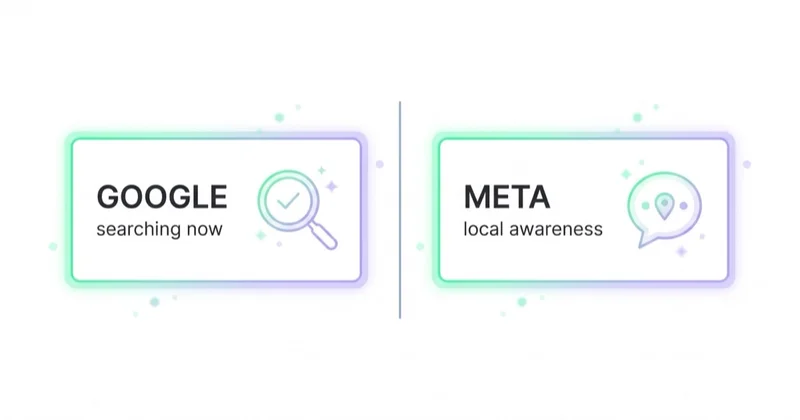
The simplest version is "Google for people searching now, Meta for local awareness and new-patient offers." That is directionally right, but incomplete. Google Ads can capture high-intent searches such as "chiropractor near me" or "chiropractor [city]". Meta can create demand with neutral, education-led creative. Reviews, Google Business Profile, phone handling and the booking flow decide whether that demand turns into a visit.
The best chiropractor marketing strategy is not optimized for the lowest lead cost. It is optimized for booked patients, show rate, care suitability, repeat attendance and long-term patient value.
TL;DR
- Chiropractor marketing is local and trust-led. People compare proximity, reviews, availability, website clarity and professional credibility before booking.
- Google Search captures active intent. Service, location and symptom-adjacent searches can work, but ad copy and landing pages should stay factual and avoid guaranteed outcomes.
- Meta is better for awareness, education and remarketing. It should not imply that the viewer has a specific medical condition or personal health problem.
- New-patient offers need discipline. Intro consultations or exams can lower friction, but the offer must fit local rules, clinical ethics and the real appointment process.
- Call tracking matters. Many chiropractic leads book by phone, so reporting should include calls, booked appointments and attended visits.
- Health-data privacy shapes tracking. Avoid sending symptoms, treatment details, diagnoses or patient identifiers into ad platforms.
- Measure beyond intro volume. The useful metrics are booked appointment, show rate, suitable patient, repeat visit and long-term value.
- Reviews and Google Business Profile are conversion assets. Paid clicks are harder to convert when the local profile looks weak, incomplete or untrusted.
Why chiropractic marketing is different
Chiropractic is not a generic local-service category. A prospect may be comparing providers while dealing with discomfort, uncertainty or a recommendation from another person. That changes the tone of marketing. The clinic has to be easy to find, easy to trust and easy to contact without making promises that sound like a cure.
Four factors shape the strategy.
First, the decision is local. Searchers care about location, opening hours, availability, parking, reviews and whether the clinic can see new patients soon.
Second, the first appointment is only the beginning. A first consultation has commercial value only if it is appropriate, attended and followed by a care path that fits the patient's situation.
Third, the category touches health. Advertising claims, personal attributes, testimonials, health data and tracking need more caution than in a standard home-services account.
Fourth, phone handling matters. A campaign can produce the right demand and still lose patients if the front desk misses calls, responds late to forms or cannot explain next steps clearly.
Google Ads for chiropractors
Google Ads is strongest when it captures people already looking for a local provider. The campaign structure should follow intent, not one broad "chiropractor" ad group.
Useful search groups include:
- local provider searches: "chiropractor near me", "chiropractor [city]", "chiropractic clinic [area]";
- appointment intent: "book chiropractor appointment", "same day chiropractor", "chiropractic consultation";
- service category searches: "sports chiropractor", "family chiropractor", "prenatal chiropractor" where the service is actually offered and compliant to promote;
- brand and practitioner searches: clinic name, chiropractor names, review-led queries;
- comparison searches: "best chiropractor [city]", "chiropractor reviews [city]".
Symptom-adjacent keywords can be commercially relevant, but they need careful handling. A search query may contain "back pain" or "sciatica", but the ad should avoid making a diagnosis, implying guaranteed relief or using fear-based language. A safer Search ad points to a consultation or clinic page with clear service information.
Negative keywords protect spend. Common exclusions include:
- jobs, salary, career, school, course, certification;
- DIY, exercises, stretches, cracking, videos;
- free equipment or unrelated products;
- legal claims or accident compensation if the clinic does not serve that segment;
- searches outside the service area;
- competitor terms if the clinic does not have a clear policy for them.
For the full workflow, see negative keywords in Google Ads.
Meta Ads for chiropractic clinics
Meta can support chiropractor marketing, but it should be treated differently from Search. On Google, the user declares intent. On Meta, the clinic interrupts a feed. That means copy, creative and targeting need to be more conservative.
Useful Meta angles:
- local clinic introduction;
- practitioner credibility and team visibility;
- educational videos about what happens during a first visit;
- posture, mobility or prevention education framed generally;
- new-patient consultation information where allowed;
- seasonal or community content;
- remarketing to site visitors where policy and consent allow it.
Risky Meta angles:
- "Back pain sufferer? Book now."
- "Spinal misalignment is the hidden cause."
- before/after style health promises;
- claims that a treatment will cure a condition;
- fear-based creative about worsening symptoms;
- testimonials that imply typical health outcomes without substantiation;
- targeting or copy that implies the viewer has a specific condition.
The practical rule: write about the clinic, service and appointment process, not about what the platform thinks the viewer personally has.
The role of a new-patient offer
Many chiropractic clinics use a new-patient consultation, exam or introductory offer to reduce the barrier to the first appointment. This can work, but only when it is built responsibly.
A strong offer should make the next step clear:
- what is included;
- what is not included;
- whether treatment is included or separate;
- whether imaging, diagnosis or referrals are part of the process;
- who the appointment is suitable for;
- how pricing works;
- what happens after the first visit.
Weak offers create the wrong demand. A very aggressive discount can fill the calendar with people who are only chasing a deal. A vague "free exam" can create compliance, expectation and intake problems if the real appointment is more nuanced. A good offer removes uncertainty without overpromising care.

Local SEO and Google Business Profile
Google Business Profile is often part of the conversion path even when the lead starts from an ad. A person may click an ad, search the clinic name, read reviews, check photos and then call from the profile.
The profile should support the same trust signals as the website:
- accurate name, address, phone and hours;
- correct category and services;
- booking link or appointment URL;
- real photos of the clinic, entrance, reception and team;
- professional review responses that do not reveal patient details;
- service descriptions that match the website;
- holiday hours and availability updates;
- consistent local citations where relevant.
Google states that local ranking is based mainly on relevance, distance and prominence. For chiropractic clinics, prominence is not only an SEO concept. It is also the trust signal a patient sees before deciding whether to call.
Landing pages that convert without overclaiming
The landing page should make the appointment feel clear, safe and appropriate. It should not sound like a miracle-cure page.
Useful sections:
- clinic location and appointment availability;
- practitioner credentials and experience;
- types of visits handled;
- what happens during the first appointment;
- pricing or offer details where appropriate;
- insurance, payment or reimbursement information if relevant;
- reviews and testimonials without unsupported outcome claims;
- phone number and booking path above the fold on mobile;
- FAQ about preparation, duration and next steps;
- privacy and data-use clarity for forms.
Ad-to-page match matters. If the ad promotes a sports chiropractic consultation, the landing page should not be a generic homepage. If the ad is for a local clinic, the page should show address, service area, map context and appointment steps.
For broader conversion structure, see what a landing page is and how to build one.
Measurement: lead is not patient
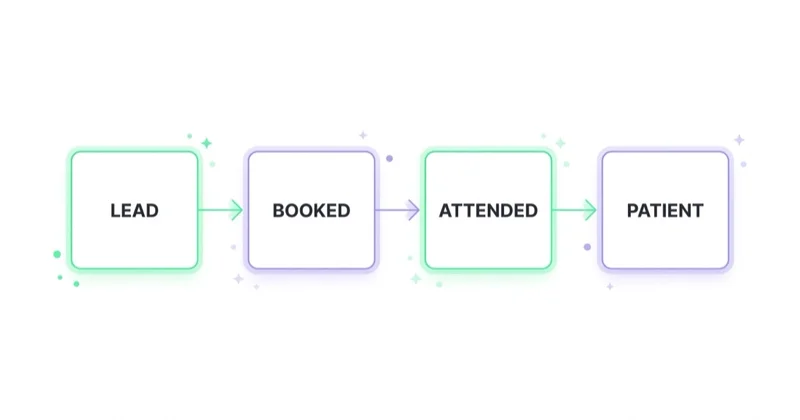
Chiropractic campaigns often look better than they are when every lead is counted equally. The useful measurement path is:
- click or profile interaction;
- call, form or booking request;
- appointment booked;
- appointment attended;
- patient suitable for care;
- care plan or follow-up started where clinically appropriate;
- repeat visits or long-term value.
The account should not optimize only toward cheap lead forms. If Meta produces many low-cost enquiries that do not book, the campaign is not winning. If Google produces fewer leads but a higher show rate and better suitability, the allowed acquisition cost may be higher.
Call tracking is often essential because many patients prefer to call. Google Ads can also use conversion measurement and imported outcomes, but health-related data should be minimized. Conversion names can stay generic, such as appointment_booked or qualified_patient, without sending symptoms or diagnosis details to ad platforms.
Privacy, healthcare policy and claim safety
This section is marketing guidance, not legal advice. Healthcare advertising rules vary by country, state, platform, license type and service scope.
Google's healthcare and medicines policy says healthcare-related ads and destinations are expected to follow appropriate laws and industry standards, and that some healthcare content can be advertised only in certain locations or by approved advertisers. Google's personalized advertising policy also lists health as a sensitive interest category and restricts some advertiser-curated audience use for sensitive categories.
For US healthcare providers that are HIPAA covered entities or work with business associates, HHS guidance says the Privacy Rule gives individuals controls over whether protected health information is used or disclosed for marketing, with limited exceptions. That does not mean every chiropractic ad is a HIPAA issue. It means patient lists, remarketing, tracking technologies and third-party integrations need careful review.
Safe operating principles:
- avoid symptom, diagnosis or treatment details in URLs, hidden fields and analytics events;
- avoid uploading patient lists unless legal, consent and platform requirements are clear;
- use generic conversion events rather than condition-specific events;
- do not promise cures, guaranteed pain relief or permanent outcomes;
- make testimonials representative and properly qualified;
- keep review responses free of patient details;
- involve compliance counsel for HIPAA, state privacy laws, health advertising rules and local chiropractic board requirements.
FTC health advertising guidance also emphasizes that health-related claims need adequate substantiation and should not overstate the certainty, nature or permanence of results. That is a useful standard even when a clinic is advertising services rather than a health product.
Channel plan for a chiropractic clinic
| Channel | Best role | What to watch |
|---|---|---|
| Google Search | high-intent local and appointment searches | booked patients, call quality, search term waste |
| Google Business Profile | local comparison and trust | calls, bookings, reviews, profile completeness |
| Meta Ads | awareness, education and soft demand creation | booked appointments, compliant language, show rate |
| Remarketing | return visits and consideration | consent, health-data sensitivity, audience rules |
| SEO/AEO | answer common patient questions | service pages, FAQs, practitioner credibility |
| Email/SMS | follow-up and retention where consent allows | attendance, rebooking, patient communication rules |
The channel mix should match clinic capacity. A clinic with limited front-desk coverage should not scale phone-led campaigns before call routing is fixed. A clinic with weak reviews should improve local trust before pushing more paid traffic into comparison journeys.
How Space Ads approaches chiropractor marketing
Across the 25+ accounts audited daily and roughly 14M monthly data points analyzed through Space Ads OS, local healthcare accounts usually fail in one of three places: the campaign measures cheap leads instead of attended appointments, the tracking leaks sensitive data, or the local trust layer is too weak to convert paid demand.
For a chiropractic clinic, the audit starts with:
- local search demand and search term quality;
- Google Business Profile completeness and review posture;
- ad copy risk and landing page claims;
- call tracking and missed-call patterns;
- booking flow and show rate;
- conversion names, tracking payloads and CRM stages;
- separation of Google Search, Meta awareness and remarketing roles.
A marketing audit can show whether the account is buying suitable appointments or only cheap enquiries. Ongoing execution fits under performance marketing, with channel work across Google Ads and Meta Ads.
Common mistakes
| Mistake | Why it hurts | Better approach |
|---|---|---|
| Optimizing for intro leads only | Fills the calendar with low-fit or one-visit enquiries | Measure booked, attended and suitable patients |
| Using fear-based health copy | Creates policy and trust risk | Use neutral, service-led language |
| Sending all traffic to the homepage | Weak ad-to-page match | Build local and service-specific landing pages |
| Ignoring phone calls | Misses a major booking path | Use call tracking and outcome reporting |
| Passing symptoms into tracking | Creates privacy and platform risk | Use generic conversion events and minimized data |
| Running Meta like Search | Implies personal conditions to passive viewers | Use education, clinic credibility and neutral offers |
| Scaling before intake is ready | Paid demand becomes missed calls | Fix call routing, reminders and booking workflow |
FAQ
What is chiropractor marketing?
Chiropractor marketing is the system a clinic uses to attract, educate, book and retain patients through local search, Google Business Profile, paid ads, reviews, landing pages, referrals and follow-up. Strong marketing measures booked and attended appointments, not only clicks or form fills.
Do Google Ads work for chiropractors?
Yes, when the campaign focuses on local appointment intent and tracks patient quality. Google Search is usually stronger than broad awareness because the user is already looking for a provider nearby. The account still needs negative keywords, compliant copy, a strong landing page and call tracking.
Should chiropractors use Meta Ads?
Meta Ads can work for awareness, education, new-patient consultation offers and remarketing, but it should use neutral language. Ads should not imply that the viewer has a specific health condition or promise a guaranteed outcome. Meta is usually a support channel, not a complete replacement for local Search.
What should a chiropractic landing page include?
It should include location, provider credibility, first-visit process, appointment options, offer details, reviews, phone number, mobile booking path, privacy clarity and FAQ. It should avoid exaggerated treatment claims or unclear promises about results.
How should chiropractic marketing be measured?
Measure the full path: call or form, booked appointment, attended appointment, suitable patient, follow-up plan and repeat value. A low cost per lead is not useful if the lead does not book, does not attend or is not appropriate for the clinic.
Can chiropractic clinics use patient lists for remarketing?
Only after legal, consent and platform-policy review. Health-related data is sensitive, and US providers may need to consider HIPAA and state privacy rules. In many cases, safer remarketing uses generic site behavior, consent-aware tagging and broad educational audiences rather than patient-condition data.
In short
Chiropractor marketing works when local intent, trust, compliant messaging and patient-quality measurement are connected. Google captures people already looking for a provider. Meta builds local awareness and education. Reviews and Business Profile validate the decision. The clinic should optimize toward booked, attended and appropriate patients - not cheap intro leads that never become care.
Sources and further reading
- Google Ads Help - Healthcare and medicines policy
- Google Ads Help - Restricted targeting in personalized advertising
- Google Business Profile Help - Local ranking documentation
- HHS - HIPAA marketing guidance
- FTC - Health Products Compliance Guidance
Continue learning
Continue reading

Language School Marketing: Two Businesses, One Building
Language schools often combine consumer enrolment and corporate training. Market them as separate buying journeys, then connect campaigns to attendance, enrolment, group contribution and continuation.

Driving School Marketing: Selling Instructor Hours, Not Courses
A practical system for growing a driving school around real instructor capacity: local demand, transparent lesson offers, compliant proof, responsive booking and completed-pupil value.

Bike Shop Marketing: The Workshop Pays the Rent
A practical marketing system for bike retailers and workshops: model capacity and contribution, capture local service demand, promote in-stock bikes, and turn first visits into lasting customer relationships.