
Marketing a fashion brand means running brand-building and performance as one system, not two budgets — building desire for the label while capturing the demand that desire creates. In 2026 the brands that grow do four things well: they protect price integrity instead of discounting, they split spend between brand-building and activation (premium labels weight further toward brand), they run their channels as build-and-capture rather than last-click harvesting, and they measure against the business — returns and all — rather than platform-reported ROAS. Everything else is execution on top of those four. This is the strategy; the deep-dives on each channel link out from here.
TL;DR
- Brand and performance are one system. Brand-building creates demand and protects pricing power; performance captures it. Funding only the second slowly commoditises the brand.
- Weight toward brand — more so for premium. The effectiveness baseline is roughly 60% brand / 40% activation; premium labels skew closer to 70/30, because brand-building reduces price sensitivity.
- Don't discount your way to growth. In a contracting, margin-pressured market, discounting trains customers to wait and erodes the equity that justifies the price.
- Run channels as build-and-capture. YouTube, Demand Gen and TikTok build desire; Search, Shopping, Performance Max and Meta capture it. Most brands plateau by running only the capture half.
- The economics are different. High AOV, online return rates near 24%, and concentrating customer value make returns-aware bidding and first-party data strategic, not optional.
- Measure against the business. Last-click flatters a long, considered purchase — use incrementality, MMM and blended, returns-adjusted ROAS, not platform-reported numbers.
The strategy in one picture
Most "fashion marketing" advice is a list of tactics — be on TikTok, use influencers, run retargeting. Tactics aren't strategy. The strategy is a sequence of four decisions, and the tactics only work if those decisions are right.
A fashion brand competes for desire first and clicks second. The brands that endure decide, in order: how they position and price (and refuse to discount their way out of trouble), how they split budget between building the brand and converting it, which channels do the building and which do the capturing, and how they measure whether any of it worked given a long, return-heavy purchase. Get those four right and the channel mechanics — the feed, the creative, the bidding — are execution. Get them wrong and no amount of campaign optimisation compensates.
A quick glossary
- Brand-building vs activation — brand-building creates long-term demand and pricing power; activation converts demand that already exists. The split is a budget decision.
- Build vs capture — channels that create new demand (YouTube, Demand Gen, TikTok) versus channels that harvest existing demand (Search, Shopping, retargeting).
- AOV — average order value; fashion's tends to be high enough that returns and margin materially change what "profitable" means.
- Returns-aware bidding — passing profit net of expected returns as the conversion value, so bidding doesn't scale the styles that come back.
- Incrementality — the revenue a campaign actually caused, measured against a control, versus what a platform claims.
- Blended ROAS — return across all channels against one reconciled, returns-adjusted revenue number.
1. Positioning and price integrity
Everything starts with what the brand stands for and what it costs — and the discipline not to undermine either. The luxury market spent the last few years learning this the hard way: in a contracting, margin-pressured market, the brands that leaned on discounts and reflexive price hikes lost the customers they were trying to keep. The lesson generalises down-market: discounting drives a short-term sale and a long-term problem, because it teaches the customer to wait for the next markdown and chips away at the equity that lets you charge full price at all.
The marketing job, then, is to build desire — through brand, product newness, scarcity where it fits, and a consistent point of view — rather than to buy volume with promotions. That doesn't mean never running a sale; it means the brand's growth engine is desire, not discount, and the calendar reflects that.
2. The brand–performance split
Once positioning is set, the biggest budget decision is how much to spend building the brand versus converting it. The well-documented effectiveness benchmark is roughly 60% brand-building, 40% activation to maximise long-term effect. Premium and luxury labels should skew further — closer to 70/30 toward brand — because brand-building reduces price sensitivity, and a brand whose model is pricing power should invest most in the thing that protects it.
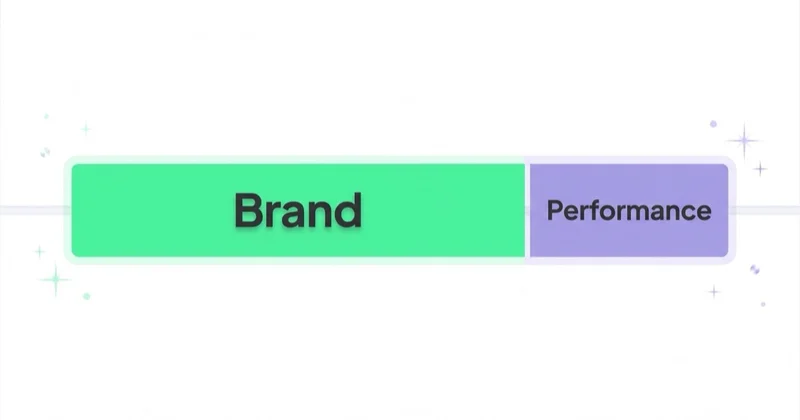
The practical trap is that activation is easy to measure and brand is not, so budgets drift toward activation quarter after quarter until pricing power quietly softens. Defend the brand share deliberately, and measure it with brand-lift and awareness work rather than judging it on last-click ROAS it was never meant to produce.
3. Build and capture: the channel map
With the split decided, sort every channel by the job it does. The single most common reason a fashion brand plateaus is running only the capture half — harvesting demand other people's brand-building created, and wondering why growth stalls when that demand runs out.
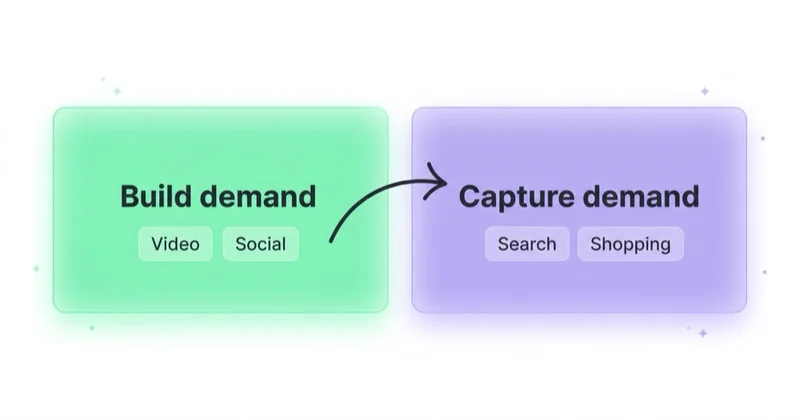
| Job | Channels | Metric | Deep dive |
|---|---|---|---|
| Build desire | YouTube, Demand Gen, TikTok, brand campaigns | Brand lift, branded-search, reach | Paid social |
| Capture demand | Search, Shopping, Performance Max | Returns-adjusted ROAS | Google Ads |
| Retarget & retain | Meta catalog ads, Customer Match, CRM/email | Repeat rate, blended ROAS | Paid social |
The two big channel families each have their own playbook. On Google, the work is Search, Shopping, Performance Max and Demand Gen — with the product feed as the engine and brand-safety controls set deliberately for premium. On paid social, it's Facebook, Instagram and TikTok — where targeting is automated and creative volume is the lever you control. Underneath both sits the same feed and the same measurement discipline.
4. The economics that change the playbook
Fashion's economics make some "best practices" actively wrong. Three numbers matter.
Returns. Online apparel returns run near 24% and footwear higher, almost all on fit and sizing. A campaign optimising to gross revenue scales the styles that get returned most — so returns-aware bidding (passing net-of-returns profit as the value, feeding returns back through conversion adjustments) is foundational, not advanced. So is reducing returns at source with sizing and fit content, which doubles as conversion-rate work.
Customer value concentration. A growing share of fashion revenue — especially in premium — comes from a small, high-value cohort. That makes first-party data and retention a media strategy: identify the cohort, feed it into Customer Match and lookalikes, and spend to keep it, not just to acquire.
First-party data. Despite the noise, this isn't about a "cookieless future" — third-party cookies stayed in Chrome. It's about signal quality in a privacy-constrained world: own your customer data, keep your conversion signal clean, and stop renting your audience back one campaign at a time. Recovering the demand you already earned — abandoned-cart and browse retargeting — is usually cheaper than buying new demand.
5. Measurement that survives a long, returning purchase
A fashion purchase is discovered on one channel, considered over days or weeks, and bought on another — which makes last-click attribution actively misleading. It hands credit to the final touch and undervalues the brand-building that created the demand, then recommends cutting exactly the spend that fills the funnel.
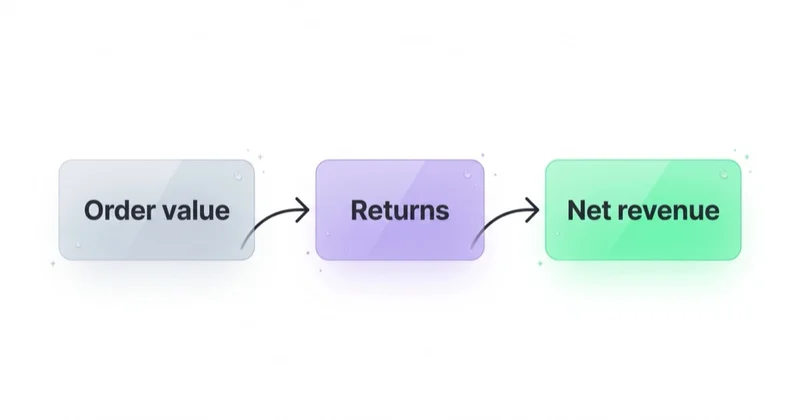
The fix is measurement design, not a prettier dashboard: data-driven attribution as the baseline, incrementality testing to isolate true lift, marketing mix modelling for the whole mix, and brand lift for the upper funnel. Then connect platform numbers to the business — reconciled against GA4 and the order book — so the budget lands where it actually delivers rather than where the last click fell. Done well, the channels stop being separate stories and become one reconciled view of how acquisition really behaves.
By segment
The strategy holds across fashion, but the weighting changes:
- Premium and luxury labels weight hardest toward brand, protect price integrity most strictly, and measure over the longest cycle. The full version is in luxury fashion marketing.
- Footwear brands carry footwear's specific edges — sizing-driven returns, the shoe feed rule, and the split between hype drops and evergreen styles. See how to market a footwear brand.
- Contemporary and accessible brands can run a more even 60/40 split and lean harder on demand capture and retention, but the discount discipline still applies — accessible isn't the same as promotional.
Seasonality and the calendar
Fashion runs on a calendar in a way most categories don't — seasons, drops, and peak trading. The brand-and-performance balance shifts across it: build desire ahead of a season or a launch, then lean into capture as intent peaks. Peak trading deserves its own plan rather than improvisation — our Black Friday timeline lays out the budgets and structure across Google, Meta and TikTok. The principle through all of it: the calendar concentrates demand, but it doesn't change the rules — desire still beats discount, and returns still decide the real ROAS.
How we approach this at Space Ads
We run daily audits across 25+ client accounts and analyse roughly 14 million data points a month through Space Ads OS, and several are fashion and footwear brands. The pattern that holds across those accounts is that the leverage sits underneath the campaigns: feed quality, measurement, returns, seasonality, category structure and how brand-building connects to demand capture.
The feed and measurement often move the commercial result more than another campaign tweak. In public work such as Philipp Plein, Plein Sport and ZAXY, the work spans Google Ads, Meta Ads, GA4, product data and ecommerce reporting because fashion performance depends on the system, not the channel screenshot. If you're weighing whether to build that in-house or bring in a partner, our guide to choosing a fashion marketing agency is the honest version, and our fashion & footwear paid media practice is where we do it.
A staged plan to market a fashion brand
- Set positioning and the split. Decide the point of view, the price discipline, and the brand/activation ratio (closer to 70/30 for premium) before touching budgets.
- Fix the foundation. Clean feed (variants, sizing, availability, imagery), conversion tracking, and the returns → conversion-adjustment pipeline. Pass profit, not revenue, as value.
- Run capture with controls. Search, Shopping and Performance Max with brand-safety settings; retarget the demand you already earned.
- Add the build layer with measurement. Demand Gen, YouTube and TikTok to create demand, with brand lift attached from the start.
- Reconcile and reallocate. Report blended, returns-adjusted ROAS against the order book; use incrementality to reallocate by contribution, not platform-claimed return.
Stop doing / do instead
| Stop doing | Do instead |
|---|---|
| Treating brand and performance as separate budgets | Run them as one system; defend the brand share |
| Discounting to hit growth | Build desire; keep the sale calendar deliberate |
| Funding only lower-funnel capture | Add a build layer measured on lift, not last-click |
| Optimising to gross revenue | Pass net-of-returns profit; feed returns back to bidding |
| Trusting platform-reported ROAS | Reconcile against the order book; report blended ROAS |
| Improvising peak trading | Plan the calendar; concentrate build before capture |
Common mistakes
- Tactics without strategy — chasing channels and trends without deciding positioning, the split, and how to measure.
- The discount reflex — buying short-term sales at the cost of long-term pricing power.
- Capture-only media — harvesting demand without building any, then stalling when it runs out.
- Ignoring returns — reporting gross ROAS on a category that returns a fifth of its units online.
- Last-click verdicts — cutting the brand-building that a long, considered purchase actually depends on.
FAQ
How do you market a fashion brand?
Run brand-building and performance as one system. Decide positioning and price discipline first (don't discount your way to growth), split the budget between building the brand and converting it (premium skews toward brand), run channels as build-and-capture rather than last-click harvesting, and measure against the business with incrementality and returns-adjusted ROAS rather than platform-reported numbers. The channel tactics — feed, creative, bidding — are execution on top of those decisions.
What's a good fashion marketing strategy in 2026?
One that protects price integrity, weights spend toward brand-building (around 60/40, closer to 70/30 for premium), runs demand-creation channels (YouTube, Demand Gen, TikTok) alongside demand-capture channels (Search, Shopping, Performance Max, Meta), and measures with incrementality and blended, returns-adjusted ROAS. It treats the product feed and first-party data as strategic assets, and the sale calendar as deliberate rather than reactive.
How much should a fashion brand spend on brand vs performance?
The effectiveness baseline is roughly 60% brand-building to 40% activation. Premium and luxury labels should skew further toward brand — closer to 70/30 — because brand-building reduces price sensitivity and protects the pricing power their model depends on. The exact ratio varies with brand maturity and distribution, but skewing toward brand is the defensible default for a fashion business that wants to hold full price.
Which channels should a fashion brand use?
Split them by job. To build demand: YouTube, Google Demand Gen, and TikTok. To capture it: Google Search, Shopping and Performance Max, and Meta Advantage+. To retarget and retain: Meta catalog ads, Customer Match and CRM. Most brands over-invest in capture and under-invest in build, which slowly commoditises the brand — the mix matters more than any single channel.
How do you market a fashion brand with returns at 24%?
Make returns a marketing input, not just a finance line. Pass net-of-returns profit as the conversion value so bidding doesn't scale high-return styles, feed returns back through conversion adjustments quickly, and reduce returns at source with accurate sizing and fit content. Report blended, returns-adjusted ROAS against the order book rather than platform-reported numbers, which overstate profit on a high-return category.
Should I hire an agency or build a fashion marketing team in-house?
Usually a mix. Most large brands run both — brand strategy and creative direction tend to belong in-house, while cross-platform media buying, feed operations and measurement are where an agency's breadth and tooling pay off. The deciding factors are spend level, channel breadth, and how much specialist measurement you need. Our guide to choosing a fashion marketing agency covers the trade-offs and the questions to ask.
In short
- Marketing a fashion brand is four decisions — positioning, the brand/performance split, build-and-capture channels, and measurement — with tactics as execution on top.
- Build desire rather than discounting; weight spend toward brand (more for premium).
- Run demand-creation and demand-capture channels together, not capture alone.
- Treat returns, AOV and first-party data as strategic — returns-aware bidding is foundational.
- Measure with incrementality and blended, returns-adjusted ROAS against the order book.
Sources and further reading
- Bain & Company — Finding a New Longevity for Luxury (2025)
- Marketing Week — Les Binet on the premium 70:30 split
- NRF & Happy Returns — 2025 retail returns report
- Google — Decoding Decisions: the messy middle
Continue learning
- Luxury fashion marketing: how premium brands build desire (not discounts)
- Google Ads for fashion e-commerce: Search, Shopping, Performance Max & Demand Gen
- Facebook, Instagram & TikTok ads for fashion brands
- How to market a footwear brand: a playbook for premium & designer shoes
- How to choose a luxury & fashion marketing agency
- Incrementality testing and geo experiments with Meta, Google and Meridian
Continue reading
How to Market a Footwear Brand: Sizing, Drops, Returns and Paid Media
Footwear marketing needs more than generic fashion advice. This guide explains how to use sizing data, product feeds, fit content, returns-aware measurement, drops, paid media and retention to sell shoes profitably.
Fashion Marketing in 2026: The Complete Guide to Channels, Strategy and Measurement
Fashion marketing connects brand-building, social, creators, paid media, ecommerce, retail and retention into one growth system. This guide explains the discipline, the channel roles, the 2026 market context and how to measure fashion growth without being misled by platform ROAS.
Facebook, Instagram & TikTok Ads for Fashion Brands: Creative, Catalogs and Targeting
Use this as a paid-social operating map for apparel and footwear, not a channel overview. It shows how catalogue quality, platform-specific creative, creator-style ads, retargeting and return-adjusted measurement fit together when Meta and TikTok do most of the targeting for you.


































