PPC vs SEO is not a choice between a "better" and a "worse" marketing channel. It is a decision about how a business wants to capture demand: buy controlled traffic now, or build organic visibility that takes longer to earn but can keep working after the first investment is made.
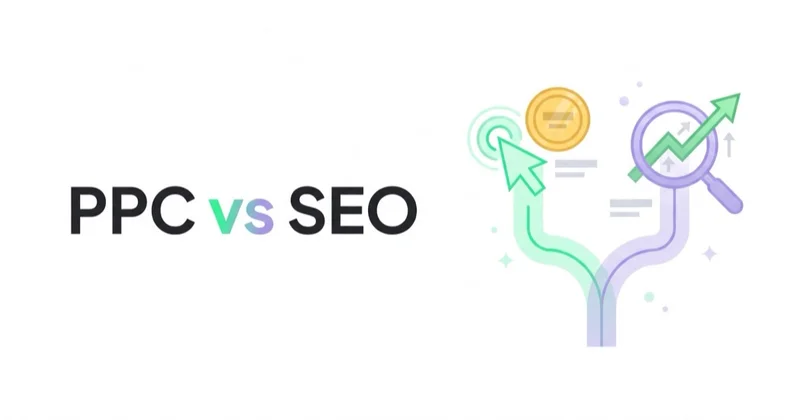
PPC gives speed, control and fast learning. SEO gives compounding visibility, trust and lower dependence on paid auctions over time. The wrong answer is choosing one because it feels fashionable. The useful answer depends on margin, lifetime value, payback period, sales cycle, existing demand, website authority, measurement quality and how quickly the business needs revenue.
This guide compares PPC and SEO as acquisition systems, not as abstract tactics. If you want the narrower Google-specific comparison, including brand bidding, paid and organic overlap, and SERP cannibalization, read Google Ads vs SEO. This article is broader: it covers PPC across paid channels and SEO across organic search, AEO and LLM visibility.
TL;DR
- PPC buys speed and control. You can launch campaigns quickly, choose audiences or keywords, control budgets, test offers and measure early conversion signals.
- SEO builds organic visibility and trust. It takes longer, but strong pages, technical foundations and authority can compound without paying for every click.
- PPC is not only Google Ads. It includes Search, Shopping, Performance Max, Meta Ads, TikTok Ads, LinkedIn Ads, marketplace ads, retail media, remarketing and paid lead generation.
- SEO is not free. Organic clicks have no media cost per click, but earning them requires strategy, content, technical work, analytics, internal links, updates and expertise.
- The decision is economic. CPC, rankings and traffic volume mean little without margin, LTV, lead quality, conversion rate and payback period.
- Most businesses should combine both. PPC captures high-intent demand now and generates data; SEO uses that data to build an asset that can reduce paid dependence later.
- AI search increases the value of quality. AEO and LLM SEO do not replace SEO. They reward clear, useful, well-structured, credible content that answer engines can understand and cite.
What PPC actually means
PPC stands for pay-per-click, but in modern marketing it is often used as shorthand for paid digital acquisition. Some campaigns literally charge per click. Others optimize toward impressions, views, conversions, purchases, leads or value. The strategic idea is the same: the business pays a platform for distribution and receives controllable visibility while the budget is active.
PPC can include:
- Google Search and Microsoft Advertising;
- Shopping ads, Performance Max and feed-led product campaigns;
- Meta Ads on Facebook and Instagram;
- TikTok Ads and Spark Ads;
- LinkedIn Ads for B2B demand generation;
- Amazon Ads, marketplace ads and retail media;
- remarketing, catalogue ads and paid content promotion;
- lead form campaigns, local ads and appointment campaigns.
The main advantage is control. A campaign can point traffic to a specific landing page, test a message, isolate a geography, promote a seasonal product, reach a competitor-intent query or scale a proven audience. Good PPC also creates market intelligence: which searches convert, which objections block conversion, which offers attract qualified leads, and which landing pages waste budget.
The main limitation is dependency. Visibility is tied to spend, auction pressure, platform rules, tracking quality and creative fatigue. If the business stops paying, the traffic usually stops. If competitors bid more aggressively or the algorithm receives weak conversion data, the economics can deteriorate quickly.
What SEO actually means
SEO, or search engine optimization, is the work of earning organic visibility by making a website useful, accessible, technically healthy, authoritative and aligned with search intent. Google describes SEO as helping search engines understand content and helping users decide whether they should visit a site from search.
In practice, SEO includes:
- crawlability, indexability and site architecture;
- technical SEO, page experience and mobile performance;
- service, category, product and editorial content;
- internal linking and topical structure;
- structured data where it genuinely helps search engines understand visible content;
- Search Console and analytics work;
- content updates and pruning;
- digital PR, brand authority and trustworthy citations;
- AEO and LLM SEO patterns: concise answers, entity clarity, sources, definitions and useful structure.
SEO has no direct media cost per click, but that does not make it free. The cost appears in research, writing, editing, technical implementation, expertise, tools, updates and the time needed before results compound. A strong page can generate traffic and assisted conversions for months or years. A weak page can sit indexed and do nothing.
PPC vs SEO at a glance
| Area | PPC | SEO |
|---|---|---|
| Primary role | Controlled demand capture and paid distribution | Durable organic visibility and authority |
| Speed | Fast once tracking, campaigns and landing pages are ready | Slower; meaningful impact often takes weeks or months |
| Cost shape | Media spend, click costs, platform costs, creative and management | Strategy, content, technical work, tools, authority and maintenance |
| Control | High control over budget, targeting, creative and landing page | Influence over content and structure, but no guaranteed ranking or snippet |
| Durability | Visibility usually stops when spend stops | Visibility can continue with updates and maintenance |
| Best data | Search terms, audiences, conversion value, lead quality, creative tests | Queries, impressions, rankings, topical gaps, assisted demand, content quality |
| Main risk | Rising CPC, weak tracking, poor lead quality, platform dependence | Slow payback, algorithm changes, SERP changes, under-resourced content |
| Best use | Launches, high-intent capture, testing, remarketing, hard-to-rank terms | Long-tail demand, authority, education, comparisons, durable category coverage |
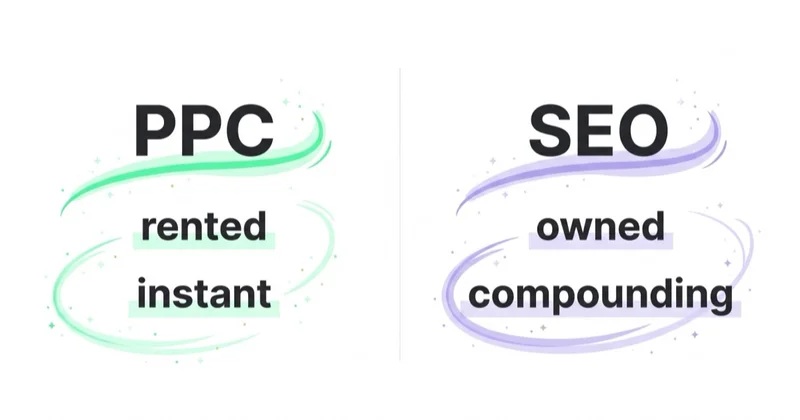
The simplest distinction: PPC buys time and data; SEO builds an asset. Mature growth teams use both, but not in the same way for every query, product or market.
When PPC should lead
PPC should usually lead when speed, precision or immediate feedback matters more than long-term compounding.
Use PPC first when:
- a new offer, product or market needs traffic and data quickly;
- the business has high-intent searches that can turn into revenue now;
- the sales window is seasonal or time-sensitive;
- a landing page, price point, message or category needs testing before larger SEO investment;
- organic competition is too strong to wait for rankings;
- margin or lifetime value can support paid acquisition;
- the company needs location, audience, schedule or budget control;
- remarketing can recover demand created by content, PR, social or email.
PPC works best near the decision. Queries that include words such as "price," "agency," "service," "demo," "buy," "near me," "quote," "consultant," "software," "alternative" or "comparison" often deserve paid visibility before organic rankings are realistic.
The condition is measurement quality. A PPC account that treats every form fill, phone call or micro-conversion as equally valuable will train automation to find easy signals, not profitable customers. For ecommerce, value and margin matter. For lead generation, qualified lead rate and sales outcome matter more than cheap CPL.
When SEO should lead
SEO should lead when the business needs to own demand rather than rent every visit.
Use SEO first, or invest heavily in it, when:
- customers ask repeated questions before buying;
- the category has a large long-tail of informational, comparison or problem-led queries;
- paid clicks are expensive relative to margin;
- the website has many services, categories, products, locations or use cases to cover;
- trust, expertise and education influence conversion;
- content can support sales repeatedly rather than only one campaign;
- the brand needs visibility in AI answers, comparison searches and research journeys;
- the company already has some authority and can turn content improvements into results.
SEO is especially valuable for queries such as "how to," "what is," "cost," "best," "alternative," "vs," "for [use case]," "mistakes," "checklist," "examples" and "questions to ask." These searches may not always convert immediately, but they influence trust, remarketing pools, branded demand, sales conversations and future direct visits.
SEO should not be treated as passive publishing. Thin generic content rarely builds authority or conversion. A useful SEO page answers the user's real decision, includes practical detail, links to relevant next steps, and shows why the advice is credible.
How to choose: economics before channel preference
The PPC vs SEO decision should start with commercial math.
| Question | Why it matters |
|---|---|
| What is the gross margin or contribution margin? | It defines how much the business can afford to spend on acquisition. |
| What is the average order value or contract value? | High-value purchases can justify higher CPC and longer sales cycles. |
| What is customer lifetime value? | Paid acquisition can be profitable despite high first-order CPA if retention is strong. |
| What payback period is acceptable? | PPC can produce faster feedback; SEO usually needs a longer horizon. |
| How long is the sales cycle? | B2B and premium products need assisted-conversion measurement, not only last click. |
| How qualified are leads by channel and query? | A cheap lead is expensive if sales rejects it. |
| How much demand already exists? | PPC captures active demand; SEO can build visibility across research and long-tail demand. |
| Does the team have content and technical capacity? | SEO without implementation resources becomes a strategy document, not growth. |
| Does tracking measure quality? | Both PPC and SEO decisions are distorted when analytics reward the wrong actions. |
Example: a B2B company with a high contract value and a six-month sales cycle may profitably pay more for a qualified search lead than a low-margin ecommerce store can pay for a click. The B2B company still needs SEO, because educational and comparison content supports the long buying process. The ecommerce store still needs PPC, but it may need tighter feed quality, CRO and retention economics before increasing spend.
The right question is not "which channel is cheaper?" It is: which channel can profitably capture or create the next unit of valuable demand, within the time horizon the business can afford?
PPC and SEO by business type
| Business type | Usually strongest start | Why |
|---|---|---|
| Local service business | PPC plus local SEO | Search and map intent can convert quickly, while local authority compounds. |
| Ecommerce with active demand | Shopping/PPC plus category SEO | Paid product visibility drives sales now; SEO builds category and guide coverage. |
| New DTC brand | Paid social, PPC tests and content SEO | Demand often needs to be created before organic research demand grows. |
| B2B SaaS | High-intent PPC plus SEO/AEO | Search and LinkedIn capture active buyers; expert content supports long evaluation. |
| Expert service firm | SEO plus selective PPC | Authority content builds trust, while paid search captures urgent commercial intent. |
| Seasonal product | PPC in season, SEO before season | Organic pages need time to mature before the demand peak. |
| Premium brand | SEO, brand control and careful PPC | Visibility must protect positioning, price integrity and context. |
This table is a starting point, not a rule. A premium ecommerce brand with strong margins may use PPC aggressively. A local service company with a trusted domain may get strong SEO results quickly. Channel sequencing should follow the business model.
How PPC and SEO work together
The best acquisition systems connect PPC and SEO instead of reporting them in isolation.
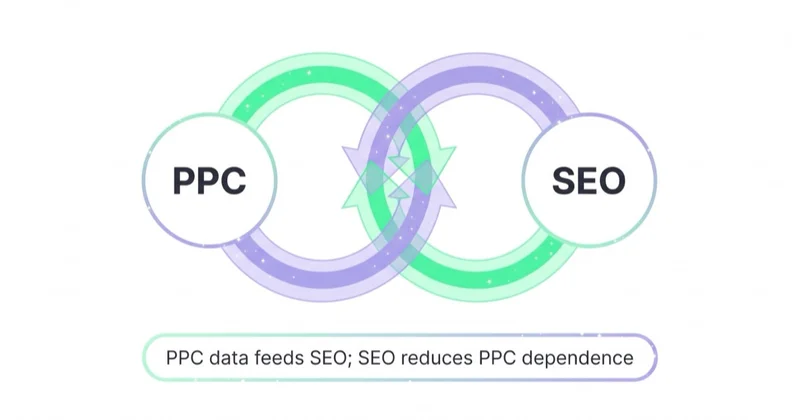
PPC can improve SEO by showing:
- real search terms customers use, not only keyword-tool volume;
- which offers, prices and angles attract qualified traffic;
- which landing pages convert and which create friction;
- which queries generate revenue, not just clicks;
- which objections should be answered in SEO content;
- where competitors are buying demand because organic ranking is difficult.
SEO can improve PPC by creating:
- stronger landing pages with clearer intent match;
- educational pages that build remarketing audiences;
- comparison content that shortens the path to sales;
- brand authority that improves trust before a paid click;
- organic coverage that reduces the need to buy every query forever;
- FAQ sections and structured answers that support AEO, ads and sales teams.
A practical 90-day combined plan looks like this:
| Period | PPC work | SEO work | Shared measurement |
|---|---|---|---|
| Days 1-30 | Launch or clean the highest-intent campaigns; separate brand and non-brand; fix conversion tracking | Technical audit, intent map, Search Console review, priority page inventory | Define lead quality, revenue fields, attribution limits and reporting segments |
| Days 31-60 | Review search terms, CPA, ROAS, lead quality and landing page conversion | Build or improve pages for proven commercial and comparison intent | Compare paid and organic visibility by query group |
| Days 61-90 | Scale, cut or restructure campaigns based on qualified outcomes | Publish or update supporting guides, FAQs, internal links and AEO sections | Decide where paid remains essential and where SEO should reduce dependence |
This avoids two expensive extremes: waiting for SEO while customers are ready to buy, or paying indefinitely for every visit while no organic asset is built.
How AI search changes PPC vs SEO
AI search changes the environment, but it does not make PPC or SEO obsolete. Google AI Overviews, AI Mode, ChatGPT, Perplexity and other answer engines can summarize information directly, which may reduce clicks for some informational queries and increase the importance of being cited, mentioned or understood as an authoritative source.
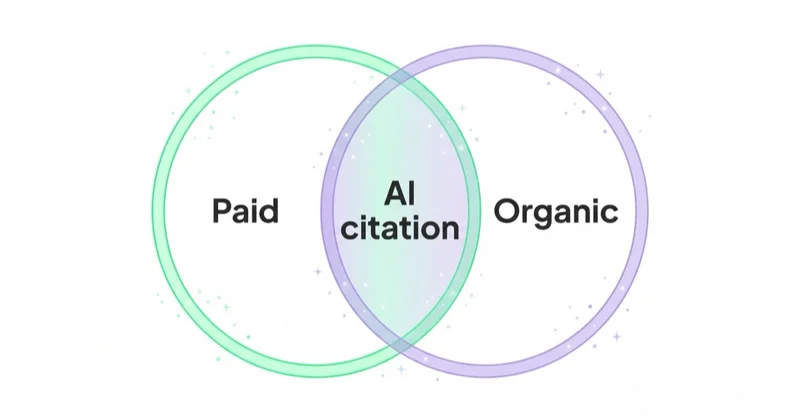
For SEO, the practical response is not to chase a magic "AI ranking factor." It is to make content more useful and machine-readable in the same direction good SEO already required:
- answer the main question directly;
- define entities, processes, costs and trade-offs clearly;
- show practical experience and decision criteria;
- cite credible sources where facts can change;
- keep content updated;
- use internal links to connect related expertise;
- avoid generic filler that could appear on any competitor site.
For PPC, AI increases the importance of clean conversion data and strategic guardrails. Automated campaign types, broad matching, dynamic creative and AI-assisted surfaces can only optimize toward the signals they receive. If the account feeds weak conversions into automation, automation will scale weak outcomes faster.
For more detail, read Answer Engine Optimization (AEO) vs GEO and SEO and Google AI Mode: what it means for brands and marketing.
How Space Ads approaches PPC vs SEO
At Space Ads, the PPC vs SEO decision starts with acquisition economics and buyer intent, not channel preference. The work begins by clarifying what a valuable conversion is, how quickly the business needs payback, which queries or audiences have commercial intent, and where the current website fails to turn attention into qualified demand.
For PPC, the priority is not simply cheaper clicks. The priority is profitable demand: campaigns, feeds, landing pages, creative and measurement that help the platform optimize toward business value. For SEO, the priority is not publishing more pages. The priority is useful organic coverage: content and structure that help buyers compare options, understand cost, trust the brand and choose the next step.
That usually produces a sequenced plan:
- use PPC to capture high-intent demand and create fast learning;
- use PPC and CRM data to identify which organic pages are worth building;
- improve landing pages, offer clarity and internal links so both channels convert better;
- build SEO/AEO assets around recurring questions, comparison intent and commercial pages;
- test where organic visibility can reduce paid dependence without losing total conversions.
This is the logic behind performance marketing, Google Ads, marketing audit, SEO audit work and CRO. The goal is not to win the argument between channels. The goal is a resilient acquisition system that does not overpay for easy demand and does not wait passively where paid media could create revenue faster.
Common mistakes
| Mistake | Why it hurts | Better approach |
|---|---|---|
| Choosing a channel without unit economics | CPC, rankings and traffic do not prove profitability | Start with margin, LTV, payback and lead quality |
| Calling SEO "free traffic" | Content, technical work and authority still cost money | Treat SEO as asset building with a longer payback |
| Renting all demand through PPC | Acquisition cost remains exposed to auctions and competition | Use PPC data to build organic assets over time |
| Waiting for SEO when sales are urgent | Revenue is lost while rankings mature | Use PPC for immediate high-intent demand |
| Reporting PPC and SEO separately | Channels influence each other across the buying journey | Review paid, organic, direct, CRM and revenue data together |
| Optimizing for cheap leads | Low CPL can hide poor fit and weak sales outcomes | Import quality signals and qualify conversions |
| Publishing content only for keywords | Generic pages do not build trust, AEO or conversion | Answer real buyer questions with evidence and next steps |
| Ignoring CRO | More traffic cannot fix unclear offers or weak pages | Improve landing page clarity, proof, speed and calls to action |
FAQ
What is the difference between PPC and SEO?
PPC is paid acquisition where a business pays for visibility, clicks or actions through advertising platforms. SEO is organic acquisition through content, technical accessibility, authority and relevance to search intent. PPC is faster and more controllable. SEO is slower but can build a durable visibility asset without paying for each click.
Is PPC better than SEO?
PPC is better when the business needs speed, control, testing or immediate high-intent traffic. It is often the right first move for launches, urgent sales goals, seasonal windows and competitive queries where organic rankings are not realistic yet. It is not automatically better, because the traffic depends on budget and auction economics.
Is SEO better than PPC?
SEO is better when the business wants durable visibility, trust, educational content, comparison coverage and lower marginal click cost over time. It is especially useful when customers research before buying or when the category has many recurring questions. It is not automatically better, because meaningful SEO results can take time and require ongoing investment.
Should a new business start with PPC or SEO?
Many new businesses should start with focused PPC while building SEO foundations in parallel. PPC creates immediate data about demand, offers, landing pages and conversion quality. SEO builds the asset that can reduce paid dependence later. If the budget is very limited and the sales horizon is long, SEO may receive more weight, but PPC can still test the highest-intent terms.
Is SEO cheaper than PPC?
SEO can become cheaper per visit over time because there is no media cost for each organic click. But SEO is not free: it requires content, technical work, analytics, authority and maintenance. PPC may be more expensive per click, but it can produce revenue faster. The cheaper channel depends on time horizon, conversion rate, margin and quality of demand.
How long does SEO take compared with PPC?
PPC can generate traffic as soon as campaigns, tracking and approval are in place. SEO usually takes longer because search engines need to discover, crawl, understand and trust pages, and because competitors may already have authority. Some changes can be reflected quickly, but meaningful business impact often requires weeks or months of consistent work.
How should PPC and SEO budgets be split?
There is no universal percentage. A business that needs immediate revenue may weight PPC heavily while building SEO. A business with high paid costs, strong content opportunities and a longer horizon may weight SEO more. The split should change as paid data, organic rankings, lead quality, margins and sales outcomes become clearer.
Does PPC help SEO rankings?
Running PPC does not directly buy organic rankings. It can help SEO indirectly by revealing search terms, customer language, conversion rates, objection patterns and landing page performance. That data can make the SEO roadmap more commercial and reduce the risk of publishing content that brings traffic but no qualified demand.
How does AI search affect PPC vs SEO?
AI search makes over-reliance on one surface riskier. Some informational queries may receive direct AI answers, while paid platforms also use more automation and AI-assisted placements. The practical response is to build useful, credible, structured SEO/AEO content, keep paid campaigns focused on business value and connect both channels through better measurement.
Key takeaways
- PPC vs SEO is an economic and strategic decision, not a permanent channel winner.
- PPC buys speed, control and data; SEO builds durable visibility, trust and authority.
- PPC is broader than Google Ads, and SEO is broader than classic rankings because AEO and LLM visibility now matter.
- The best choice depends on margin, LTV, payback period, intent, conversion rate and measurement quality.
- Most businesses should combine both: PPC captures demand now, while SEO builds the asset that reduces paid dependence later.
- AI search increases the need for expert, structured, useful content and clean paid-media data.
Sources and further reading
- Google Search Central - SEO Starter Guide
- Google Ads Help - How Google Ads works
- Google Search Central - AI features and your website
- Google Search Central - Creating helpful, reliable, people-first content
Continue learning
- Google Ads vs SEO: Paid vs Organic on Google, and How to Use Both
- What is PPC? The ultimate guide to pay-per-click advertising
- How much does Google Ads cost?
- Answer Engine Optimization (AEO) vs GEO and SEO
- What is an SEO audit and how to do it properly
- How to use Google Search Console for SEO
- Performance marketing · Google Ads · Marketing audit
Continue reading
Google Ads vs SEO: Paid vs Organic on Google, and How to Use Both
Google Ads vs SEO is a decision about speed, control, cost and durability on the Google results page. This guide explains when to pay for clicks, when to build organic visibility, how to test brand bidding and how to connect paid and organic data.
Google Ads vs Facebook Ads: Which Is Better for Your Business in 2026?
Google Ads vs Facebook Ads is not a question of one universally better platform. Google is strongest when demand already exists; Facebook and Instagram ads are strongest when the product needs discovery, creative proof and repeated exposure.
Content Marketing in B2B: How to Create Content That Supports Sales Pipeline
Content marketing in B2B should help buyers understand problems, compare options, trust the vendor and move through the sales pipeline. This guide shows how to plan content beyond traffic.