
An SEO contract should define work the parties can verify: research, technical recommendations or implementation, content, measurement, approvals, change control and reporting. It should also state the rights to deliverables, the client's direct access to its website and data, the link-acquisition rules, and what is delivered at exit. It should not guarantee a #1 ranking: Google explicitly says no one can guarantee that result. A short or flexible term can reduce exit risk, but “no lock-in” is not proof of quality on its own. Evaluate term, notice, setup investment and offboarding as one operating system.
Operator guidance from an agency that signs these contracts — not legal advice; check specifics with a lawyer for your situation.
TL;DR
- A guaranteed #1 position is a red flag. Google recommends finding another provider if an SEO guarantees first place.
- Define implementation, not only recommendations. State who can deploy changes, who approves them and how client delays affect milestones.
- Specify content rights and files. Payment alone may not transfer copyright; state whether work is assigned or licensed and list source materials.
- No one owns a third-party backlink. Require transparent link records, commercial disclosure and policy-compliant attributes, while acknowledging that publishers can change or remove links.
- The ten clauses to look for cover scope, deliverables, ownership, reporting, term, notice, IP, exclusivity and more.
- The biggest red flags: secret methods, prohibited link schemes, vague outputs, no change log, no direct client access and an exit promise with no asset schedule.
- Assess lock-in economically. A minimum term may fund discovery or implementation; the risk comes from an excessive or unclear combination of term, renewal, notice, charges and weak exit rights.
- Plan offboarding at onboarding. Record accounts, properties, repositories, content, redirects, link evidence and outstanding recommendations with owners and formats.
The ten clauses to look for in an SEO contract
A fair SEO contract is legible and specific. These ten clauses, each defined by what "good" looks like, are what to check:
- Scope of work — which SEO disciplines are included (technical, on-page, content, off-page/links, local) and what is out of scope.
- Deliverables — defined as activities (audits, pages published, fixes shipped, links earned), not as ranking positions.
- KPIs and reporting — the metrics reported and their cadence, framed as targets, not guarantees.
- Content rights and files — assignment or licence, effective date, source-file list, third-party assets and pre-existing materials.
- Link practices — eligible tactics, approval, commercial relationships, attributes, evidence, removal response and prohibition of undisclosed schemes.
- Access and deployment — direct client administrators for the website, Search Console and analytics, with least-privilege agency access and a change log.
- Term and renewal — initial term, renewal basis and any setup or non-cancellable commitments.
- Termination and offboarding — notice mechanics, charges, handover schedule, security and deletion or retention duties.
- Change control — treatment of migrations, redesigns, new markets, CMS changes and material scope additions.
- Exclusivity and conflicts — whether the agency can work with direct competitors in your niche.
The useful framing across all ten is to distinguish controlled obligations from outcome targets. An agency can commit to a researched content brief, an approved implementation, validation evidence and reporting. It can set traffic, visibility or revenue targets with assumptions, but cannot control whether Google crawls, indexes or ranks a page in a particular position. Even output counts need quality criteria: “20 links” or “30 articles” can reward spam rather than value.

What a fair SEO contract does NOT promise
The defining honesty of a good SEO contract is what it refuses to guarantee. No credible agency guarantees a specific ranking, because Google's results depend on factors outside anyone's control: the algorithm, competitors' actions, your own site and domain authority, and Google's constant changes. Google itself warns that no one can guarantee rankings, and treats guaranteed-ranking claims as a hallmark of low-quality SEO.
So a fair contract:
- Does not guarantee a #1 (or any) ranking for a keyword.
- Does not guarantee a fixed amount of traffic or leads as a contractual outcome.
- Defines verifiable obligations — work, evidence, approvals and deployment responsibilities — while treating outcomes as targets with assumptions and limitations.
- Uses the standard of performance appropriate to the governing law and negotiation, rather than relying on an undefined phrase such as “best efforts.”
Refusing to guarantee a ranking is necessary but not sufficient evidence of a credible provider. The contract should also require transparent methods, compliance with agreed search-engine policies, prior approval for material site changes, disclosure of link relationships and a record of what changed. Google warns that the site owner remains responsible for actions taken by a hired SEO.
Rights, third-party links and access
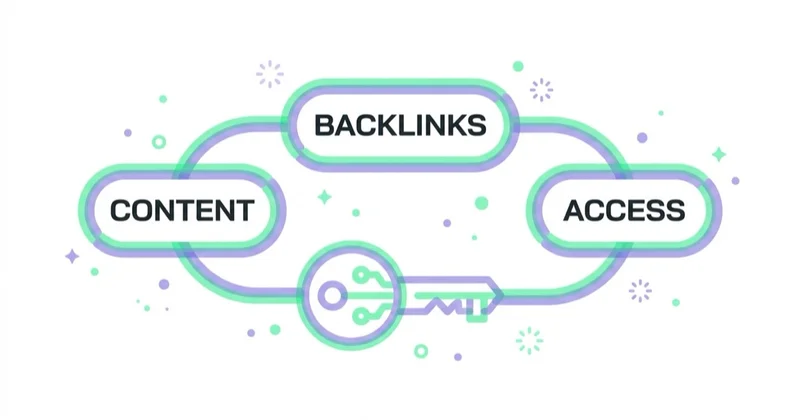
When an SEO engagement ends, three areas need separate treatment:
- Content and code. State whether bespoke deliverables are assigned or licensed, when rights take effect and which source files are included. Identify stock media, fonts, plugins, open-source code and agency templates separately. Avoid making the public website dependent on an agency-only subdomain or system without an export and migration right.
- Third-party links. A backlink is controlled by the publisher, not owned by the client or agency. Record the source and destination URLs, anchor, placement date, commercial relationship and applicable
relattribute. Prohibit private networks, undisclosed rented links and any unauthorised removal or redirect action by the agency, but do not promise that an independent publisher will keep a link live. - Access and change control. Keep direct client administrators for the CMS, hosting, domain, Search Console, analytics and tag management. Give the agency only the permissions it needs, log material changes and test the client's ability to remove access. The wider mechanics are in who owns your Google Ads, Meta and GA4 when you leave an agency.
The contract should state the offboarding sequence rather than rely on “before” or “after” the final invoice as a universal rule. Define priority access changes, final files and exports, outstanding work, payment of undisputed sums, treatment of disputes, security, and data return or deletion. Ask local counsel to review any suspension, lien or withholding provisions. Direct client administration from day one reduces dependence on the handover sequence.

Exit and lock-in: why "no lock-in" matters
SEO can require technical discovery, implementation and enough observation time to distinguish signal from normal volatility. A fixed initial term may therefore be commercially reasonable, especially when the provider funds substantial setup work or reserves specialist capacity. The risk lies in a term whose cost and exit mechanics are disproportionate or unclear, not in a particular number of months by itself.
The healthier structures:
- Month-to-month — more flexibility, but check setup fees, priority, continuity and the offboarding workload.
- Defined initial term with milestone reviews — useful when milestones test completion and quality of work, not promise ranking by a fixed date.
- Longer committed term — may support pricing or capacity, but should have clear deliverables, breach rights, renewal mechanics and an exit schedule.
Review the initial term, renewal length, notice window, termination for breach, cure period, early-termination charges and non-cancellable supplier costs together. A month-to-month agreement can still have poor handover rights; a 12-month agreement can be workable if the investment, milestones and exit protections justify it. “No lock-in” describes one commercial feature, not the quality of the SEO strategy.
What a template won't tell you
Search for "SEO contract template" and you will find plenty of downloadable documents. A template gives you the skeleton — parties, scope, payment, term — but three things a template will not tell you are exactly the ones that matter:
- Whether the deliverables are honest. A template has blanks; it does not stop an agency filling them with guaranteed rankings or vague activities. You still have to judge the substance.
- Where the operating dependencies hide. Templates rarely inventory CMS hosting, content rights, publisher-controlled links, platform roles, deployment ownership or exit formats.
- What a fair term looks like for your situation. A template's default term is arbitrary; the right term depends on your site, competition and how the relationship is structured.
Use a template as a starting checklist, but the value is in reading the substance against the ten clauses above, not in the document itself.
Define evidence, link risk, and change control
SEO deliverables need verifiable evidence: technical change logs, approved content, indexation checks, a link register, and access to source systems. The contract should state which recommendations the client must implement, who owns deployment, and how delays affect timelines. Otherwise, the agency can be blamed for changes it could not ship, or the client can pay for recommendations that never reach production.
For links, require source URL, destination, anchor, commercial relationship, applicable attribute and any placement term. Google's spam policies list buying or selling links for ranking purposes and other link spam as prohibited practices; paid placements should be qualified with the appropriate rel values. “20 links per month” is not a quality commitment. Any temporary or rented placement must be disclosed, approved and treated as advertising rather than presented as an earned permanent asset.
The change-control process should price work caused by a migration, redesign, new market, CMS replacement, or material algorithm response. A fixed retainer cannot silently absorb an unlimited transformation program, and the client should not discover critical exclusions after the event.
Glossary
- Deliverables — the activities the agency commits to (audits, pages, fixes, links), which it controls.
- Guaranteed ranking — a promise of a specific position; a red flag because no one controls Google.
- Standard of performance — the contractually defined level of skill, care or effort, interpreted under the governing law.
- Lock-in — the combined economic and operational cost of leaving, not only the headline contract term.
- Milestone review — a scheduled checkpoint to assess completed work, evidence, dependencies and next decisions.
- Link register — evidence of third-party placements, their commercial status, attributes and known terms; not proof of permanent ownership.
How to read an SEO contract (before you sign)
A quick walkthrough to pressure-test any SEO contract:
- Find the deliverables clause. Are they activities the agency controls, or rankings it does not? Guaranteed rankings → walk away.
- Find the rights and dependency schedule. Are assignment or licence terms, source files, third-party materials and export rights explicit?
- Check direct access and change control. Does the client have verified administration, and will material changes be approved and logged?
- Read term, renewal, termination and offboarding together. Can both parties calculate the effective date, charges and asset handover?
- Inspect the link policy. Are commercial relationships and attributes disclosed, with prohibited tactics and approvals clear?
- Check exclusivity. Can the agency also work for your direct competitors? Undisclosed → ask.
Passing these checks does not replace legal review, technical diligence or references, but it makes the operating risks visible before signing.
Red flags to walk away from
| Red flag | Why it's a problem |
|---|---|
| Guaranteed #1 (or any) ranking | Not controllable; signals dishonest or risky SEO |
| Term, renewal and charges cannot be calculated | Exit cost and timing are unpredictable |
| Public content depends on an agency-only system with no export | Migration risk is hidden until exit |
| Link quantity promised with no source or commercial disclosure | Incentivises spam and policy risk |
| No direct client administrator access | Business continuity depends on the provider |
| Offboarding has no asset schedule, formats or deadlines | The handover cannot be tested |
| Deliverables defined only as rankings | Sets up disputes over an outcome no agency controls |
| No approvals or change log for material site edits | The client cannot audit risk or reverse changes |
How Space Ads approaches the SEO contract
Our contract review starts with the real delivery model: who researches, approves and deploys changes; where content and code live; how claims and links are reviewed; which systems provide evidence; and what another provider would need to continue the work. That makes operational dependency visible instead of relying on broad ownership language.
We define controlled obligations and outcome targets separately, keep direct client administration, log deployed changes, document content rights and disclose link relationships. The term reflects discovery and implementation needs, while the exit schedule identifies files, access, redirects, evidence and open recommendations. That is the SEO-specific layer of the agency contract checklist, connected to performance marketing. A fractional CMO can align the same responsibilities across marketing, product, engineering and legal.
FAQ
Should an SEO contract guarantee a #1 ranking?
No — a guaranteed ranking is a red flag. Google's results depend on the algorithm, competitors, your own site and constant changes, none of which an agency fully controls, and Google itself treats guaranteed-ranking claims as a sign of low-quality SEO. A fair contract commits to activities and deliverables, with rankings and traffic reported as trends, not promised.
Who owns the content and backlinks at the end of an SEO contract?
Content rights depend on the contract and governing law: specify assignment or licence, effective date, source files and third-party components. A backlink is controlled by the publisher and can change or disappear; neither party can promise permanent ownership. Require a link register, commercial disclosure and a prohibition on unauthorised agency-controlled removal or redirect tactics.
What should be included in an SEO contract?
Include scope, implementation dependencies, approvals, evidence, KPI definitions, content rights, link practices, direct client access, security, change control, term, renewal, termination, offboarding, data protection and conflicts. Separate work the provider controls from outcomes such as ranking that it can target but not guarantee.
How long should an SEO contract be?
There is no universal term. It should reflect discovery, implementation, observation time, reserved capacity and setup investment. Evaluate the initial term together with milestone reviews, renewal, notice, breach rights, early-termination charges and offboarding. A short agreement can still create dependency; a longer one can be reasonable when obligations and exit rights are clear.
What are the biggest red flags in an SEO contract?
Guaranteed rankings, secret methods, link quotas without source and commercial disclosure, no direct client administration, unlogged site changes, vague implementation responsibility, rights that omit source files and third-party materials, and offboarding without an asset schedule. Also review the combined cost of term, renewal, notice and early exit.
Is "no contract" or "no lock-in" SEO a good sign?
It is one favourable flexibility feature, not proof of competent SEO. Check whether the agreement still contains setup charges, non-cancellable costs, weak export rights or operational dependencies. Judge the provider on methods, evidence, references, access design and implementation quality, then assess whether the term fairly reflects the work.
Can I use an SEO contract template?
A template gives you the skeleton, but it will not tell you whether the deliverables are honest, where the ownership traps hide, or what a fair term is for your situation. Use it as a starting checklist and judge the substance against the key clauses — honest deliverables, ownership of content and access, fair term — rather than trusting the document itself.
Key takeaways
- A good SEO contract commits to deliverables and activities, never a guaranteed ranking.
- State content rights, source files and third-party components explicitly; payment alone is not enough.
- Treat publisher-controlled backlinks as documented placements, not owned permanent assets.
- Keep direct client administration and define an asset-level offboarding sequence from the start.
- Assess lock-in through term, renewal, notice, charges, dependencies and exit rights together.
Sources and further reading
- Google Search Central — Do you need an SEO? (and guaranteed-ranking warnings)
- Google Search Essentials — Spam policies and low-quality SEO signals
- ICO (UK) — Contracts between controllers and processors
- US Copyright Office — Copyright basics
Continue learning
Continue reading

What Should Be in a Social Media Management Contract?
A social media management contract should define asset control, scope, approvals, IP and licences, claims, moderation, security, fees and offboarding. Use this operational checklist with counsel.

What Should Be in a Marketing Agency Contract? A Founder's Checklist
A marketing agency contract should turn expectations into testable obligations: scope, fees and media costs, platform access, data roles, IP rights, approvals, liability and exit. Use this practical checklist to identify decisions that need precise wording and local legal review.

GEO for E-commerce: Product Visibility in AI Overviews, ChatGPT and Perplexity
AI shopping visibility depends on whether products are easy for machines to identify, compare and trust. That means clean feeds, product schema, crawlable pages, useful buying content and measurement that does not rely on one visible referral.


































