A social media management contract should identify every account and data asset, define the agency's permissions, state exactly which services and deliverables are included, allocate intellectual-property rights and create a workable approval and incident process. No single template can determine the right legal position across jurisdictions. This checklist highlights the operational questions to resolve with counsel, including paid media, creator content, moderation, security and offboarding.
Operator guidance from an agency that signs these contracts — not legal advice; check specifics with a lawyer for your jurisdiction.
TL;DR
- Control and rights are the lead clauses. List each account, Page, profile, ad account and dataset; identify the business holding it and give the agency revocable partner access where possible.
- Do not assume assets are portable. Meta applies different assignment and transfer rules to different assets, and platform audiences may not be exportable.
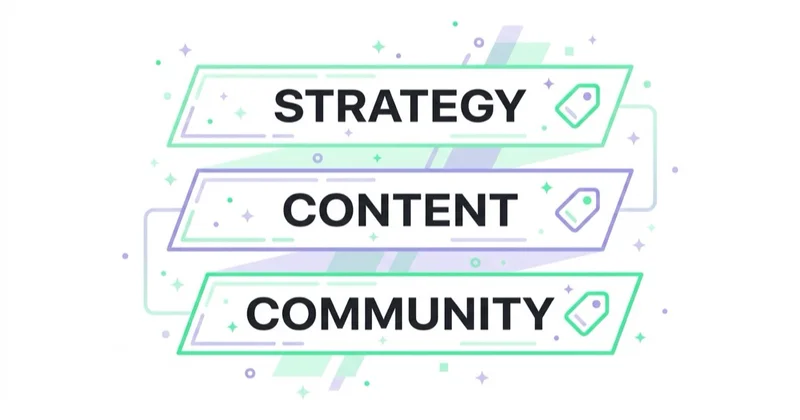
- Scope should distinguish three layers: organic content, paid social and community management. They may be priced separately or bundled transparently.
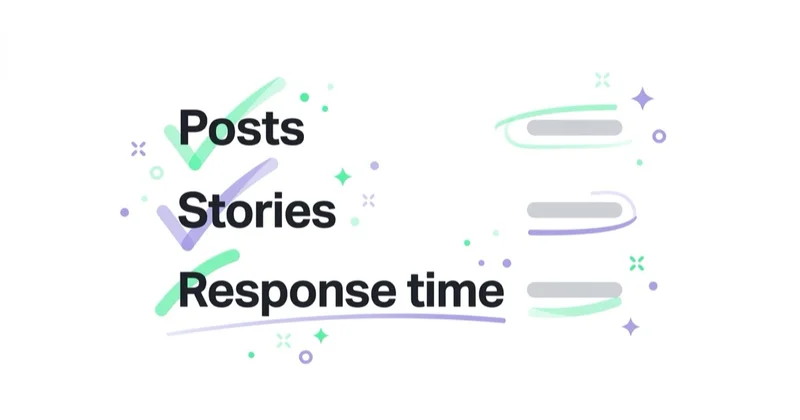
- Deliverables need numbers — posts per week, publishing windows, and a response-time SLA for community.
- IP treatment must be explicit. Define assignment or licence, timing, territories, media, source files, moral rights where applicable and all third-party restrictions.
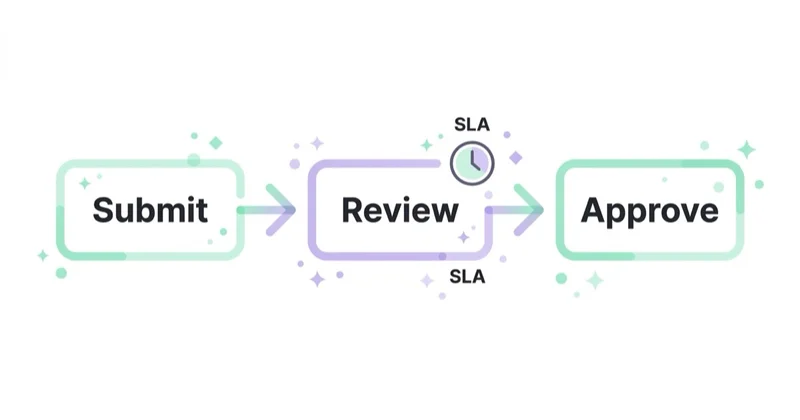
- Turn approvals into a workflow with submit and review windows. Never deem regulated claims, crisis responses or unapproved creator content approved by silence.
- Termination needs clear economics and an offboarding runbook. Notice, cancellation charges and payment dependencies should reflect actual committed work and governing law.
Ownership comes first — including the ad assets
The contract should contain an asset schedule rather than a single sentence saying “the client owns everything”. List the Facebook Page, Instagram account, Meta Business Portfolio, ad account, dataset, domain, catalogues, creator handles, publishing tools and any cloud integrations. Record the current asset holder, company administrators, agency role, billing responsibility and expected state at exit.
Creating an asset in an agency-controlled Business Portfolio can create a difficult exit because not every Meta asset can be moved through a simple transfer. Prefer company-controlled assets with partner access where the platform permits it, but verify the present configuration before promising a migration. The contract should disclose any exception and say whether the item can be transferred, exported, documented or must be rebuilt. The platform mechanics are covered in who owns your Google Ads, Meta and GA4 when you leave an agency.
Two ownership details specific to paid social:
- Media billing — state whether the client pays the platform directly or the agency invoices media, and disclose fees, taxes, credit risk, refunds and spend limits as separate concepts.
- Dataset, CAPI and audiences on exit — identify the dataset holder, event connection and lawful source data. Do not promise that every custom or lookalike audience is portable or downloadable.
This paid-media layer is easy to miss when a template was written only for organic publishing. Its absence is a problem regardless of whether the supplier is a freelancer or an agency.
Scope: three layers, priced separately
“Social media management” can bundle three genuinely different jobs. Scope them separately even if the commercial fee bundles them:
- Organic content — strategy, creative, copy, publishing to the feed.
- Paid social — running ads, including ad spend management and the ownership considerations above.
- Community management — responding to comments, messages and mentions, with a response-time commitment.
A single fee is not inherently a problem; an undefined service is. State the included platforms, markets, languages, production responsibilities, exclusions, dependencies and change-request process for each layer. If an extra service has a separate rate or allowance, show it.
Deliverables need numbers
Vague deliverables ("regular posting," "active community management") are unenforceable and set up disputes. A good contract quantifies:
- Posting cadence — posts per week per platform, and which platforms.
- Content mix — how many of what type (static, video, stories, reels) if that matters.
- Publishing windows — turnaround from approval to live.
- Community response SLA — a response-time commitment (for example, respond to comments and DMs within a defined number of business hours), and its coverage hours.
Numbers make delivery checkable, but volume alone does not define quality or business value. A sample deliverable might specify 12 feed posts and 8 stories per month, the number of revision rounds, required formats and a response target during stated coverage hours. It should also state dependencies such as product samples, subject-matter approval and access to locations or spokespeople.
Intellectual property: assign it, don't assume it
Payment does not automatically produce the same copyright result in every jurisdiction. UK Intellectual Property Office guidance says a contractor will usually retain copyright in commissioned work unless the parties agree otherwise in writing. In the United States, a commissioned work qualifies as “work made for hire” only in limited statutory categories and under a signed written agreement. The contract should therefore state the intended ownership or licence rather than relying on an invoice or label.
Define which final deliverables are assigned, which pre-existing agency tools or templates are licensed, and which third-party assets remain subject to stock, music, font, platform or creator terms. State whether editable source files are deliverables and when rights transfer. An assignment on full payment is one possible structure, not the only lawful or commercially appropriate one; counsel should draft it for the governing law.
Turn approvals into an SLA
Social calendars stall on approvals, and a contract that ignores the approval workflow guarantees friction — the agency blames slow sign-off, the client blames late drafts, and posts miss their moment. A good contract makes approval a mutual SLA:
- Submission window — the agency submits content a set number of days before the publish date (e.g. 5 business days).
- Review window — the client approves or requests changes within a set window (e.g. 2 business days).
- Missed-deadline rule — if the client does not respond, the post is rescheduled or held, or low-risk pre-agreed content may be deemed approved if counsel and the client accept that approach.
Silence should never approve regulated claims, pricing, legal statements, crisis responses, paid endorsements or content outside a pre-approved message library. For ordinary low-risk posts, the parties can agree a deemed-approval mechanism, but a hold-and-reschedule default is safer for many brands. In all cases, the workflow should record who approved the final version and when.
Termination, kill fee and offboarding
Social work is produced in advance — content is created, scheduled and often paid for before it publishes — so termination needs to handle work in progress:
- Notice — a defined period aligned with production lead times, staffing commitments and any minimum term; symmetry is a commercial choice, not an automatic requirement.
- Cancellation charges — identify non-cancellable third-party costs, completed work and work in progress. If a kill fee applies, state the calculation rather than calling an unspecified percentage “fair”.
- Offboarding runbook — handing back access to accounts, the content library and source files, the pixel/audiences, and any scheduled content, on a defined timeline.
The offboarding runbook should list content and source files due under the IP clause, scheduled-post treatment, account and tool access, data exports that platforms actually permit, token revocation, credential rotation and a final asset register. Audiences may remain non-portable even when the client's contractual rights are clear.
Moderation and incident-response rules
Community management creates operational and legal risk that a posting calendar does not cover. The agreement should classify ordinary comments, complaints, threats, regulated claims, privacy requests, press inquiries, and account-security incidents. Each class needs a response window, escalation owner, approved holding language, and evidence-retention rule.
The agency should not improvise on product safety, financial advice, health claims, employment complaints, or litigation. The client supplies the subject-matter approver and emergency contact. The contract should state whether evenings, weekends, and crisis coverage are included and price on-call work separately.
Creator and endorsement work needs its own controls. Specify who contracts and pays creators, who approves objective claims, who checks that material connections are clearly disclosed, and who monitors live content. The US Federal Trade Commission states that both advertisers and endorsers can be responsible for deceptive claims or missing disclosures; a platform's paid-partnership label may not be sufficient by itself.
Credential handling also needs a standard: platform partner access instead of shared passwords where available, least privilege, multi-factor authentication, recovery contacts controlled by the client, and immediate rotation after team changes. Offboarding is complete only after partner access, publishing tools, API tokens, and scheduled posts are reconciled.
Basic template vs operational contract
| Clause | Basic template | Operational contract |
|---|---|---|
| Account control | Generic ownership sentence | Asset register, direct administrators, partner roles and exceptions |
| Paid social / ad assets | Often absent | Billing, dataset, CAPI, audience limits and consent responsibilities |
| IP | Generic ownership sentence | Assignment/licence scope, timing, source files and third-party rights |
| Deliverables | Vague ("regular posts") | Quantified cadence + community SLA |
| Approvals | Informal | Submit/review windows, risk exceptions and missed-deadline rule |
| Termination | Basic notice | Calculated cancellation costs and asset-by-asset offboarding |
The gap between the two is exactly the set of clauses that decide what happens when the relationship ends or the paid layer matters — which is why a downloadable template is a starting point, not a safe contract.
Glossary
- Business Manager (Business Portfolio) — Meta's container that owns Pages, ad accounts, pixels and audiences.
- Non-portable asset risk — an account or dataset held in another Business Portfolio that may need transfer, documentation or rebuilding at exit.
- Work made for hire — a narrow doctrine that does not automatically make paid content the client's; an express assignment is needed.
- Deemed approval — a clause treating specified low-risk content as approved after silence; it requires clearly defined exclusions.
- Kill fee — a pre-agreed cancellation charge whose trigger and calculation should be explicit.
- Community management — responding to comments, messages and mentions, with a response-time SLA.
How Space Ads approaches the social media contract
Our contracting process begins with scope, an asset register, approval roles, claims risk and intended IP treatment. This avoids using “client owns everything” as a substitute for identifying the actual account, source file, dataset, licence or platform restriction.
Where platform rules allow it, we use company-controlled Business Portfolio assets with revocable partner access. The agreement separates organic, paid and community scope, defines measurable deliverables and coverage, records assignment and licensing terms, and sets a risk-based approval workflow. That is the social layer of the agency contract checklist, run as part of social media marketing. Paid social can sit inside a broader performance marketing plan with separately documented media and data responsibilities.
FAQ
What should be in a social media management contract?
Include an asset and access schedule; organic, paid and community scope; measurable deliverables and coverage; approval and escalation rules; IP assignment or licence terms; creator-disclosure and claims controls; security; data responsibilities; fees; termination economics; and asset-by-asset offboarding. Have counsel adapt the agreement to the governing law and regulated risks.
Who owns the social media accounts and content?
The contract should allocate rights, while the platform setup should give the company practical control through direct administrators and its own Business Portfolio where permitted. Check each asset separately because Meta transfer rules differ and audiences may be non-portable. For content, state whether rights are assigned or licensed, when that occurs and whether source files and third-party licences are included.
Do I automatically own content the agency creates?
Not necessarily. UK guidance says a contractor usually retains copyright in commissioned work unless the parties agree otherwise in writing. US “work made for hire” rules are limited and fact-specific. Use a written assignment or sufficiently broad licence drafted for the governing law, and identify source files and third-party restrictions.
What deliverables should a social media contract specify?
Quantified ones: posts per week per platform, the content mix if it matters, publishing turnaround windows, and a community response-time SLA with its coverage hours. Vague deliverables like "regular posting" or "active community management" are unenforceable and cause disputes; numbers make the deliverable checkable.
How should approvals be handled in a social media contract?
Set submission and review windows, named approvers, revision limits, version records and a missed-deadline rule. Low-risk, pre-agreed content may use deemed approval if the parties accept it. Regulated claims, crisis responses, endorsements, pricing and content outside the approved message library should require explicit approval.
What is a kill fee in a social media contract?
A kill fee is a pre-agreed cancellation charge. The contract should define its trigger and calculation, distinguish completed work from non-cancellable third-party costs and future unperformed services, and align it with applicable law. An undefined percentage of the remaining contract is not automatically fair.
What is the difference between a freelancer template and an agency-grade social contract?
A basic template may omit asset-level permissions, paid-media billing, datasets, third-party licences, claims review, incident response and detailed handover. An operational contract addresses those topics explicitly. The distinction is the completeness of the agreement and risk model, not whether the supplier is a freelancer or agency.
Key takeaways
- Keep company administrators and review every Business Portfolio asset, partner role and portability limit.
- Split scope into organic, paid and community, even if pricing bundles them.
- Quantify deliverables and set a community response SLA.
- Define IP assignment or licence terms, source files and third-party restrictions in writing.
- Use risk-based approvals and explicit termination economics, then complete an asset-by-asset handover.
Sources and further reading
- Meta Business Help — Business Manager, Pages and ad account ownership
- GOV.UK / IPO — Copyright ownership and commissioned works
- U.S. Copyright Office — Works made for hire
- Federal Trade Commission — Endorsement disclosures and advertiser responsibilities
Continue learning
Continue reading
Static vs Video Ads: Which Converts, and When to Use Each
Static and video ads can both sell. The useful question is which format communicates a specific idea in a specific placement at an acceptable total cost. This guide shows how to choose and test them fairly.

UGC Ads: How to Brief, Source and Run Creator Content That Performs
Creator-led ads can make a product easier to understand, but paid content must not masquerade as an independent customer opinion. Learn how to source, brief, contract, disclose and test creator content responsibly.
How Many Ad Creatives Do You Need Per Campaign?
The right creative count depends on the platform format, objective, audience, budget and question being tested. Use this framework to plan coverage, testing and refreshes without manufacturing a magic number.