Shooting and gun range marketing has to be built in the opposite order from ordinary local marketing. Most local businesses start with Google Search Ads, Meta, landing pages and tracking. A range has to start with platform policy, legal review, landing page content and offer framing because weapons-related promotion can trigger disapprovals or account restrictions.

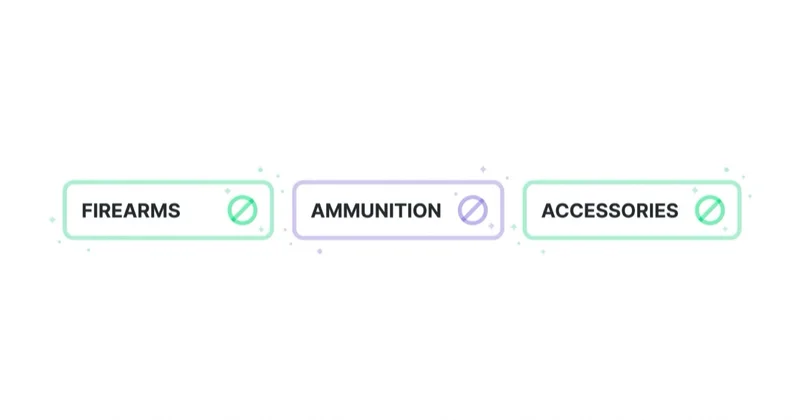
Google's dangerous products policy restricts ads for firearms, gun parts, ammunition and related instructional content. Google's gun policy also says it may apply caution to sporting or recreational guns, and lists certain activity-as-a-service examples. Meta's Advertising Standards state that ads must not promote the sale or use of weapons, ammunition or explosives. That does not mean a range has no marketing options. It means the plan should lean much harder on organic local demand, reviews, owned audiences, education, memberships and events, with paid campaigns used only after a conservative policy review.
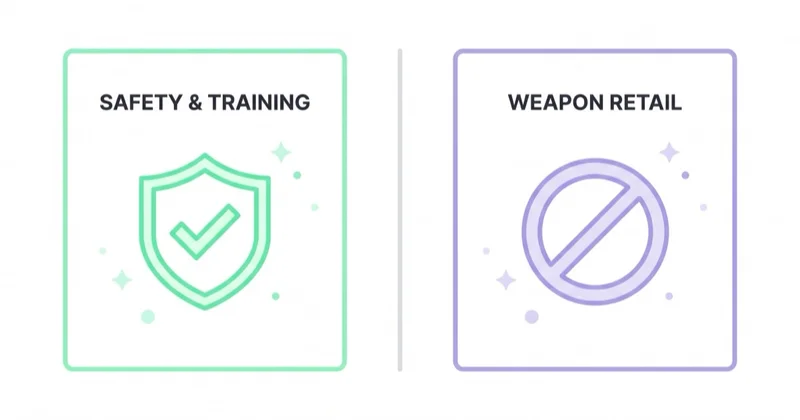
The strongest shooting range marketing usually looks less like firearm retail advertising and more like local experience, membership, safety education and community marketing. The safest assumption is simple: do not try to sell, show, imply purchase, or encourage use of weapons through ad creative or landing pages. Build demand capture around the venue, training, policies, safety, events and local trust.
TL;DR
- Policy comes first. Firearms, ammunition, weapon parts, weapon-sale pages, weapon imagery and some activity-related framing can create ad review risk.
- Google Ads is not a normal channel for ranges. A conservative plan treats paid Google campaigns as restricted and case-by-case, not as the default lead source.
- Meta requires equal caution. Meta broadly restricts ads that promote the sale or use of weapons, ammunition or explosives. Safety or education concepts still need current policy and account review.
- Local SEO and Google Business Profile carry more weight. Searches such as range near me, safety course near me, memberships and events should be captured through organic and local assets.
- Owned audiences matter. Email, SMS, member programs, event calendars, referrals and partnerships reduce dependence on restricted paid platforms.
- Copy and imagery decide risk. Neutral venue, education, safety and membership framing is safer than weapon-forward creative, purchase language or tactical messaging.
Why Shooting Range Marketing Is Policy-Led
The basic marketing problem is not demand. Many people search for local ranges, beginner courses, memberships, gift experiences, private events and safety education. The problem is channel eligibility and interpretation.
Four constraints shape the strategy.
| Constraint | Practical effect |
|---|---|
| Firearms ad restrictions | Paid campaigns can be rejected or accounts can face limits if ads or destinations promote restricted products or use |
| Landing page review | Platforms may review not only the ad, but also the destination page and linked content |
| Local trust matters | Reviews, hours, safety process, booking clarity and location information affect organic conversion |
| Repeat usage | Memberships, leagues, training series and events can be more valuable than one-time visits |
A range that tries to advertise like a retailer creates avoidable risk. A range that behaves like a local membership venue, training provider and events business has more room to build durable demand through non-paid and owned channels.
What Google and Meta Restrict
The exact review outcome can depend on location, account history, ad creative, landing page, destination links and policy updates. The practical baseline should be conservative.
| Platform | Important policy point | Marketing implication |
|---|---|---|
| Google Ads | Dangerous products policy restricts firearms, parts, ammunition and related instructional content | Avoid using Google Ads as a default acquisition channel for range traffic without policy review |
| Google Ads | Destination pages matter, not only ad text | A page with weapon sales, weapon-heavy imagery or prohibited products can affect ad eligibility |
| Meta | Advertising Standards restrict ads that promote sale or use of weapons, ammunition or explosives | Treat firearm-related paid social as restricted, even when the concept is educational |
| Meta | Ads are reviewed for creative, text, targeting and destination | Landing pages, forms and imagery need the same caution as ad copy |
This is not legal advice and not a substitute for a live platform review. It is an operating rule: do not build the plan around borderline paid ads. Build the plan around channels that can capture demand without forcing the ad platform to approve firearm-related promotion.
Safer Offer Framing
The range still needs clear positioning. The safer direction is to frame the business around venue, education, memberships and events rather than retail, hardware or tactical outcomes.
| Safer direction | Higher-risk direction |
|---|---|
| Safety education and introductory classes | Weapon purchase language |
| Membership access and facility benefits | Firearm sales, ammunition, parts or accessories |
| Corporate events, private events and group bookings | Tactical or combat-style claims |
| Range rules, supervision and onboarding | Aggressive imagery or sensational copy |
| Skills development and responsible practice | Claims focused on self-defense outcomes |
| Gift cards or experience vouchers after policy review | Ads that imply weapons are being sold, transferred or included |
This framing also improves conversion for beginners. Many first-time visitors do not want aggressive copy. They want to know whether the place is professional, safe, supervised, beginner-friendly, clean, well-reviewed and easy to book.
Local SEO Is the Core Demand Channel
Organic search matters more for shooting ranges than for many local businesses because paid options are constrained. Local SEO should answer the questions people search before they visit.
Important page types:
- location page with hours, address, parking, booking and visitor requirements;
- beginner guide;
- safety course page;
- membership page;
- private events page;
- corporate events page;
- group booking page;
- league or community calendar;
- FAQ page for age rules, identification, supervision, booking, rentals where allowed, and what to expect;
- review and testimonials page;
- accessibility and visitor information page.
The SEO strategy should avoid thin doorway pages. The goal is not to stuff "gun range near me" into every heading. The goal is to give search engines and AI systems a clear, factual entity: location, services, classes, membership options, requirements, policies, reviews, directions, and common questions.
For a deeper technical pass, start with an SEO audit. The same logic applies to AEO and LLM visibility: structured, factual, locally specific pages are easier for answer engines to summarize accurately.
Google Business Profile and Local Trust
Google Business Profile can be more important than paid ads for a shooting range. Google says local ranking is influenced by relevance, distance and prominence, and recommends complete, accurate business information, current hours, photos and review responses.
A strong profile should include:
- accurate category and service information;
- current regular and holiday hours;
- booking or contact link;
- phone number;
- photos of the facility, exterior, reception, classrooms and safe non-sensational context;
- review response process;
- accessibility and parking information where relevant;
- UTM-tagged website link if attribution governance allows it.
The profile should not function like a product catalog for restricted items. It should help a local user understand the venue, policies, booking process and trust signals.
Email, Membership and Owned Channels
Owned channels are central because they do not require every message to pass an ad auction review. They still need legal, privacy and content review, but they give the business more durable demand.
Useful owned-channel plays:
- beginner course follow-up sequence;
- membership renewal reminders;
- event calendar;
- league or competition updates where appropriate;
- safety and rules education;
- gift card and group booking campaigns after policy review;
- reactivation campaigns for lapsed members;
- referral campaigns;
- corporate event outreach.
This is where the range can think more like a gym or fitness studio: member acquisition is only the first step. Retention, frequency, renewal and community participation decide lifetime value.
Paid Media: Use a Conservative Test Gate
Paid campaigns are not impossible in every scenario, but they should pass a gate before launch.
Review checklist:
- Confirm current Google and Meta policy for the target country and account.
- Review ad text, creative, landing page, forms, navigation and adjacent links.
- Remove weapon-sale language, ammunition, parts, accessory and purchase references from campaign destinations.
- Avoid weapon-forward imagery in ads and on campaign landing pages.
- Use neutral venue, safety, class, membership or event framing.
- Keep age, eligibility and local legal requirements visible where relevant.
- Document review decisions before launch.
- Expect re-review and keep a fallback channel plan ready.
If a campaign is approved, do not treat approval as permanent. Meta says ads can be reviewed again after going live, and Google policy enforcement can change with destination edits. A later website update can create new risk if it adds restricted content to the landing path.
Landing Pages for Policy-Sensitive Campaigns
Landing pages for restricted categories should be narrower than normal local-service pages. The campaign page should not send reviewers or users into a mixed ecommerce-style experience.
A safer class or membership landing page should include:
- what the class or membership includes;
- who it is for;
- safety rules;
- supervision and instructor credentials where relevant;
- eligibility requirements;
- booking path;
- cancellation policy;
- contact information;
- neutral facility imagery;
- FAQ;
- privacy and consent notices for forms.
Avoid:
- product grids for restricted items;
- weapon prices;
- ammunition references;
- tactical claims;
- sensational imagery;
- "buy", "stock up", "upgrade" or similar purchase-oriented language;
- links from the campaign page into restricted product pages.
For page structure, the guide to landing pages is useful, but policy-sensitive pages need a stricter destination review than ordinary lead gen pages.
How we approach this at Space Ads
Across the 25+ accounts we audit daily, with analysis on the order of 14M monthly data points through Space Ads OS, restricted categories usually fail when the team treats policy as a final checkbox. It has to be part of the strategy from the first brief.
For shooting and gun range marketing, the audit starts with:
- ad platform eligibility;
- landing page and navigation review;
- Google Business Profile completeness;
- local SEO visibility;
- review profile;
- membership economics;
- event and group booking demand;
- email and CRM segmentation;
- tracking for booking, membership, class enquiry and repeat visits;
- legal and policy review workflow.
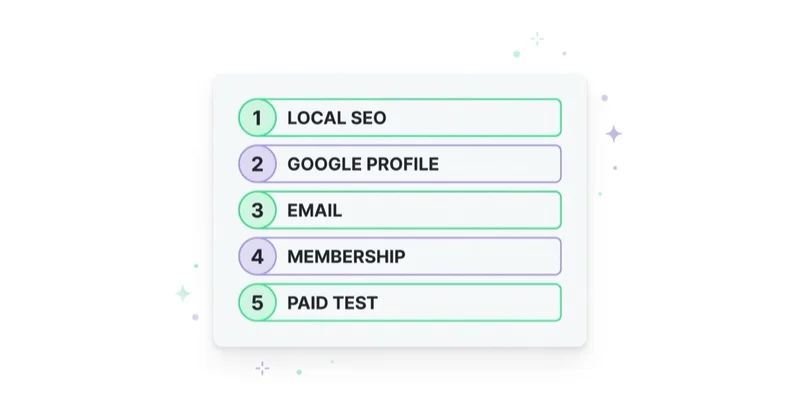
The result is usually a channel mix that puts SEO, local presence and owned audiences first, then tests tightly framed paid campaigns only where the offer, creative and destination can survive review. A marketing audit can identify whether the current system is over-reliant on risky paid tactics or underusing organic local demand. Ongoing management fits under performance marketing, but with policy guardrails built into the operating process.
A practical way to market a shooting range
- Start with policy review. Check Google, Meta, local law, landing pages and business model before campaign ideas are approved.
- Separate retail from venue marketing. Keep restricted products away from campaign pages and promotional copy.
- Build local SEO pages. Cover location, beginner visits, safety classes, memberships, events and FAQs.
- Optimize Google Business Profile. Keep hours, photos, reviews, booking links and contact information accurate.
- Grow owned audiences. Use email, member programs, event calendars and referrals to reduce platform dependency.
- Create neutral landing pages. Use safety, education, membership and venue framing, not weapon-forward selling.
- Test paid campaigns only after a gate. Review ad, creative, destination, links, forms and policy before launch.
- Track bookings and retention. Measure classes, membership signups, event enquiries, repeat visits and renewal value.
Stop doing / do instead
| Stop doing | Do instead |
|---|---|
| Treating policy as a final approval step | Make policy the first planning filter |
| Sending ads to mixed product pages | Use narrow, reviewed landing pages |
| Using weapon-forward creative | Use neutral facility, class, safety and membership creative |
| Depending on paid social for demand | Build SEO, Google Business Profile, email and referrals |
| Chasing loopholes | Build a durable compliant channel mix |
| Measuring one-off visits only | Track memberships, classes, repeat visits and events |
| Writing aggressive claims | Use factual, supervised, safety-led language |
FAQ
Can a shooting range advertise on Google?
Google Ads should be treated as restricted for shooting range acquisition. Google's dangerous products and gun policies restrict firearms, related parts, ammunition and some related services or instructional content. A range should not assume that reframing alone makes paid search safe. Organic search, Google Business Profile and owned channels are usually the more reliable foundation.
Can a gun range advertise on Facebook or Instagram?
Meta broadly restricts ads that promote the sale or use of weapons, ammunition or explosives. Educational, safety, membership or venue concepts should still be reviewed against current Meta policy, destination content and local legal requirements before launch. Do not assume that an ad is safe because it avoids direct sales language.
How should a shooting range be marketed when paid ads are restricted?
The strongest plan usually prioritizes local SEO, Google Business Profile, reviews, email, memberships, classes, events, referrals and community partnerships. Paid media can be tested only after a policy gate that reviews ad copy, creative, landing pages, forms and adjacent links.
What content should a shooting range publish for SEO?
Useful content includes beginner visit guides, safety course pages, membership pages, event pages, corporate group pages, local FAQ pages, range rules, instructor bios, review pages and location information. The content should be factual, locally specific and policy-aware.
Are safety courses a safer marketing angle?
Safety education is usually a better angle than weapon retail or tactical messaging because it is informational, beginner-friendly and trust-led. It still needs policy and legal review before paid promotion, especially on platforms that restrict weapons-related content.
What should be removed from ad landing pages?
Remove restricted product grids, ammunition references, weapon-sale copy, weapon prices, tactical claims, aggressive imagery and links that push the campaign journey into restricted commerce pages. Keep the landing page focused on the class, venue, membership or event being promoted.
In short
- Shooting and gun range marketing starts with platform policy, not media tactics.
- Google Ads and Meta both restrict weapons-related promotion, so paid campaigns need conservative review.
- Organic local demand, Google Business Profile, reviews and owned audiences carry more weight than in ordinary local service marketing.
- Safer framing emphasizes venue, education, safety, memberships, events and local trust.
- Landing pages must be reviewed as carefully as ad copy.
- The best system measures bookings, classes, memberships, events, repeat visits and renewal value.
Sources
- Google Ads Help - Dangerous products or services policy
- Google Ads Help - Guns, gun parts and related products policy
- Meta Transparency Center - Advertising Standards
- Google Business Profile Help - Local ranking documentation
Continue learning
Continue reading

Language School Marketing: Two Businesses, One Building
Language schools often combine consumer enrolment and corporate training. Market them as separate buying journeys, then connect campaigns to attendance, enrolment, group contribution and continuation.

Driving School Marketing: Selling Instructor Hours, Not Courses
A practical system for growing a driving school around real instructor capacity: local demand, transparent lesson offers, compliant proof, responsive booking and completed-pupil value.

Bike Shop Marketing: The Workshop Pays the Rent
A practical marketing system for bike retailers and workshops: model capacity and contribution, capture local service demand, promote in-stock bikes, and turn first visits into lasting customer relationships.